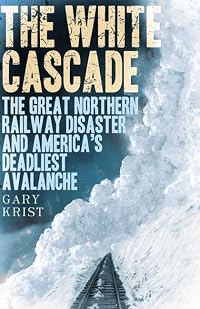
The White Cascade: The Great Northern Railway Disaster and America's Deadliest Avalanche
by Gary Krist
On This Page
Description
"In February 1910, a monstrous blizzard hit Washington State. High in the Cascade Mountains near the tiny town of Wellington, two trainloads of cold, hungry passengers and their crews found their railcars buried in rising drifts, parked precariously on the edge of a steep ravine. An army of the Great Northern Railroad's men worked round-the-clock to rescue the trains, but the storm was unrelenting. Suddenly the earth shifted and a colossal avalanche tumbled, sweeping the trains and their show more sleeping passengers over the steep slope and down the mountainside."--From source other than the Library of Congress show lessTags
Recommendations




Member Recommendations
Member Reviews
My reading patterns have become somewhat eclectic -- I don't even remember where I heard about this book, and nonfiction is not my typical genre, but what a read! Bringing to life the Wellington train tragedy of 1910 (which I didn't even know had occurred) Krist paints with broad strokes to show the political climate of the time (progressive) as well as the financial boom of the Railroad Era, in particular the rise of the Great Northern Line under James J. Hill from MN. Lesser known than the era's other Robber Barons, Hill forged a railroad with sheer grit and now-embarrassingly cheap labor through the formidable Rockies and even more daunting Cascades to reach Seattle. Jim O'Neill, the superintendent of this particular tough stretch of show more mountain passage through the Cascades began work on the railroad at age 13: "What fetched [boys who went to work on the railroad] were the sights and sounds of moving trains, and above all the whistle of a locomotive. I've heard of the call of the wild, the call of the law, the call of the church. There is also the call of the railroad." (9) Quoting Miles C. Moore, an early governor of the Washington territory he notes: "Railroads are not a mere convenience. They are the true alchemy of the age, which transmutes the otherwise worthless resources of a country into gold." (15) Krist captures well the romance of the Iron Horse and the immense growth and progress in the country at this time. " the final victory of man's machinery over nature's is the next step in evolution" (5) and "It was ... a time when mankind's technological reach had profoundly exceeded its grasp, when safety regulations and innovations in fail-safe communication and operations technologies had not yet caught up with the ambitious new standards of speed and efficiency...." Think of the Titanic 2 years later. So the stage is set for a tragedy: a monstrous late-winter storm that started with temps in the single digits that progressed to thunderstorms and rain within days. More than 12 FEET of snow fell and the mountain wind whipped some drifts even higher and 2 trains: The Seattle Express and the Fast Mail Train (an innovation of its day) became stranded when they were sidelined in Wellington to wait out the storm and wait for the tracks to be cleared. Here, Krist skillfully fills in the details for the trip from boarding to disaster, with fascinating information about many of the passengers, the workers and the "town" of Wellington -- a handful of buildings on a single street. He is very sympathetic to James O'Neill, the man in charge of the entire situation, and rightfully so, for he was out there in the storm on the tracks, personally running some of the rotary snowplows and shoveling to try to get passage through for his passengers and cargo. He is a man of action and a leader by example. In general, the hardiness of people at this time was amazing -- some passengers chose to hike out the 5+ miles through the storm and fallen snow to a lower station. Slide after slide blocked the throughway in one direction then the other as men worked round the clock to try to fee the line and get the trains moving again. Meanwhile, avalanche conditions worsened in the area where the trains were parked, culminating in the final fall that wiped out the trains, track and killed 96 people. Though I knew the outcome, this was still a page-turner -- I became so invested in the people and the action. Krist seamlessly wove together facts from exhaustive research and good storytelling that followed through to the subsequent inquest and civil trials. If you like Jon Krakauer or Erik Larson, this is on par! Also includes authentic photos from the time period, which are fascinating. show less
Uniformly enjoyable, but never great.(But enjoyable!) Krist obviously has a crush on O'Neill, the train superintendent, who apparently worked tirelessly, even obsessively, to guard his trains from harm and keep 'em running on time. But even the great O'Neill was unable to stop AN AVALANCHE.
The storm had raged for days, trapping the passenger train on the edge of a mountain. Meanwhile, the passengers sat in the cars (and occasionally wandered out to have lunch at the local greasy spoon), writing letters that grew more and more cranky as the week passed. (Man to daughter: "You're crippled inside your head where you can't use crutches." Ouch.)
Meanwhile, worker crews (composed of itinerants, immigrants, and anyone else desperate enough to show more do filthy, dangerous, backbreaking work for 10c. an hour) dug out the tracks.
Meanwhile, the blizzard dumped another four feet of snow. The crews dug out the tracks. The passengers grew irate. The mountain sent down a little avalanche over the nearly-clear tracks - just to rub it in.
Wash. Rinse. Repeat. Until the mountain sent down a massive wave of snow directly on top of the train, knocking it off a cliff and killing a hundred (or so) passengers and crew and untold numbers of workers, most of whom were not documented ...
I have a great deal of admiration for how Krist handled this story. It may be unduly sympathetic to O'Neill - but the passengers are treated both as individuals and as a group, with letter and journal extracts, personal recounting, photographs. The background information on weather, life in 1910, sufferings of train crews, life of O'Neill and his wife - well, there were some graceless transitions, but the information was relevant and interesting.
And there are PICTURES. And CONVERSATIONS. (What is the use of a book without pictures or conversations?)
And! the author's brief preface of 'I was scrupulous in my research and included no speculation, except where noted within the text' made my little black heart beat fast. This, ah, this is what non-fiction should be.
Best part: the commission tries to lambaste O'Neill for not, you know, preventing an avalanche by sheer force of will. Paraphrasing of cross-examination:
(Commission): Didn't you know there was a possibility of avalanches?
(O'Neill): There had been six avalanches just that week, on other parts of the mountain. So, yeah. It had crossed my mind.
(Commission): Why didn't you try to do something?
(O'Neill): I'm not going to dignify that with a response. (aside: ... you silly ass.)
Ahh. Disaster non-fiction. So good for making you grateful to be - you know - alive, and not slowly suffering under ten feet of hard-packed snow. show less
The storm had raged for days, trapping the passenger train on the edge of a mountain. Meanwhile, the passengers sat in the cars (and occasionally wandered out to have lunch at the local greasy spoon), writing letters that grew more and more cranky as the week passed. (Man to daughter: "You're crippled inside your head where you can't use crutches." Ouch.)
Meanwhile, worker crews (composed of itinerants, immigrants, and anyone else desperate enough to show more do filthy, dangerous, backbreaking work for 10c. an hour) dug out the tracks.
Meanwhile, the blizzard dumped another four feet of snow. The crews dug out the tracks. The passengers grew irate. The mountain sent down a little avalanche over the nearly-clear tracks - just to rub it in.
Wash. Rinse. Repeat. Until the mountain sent down a massive wave of snow directly on top of the train, knocking it off a cliff and killing a hundred (or so) passengers and crew and untold numbers of workers, most of whom were not documented ...
I have a great deal of admiration for how Krist handled this story. It may be unduly sympathetic to O'Neill - but the passengers are treated both as individuals and as a group, with letter and journal extracts, personal recounting, photographs. The background information on weather, life in 1910, sufferings of train crews, life of O'Neill and his wife - well, there were some graceless transitions, but the information was relevant and interesting.
And there are PICTURES. And CONVERSATIONS. (What is the use of a book without pictures or conversations?)
And! the author's brief preface of 'I was scrupulous in my research and included no speculation, except where noted within the text' made my little black heart beat fast. This, ah, this is what non-fiction should be.
Best part: the commission tries to lambaste O'Neill for not, you know, preventing an avalanche by sheer force of will. Paraphrasing of cross-examination:
(Commission): Didn't you know there was a possibility of avalanches?
(O'Neill): There had been six avalanches just that week, on other parts of the mountain. So, yeah. It had crossed my mind.
(Commission): Why didn't you try to do something?
(O'Neill): I'm not going to dignify that with a response. (aside: ... you silly ass.)
Ahh. Disaster non-fiction. So good for making you grateful to be - you know - alive, and not slowly suffering under ten feet of hard-packed snow. show less
“The last body was found at the end of July, twenty-one weeks after the avalanche. Workmen clearing debris from the secluded site, high in the cool, still snow-flecked Cascades, discovered the deteriorating corpse in a creek at the mountainside's base.” So begins the prologue of The White Cascade: The Great Northern Railway Disaster and America's Deadliest Avalanche. Is such shock value entirely appropriate for a “work of nonfiction, adhering strictly to the historical record and incorporating no invented dialogue or other undocumented re-creations” as stated in the author's introductory note? I think that it is indeed appropriate, for it sets the tone of the disaster which is the subject of this book. And whoever said that a show more history must be a boring read? The White Cascade is anything but boring!
Krist does not limit himself to recounting the facts of the avalanche itself. Though it swept two entire railroad trains and, officially, 96 people to their deaths, an accounting of the event alone would hardly consume 258 pages of text. The reader learns quite a bit about the unusual weather conditions in the Cascade Mountains during the winter of 1909-1910; a great deal about James H. O'Neill, superintendent of the Cascade Division of the Great Northern Railroad; a bit about James J. Hill, creator and still de facto generalissimo of the road by 1910; operation of rotary plows, the railroad's heaviest artillery in its war against snows so deep that wedge plows are vanquished; how a switchmen's strike may have inadvertently contributed to the disaster; and how both coroner and court juries as well as Washington state supreme court justices reacted in the aftermath. (The reaction of the railroad company itself was, as might be expected, the same as that of any contemporary big business or industry, which is far more concerned with denying culpability and in defending its capitalistic pro-investor profits than in indemnifying the victims of its malfeasance.)
I have but two nits to pick with The White Cascade. First is the physical binding of the book. While the book is technically “hardbound,” the covers remind me of nothing more than those of The Little Golden Book series that I read as a child more decades ago than I care to admit. I have seldom seen a book more cheaply bound than this one! The historical topic deserves a much more professional presentation than the binding and the covers afford it. The second nit is that the proofreader was asleep when he or she should have been studying the first several chapters. There are several instances where auto-correct software came up with some peculiar wording that should have been easily caught and corrected. The best (or perhaps worst) example is a passage explaining that temporary workers were hired directly off skid row, but we are told that, instead, they came from Skid Road! Fortunately, such errors disappear from the text after about the first quarter of the book and do not bedevil us for the entire trip.
The White Cascade is unlikely, in my view, to go down as great literature or even as a penultimate milestone of historical revelation. Nevertheless, Krist has done an admirable job of bringing to life an event that shocked the nation in the early days of March 1910, and we are reminded that man is perhaps not quite the master of Nature that he fancies himself to be. I found the book a fast read and, as such, fully worth the investment in time that I devoted to it. I have no qualm in recommending it to readers interested in railroading, in the Great Northern Railroad specifically, or in more or less forgotten tidbits of American history. show less
Krist does not limit himself to recounting the facts of the avalanche itself. Though it swept two entire railroad trains and, officially, 96 people to their deaths, an accounting of the event alone would hardly consume 258 pages of text. The reader learns quite a bit about the unusual weather conditions in the Cascade Mountains during the winter of 1909-1910; a great deal about James H. O'Neill, superintendent of the Cascade Division of the Great Northern Railroad; a bit about James J. Hill, creator and still de facto generalissimo of the road by 1910; operation of rotary plows, the railroad's heaviest artillery in its war against snows so deep that wedge plows are vanquished; how a switchmen's strike may have inadvertently contributed to the disaster; and how both coroner and court juries as well as Washington state supreme court justices reacted in the aftermath. (The reaction of the railroad company itself was, as might be expected, the same as that of any contemporary big business or industry, which is far more concerned with denying culpability and in defending its capitalistic pro-investor profits than in indemnifying the victims of its malfeasance.)
I have but two nits to pick with The White Cascade. First is the physical binding of the book. While the book is technically “hardbound,” the covers remind me of nothing more than those of The Little Golden Book series that I read as a child more decades ago than I care to admit. I have seldom seen a book more cheaply bound than this one! The historical topic deserves a much more professional presentation than the binding and the covers afford it. The second nit is that the proofreader was asleep when he or she should have been studying the first several chapters. There are several instances where auto-correct software came up with some peculiar wording that should have been easily caught and corrected. The best (or perhaps worst) example is a passage explaining that temporary workers were hired directly off skid row, but we are told that, instead, they came from Skid Road! Fortunately, such errors disappear from the text after about the first quarter of the book and do not bedevil us for the entire trip.
The White Cascade is unlikely, in my view, to go down as great literature or even as a penultimate milestone of historical revelation. Nevertheless, Krist has done an admirable job of bringing to life an event that shocked the nation in the early days of March 1910, and we are reminded that man is perhaps not quite the master of Nature that he fancies himself to be. I found the book a fast read and, as such, fully worth the investment in time that I devoted to it. I have no qualm in recommending it to readers interested in railroading, in the Great Northern Railroad specifically, or in more or less forgotten tidbits of American history. show less
Disasters don't always happen suddenly, like 9-11. Often they unfold over hours (think Titanic) or days (Hurricane Katrina). The longer, drawn-out tragedies start to look avoidable in hindsight. If only better preparations had been made. If only the crisis had been managed more competently. Some of these common themes played out in The White Cascade, a riveting book by Gary Krist,
Krist's book delves into the deadly Wellington Avalanche that rolled several trains down a King County mountainside in 1910. It was one of the worst railroad disasters in American history but is little known even in the Northwest. (I've known about it since I was a kid, but I'm a Northwest history geek, if there is such a thing.) This is the first time such a show more fluid, detailed narrative of the event has been published.
The Wellington disaster is rich in story lines, miscues, and chances to second guess. Ignoring the worsening weather and hoping to keep to its schedule, the Great Northern Railway pushed a passenger train into the high North Cascades. When a late February blizzard stalled the train, days of temporary delays became a week-long ordeal that stranded dozens of people on a precarious slope.
Passengers tried to make the best of their predicament, socializing and wandering the small railroad maintenance village outside. But they saw the weather worsen and fuel supplies diminish. They heard the frequent thunder of avalanches on nearby slopes. Snow clearing equipment broke down. Labor relations among the rail line's work crews soured. Several passengers tried to convince the railroad to move the train cars to a safer location; others determined to hike out on foot. The railroad, personified by superintendent James H. O'Neill, declined any move, discouraged hikers, and forbade women passengers any attempts to venture away. All the while snow accumulated on the ominous slopes above. When the avalanche struck in the early morning hours of March 1, a week of inconvenience instantly turned to terror and disaster, followed by recovery and years of litigation.
Krist is a writer with three novels and two story collections to his credit, but he's done a superb job with his first work of nonfiction. His research is thorough and gleaned from first hand accounts, letters, telegrams, and court records. He manufactures no dialogue in the process. He includes the need background, personal motivations, and suspense behind the drama. He introduces many of the passengers with a novelist's sense of what's important to the reader. He tells us why they were on the train and how they responded to events and interacted with each other. There are some horrific details, but Krist doesn't overplay his hand even during the "reddened snow" chapter. He allows the facts to speak for themselves.
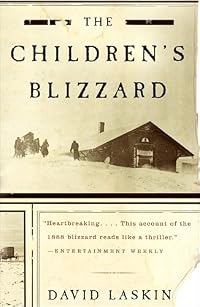
Although this is a story pulled from Northwest history, Krist has written a book for a national audience in the style of David Laskin's The Children's Blizzard and Erik Larson's Isaac's Storm. It's nice to see this event finally told in a comprehensive, well organized narrative.
Find more of my reviews at Mostly NF. show less
Krist's book delves into the deadly Wellington Avalanche that rolled several trains down a King County mountainside in 1910. It was one of the worst railroad disasters in American history but is little known even in the Northwest. (I've known about it since I was a kid, but I'm a Northwest history geek, if there is such a thing.) This is the first time such a show more fluid, detailed narrative of the event has been published.
The Wellington disaster is rich in story lines, miscues, and chances to second guess. Ignoring the worsening weather and hoping to keep to its schedule, the Great Northern Railway pushed a passenger train into the high North Cascades. When a late February blizzard stalled the train, days of temporary delays became a week-long ordeal that stranded dozens of people on a precarious slope.
Passengers tried to make the best of their predicament, socializing and wandering the small railroad maintenance village outside. But they saw the weather worsen and fuel supplies diminish. They heard the frequent thunder of avalanches on nearby slopes. Snow clearing equipment broke down. Labor relations among the rail line's work crews soured. Several passengers tried to convince the railroad to move the train cars to a safer location; others determined to hike out on foot. The railroad, personified by superintendent James H. O'Neill, declined any move, discouraged hikers, and forbade women passengers any attempts to venture away. All the while snow accumulated on the ominous slopes above. When the avalanche struck in the early morning hours of March 1, a week of inconvenience instantly turned to terror and disaster, followed by recovery and years of litigation.
Krist is a writer with three novels and two story collections to his credit, but he's done a superb job with his first work of nonfiction. His research is thorough and gleaned from first hand accounts, letters, telegrams, and court records. He manufactures no dialogue in the process. He includes the need background, personal motivations, and suspense behind the drama. He introduces many of the passengers with a novelist's sense of what's important to the reader. He tells us why they were on the train and how they responded to events and interacted with each other. There are some horrific details, but Krist doesn't overplay his hand even during the "reddened snow" chapter. He allows the facts to speak for themselves.
Although this is a story pulled from Northwest history, Krist has written a book for a national audience in the style of David Laskin's The Children's Blizzard and Erik Larson's Isaac's Storm. It's nice to see this event finally told in a comprehensive, well organized narrative.
Find more of my reviews at Mostly NF. show less
This engaging tale of the avalanche at Wellington, Washington is a fast read, with a smooth style. The author focuses on several individuals, providing enough detail to encourage the reader to really care about them. I was slightly annoyed by the author's tendency to tell us what individuals must have been feeling, but it didn't spoil the book.
Worth reading more than once.
Worth reading more than once.
This is a fascinating book about a subject I knew nothing about. I went into this book knowing nothing about mountain railroading, the Great Northern railroad, avalanches, or the Cascade Mountain range. I learned a great deal about all of those topics.
The book is well organized and easy to follow - we learn about the Cascades, the history of railroading in the Cascades, the backgrounds of some of the key passengers and railroad employees, the conditions that led to the trains' being stranded, and the conditions that ultimately caused the avalanche. This is followed by a description of the various civil lawsuits that faced the Great Northern railroad after the avalanche, some of the subsequent safety measures put in place as a direct show more result of the avalanche, and details about the lives of the people who survived and the families of those who didn't.
I am giving the book four stars because I felt that it dragged a little bit. The lead-up the avalanche itself took up more than half of the book. The background is necessary to understanding why the trains were stranded in such a hopeless position, but it did get pretty dry in a few spots.
However, that being said, it is still, overall, an interesting thriller, and it is a lot more than just a disaster story. It is a disaster story in the context of rapidly changing times in a rapidly changing area. It's got a little bit of everything: labor relations, changing attitudes towards railroads, the role of the railroad tycoon, the beginning of a regulatory environment for an industry that previously operated unchecked, and even, to some extent, a look at how women and foreign laborers were perceived. All of this was interspersed throughout the story, compensating for some of the dry spots in the book and making me really excited to get back to the book once I put it down.
Also - two recommendations: 1.) Bookmark the pictures in the middle of the book and go back to them - they are all clustered together and if you look at them all and read the captions, there are some spoilers. 2.) Google the old Cascade tunnel and the Wellington snow shed when you are done with the book - there are some interesting pictures of it as it stands today, and it is interesting to view 1910 structures as they exist today. show less
The book is well organized and easy to follow - we learn about the Cascades, the history of railroading in the Cascades, the backgrounds of some of the key passengers and railroad employees, the conditions that led to the trains' being stranded, and the conditions that ultimately caused the avalanche. This is followed by a description of the various civil lawsuits that faced the Great Northern railroad after the avalanche, some of the subsequent safety measures put in place as a direct show more result of the avalanche, and details about the lives of the people who survived and the families of those who didn't.
I am giving the book four stars because I felt that it dragged a little bit. The lead-up the avalanche itself took up more than half of the book. The background is necessary to understanding why the trains were stranded in such a hopeless position, but it did get pretty dry in a few spots.
However, that being said, it is still, overall, an interesting thriller, and it is a lot more than just a disaster story. It is a disaster story in the context of rapidly changing times in a rapidly changing area. It's got a little bit of everything: labor relations, changing attitudes towards railroads, the role of the railroad tycoon, the beginning of a regulatory environment for an industry that previously operated unchecked, and even, to some extent, a look at how women and foreign laborers were perceived. All of this was interspersed throughout the story, compensating for some of the dry spots in the book and making me really excited to get back to the book once I put it down.
Also - two recommendations: 1.) Bookmark the pictures in the middle of the book and go back to them - they are all clustered together and if you look at them all and read the captions, there are some spoilers. 2.) Google the old Cascade tunnel and the Wellington snow shed when you are done with the book - there are some interesting pictures of it as it stands today, and it is interesting to view 1910 structures as they exist today. show less
What can I say? For a railroad buff who is also fascinated by books about disasters, this was the perfect read. It's utterly amazing that I had never heard about this tragedy until I found this book.
In late February of 1910, an almost unprecedented late-winter snowstorm hit the US Pacific Northwest, causing massive disruption to transportation throughout the region, and utterly crippling the Great Northern Railroad in the vicinity of Stevens Pass, the railroad's Cascade Mountains summit crossing. Two Great Northern trains, the #25 Seattle Express (filled with passengers) and the #27 Express Mail, were eventually stranded on passing tracks at Wellington Station on the western side of the GN Cascade Tunnel. There they sat for days, while show more railroaders worked round-the-clock in abysmal conditions to clear the snow-drifted tracks so that the trains could move again.
The trains sat on a narrow ledge -- with a steep, snow-covered mountainside rising above them to one side, and a deep precipice falling to the other side . The treacherous and isolated terrain made evacuation of the trains by foot seem a less-than-viable option. As temperatures fluctuated and the precipitation continued falling, in varying mixtures of snow, ice, and rain, the snowpack on the slope above them became more and more unstable . . .
This is Gary Krist's first venture into non-fiction, and he brings the full storytelling skills of a novelist to this true story of a railroad under siege by Mother Nature. The narrative is well-paced, vividly (but not luridly) presented, never dry. Yet his research seems thoroughly done, too, with solid endnotes explaiing his sources and how he put the story together from the historical record.
I highly recommend this book, especially to lovers of railroad history. show less
In late February of 1910, an almost unprecedented late-winter snowstorm hit the US Pacific Northwest, causing massive disruption to transportation throughout the region, and utterly crippling the Great Northern Railroad in the vicinity of Stevens Pass, the railroad's Cascade Mountains summit crossing. Two Great Northern trains, the #25 Seattle Express (filled with passengers) and the #27 Express Mail, were eventually stranded on passing tracks at Wellington Station on the western side of the GN Cascade Tunnel. There they sat for days, while show more railroaders worked round-the-clock in abysmal conditions to clear the snow-drifted tracks so that the trains could move again.
The trains sat on a narrow ledge -- with a steep, snow-covered mountainside rising above them to one side, and a deep precipice falling to the other side . The treacherous and isolated terrain made evacuation of the trains by foot seem a less-than-viable option. As temperatures fluctuated and the precipitation continued falling, in varying mixtures of snow, ice, and rain, the snowpack on the slope above them became more and more unstable . . .
This is Gary Krist's first venture into non-fiction, and he brings the full storytelling skills of a novelist to this true story of a railroad under siege by Mother Nature. The narrative is well-paced, vividly (but not luridly) presented, never dry. Yet his research seems thoroughly done, too, with solid endnotes explaiing his sources and how he put the story together from the historical record.
I highly recommend this book, especially to lovers of railroad history. show less
Members
- Recently Added By
Lists

Disaster Books
74 works; 19 members

Best History Books about Disasters
33 works; 19 members

Accidents, Disasters, and Tragedies
175 works; 7 members

Recommend the 20 best books you've read in the last five years
2,167 works; 605 members

Non-Fiction Worth Reading
1,015 works; 259 members

Set in the Pacific Northwest
136 works; 7 members
Author Information

12+ Works 2,085 Members
Gary Krist was born in Jersey City, New Jersey in 1957. He graduated from Princeton University and studied literature at the Universitaet Konstanz on a Fulbright Scholarship. He is an author and journalist. His first collection of short stories, The Garden State, was published in 1988 and won the Sue Kaufman Prize for First Fiction. His other show more works of fiction include Bone by Bone, Bad Chemistry, Chaos Theory, and Extravagance. His non-fiction works include The White Cascade: The Great Northern Railway Disaster and America's Deadliest Avalanche and City of Scoundrels: The 12 Days of Disaster that Gave Birth to Modern Chicago. He is a regular book reviewer for the New York Times Book Review, Salon, and the Washington Post Book World. He has won numerous awards including the Stephen Crane Award and a Lowell Thomas Gold Medal for Travel Journalism. (Bowker Author Biography) show less
Common Knowledge
- Original publication date
- 2007
- People/Characters
- James Henry O'Neill; James J. Hill (The Empire Builder); Arthur Blackburn; Sarah Jane Covington; J. J. Dowling; William Harrington (Snow King) (show all 11); Alfred B. Hensel; Lewis C. Jesseph; Joseph L. Pettit; Edward W. Topping (Ned); Henry H. White
- Important places
- Wellington, Washington, USA; Cascade Tunnel Station, Washington, USA; Windy Point, Washington, USA; Scenic Hot Springs, Washington, USA
- Important events
- Disaster: Blizzard
- Epigraph
- The difference between civilization and barbarism may be measured by the degree of safety to life, property, and the pursuit of the various callings that men are engaged in.
- James J. Hill - Dedication
- For Jon
- First words
- The last body was found at the end of July, twenty-one weeks after the avalanche. (Prologue)
District weather observer G. N. Salisbury delivered the bad news early Monday morning: It was going to snow -- again. - Canonical DDC/MDS
- 979.777041
- Canonical LCC
- QC929.A8
Classifications
Statistics
- Members
- 357
- Popularity
- 87,239
- Reviews
- 15
- Rating
- (4.03)
- Languages
- English
- Media
- Paper, Audiobook, Ebook
- ISBNs
- 4
- ASINs
- 7