On This Page
Description
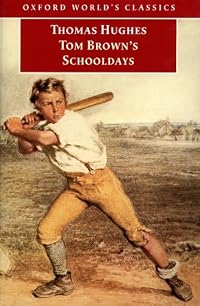
Tom Brown's School Days follows a young boy through his early education at a British public school, and many regard it as one of the most influential books of the 19th century. Today, critics say its influence can be seen in works ranging from Billy Bunter's Greyfriars tales to J.K. Rowling's depiction of Hogwarts School of Witchcraft and Wizardry in the popular Harry Potter series. Tom's fun-loving nature gets him into trouble as he encounters bullies, tough teachers, and stifling rules.Tags
Recommendations



















Member Recommendations
thesmellofbooks Why would I pair these two books, when one is set over many years in boarding school and the other is a single summer of woodcraft and exploration? Because there is a sensibility shared between the two, the energy and love of adventure, play, and learning, and the camaraderie that develops between the actors. Two of the loveliest books I have read, for this reason.
Member Reviews
I have seen this book on countless used bookstore shelves but always thought, errr, I'd probably hate it. Finally found it in a Free Library, full of ghastly inked in commentary by some student I suppose. Thought, "Wot the hell," and read.
What a wonderful, wonderful book. Mr. Hughes's efforts to make a book appealing to boys (not to mention girls, Mr. Hughes), one with moral clarity and compassion, adventure and evocation, real characters whose errors and aspirations, whose very lives matter to the reader, all succeed, brilliantly.
I am so happy I have stopped reading the books Everyone Loves and given myself over entirely to the ones that tug at my attention, say, "Pssst, read me. I may be not the thing at all, or I may be an old star show more in forgotten skies, but I think if you take the time, you will be pleased." (Of course, Tom Brown is not forgotten. Just by my friends and me.) show less
What a wonderful, wonderful book. Mr. Hughes's efforts to make a book appealing to boys (not to mention girls, Mr. Hughes), one with moral clarity and compassion, adventure and evocation, real characters whose errors and aspirations, whose very lives matter to the reader, all succeed, brilliantly.
I am so happy I have stopped reading the books Everyone Loves and given myself over entirely to the ones that tug at my attention, say, "Pssst, read me. I may be not the thing at all, or I may be an old star show more in forgotten skies, but I think if you take the time, you will be pleased." (Of course, Tom Brown is not forgotten. Just by my friends and me.) show less
Raised near a rural village in Berkshire, in the Vale of White Horse (presently part of Oxfordshire), Tom Brown was a healthy, hearty young English boy, full of fun and plenty of mischief. His parents, convinced that the female authority of his nurse was not enough to keep him in line, sent him to private school at the age of nine. When this school unexpectedly closed due to illness, he was sent early to Rugby, one of England's great public schools.** His father advised him that he would see a great many cruel deeds at school, but that he should always "tell the truth, keep a brave and kind heart, and never listen to or say anything you wouldn't have your mother and sister hear." Arriving at school, Tom initially found it rather show more difficult to adhere to this good advice, discovering that he and his new schoolfriend, Harry East, had made an enemy in the form of the upperclassman and bully, Flashman. The battle with this adversary takes up the rest of the first part of the book, while the second is devoted to Tom's growing friendship with the frail and saintly George Arthur, a pious and brilliant young new boy, who has a reciprocal good influence on our eponymous hero...
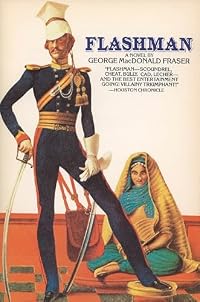
First published in 1857, and set during the 1830s, Tom Brown's Schooldays - alternately knowns as Tom Brown at Rugby, School Days at Rugby, and Tom Brown's School Days at Rugby - was an immensely influential work of children's fiction, both in the genre of the school story, but also in the field of schooling itself. It is apparently based upon the experiences of author Thomas Hughes' brother, George Hughes, while he was a student at Rugby, while the sequel, Tom Brown at Oxford (1861) was based upon George Hughes' time at that university. The character of George Arthur is thought to be based upon the figure of Arthur Penrhyn Stanley, a churchman and academic also educated at Rugby in the 1830s. Needless to say, the beloved 'master' in this story, frequently referred to simply as 'the Doctor,' and named only in the final chapter, is educational reformer Dr. Thomas Arnold, Rugby headmaster from 1828-1841. In an interesting twist, the character of Flashman, although not believed to be based upon one specific real-life person, did go on to become the anti-hero of a series of immensely popular novels written by Scottish author George MacDonald Fraser, from 1969 to 2005.
In addition to exploring the institutions and customs of Rugby - birthplace of rugby football, which features prominently in the story - Tom Brown's Schooldays is often considered the first and best argument in favor of what would come to be called "Muscular Christianity." This was a mid-19th-century English philosophy that tied moral and physical education to one another, emphasizing the masculine experiences of religion and sport, and tying them to national duty and political citizenship. In the context of Britain, this meant participation in the British Empire, but in the United States, where it spread in the later part of the 19th century, its was tied to patriotism more generally. Many of the authors of boys' sports fiction of the late 19th and early 20th centuries might be said to exhibit a kind of Muscular Christianity, or, in the case of authors like Earl Reed Silvers, whose work was secular, a kind of Muscular Good Citizenship.
Tom Brown's Schooldays is a book that I had long been aware of. It has often been incorrectly cited as the first British school story, an honor that actually belongs to Sarah Fielding's 1749 The Governess; or, The Little Female Academy. Although not the first, it was certainly influential in the development of the genre into the later Victorian and post-Victorian periods. It was an assigned text in the history of children's literature I took while getting my masters, and I am glad to have read it. I found the story engaging, and became quite fond of Tom's forthright, goodhearted, and non-intellectual character. I can understand why some today might find the story preachy, but I actually thought it quite entertaining, and I found the discussion of prayer quite moving. There are many different kinds of cowardice, and many different kinds of bravery, something Tom discovers when he witnesses the frail George Arthur kneel down to say his evening prayers, surrounded by a group of boys who are likely to mock and bully him for it. Tom's epiphany that night - his realization that in this sense, he himself has been a coward, while the frail boy he pitied has been strong and brave - is a valuable one, and the perspective shift perceptively captured. The peace that he feels, once he has decided how to respond to this revelation - "he who has conquered his own coward spirit has conquered the whole outward world" - was very moving to me. Surely, whether one is religious or not, the conduct of those who stick to their beliefs, in the face of possible persecution, can be admired and respected.
In sum: this is well worth the time of any reader interested in Victorian children's literature, the school story genre, sports fiction for boys, or the development of the idea of Muscular Christianity.
**American readers should note that in the British context, 'public school' does not refer to a state-funded school, but to a certain kind of prestigious private school, open to "the public" of the nation. show less
First published in 1857, and set during the 1830s, Tom Brown's Schooldays - alternately knowns as Tom Brown at Rugby, School Days at Rugby, and Tom Brown's School Days at Rugby - was an immensely influential work of children's fiction, both in the genre of the school story, but also in the field of schooling itself. It is apparently based upon the experiences of author Thomas Hughes' brother, George Hughes, while he was a student at Rugby, while the sequel, Tom Brown at Oxford (1861) was based upon George Hughes' time at that university. The character of George Arthur is thought to be based upon the figure of Arthur Penrhyn Stanley, a churchman and academic also educated at Rugby in the 1830s. Needless to say, the beloved 'master' in this story, frequently referred to simply as 'the Doctor,' and named only in the final chapter, is educational reformer Dr. Thomas Arnold, Rugby headmaster from 1828-1841. In an interesting twist, the character of Flashman, although not believed to be based upon one specific real-life person, did go on to become the anti-hero of a series of immensely popular novels written by Scottish author George MacDonald Fraser, from 1969 to 2005.
In addition to exploring the institutions and customs of Rugby - birthplace of rugby football, which features prominently in the story - Tom Brown's Schooldays is often considered the first and best argument in favor of what would come to be called "Muscular Christianity." This was a mid-19th-century English philosophy that tied moral and physical education to one another, emphasizing the masculine experiences of religion and sport, and tying them to national duty and political citizenship. In the context of Britain, this meant participation in the British Empire, but in the United States, where it spread in the later part of the 19th century, its was tied to patriotism more generally. Many of the authors of boys' sports fiction of the late 19th and early 20th centuries might be said to exhibit a kind of Muscular Christianity, or, in the case of authors like Earl Reed Silvers, whose work was secular, a kind of Muscular Good Citizenship.
Tom Brown's Schooldays is a book that I had long been aware of. It has often been incorrectly cited as the first British school story, an honor that actually belongs to Sarah Fielding's 1749 The Governess; or, The Little Female Academy. Although not the first, it was certainly influential in the development of the genre into the later Victorian and post-Victorian periods. It was an assigned text in the history of children's literature I took while getting my masters, and I am glad to have read it. I found the story engaging, and became quite fond of Tom's forthright, goodhearted, and non-intellectual character. I can understand why some today might find the story preachy, but I actually thought it quite entertaining, and I found the discussion of prayer quite moving. There are many different kinds of cowardice, and many different kinds of bravery, something Tom discovers when he witnesses the frail George Arthur kneel down to say his evening prayers, surrounded by a group of boys who are likely to mock and bully him for it. Tom's epiphany that night - his realization that in this sense, he himself has been a coward, while the frail boy he pitied has been strong and brave - is a valuable one, and the perspective shift perceptively captured. The peace that he feels, once he has decided how to respond to this revelation - "he who has conquered his own coward spirit has conquered the whole outward world" - was very moving to me. Surely, whether one is religious or not, the conduct of those who stick to their beliefs, in the face of possible persecution, can be admired and respected.
In sum: this is well worth the time of any reader interested in Victorian children's literature, the school story genre, sports fiction for boys, or the development of the idea of Muscular Christianity.
**American readers should note that in the British context, 'public school' does not refer to a state-funded school, but to a certain kind of prestigious private school, open to "the public" of the nation. show less
After reading The Fifth Form at St. Dominic's (1881), by Talbot Baines Reed, I decided to go back 24 years, to 1857, and read Tom Brown's Schooldays, by Thomas Hughes. There were a few books in a school setting before that, but this is the one that would create a storytelling tradition and prove that it could be commercially successful, the one that set the conventions of the genre that would be developed by later writers.
Hughes would not write another school novel. He had said what he wanted to say on the subject. The book was written for his son Maurice, to prepare him for his life at Rugby School and to encourage him to grow up to be a good man. Tragically, Maurice died in a drowning accident shortly afterwards and did not have the show more opportunity to go to Rugby. The story his father wrote for him, however, entertained and inspired countless children.
So let's see how kind the passage of time has been to this story.
First, I have to say that it's rather different from The Fifth Form at St. Dominic's. The target audience is the same, boys, but while Reed's book is light entertainment, Hughes' intention is more unapologetically moralizing. He wants to tell a story that will entertain boys and catch their imaginations, but also guide them on their mental and spiritual development, and pay tribute to his beloved school and his old master, Dr. Thomas Arnold, whom he clearly worshiped. Arnold was the headmaster of Rugby School from 1828 to 1841, where he introduced a number of reforms that were very influential in British public schools.
So, while Reed simply told a story, and let readers draw their own conclusions about the characters and their actions, Hughes frequently addresses the reader in second person, to comment on the story and give advice. It's quite preachy by modern standards. On the other hand, if you are going to be preachy, you might as well do it in this pleasant, colloquial manner. When he addresses the reader, Hughes' style is informal and gentle, like an uncle addressing a beloved nephew. The book is well-written, and the style makes the preachiness more palatable than it might otherwise be. Moralizers are often priggish, but there's nothing like that here.
In the words of the American writer W. D. Howells:
Unlike earlier moralizers, Hughes tells a story that boys would want to read, a story about red-blooded boys who get into fights, get bullied and rebel against their bullies, who misbehave and shirk their schoolwork, but who are fundamentally good-hearted. Looking back at the kind of books that were available for boys to read in 1857 I can imagine how delighted they must have been with this story, where the heroes are boys like them.
In short, the reader will find already here the ingredients of a good public school novel. We have the plucky young protagonist, good at sports and not so good a scholar, loyal, generous, but willing to break the rules in his boyish escapades. We have the school, which becomes his second home and family. We have sports. We have the coming of age story that resonates with the reader, because being sent to a boarding school, away from your family, at such a young age is scary and forces you to grow up and integrate in a different kind of society, with its own rules and rituals, and it makes for an appealing tale.
Bizarrely, the book starts with a slow chapter dedicated to describing the little town where the Browns live, and eulogizing the British countryside. You could safely skip this first chapter if you don't feel up to it. However, the narration, preachy as it is, has a certain earnest charm. Perhaps it helped that I was listening to the excellent LibriVox audiobook that is distributed for free. It's read by a volunteer, but the quality is exceptional and I loved it. Listening to the audiobook, your attention can drift slightly away during these bucolic descriptions, and only get the tone of it, which is what truly matters.
Then we witness Tom's first years and what kind of boy he is. It takes a while to actually get to Rugby, but these first chapters gives us a picture of our main character, and as such are not unimportant.
Tom finally gets to Rugby School and in his very first day is shown the school, makes a friend (Harry East) and is made to take part in a game of Rugby football: the School-house where he belongs against the School (all the other, smaller houses combined). The description of game is bewildering and quite interesting for sport historians. All the boys play at the same time, more than two hundred, including little ones and strapping young men, in two very large teams that do not even have the same number of players each (the School-house boys are outnumbered). The whole thing is like a lightly-regulated riot.
Obviously, in both teams the big young men of the sixth form dominate, but little Tom has his modest moment of glory, when he helps prevent a goal that would have defeated the School-house and is praised by Brooke, the captain of his house (the "bull-dogs" mentioned here are not dogs, but a group of boys whose job is to harass the other side's attackers and take the ball from them):
It's a wonder the younger boys survive this game.
Anyway, during the victory celebration in the School-house, Brooke, who is about to leave the school, gives a speech and warns them against bullying. He says that they were only able to win this game because, although inferior in numbers, they were better united than their opponents. He says that if bullying is allowed to come back, that unity will be lost and the School-house teams will no longer dominate.
In the following chapters, after Brooke and other sixth-form boys that had been the backbone of the house leave, we see that his prophecies come true. With no one able to curb them, the bullies led by a senior boy named Flashman make the life of the younger boys miserable. Flashman is a nasty piece of work, and when Tom Brown and Harry East lead a rebellion of fags that turns popular opinion in the house against Flashman, the bully decides to target them personally.
Since this is the original public school novel, Flashman remains in popular culture as the trope maker of the irredeemable bully. He features prominently in all the movies and series based on this novel (more prominently than in the novel itself, actually) and more than a century later an adult Flashman became the not-so-heroic protagonist of a very successful series of historical novels by George MacDonald Fraser.
After they finally are rid of Flashman, Tom and Harry start going down the wrong path themselves, repeatedly breaking the school rules and neglecting their studies in favor of having a good time.
In the second part of the novel, the story changes when Tom is asked to help a weak, sensitive new boy, who would surely have a bad time in such a school without some guidance and protection. Tom is reluctant, but the matron knowingly appeals to his better nature and he accepts. For once, Tom takes his responsibility seriously. However, the new boy ends up helping Tom even more than Tom has helped him, becoming his conscience and his guide in spiritual matters. Tom even falls in love with him (a Platonical, manly love, what did you think).
Yes, there are still a good number of classical schoolboy scrapes, like the epic fistfight between Tom and "Slogger" Williams, that ends without a clear winner and with both boys having gained respect for each other. In fact, the novel doesn't gloss over some of the worst features of school life at Rugby. Now, however, the novel's preachiness turns religious. But perhaps that adjective doesn't do it justice, because it's more than religion. Let's say, the boys experience some spiritual growth. Again, completely different than what we would get in a modern novel. It's done gracefully, in a sentimental fashion, which some readers will dislike but I appreciated (I became emotional in a couple of places... yes, I'm hopeless).
Finally, boys grow up and become men. Tom, now a student at Oxford, learns about Dr. Arnold's untimely death, and comes back for the funeral, to pay tribute and reflect on his schooldays.
And that's the novel. It's certainly not everyone's cup of tea. Many readers will find it overly preachy and boring at certain moments. It's a bit more difficult to enjoy than Talbot Baines Reed's uncomplicated novels, but if you do enjoy it, like I did, you'll enjoy it on a deeper level. show less
Hughes would not write another school novel. He had said what he wanted to say on the subject. The book was written for his son Maurice, to prepare him for his life at Rugby School and to encourage him to grow up to be a good man. Tragically, Maurice died in a drowning accident shortly afterwards and did not have the show more opportunity to go to Rugby. The story his father wrote for him, however, entertained and inspired countless children.
So let's see how kind the passage of time has been to this story.
First, I have to say that it's rather different from The Fifth Form at St. Dominic's. The target audience is the same, boys, but while Reed's book is light entertainment, Hughes' intention is more unapologetically moralizing. He wants to tell a story that will entertain boys and catch their imaginations, but also guide them on their mental and spiritual development, and pay tribute to his beloved school and his old master, Dr. Thomas Arnold, whom he clearly worshiped. Arnold was the headmaster of Rugby School from 1828 to 1841, where he introduced a number of reforms that were very influential in British public schools.
So, while Reed simply told a story, and let readers draw their own conclusions about the characters and their actions, Hughes frequently addresses the reader in second person, to comment on the story and give advice. It's quite preachy by modern standards. On the other hand, if you are going to be preachy, you might as well do it in this pleasant, colloquial manner. When he addresses the reader, Hughes' style is informal and gentle, like an uncle addressing a beloved nephew. The book is well-written, and the style makes the preachiness more palatable than it might otherwise be. Moralizers are often priggish, but there's nothing like that here.
In the words of the American writer W. D. Howells:
It is not often that in later years one finds any book as good as one remembers it from one's youth; but it has been my interesting experience to find the story of Tom Brown's School Days even better than I once thought it, say, fifty years ago; not only better, but more charming, more kindly, manlier, truer, realler. So far as I have been able to note there is not a moment of snobbishness in it, or meanness of whatever sort. Of course it is of its period, the period which people call Middle Victorian (...)
The author openly preaches and praises himself for preaching; he does not hesitate to slip into the drama and deliver a sermon; he talks the story out with many self-interruptions and excursions; he knows nothing of the modern method of letting it walk along on its own legs, but is always putting his hands under its arms and helping it, or his arm across its shoulder and caressing it. In all this, which I think wrong, he is probably doing quite right for the boys who formed and will always form the greatest number of his readers; boys like to have things fully explained and commentated, whether they are grown up or not. In much else, in what I will not say are not the great matters, he is altogether right. By precept and by example he teaches boys to be good, that is, to be true, honest, clean-minded and clean-mouthed, kind and thoughtful. He forgives them the follies of their youth, but makes them see that they are follies.
Unlike earlier moralizers, Hughes tells a story that boys would want to read, a story about red-blooded boys who get into fights, get bullied and rebel against their bullies, who misbehave and shirk their schoolwork, but who are fundamentally good-hearted. Looking back at the kind of books that were available for boys to read in 1857 I can imagine how delighted they must have been with this story, where the heroes are boys like them.
In short, the reader will find already here the ingredients of a good public school novel. We have the plucky young protagonist, good at sports and not so good a scholar, loyal, generous, but willing to break the rules in his boyish escapades. We have the school, which becomes his second home and family. We have sports. We have the coming of age story that resonates with the reader, because being sent to a boarding school, away from your family, at such a young age is scary and forces you to grow up and integrate in a different kind of society, with its own rules and rituals, and it makes for an appealing tale.
Bizarrely, the book starts with a slow chapter dedicated to describing the little town where the Browns live, and eulogizing the British countryside. You could safely skip this first chapter if you don't feel up to it. However, the narration, preachy as it is, has a certain earnest charm. Perhaps it helped that I was listening to the excellent LibriVox audiobook that is distributed for free. It's read by a volunteer, but the quality is exceptional and I loved it. Listening to the audiobook, your attention can drift slightly away during these bucolic descriptions, and only get the tone of it, which is what truly matters.
Then we witness Tom's first years and what kind of boy he is. It takes a while to actually get to Rugby, but these first chapters gives us a picture of our main character, and as such are not unimportant.
Tom finally gets to Rugby School and in his very first day is shown the school, makes a friend (Harry East) and is made to take part in a game of Rugby football: the School-house where he belongs against the School (all the other, smaller houses combined). The description of game is bewildering and quite interesting for sport historians. All the boys play at the same time, more than two hundred, including little ones and strapping young men, in two very large teams that do not even have the same number of players each (the School-house boys are outnumbered). The whole thing is like a lightly-regulated riot.
Obviously, in both teams the big young men of the sixth form dominate, but little Tom has his modest moment of glory, when he helps prevent a goal that would have defeated the School-house and is praised by Brooke, the captain of his house (the "bull-dogs" mentioned here are not dogs, but a group of boys whose job is to harass the other side's attackers and take the ball from them):
And now the last minutes are come, and the School gather for their last rush, every boy of the hundred and twenty who has a run left in him. Reckless of the defence of their own goal, on they come across the level big-side ground, the ball well down amongst them, straight for our goal, like the column of the Old Guard up the slope at Waterloo. All former charges have been child's play to this. Warner and Hedge have met them, but still on they come. The bull-dogs rush in for the last time; they are hurled over or carried back, striving hand, foot, and eyelids. Old Brooke comes sweeping round the skirts of the play, and turning short round, picks out the very heart of the scrummage, and plunges in. It wavers for a moment; he has the ball. No, it has passed him, and his voice rings out clear over the advancing tide, “Look out in goal!” Crab Jones catches it for a moment; but before he can kick, the rush is upon him and passes over him; and he picks himself up behind them with his straw in his mouth, a little dirtier, but as cool as ever.
The ball rolls slowly in behind the School-house goal, not three yards in front of a dozen of the biggest School players-up.
There stands the School-house praepostor, safest of goal-keepers, and Tom Brown by his side, who has learned his trade by this time. Now is your time, Tom. The blood of all the Browns is up, and the two rush in together, and throw themselves on the ball, under the very feet of the advancing column—the praepostor on his hands and knees, arching his back, and Tom all along on his face. Over them topple the leaders of the rush, shooting over the back of the praepostor, but falling flat on Tom, and knocking all the wind out of his small carcass. “Our ball,” says the praepostor, rising with his prize; “but get up there; there's a little fellow under you.” They are hauled and roll off him, and Tom is discovered, a motionless body.
Old Brooke picks him up. “Stand back, give him air,” he says; and then feeling his limbs, adds, “No bones broken.—How do you feel, young un?”
“Hah-hah!” gasps Tom, as his wind comes back; “pretty well, thank you—all right.”
“Who is he?” says Brooke.
“Oh, it's Brown; he's a new boy; I know him,” says East, coming up.
“Well, he is a plucky youngster, and will make a player,” says Brooke.
And five o'clock strikes. “No side” is called, and the first day of the School-house match is over.
It's a wonder the younger boys survive this game.
Anyway, during the victory celebration in the School-house, Brooke, who is about to leave the school, gives a speech and warns them against bullying. He says that they were only able to win this game because, although inferior in numbers, they were better united than their opponents. He says that if bullying is allowed to come back, that unity will be lost and the School-house teams will no longer dominate.
In the following chapters, after Brooke and other sixth-form boys that had been the backbone of the house leave, we see that his prophecies come true. With no one able to curb them, the bullies led by a senior boy named Flashman make the life of the younger boys miserable. Flashman is a nasty piece of work, and when Tom Brown and Harry East lead a rebellion of fags that turns popular opinion in the house against Flashman, the bully decides to target them personally.
Since this is the original public school novel, Flashman remains in popular culture as the trope maker of the irredeemable bully. He features prominently in all the movies and series based on this novel (more prominently than in the novel itself, actually) and more than a century later an adult Flashman became the not-so-heroic protagonist of a very successful series of historical novels by George MacDonald Fraser.
After they finally are rid of Flashman, Tom and Harry start going down the wrong path themselves, repeatedly breaking the school rules and neglecting their studies in favor of having a good time.
In the second part of the novel, the story changes when Tom is asked to help a weak, sensitive new boy, who would surely have a bad time in such a school without some guidance and protection. Tom is reluctant, but the matron knowingly appeals to his better nature and he accepts. For once, Tom takes his responsibility seriously. However, the new boy ends up helping Tom even more than Tom has helped him, becoming his conscience and his guide in spiritual matters. Tom even falls in love with him (a Platonical, manly love, what did you think).
Yes, there are still a good number of classical schoolboy scrapes, like the epic fistfight between Tom and "Slogger" Williams, that ends without a clear winner and with both boys having gained respect for each other. In fact, the novel doesn't gloss over some of the worst features of school life at Rugby. Now, however, the novel's preachiness turns religious. But perhaps that adjective doesn't do it justice, because it's more than religion. Let's say, the boys experience some spiritual growth. Again, completely different than what we would get in a modern novel. It's done gracefully, in a sentimental fashion, which some readers will dislike but I appreciated (I became emotional in a couple of places... yes, I'm hopeless).
Finally, boys grow up and become men. Tom, now a student at Oxford, learns about Dr. Arnold's untimely death, and comes back for the funeral, to pay tribute and reflect on his schooldays.
And that's the novel. It's certainly not everyone's cup of tea. Many readers will find it overly preachy and boring at certain moments. It's a bit more difficult to enjoy than Talbot Baines Reed's uncomplicated novels, but if you do enjoy it, like I did, you'll enjoy it on a deeper level. show less
This classic portrayal of life at Victorian public school was immensely entertaining. True, at times it occasionally veered towards the sanctimonious, and the depth of Tom's sorrow upon hearing of the death of his former headmaster seems highly exaggerated to the modern reader.
The odious Flashman, the rather too pious Arthur and the rumbustious East are all marvellously drawn, and the eponymous hero bestrides them all as he passes from nervous, innocent new boy to captain of the cricket eleven, taking everything that Flashman, the local gamekeepers and the watchful teachers can throw at him.
The odious Flashman, the rather too pious Arthur and the rumbustious East are all marvellously drawn, and the eponymous hero bestrides them all as he passes from nervous, innocent new boy to captain of the cricket eleven, taking everything that Flashman, the local gamekeepers and the watchful teachers can throw at him.
This is a seminal novel of English public (i.e. private!) school life in the 1830s, arguably the first influential novel in a school setting, that has formed a template for many subsequent school-based novels, including much more recently, the Harry Potter series.
I found the novel amusing in many places, and pointed in its detailed description of the customs of school (Rugby) life, though it also dragged for me in places and it took me a longer to read than a novel of its length (slightly under 300 pages in my version) normally would. There is a real historical personage here - Dr Thomas Arnold, the headmaster of the real Rugby School at the time. The author, expressing his views and experiences through the title character, clearly has show more a lot of respect for Dr Arnold, and the changes he brought about to the "public" school system; as one (adult) character says "perhaps ours is the only corner of the British Empire which is thoroughly, wisely and strongly ruled just now".
The real central "character" of the novel, though, is probably the custom-bound way of life of the school itself, with its arcane traditions that the students value and revere more than the masters if anything. There are detailed descriptions of the original version of the sport of rugby as well as, of course, cricket, described by one character as "the birthright of British boys old and young, as habeas corpus and trial by jury are of British men", as it is an "unselfish game" that "merges the individual in the eleven; he doesn't play that he may win, but that his side may", as opposed to individual sports where the object is to win for oneself.
An interesting examination of the life and mores of a particular section of society at a particular time, but which has been massively influential on the literary genre well beyond that place and time. show less
I found the novel amusing in many places, and pointed in its detailed description of the customs of school (Rugby) life, though it also dragged for me in places and it took me a longer to read than a novel of its length (slightly under 300 pages in my version) normally would. There is a real historical personage here - Dr Thomas Arnold, the headmaster of the real Rugby School at the time. The author, expressing his views and experiences through the title character, clearly has show more a lot of respect for Dr Arnold, and the changes he brought about to the "public" school system; as one (adult) character says "perhaps ours is the only corner of the British Empire which is thoroughly, wisely and strongly ruled just now".
The real central "character" of the novel, though, is probably the custom-bound way of life of the school itself, with its arcane traditions that the students value and revere more than the masters if anything. There are detailed descriptions of the original version of the sport of rugby as well as, of course, cricket, described by one character as "the birthright of British boys old and young, as habeas corpus and trial by jury are of British men", as it is an "unselfish game" that "merges the individual in the eleven; he doesn't play that he may win, but that his side may", as opposed to individual sports where the object is to win for oneself.
An interesting examination of the life and mores of a particular section of society at a particular time, but which has been massively influential on the literary genre well beyond that place and time. show less
One of the few thorns in my college literature classes! Tom Brown was part of the syllabus of our Victorian literature class not because of its literary value but as a portrait of the Victorian psychology. After all, it was schools like Rugby which shaped the great writers, thinkers, empire builders and political figures
of 19th century England, not the least among the literary figures being Matthew Arnold, the son of Rugby's headmaster Thomas Arnold. Thomas Arnold in Tom Brown figures as a guiding, benevolent godhead of the school.
As the granddaddy of the school boy novel genre which has ranged from the various works of Delderfield to Hilton's Goodbye, Mr. Chips to Knowles's A Separate Peace, it must be given its due. One can also note show more to its credit that it is the source of Fraser's character Flashman who was a bully and Tom's nemesis in Hughes's novel. As a mirror of the educated upper middle class Victorian mindset it is quite effective. Which is to say it isn't much fun. show less
of 19th century England, not the least among the literary figures being Matthew Arnold, the son of Rugby's headmaster Thomas Arnold. Thomas Arnold in Tom Brown figures as a guiding, benevolent godhead of the school.
As the granddaddy of the school boy novel genre which has ranged from the various works of Delderfield to Hilton's Goodbye, Mr. Chips to Knowles's A Separate Peace, it must be given its due. One can also note show more to its credit that it is the source of Fraser's character Flashman who was a bully and Tom's nemesis in Hughes's novel. As a mirror of the educated upper middle class Victorian mindset it is quite effective. Which is to say it isn't much fun. show less
Read this because of the Flashman connection. Enjoyed reading about the boys until they began to kneel beside their beds to say prayers - - - - - Teenage boys! That is when I realised they were public school twats, groomed by their rich parents to become useless residents of The House of Commons or top lawyers with no experience of real life whatsoever. We all know they exist but we don’t need to read about them and their pampered lives.
Members
- Recently Added By
Lists

The Guardian's 1000 Novels Everyone Must Read
1,005 works; 549 members

1898 C.K. Shorter List of Best 100 Novels
100 works; 34 members

Best of British Literature
226 works; 41 members

1001 Children's Books You Must Read Before You Grow Up
774 works; 101 members
Best School Stories
219 works; 22 members

Best Books Set in Boarding Schools
160 works; 57 members
150 Best Novels Selected by Brander Matthews (1883)
150 works; 7 members

Academia in Fiction
158 works; 23 members

A Novel Cure
742 works; 23 members

AlphaKIT: Brown
21 works; 4 members

the preppy handbook
36 works; 1 member

Books Read in 2021
5,361 works; 114 members

Blue Pyramid 1,276 Best Books of All Time
1,248 works; 32 members

A Rainbow of Books: Colors in the Title
570 works; 24 members
F. B. Perkins' List of 100 Best Fiction
100 works; 5 members
Trinity College Booklist (1951): Class Ten, English Literature
358 works; 5 members

CCE 1000 Good Books List
1,033 works; 12 members

Before Austen Comes Aesop
318 works; 9 members
Author Information

27+ Works 2,310 Members
Some Editions
Awards and Honors
Series

Belongs to Publisher Series
Work Relationships
Is contained in
Has the adaptation
Is abridged in
One hundred best novels condensed: 3 of 4 see note: Adam Bede; Tess of the D'Urbervilles; Don Quixote; East Lynne; Count of Monte Cristo; Paul and Virginia; Tom Brown's School Days; Waverley; Dombey and Son; Romola; Legend of Sleepy Hollow; Last of the Mohicans; Wreck of the "Grosvenor"; Right of Way; Coniston; Far from the Madding Crowd; Woman in White; Deemster; Waterloo; Hypatia; Kidnapped; Oliver Twist; Gil Blas; Peg Woffington; Virginians by Edwin Atkins Grozier
Common Knowledge
- Canonical title
- Tom Brown's School Days
- Original title
- Tom Brown's School Days
- Alternate titles
- Tom Brown at Rugby; School Days at Rugby; Tom Brown's School Days at Rugby
- Original publication date
- 1857
- People/Characters
- Harry Paget Flashman; Tom Brown; Dr. Thomas Arnold; Harry "Scud" East
- Important places
- Rugby School
- Related movies
- Tom Brown's School Days (1940 | IMDb); Tom Brown's Schooldays (1951 | IMDb); Tom Brown's Schooldays (1971 | IMDb); Tom Brown's Schooldays (2005 | IMDb)
- Epigraph
- "I'm the Poet of White Horse Vale, Sir,
With liberal notions under my cap."
—Ballad - First words
- The Browns have become illustrious by the pen of Thackeray and the pencil of Doyle, within the memory of the young gentlemen who are now matriculating at the Universities
- Last words
- (Click to show. Warning: May contain spoilers.)For it is only through our mysterious human relationships—through the love and tenderness and purity of mothers and sisters and wives, through the strength and courage and wisdom of fathers and brothers and teachers—that we can come to the knowledge of Him in whom alone the love, and the tenderness, and the purity, and the strength, and the courage, and the wisdom of all these dwell for ever and ever in perfect fullness.
Classifications
Statistics
- Members
- 1,867
- Popularity
- 11,449
- Reviews
- 32
- Rating
- (3.26)
- Languages
- 10 — Chinese, Danish, English, Finnish, French, German, Norwegian (Bokmål), Norwegian, Spanish, Swedish
- Media
- Paper, Audiobook, Ebook
- ISBNs
- 148
- UPCs
- 1
- ASINs
- 154