
Bridget Kinsella
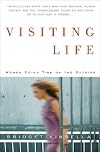
Author of Visiting Life: Women Doing Time on the Outside
About the Author
Bridget Kinsella is a media consultant with twenty years' experience as a journalist covering the book business for Publishers Weekly and Shelf Awareness. Her work has appeared in publications such as the Chicago Tribune and Writer's Digest, and on NPR and Salon.com. She lives in Northern show more California. show less
Works by Bridget Kinsella
Tagged
Common Knowledge
- Gender
- female
Members
Reviews
I was looking forward to this book, as I'm fascinated with stories about prison and prisoners, and thought this would examine yet another level. Saying that I wound up disappointed is a vast understatement.
Bridget Kinsella, an upper-middle class journalist and literary agent, became romantically involved with a Pelican Bay inmate after her marriage broke up. (Pelican Bay, for those of you not familiar with it, is a maximum-security prison in the California Bay Area, and is frequently said to show more be one of the most brutal prisons in the United States.) In addition to examining her own relationship, Kinsella also writes about the many women she met whose partners were in prison.
Reading this book was like being on the phone for hours with The Friend You Hate. You know the one I'm talking about -- you've known her for years, but you don't like her much even though she's part of your social circle. Chances are good that she calls you up a lot, probably at inappropriate hours, whining and carrying on either about how awful her boyfriend is, how awful her last date was, or how awful it is that no man wants to go out with her despite the fact that she's FABulous. You spend a lot of time rolling your eyes while making that "blah blah blah" motion with your hand.
Kinsella, despite the fact that she rarely stops telling us how admirable she is, comes across as a not-very-intelligent, self-absorbed loon. To begin with, she shows as little self-awareness as any memoirist I can remember. And to makes matters worse, she shows nearly no insight about the women who, like her, love men in prison -- for example, although she notes in passing that the majority of these women were abused either as children or adults or both, she never seems to make any connection between their histories and their involvement with men unavailable to them. To the contrary, she spends much of the book dithering through rose-colored glasses about how bee-you-ti-full it is that she and these women have finally found love. Um, what?
All this would probably be tolerable if Kinsella were an especially good writer, but her prose never rises above the workmanlike. Don't bother with this one. show less
Bridget Kinsella, an upper-middle class journalist and literary agent, became romantically involved with a Pelican Bay inmate after her marriage broke up. (Pelican Bay, for those of you not familiar with it, is a maximum-security prison in the California Bay Area, and is frequently said to show more be one of the most brutal prisons in the United States.) In addition to examining her own relationship, Kinsella also writes about the many women she met whose partners were in prison.
Reading this book was like being on the phone for hours with The Friend You Hate. You know the one I'm talking about -- you've known her for years, but you don't like her much even though she's part of your social circle. Chances are good that she calls you up a lot, probably at inappropriate hours, whining and carrying on either about how awful her boyfriend is, how awful her last date was, or how awful it is that no man wants to go out with her despite the fact that she's FABulous. You spend a lot of time rolling your eyes while making that "blah blah blah" motion with your hand.
Kinsella, despite the fact that she rarely stops telling us how admirable she is, comes across as a not-very-intelligent, self-absorbed loon. To begin with, she shows as little self-awareness as any memoirist I can remember. And to makes matters worse, she shows nearly no insight about the women who, like her, love men in prison -- for example, although she notes in passing that the majority of these women were abused either as children or adults or both, she never seems to make any connection between their histories and their involvement with men unavailable to them. To the contrary, she spends much of the book dithering through rose-colored glasses about how bee-you-ti-full it is that she and these women have finally found love. Um, what?
All this would probably be tolerable if Kinsella were an especially good writer, but her prose never rises above the workmanlike. Don't bother with this one. show less
I was expecting this book to be more about women whose significant others were doing time in prison and how that affected their relationships. There are some chapters on women whose husbands are serving time in Pelican Bay, but their stories are superficial at best.
The author appears to be extremely self-absorbed. She spends most of her time lamenting the failure of her marriage to a man (who was not in prison) who later discovered that he was gay, and what her divorce meant for her show more possibilities of future motherhood. She also continually stressed that she was "not that type of woman" (someone who marries a man behind bars), even though she "fell in love" with a prisoner (whom she does not marry). She also continually stresses that she is beautiful, talented, intelligent, etc. I got rather sick of watching her praise herself.
The author was extremely judgmental towards the women she interviewed. I felt sorry for "Ruth," the first woman she talks with after meeting her in Pelican Bay. The author states that Ruth would be a "spinster" if it wasn't for her man who is locked up, and the author mentions more than once that Ruth is a 50-year-old virgin who sometimes dispenses condoms for her job.
The author is also quick to find potentially manipulative behavior in the prisoners, and she calls Rory (the man she "loves") emotionally manipulative more than once. However, the author seems completely oblivious that she is just as manipulative, if not more so. She doesn't pull any punches; she is using this "love" with Rory to heal herself, and once she is healed, she's going to fly away and live a normal life with a normal man. Rory is just an interlude, a fantasy that helps her during a difficult time.
The only time the author really mellowed out was when she was on a bus with a bunch of kids going to see their mothers in prison for Mother's Day. Other than that, this memoir is poorly written and incredibly narcissistic. And the ending...how can that possibly even be real? I have serious doubts about the author's truthfulness. show less
The author appears to be extremely self-absorbed. She spends most of her time lamenting the failure of her marriage to a man (who was not in prison) who later discovered that he was gay, and what her divorce meant for her show more possibilities of future motherhood. She also continually stressed that she was "not that type of woman" (someone who marries a man behind bars), even though she "fell in love" with a prisoner (whom she does not marry). She also continually stresses that she is beautiful, talented, intelligent, etc. I got rather sick of watching her praise herself.
The author was extremely judgmental towards the women she interviewed. I felt sorry for "Ruth," the first woman she talks with after meeting her in Pelican Bay. The author states that Ruth would be a "spinster" if it wasn't for her man who is locked up, and the author mentions more than once that Ruth is a 50-year-old virgin who sometimes dispenses condoms for her job.
The author is also quick to find potentially manipulative behavior in the prisoners, and she calls Rory (the man she "loves") emotionally manipulative more than once. However, the author seems completely oblivious that she is just as manipulative, if not more so. She doesn't pull any punches; she is using this "love" with Rory to heal herself, and once she is healed, she's going to fly away and live a normal life with a normal man. Rory is just an interlude, a fantasy that helps her during a difficult time.
The only time the author really mellowed out was when she was on a bus with a bunch of kids going to see their mothers in prison for Mother's Day. Other than that, this memoir is poorly written and incredibly narcissistic. And the ending...how can that possibly even be real? I have serious doubts about the author's truthfulness. show less
I read several reviews of this memoir in my summer magazines, all of which were positive. While the beginning is a little slow and could have used some stricter editing, it is worth it to keep reading and get to the end. This story of redemption for both the convicted "lifer" in Pelican Bay prison and the author who falls in love with him during her visits is a testament to the transforming power of selfless caring for others. Loved it.
Fantastic, moving portrait of a woman who finds solace in a man serving a lifelong sentence in prison for murder. Kinsella is a master with quiet words that also hint at so much turmoil underneath.
Statistics
- Works
- 1
- Members
- 57
- Popularity
- #287,972
- Rating
- 3.4
- Reviews
- 5
- ISBNs
- 3