
Dacia Maraini
Author of The Silent Duchess
About the Author
The Florentine Maraini published her first novel, "La Vacanza" (The Holiday), which treats the theme of contemporary female sexuality, in 1962. The next year, she was awarded the Formentor Prize for the novel "L'Era del Malessere" (The Age of Malaise). Later in the decade, she moved almost show more exclusively to theater, establishing the Teatro di Centocelle in Rome in 1969. Though she resumed prose writing, and also has published numerous collections of poetry, she is best known as one of the most important voices in contemporary Italian theater, a writer, director, and producer. In all of her works, Maraini's protaganists are women, often in conflict with men, who are seeking female solidarity. (Bowker Author Biography) show less
Image credit: http://www.flickr.com/photos/giuseppenicoloro/
http://www.flickr.com/photos/giuseppenicoloro/2246514705/in/set-72157603706880065/
Series
Works by Dacia Maraini
Trilogy of Life (The Decameron / The Canterbury Tales / Arabian Nights) (1971) — Screenwriter — 62 copies, 1 review
Donne mie 9 copies
Donna in Guerra (Italian Edition) 4 copies
A idade ingrata 3 copies
דור חסר-נחת 3 copies
Il ricatto a teatro e altre commedie 3 copies
La donna perfetta 2 copies
Viva l'Italia 2 copies
DON JUAN 2 copies
L' eta del malessere - Donne mie 2 copies
Dragi Pjer Paolo 1 copy
Erinnerungn einer Diebin 1 copy
Cuore di mamma 1 copy
Una rivoluzione gentile 1 copy
Crudeltà all'aria aperta 1 copy
Dizionarietto quotidiano: da "amare" a "zonzo"/ Dacia Maraini ; 229 voci raccolte da Gioconda Marinelli (1997) 1 copy
La pecora Dolly 1 copy
Stravaganza 1 copy
Menzogna felice 1 copy
Madre saginata 1 copy
Caccia alle steghe 1 copy
I sogni di clitennestra 1 copy
Den svære alder 1 copy
Lezioni d'amore 1 copy
Maraini Dacia 1 copy
L'età del malessere 1 copy
Associated Works
The Merits of Women: Wherein Is Revealed Their Nobility and Their Superiority to Men (1600) — Foreword, some editions — 17 copies
Tagged
Common Knowledge
- Canonical name
- Maraini, Dacia
- Legal name
- Maraini, Dacia
- Birthdate
- 1936-11-13
- Gender
- female
- Education
- L'Istituto Statale della Ss. Annunziata, Florence, Italy
- Occupations
- novelist
poet
playwright
short story writer
screenwriter - Organizations
- Teatro del Porcospino (theater company)
Teatro della Maddalena (theater company)
Tempo di letteratura (literary magazine) - Awards and honors
- Laurea magistrale Honoris Causa - Università degli Studi di Foggia (2010)
Man Booker International Prize Finalist (2011)
Premio Alabarda d'oro (2012) - Relationships
- Moravia, Alberto (lover)
Pozzi, Lucio (ex-husband) - Short biography
- Dacia Maraini spent her early childhood in Japan, where her father was conducting ethnological research. Due to her parents' anti-Fascist views, the family was interned in a concentration camp for several years during World War II. After the war, they returned to Italy and lived in Bagheria, Sicily at the ancestral home of her mother. Dacia studied in Palermo, Florence and Rome, and began her writing career with articles in literary magazines. Her first novel was published in 1962. She has since become one of Italy's most distinguished writers and playwrights, and co-founder of a theater company. She is active in feminist causes and as a commentator on politics and society, writing columns for newspapers and weeklies.
- Nationality
- Italy
- Birthplace
- Fiesole, Tuscany, Italy
- Places of residence
- Japan
Palermo, Sicily, Italy
Bagheria, Sicily, Italy
Rome, Italy - Associated Place (for map)
- Italy
Members
Reviews
Ein halber Löffel Reis: Kindheit in einem japanischen Internierungslager (Transfer Bibliothek) by Dacia Maraini
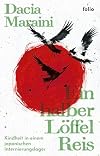
It is Maraini's autobiography of her early childhood in Japan. She describes, with clear and concise language, what happened to her in an internment camp in Japan during World War II. She presents it from a childlike perspective, one that knows neither resentment nor hatred, yet she names all the terrible things with a clear message.
She only reveals her lack of understanding of politicians and humanity in retrospect, which is all the more accusatory and frightening, given that we are back at show more the same point today as we were 85 years ago.
Among other things, she writes that she repeatedly visits former concentration camps. She doesn't compare them to her time in the internment camp. Rather, she asks questions about them:
Another statement by Maraini:
Another statement by Maraini that perfectly fits today's times and is more than frightening:
Shouldn't we be asking ourselves the same question today, when we read all the horrific news from Gaza, where an entire people is being exterminated and no one dares to shout "stop"?
After being liberated from the internment camp by the Americans, where she was grateful and happy from a child's perspective, Maraini asks herself almost 80 years later:
Maraini is a very politically minded woman who is particularly committed to women's rights. She dealt with her years in the internment camp, partly by 'eating' her way through the old literary classics. Poetry is equally important to her, and she has also worked on several projects in prisons.
Something from her time in Japan, however, has stayed with her, as she writes:
You have to know that the internees did not receive the food they were entitled to. It was confiscated by the guards. They were given only enough to keep them alive. They all became very ill. Maraini's youngest sister died from the long-term effects of this food deprivation.
It's a very interesting story that I highly recommend. show less
She only reveals her lack of understanding of politicians and humanity in retrospect, which is all the more accusatory and frightening, given that we are back at show more the same point today as we were 85 years ago.
Among other things, she writes that she repeatedly visits former concentration camps. She doesn't compare them to her time in the internment camp. Rather, she asks questions about them:
Goethe once said: "What is the hardest thing in the world? To see with your eyes what lies before your eyes." (Maraini about the soldiers and population around the concentration camps): In fact, the desire to ignore what is documented by thousands upon thousands of documents and photographs is a desire to see nothing and hear nothing, an ethical blindness and deafness that has turned them into unfeeling automatons.
Another statement by Maraini:
It's difficult to discuss things with people who are inaccessible to other worldviews and common sense.
Another statement by Maraini that perfectly fits today's times and is more than frightening:
Totalitarian systems are perfectly organized, especially when it comes to information. The critical press was banned, and broadcasting was placed under strict state control. No one would have dared to ask uncomfortable questions. No one would have dared to criticize or ask: Where are these trains full of people going, passing by here every hour from all over Europe?
Shouldn't we be asking ourselves the same question today, when we read all the horrific news from Gaza, where an entire people is being exterminated and no one dares to shout "stop"?
After being liberated from the internment camp by the Americans, where she was grateful and happy from a child's perspective, Maraini asks herself almost 80 years later:
When I think about what the American soldiers who defeated the terrible dragon of National Socialism meant to us, I wonder how they could have fallen so low afterward. One of her fatal mistakes, for example, was allying herself with the Mafia during the conquest of Sicily, thus giving it legitimacy, which later contributed to the Cosa Nostra's ever-increasing power.
Maraini is a very politically minded woman who is particularly committed to women's rights. She dealt with her years in the internment camp, partly by 'eating' her way through the old literary classics. Poetry is equally important to her, and she has also worked on several projects in prisons.
Something from her time in Japan, however, has stayed with her, as she writes:
For years, I hid food as a supply for later, like a dog burying a piece of bread, because the future is uncertain and it's better to prepare for the worst.
You have to know that the internees did not receive the food they were entitled to. It was confiscated by the guards. They were given only enough to keep them alive. They all became very ill. Maraini's youngest sister died from the long-term effects of this food deprivation.
It's a very interesting story that I highly recommend. show less
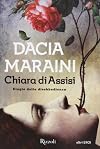
Sinceramente l'unico difetto è lo scambio fittizio di lettere con la presunta Chiara siciliana, futura clarissa; io l'ho trovato forzato. Per il resto, un'ottima ricerca storica e filologica su S. Chiara, riletta in chiave moderna e quindi eversiva. Come S. Francesco, anche Chiara è stata una realtà dirompente per la sua epoca e lo è tuttora; a maggior ragione rappresentando l'eversività della povertà francescana dal lato femminile e quindi in modo doppiamente rivoluzionario, dal punto show more di vista della rinuncia al potere e dal punto di vista della lotta di genere.
La povertà assoluta e la rinuncia a sé sono rivoluzionarie oggi come ieri, dice la Maraini, e condivido in pieno. Come condivido il suo invito a riscoprire tutta quella letteratura medievale femminile mistica che purtroppo ancora oggi giace perlopiù ignorata o misconosciuta. show less
La povertà assoluta e la rinuncia a sé sono rivoluzionarie oggi come ieri, dice la Maraini, e condivido in pieno. Come condivido il suo invito a riscoprire tutta quella letteratura medievale femminile mistica che purtroppo ancora oggi giace perlopiù ignorata o misconosciuta. show less

Hugely evocative of its time and place in eighteenth century Sicily, [The Silent Duchess] paints a picture of a decadent and lethargic aristocracy to whom conspicuous consumption and display is far more important than the fact that their estates are going to rack and ruin. A world where beautiful daughters are married at twelve and are considered to be old maids at eighteen, while less favoured ones are destined for the convent despite the absence of any heightened religious conviction; show more where a woman can look old at twenty-three, worn out with successive pregnancies; and a woman of forty-five should be 'preparing her soul for the beyond rather than looking for new friendships'. Where superstitions are rife and children must seriously beware of dogs as 'their tails grow so long that they wrap themselves round people's waists like chimeras do and then, hey presto, they pierce you without ever realising what has happened to you.
This is the world of Marianna Ucria, youngest daughter of a Sicilian Duke; profoundly deaf and unable to speak, she communicates with her family by writing notes and despite her father telling her that she has been deaf since birth she retains residual memories of hearing sounds. Marianna is introduced at age seven, as she follows her father as he officiates at the execution of a brigand scarcely more than a child himself, to which she has been taken in the hope that the shock may jolt her out of her speechlessness. At age thirteen she is married to her uncle, which as her mother says, 'is a saving of fifteen thousand escudos' over the dowry that a convent would require to take her. The book follows Marianna through key periods of her life, as her children are born, are married and have children of their own. Separated from her society and family by her disability she reads widely and thinks for herself, which serves to set her even further apart.
Recommended to anyone who has enjoyed [The Leopard] although set a hundred years or so earlier [The Last Duchess] is without the same sense of the ending of a way of life. show less
This is the world of Marianna Ucria, youngest daughter of a Sicilian Duke; profoundly deaf and unable to speak, she communicates with her family by writing notes and despite her father telling her that she has been deaf since birth she retains residual memories of hearing sounds. Marianna is introduced at age seven, as she follows her father as he officiates at the execution of a brigand scarcely more than a child himself, to which she has been taken in the hope that the shock may jolt her out of her speechlessness. At age thirteen she is married to her uncle, which as her mother says, 'is a saving of fifteen thousand escudos' over the dowry that a convent would require to take her. The book follows Marianna through key periods of her life, as her children are born, are married and have children of their own. Separated from her society and family by her disability she reads widely and thinks for herself, which serves to set her even further apart.
Recommended to anyone who has enjoyed [The Leopard] although set a hundred years or so earlier [The Last Duchess] is without the same sense of the ending of a way of life. show less

I picked up the Italian version of this book (L'Eta del Malessere) while on vacation in Paris last March. I still remember from my Italian text book in college that one of the characters in the "dialoghi lampi" portions was reading the latest book by Dacia Maraini and adored everything she had written. Wow, I thought, to end up in a text book destined for a foreign market, this writer had to be the human equivalent of champagne. I only recently discovered that Maraini was for over twenty show more years the live-in companion of Alberto Moravia, another glum Italian author who I favor. But all this has little to do with the book. The Age of Discontent is a very elegant, compact story of a young woman grappling with constrictive circumstances (parents, love, class, etc.) and eventually achieving release (of a sort) at the end. Enrica starts as a passive, somewhat self-destructive teenager, unconsciously responding to her mother's obession with wealth and status. Over the course of her last school year, she discovers the infructuousness of looking to others, men in particular but also women, to safeguard her own livelihood and happiness. show less
Lists
Awards


You May Also Like


Associated Authors
Statistics
- Works
- 142
- Also by
- 7
- Members
- 2,471
- Popularity
- #10,375
- Rating
- 3.3
- Reviews
- 54
- ISBNs
- 354
- Languages
- 16
- Favorited
- 2