
Lisa Appignanesi
Author of Mad, Bad, and Sad: Women and the Mind Doctors
About the Author
Lisa Appignanesi is the former deputy director of the Institute of Contemporary Arts in London, chair of the Freud Museum, and president of English PEN.
Disambiguation Notice:
Elżbieta Borenztejn Appignanesi writes as Jessica Ayre and Lisa Appignanesi.
Image credit: Lisa Appignanesi
Series
Works by Lisa Appignanesi
Femininity & the creative imagination; a study of Henry James, Robert Musil & Marcel Proust (1973) 4 copies
Romance Treasury: Hard to Handle / Villa of Vengeance / The Ashby Affair (1991) — Contributor — 2 copies
Ideas from France: The Legacy of French Thoery, Ica Documents by Lisa Appignanesi (1989-01-19) 1 copy
'Freud's Clay Feet' in NYRB 64/16 26 Oct 2017 [review of Crews' 'Freud: The making of an illusion'] 1 copy
Fatale charme 1 copy
Associated Works
Underground in Berlin: A Young Woman's Extraordinary Tale of Survival in the Heart of Nazi Germany (1999) — Introduction, some editions — 394 copies, 9 reviews
Tagged
Common Knowledge
- Other names
- Ayre, Jessica (pseudonym)
Borenztejn, Elżbieta (birth name) - Birthdate
- 1946-01-04
- Gender
- female
- Education
- McGill University (BA ∙ 1966)
The Sorbonne, Paris, France
McGill University (MA ∙ 1967)
University of Sussex (PhD ∙ Comparative Lit) - Occupations
- novelist
university professor - Organizations
- King's College London
Institute of Contemporary Arts
Freud Museum
English PEN - Awards and honors
- Order of the British Empire (Officer, 2013)
Royal Society of Literature (Fellow)
Ordre des Arts et des Lettres (Chevalier) - Relationships
- Forrester, John (spouse)
Appignanesi, Richard (spouse)
Appignanesi, Josh (son) - Short biography
- Elżbieta Borensztejn was born on 4 January 1946 in Łódź, Poland, the daughter of Hena and Aaron Borensztejn with Jewish origin. Following her birth, her parents moved to Paris, France, and in 1951 they emigrating to Canada. She grew up in the province of Quebec - first in a small Laurentian town, subsequently in Montreal.
She graduated from McGill University with a B.A. degree in 1966 and her M.A. the following year. During 1970-71 she was a staff writer for the Centre for Community Research in New York City and is a former University of Essex lecturer in European Studies. She was a founding member and editorial director of the Writers and Readers Publishing Cooperative. Through the eighties she was a Deputy Director of the Institute of Contemporary Arts in London, UK, for whom she also edited the seminal Documents Series and established ICA television and the video Writers in Conversation series.
She produced several made for television films and had written a number of books before devoting herself to writing fulltime in 1990. In recognition of her contribution to literature, Lisa Appignanesi has been honoured with a Chevalier of the Ordre des Arts et des Lettres from the French government. In 2004, she became Deputy President of English PEN and has run its highly successful 'Free Expression is No Offence Campaign' against the Racial and Religious Hatred Bill. In 2008 she became President of English PEN. She writes for The Guardian, The Independent and has made several series for BBC Radio 4, as well as frequently appearing as a cultural commentator.
In 1967, she married Richard Appignanesi, another writer, with whom she had one son in 1975, Josh Appignanesi, a film director. They divorced in 1984. With her life partner John Forrester, she had a daugther, Katrina Forrester, a Research Fellow in the history of modern political thought at St John's College, Cambridge. She lives in London. - Nationality
- Poland (birth)
UK
Canada
France - Birthplace
- Łódź, Poland
- Places of residence
- Paris, France
Montréal, Québec, Canada
London, England, UK - Disambiguation notice
- Elżbieta Borenztejn Appignanesi writes as Jessica Ayre and Lisa Appignanesi.
Members
Reviews
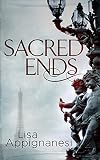
Sacred Ends (Part 2 of the Belle Époque Trilogy)
Lisa Appignanesi
Arcadia Books
9781909807587
£8.99, 352 pgs
The most dangerous phrase in any language is, “But we’ve always done it this way.”
Lisa Appignanesi is back with her signature blend of history, psychology, politics, caste, art, science, sex, religion, madness and murder. The emphasis in part two of the Belle Époque Trilogy is on religion; most of all the still-present conflict between the new-and-improved and superstitious show more tradition. Marguerite de Landois and Chief Inspector Durand reprise their roles in Sacred Ends, part two of Appignanesi’s Belle Époque Trilogy that began with Paris Requiem. (You can follow this link to read my review of part one.) It is a brand-new century, January 1900, and Marguerite has high hopes for a brand-new era. Unfortunately, the Comtesse has received an urgent letter from her husband, Olivier, calling her away from her adored, bustling Paris, back to the family estate in the countryside. Marguerite boards a train for the chateau with her newest waif, Martine Branquart, in tow. The only good thing about being recalled to the hinterlands is that she’ll now be better able to help Martine find her missing sister, as they are from the same area.
Marguerite arrives to find that Olivier has made many changes in her absence: new décor; some of the staff has been replaced; there’s a young sculptor in residence; a new Catholic priest with political ambitions hanging about; and a baby – a foundling. All of a sudden, Olivier has discovered traditional family values. He wants to abandon their understanding of lengthy duration (living apart ten months of the year and generally staying out of each other’s business) to form “a proper family.” Marguerite “…could feel an iron gate coming down with a clang in front of her.” As she applies herself to solving the mysteries of Martine’s sister’s disappearance, Olivier’s abrupt personality transplant, and the true parentage of the foundling, all hell breaks loose and she calls in Chief Inspector Durand from Paris to assist her.
The sexual obsession in Sacred Ends reminds me of nothing so much as Esmeralda and the High Priest in Victor Hugo’s The Hunchback of Notre Dame, which is still so very topical in this day and age. The characters are diverse and complex, although most of their motivations are horrific; this is not their fault, mostly. The plotting is impeccable and the pacing swifter than in part one. The setting is visceral; such a complete picture of the age and place, remarkable. And, best of all, the sumptuous sentences are back, as well. For example, a passage describing the rural landscape, page 45:
Outside it was so cold the air cracked and whistled. The stairs cut into the crag were steep, the road unpaved. The houses huddled into the rock face like the Neolithic caves out of which some of them had grown. …There was an adventure to the world growing older and older as it bounded into the future.
And this, as Marguerite is reflecting on the authority of the church in the provinces: “The power of the clergy over people’s minds in this region remained enormous. Men, dressed as God’s minions, infringing private boundaries by right. The prurience of the righteous.”
There is more humor in Sacred Ends. Such as when the new village doctor explains his frequent visits to a particular estate, “Madam Tellier suffers from two unmarried daughters, amongst a number of other perennial complaints.” And this, as the same doctor is explaining to Marguerite that the poor man whose body was found under a train was already dead when his body was placed there. Her reaction: “You mean he died of a prior dying?”
The only flat note in Sacred Ends is a subplot involving Inspector Durand and a police case back in Paris. I found it extraneous and do not believe that it added to the story the author was telling. Perhaps it will show up in part three of the trilogy to explain its inclusion. I’ve already asked Arcadia Books when I can get my hands on part three. So, to sum up, if you love Paris Requiem as I do, you will definitely want to read Sacred Ends.
I’ll leave you with this, page 351:
…She [Marguerite] had been complaining of her sense that she had come to La Rochambert to enter some strange, hoary clime far from this new twentieth century, a space where medieval tortures and consciences abetted by ideas of sanctity were still at their destructive work and no one seemed to notice. A place where families were allowed to abuse and women were mistreated; where the Enlightenment had never taken place and the Republic might as well never have been born. All that, plus the murder of innocents. How could such a world still exist in the twentieth century?
I hate to tell her this but that world still exists in the twenty-first century. She could be talking about us.
Lisa Appignanesi is the author of numerous novels and works of nonfiction, including the prize-winning Mad, Bad and Sad: A History of Women and the Mind Doctors. Appignanesi is a past-president of English PEN and is the chair of the Freud Museum, London, and Visiting Professor in Literature and the Medical Humanities at King's College London. She was awarded an OBE in 2013 for her services to literature. show less
Lisa Appignanesi
Arcadia Books
9781909807587
£8.99, 352 pgs
The most dangerous phrase in any language is, “But we’ve always done it this way.”
Lisa Appignanesi is back with her signature blend of history, psychology, politics, caste, art, science, sex, religion, madness and murder. The emphasis in part two of the Belle Époque Trilogy is on religion; most of all the still-present conflict between the new-and-improved and superstitious show more tradition. Marguerite de Landois and Chief Inspector Durand reprise their roles in Sacred Ends, part two of Appignanesi’s Belle Époque Trilogy that began with Paris Requiem. (You can follow this link to read my review of part one.) It is a brand-new century, January 1900, and Marguerite has high hopes for a brand-new era. Unfortunately, the Comtesse has received an urgent letter from her husband, Olivier, calling her away from her adored, bustling Paris, back to the family estate in the countryside. Marguerite boards a train for the chateau with her newest waif, Martine Branquart, in tow. The only good thing about being recalled to the hinterlands is that she’ll now be better able to help Martine find her missing sister, as they are from the same area.
Marguerite arrives to find that Olivier has made many changes in her absence: new décor; some of the staff has been replaced; there’s a young sculptor in residence; a new Catholic priest with political ambitions hanging about; and a baby – a foundling. All of a sudden, Olivier has discovered traditional family values. He wants to abandon their understanding of lengthy duration (living apart ten months of the year and generally staying out of each other’s business) to form “a proper family.” Marguerite “…could feel an iron gate coming down with a clang in front of her.” As she applies herself to solving the mysteries of Martine’s sister’s disappearance, Olivier’s abrupt personality transplant, and the true parentage of the foundling, all hell breaks loose and she calls in Chief Inspector Durand from Paris to assist her.
The sexual obsession in Sacred Ends reminds me of nothing so much as Esmeralda and the High Priest in Victor Hugo’s The Hunchback of Notre Dame, which is still so very topical in this day and age. The characters are diverse and complex, although most of their motivations are horrific; this is not their fault, mostly. The plotting is impeccable and the pacing swifter than in part one. The setting is visceral; such a complete picture of the age and place, remarkable. And, best of all, the sumptuous sentences are back, as well. For example, a passage describing the rural landscape, page 45:
Outside it was so cold the air cracked and whistled. The stairs cut into the crag were steep, the road unpaved. The houses huddled into the rock face like the Neolithic caves out of which some of them had grown. …There was an adventure to the world growing older and older as it bounded into the future.
And this, as Marguerite is reflecting on the authority of the church in the provinces: “The power of the clergy over people’s minds in this region remained enormous. Men, dressed as God’s minions, infringing private boundaries by right. The prurience of the righteous.”
There is more humor in Sacred Ends. Such as when the new village doctor explains his frequent visits to a particular estate, “Madam Tellier suffers from two unmarried daughters, amongst a number of other perennial complaints.” And this, as the same doctor is explaining to Marguerite that the poor man whose body was found under a train was already dead when his body was placed there. Her reaction: “You mean he died of a prior dying?”
The only flat note in Sacred Ends is a subplot involving Inspector Durand and a police case back in Paris. I found it extraneous and do not believe that it added to the story the author was telling. Perhaps it will show up in part three of the trilogy to explain its inclusion. I’ve already asked Arcadia Books when I can get my hands on part three. So, to sum up, if you love Paris Requiem as I do, you will definitely want to read Sacred Ends.
I’ll leave you with this, page 351:
…She [Marguerite] had been complaining of her sense that she had come to La Rochambert to enter some strange, hoary clime far from this new twentieth century, a space where medieval tortures and consciences abetted by ideas of sanctity were still at their destructive work and no one seemed to notice. A place where families were allowed to abuse and women were mistreated; where the Enlightenment had never taken place and the Republic might as well never have been born. All that, plus the murder of innocents. How could such a world still exist in the twentieth century?
I hate to tell her this but that world still exists in the twenty-first century. She could be talking about us.
Lisa Appignanesi is the author of numerous novels and works of nonfiction, including the prize-winning Mad, Bad and Sad: A History of Women and the Mind Doctors. Appignanesi is a past-president of English PEN and is the chair of the Freud Museum, London, and Visiting Professor in Literature and the Medical Humanities at King's College London. She was awarded an OBE in 2013 for her services to literature. show less
Mad, Bad And Sad: A History of Women and the Mind Doctors from 1800 to the Present by Lisa Appignanesi
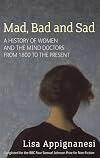
Because the UK Higher Education sector is chronically dysfunctional, I am on strike again for the third time in two years. Last time, my reading strategy was to find obscure books in the National Library of Scotland. This time, I'm trying to read books that kind people lent to me over the past few years but I've yet to read. This is the first of them. Not a light book, given the topic of women's mental illness and treatment over the past 200 years, yet very interesting indeed. Appignanesi show more demonstrates how the conceptualisation of mental illness, particularly but not exclusively in women, has changed repeatedly and significantly. She draws upon medical texts, law, and research, while also presenting individual case studies of women who exemplify the mental health struggles of their day. These case studies are handled with sensitivity, with the result that they've moving to read. I hadn't previously realised the suffering that Zelda Fitzgerald and Marilyn Monroe went through.
Appignanesi shows very skilfully that the categories of mental illness are socially constructed and their meanings change substantially over time. As in [b:Crazy Like Us: The Globalization of the American Psyche|6402564|Crazy Like Us The Globalization of the American Psyche|Ethan Watters|https://i.gr-assets.com/images/S/compressed.photo.goodreads.com/books/1263266351l/6402564._SY75_.jpg|6591364], there is also a strong theme of mental distress having historically, spatially, and culturally specific manifestations. 'Mad, Bad, and Sad' is centred upon Europe and US, so this is mainly included as changes in symptoms and diagnoses over time. Since different historical moments and cultures place different pressures on people, as well as providing different moral frameworks and measures for self-soothing, this changeability is hardly surprising. One commonality is perhaps that what is considered mental illness consists largely of unexplained physical symptoms. Yet I can't help feeling that this adds further complexity to already fraught popular perceptions of mental illness. It would be simpler and more reassuring to believe that it's all just imbalances in the brain chemicals that a pill can fix. Unfortunately the former does not lead to the latter, as what drugs there are to treat mental illness are not always effective and how they work remains largely mysterious.
Given that the advent of remotely efficacious medicines for mental illness is relatively recent, these are largely dealt with in the final chapter. Earlier sections consider the conditions of women in asylums over the centuries and recount the advent of psychotherapy in great detail. Appignanesi manages to be remarkably balanced regarding Freud, explaining the revolutionary and progressive impacts of his work without minimising the problems with and misuse of it. I was fascinated to learn about the pioneering female psychotherapists and changing views of what symptoms could be alleviated by psychoanalysis. There is also a great deal of material about how motherhood and mental health have been linked, for example the successive fashions for blaming women for not being warm and loving enough, then too warm and loving. Several latter chapters consider how the hippy and feminist movements critiqued psychology, the legacy of which I've noticed anecdotally in my family . Given personal difficulties with food, I found the chapter on eating disorders hardest to read. This considered how the saturation of popular culture with imagery of idealised thinness promoted eating disorders as a means of expressing anguish.
I found Appignanesi's writing style readable and impressively measured, while the content was extremely thought-provoking. I put off reading the book after being lent it on the justified expectation that it would be upsetting in parts, however it was entirely worth persisting with and more accessible than I anticipated. I was left thinking about the different dimensions of mental illness: biology, experience of abuse and trauma, and (gendered) social pressures, and how they relate to available treatments. Appignanesi is fairly critical of all currently available (not to mention of the DSM), noting the choice to prescribe Cognitive Behavioural Therapy or antidepressants is most likely to be based on cost. Regarding CBT, I think the impact of the therapist being a sympathetic person who wants to understand the nature of the problem and help may be underestimated. They acknowledge suffering and suggest small changes to mitigate it. I suspect that this acknowledgement and sympathy sometimes has more significant impact than the formal techniques of mindfulness and so on.
It was a wise choice, I think, to centre the book both on female sufferers of mental illness and those who have sought to treat them. The result is a nuanced and richly rewarding read that concludes with this thoughtful comment:
Appignanesi shows very skilfully that the categories of mental illness are socially constructed and their meanings change substantially over time. As in [b:Crazy Like Us: The Globalization of the American Psyche|6402564|Crazy Like Us The Globalization of the American Psyche|Ethan Watters|https://i.gr-assets.com/images/S/compressed.photo.goodreads.com/books/1263266351l/6402564._SY75_.jpg|6591364], there is also a strong theme of mental distress having historically, spatially, and culturally specific manifestations. 'Mad, Bad, and Sad' is centred upon Europe and US, so this is mainly included as changes in symptoms and diagnoses over time. Since different historical moments and cultures place different pressures on people, as well as providing different moral frameworks and measures for self-soothing, this changeability is hardly surprising. One commonality is perhaps that what is considered mental illness consists largely of unexplained physical symptoms. Yet I can't help feeling that this adds further complexity to already fraught popular perceptions of mental illness. It would be simpler and more reassuring to believe that it's all just imbalances in the brain chemicals that a pill can fix. Unfortunately the former does not lead to the latter, as what drugs there are to treat mental illness are not always effective and how they work remains largely mysterious.
Given that the advent of remotely efficacious medicines for mental illness is relatively recent, these are largely dealt with in the final chapter. Earlier sections consider the conditions of women in asylums over the centuries and recount the advent of psychotherapy in great detail. Appignanesi manages to be remarkably balanced regarding Freud, explaining the revolutionary and progressive impacts of his work without minimising the problems with and misuse of it. I was fascinated to learn about the pioneering female psychotherapists and changing views of what symptoms could be alleviated by psychoanalysis. There is also a great deal of material about how motherhood and mental health have been linked, for example the successive fashions for blaming women for not being warm and loving enough, then too warm and loving. Several latter chapters consider how the hippy and feminist movements critiqued psychology, the legacy of which I've noticed anecdotally in my family . Given personal difficulties with food, I found the chapter on eating disorders hardest to read. This considered how the saturation of popular culture with imagery of idealised thinness promoted eating disorders as a means of expressing anguish.
I found Appignanesi's writing style readable and impressively measured, while the content was extremely thought-provoking. I put off reading the book after being lent it on the justified expectation that it would be upsetting in parts, however it was entirely worth persisting with and more accessible than I anticipated. I was left thinking about the different dimensions of mental illness: biology, experience of abuse and trauma, and (gendered) social pressures, and how they relate to available treatments. Appignanesi is fairly critical of all currently available (not to mention of the DSM), noting the choice to prescribe Cognitive Behavioural Therapy or antidepressants is most likely to be based on cost. Regarding CBT, I think the impact of the therapist being a sympathetic person who wants to understand the nature of the problem and help may be underestimated. They acknowledge suffering and suggest small changes to mitigate it. I suspect that this acknowledgement and sympathy sometimes has more significant impact than the formal techniques of mindfulness and so on.
It was a wise choice, I think, to centre the book both on female sufferers of mental illness and those who have sought to treat them. The result is a nuanced and richly rewarding read that concludes with this thoughtful comment:
What is clear is that as we have moved through the twentieth century and into the twenty-first, an ever wider set of behaviours and emotions have become 'symptomatic' and fallen under the aegis of the mind doctors. A vast range of eccentricities or discomforts that seem too hard to bear shape cases for treatment. But if what is understood as illness grows, symptoms have been attributed to an ever narrowing set of 'chemical' factors. It is as if the greater the terrain of possible malaise, the more 'scientifically' and organically precise we would want the cause and cure to be. There is a contradiction here, which may serve a drug industry rather better than it serves those who have become designated as patients or indeed the social sphere as a whole. Our times may need 'cures' that are broader and other than those that can be found in therapy alone, whether of the talking or pharmaceutical kind.show less

By Lisa Appignanesi
Arcadia Books, 506 pgs
978-1-908129-99-4
Submitted by the publisher
Rating: Spectacular
Three ideas to consider:
"Liberté, Egalité, Fraternité" - and what of Justice?
"Live as domestic a life as possible...And never touch pen, brush, or pencil as long as you live." Charlotte Perkins Gilman describing Dr. S. Weir Mitchell's rest cure prescription
"Too early a death implicates us all." - Marguerite de Landois
Paris Requiem by Lisa Appignanesi is a thrilling and intoxicating show more blend of history, psychology, politics, social caste, art, sex, madness and murder. Stirred by a lesser hand those ingredients too often don't blend but sit uncomfortably atop each other in their separate strata. I am developing a theory that Ms. Appignanesi is actually a master chemist, a world-class vintner, or a magician, because in her hands these elements produce a concoction as dangerous as sodium cyanide, as deliciously rich and smooth as Bordeaux, and as surprising as if she had indeed pulled a rabbit out of a hat. Perhaps she is all three.
Paris Requiem is the story of three families (two of which are family by birth, one of which is family by necessity), a city, two countries, generational change, and what happens when industrial and technological revolution both shrinks and expands the world simultaneously. Our first family is the Nortons of Boston: elder brother James, younger brother Rafe and their sister Elinor. Our second family is the Arnhems of Paris: sisters Judith and Rachel and their father. Our third family is the bohemian and artist community of Paris brought together by their patron Marguerite de Landois ("a thoroughly modern woman"). The city is Paris in 1899; the countries are France of the Belle Époque and the United States of 2013, by implication.
Our story begins in the spring of 1899 as James Norton (who is most comfortable wrapped "in the soft blanket of habit), Esquire and Harvard Law professor, reluctantly disembarks in Paris on an errand for his mother. The formidable lady has dispatched James to fetch his younger brother Rafe (he who "had always been so hungry for life in all its beauty and all its sordidness"), a journalist for the New York Times, and younger sister Elinor (Ellie) home with him. The good Puritan mother has decided that they've tarried too long in the City of Light. James arrives as several events coincide to threaten chaos: Alfred Dreyfus, a Jewish man convicted of spying (the infamous Dreyfus Affair - look it up), is released from prison by the supreme court; the President of France is assaulted; there are demonstrations by anarchists (read: libertarians and/or libertines), Republicans (read: democrats and/or constitutionalists) and "patriots" (read: fascists, xenophobes and/or racists, also see Tea Party) in the streets; the government falls; women are disappearing and turning up dead. From Le Journal, Paris, le 30 mai, 1899 - "Police are quick to attribute these deaths to suicide. Why not? After all, two of the women were listed prostitutes whose degenerate lives, according to our guardians of morality, deserve no better end. Two others were homeless vagabonds." The latest of these women turns out to be Olympe Fabre, formerly Rachel Arnhem, actress and lover of Rafe Norton.
In no time flat James is swept up in the hunt for clues and a killer. Let me assure you that he and Rafe and various players, including a delightful chief inspector of the Paris gendarmes and a fairly shifty reporter friend of Rafe's, do discover the clues and find the culprit. But in my view that's not the most fascinating story of Paris Requiem, merely the narrative. The many things James finds in between are the actual story of Paris Requiem.
hysterical (adj.) 1610s, from Latin hystericus "of the womb," from Greek hysterikos "of the womb, suffering in the womb," from hystera "womb" (see uterus). Originally defined as a neurotic condition peculiar to women and thought to be caused by a dysfunction of the uterus. - Online Etymology Dictionary
hys·ter·i·cal /hiˈsterikəl/ adjective 1. deriving from or affected by uncontrolled extreme emotion. "hysterical laughter" synonyms: overwrought, overemotional, out of control, frenzied, frantic, wild, feverish, crazed. 2. PSYCHIATRY relating to, associated with, or suffering from hysteria. "the doctor thinks the condition is partly hysterical" another term for histrionic (denoting personality disorder). - Google
Cookie-cutter propriety (assume your shape!) dementedly insisting upon conformity at all costs, born and grown and malevolently nurtured during the period following the industrial revolution, has finally clashed violently, indeed fatally, with a resurgent individuality. And the women, by god the WOMEN, just won't stay in their assigned spaces. You say you were born female to who, where? Then you belong here. No, here. Right here. NOT over there. Come back this instant. You can't do that; you can't go there; you can't BE THAT. And if you insist on doing that, going there, being that, then the new rather squishy science of psychiatry will brand you with "hysterical." You will require a "rest cure." You will require drugging. If all else fails then you will require confinement. Deviations, most certainly sexual deviations, from the "norm" are pathological. I believe the true story Paris Requiem has to tell is the story of the Industrial Revolution and its effects on society. As Ellie laments, "Once I thought I would do something with my time on this earth, Jim. Something great. Something useful. Something beautiful. But nothing...nothing has come of it. There's nothing for a woman like me." As for me I believe that the mindset that allows this sort of sentiment, "...her eyes veiled in a sadness which only accentuated her beauty," is the real pathology. If I'm less beautiful when I'm strong and happy then you can scoot yourself right out the door. Move along, Monsieur. Rapidement!
Paris Requiem tells this story vividly by hanging it on the trope of a murder thriller. The characters are diverse and complex, their motivations sympathetic. The city itself becomes a character: Paris the Siren. You will smell the orange blossoms, taste the café au lait, hear the clop of hooves on cobblestone and the Seine rushing past. You will sense the urgency. The sentences are frequently powerful enough to stop your brain in its tracks; seemingly of its own accord it will return and read that sumptuous sentence again and again. I considered crafting this entire review of quotations from the book; no, seriously. I may still do that. For example, page 106:
Young men with unsavoury expressions and large hats lounged against door jambs and smoked, at once indolent and poised for action like so many cowhands. From the late afternoon gloom of a tavern came the sound of a guitar and a baritone drawling a song of insolent inflection.
Or this, page 354:
The air was thick with duplicity and something else, an unnaturalness. Through the miasma he sniffed at treacherous liaisons.
The plotting is impeccable although some may find the pacing a little slow for their personal taste. It is a long book, 506 pages, and we don't learn the ultimate secret until the very end. But I enjoyed it so much. The parallels between the political situation in Paris in 1899 and the political situation of the United States in 2013 are myriad and astonishing. The personal is political. Perhaps we can learn something. I do believe that for the truth we must turn to fiction. I was particularly proud of James, a man who at the beginning of this tale could be described as caring for nothing so much as "the trains running on time," who wished for nothing so much as "clear demarcation lines." By the end of this tale he was able to be described by a police officer as "altogether unruly."
Returning to Le Journal, Paris, le 30 mai, 1899: "...But what if prostitution and vagabondage are the symptoms of their plight and not its cause?...Were the lives of these women really worth so little that they could fling them away? Or are there foul forces at play here - as foul and murderous as those which condemned Captain Dreyfus...?"
Lisa Appignanesi is the author of seven previous works, including the prize-winning Mad, Bad and Sad: A History of Women and the Mind Doctors, which I'm going to order here in about fifteen minutes. The research for that book directly relates to Paris Requiem. Appignanesi is a past-president of English PEN and is the chair of the Freud Museum, London, and Visiting Professor in Literature and the Medical Humanities at King's College London. She was awarded an OBE this year for her services to literature.
I'm going to close this review with the quotation that opens Paris Requiem.
Live all you can; it's a mistake not to. It doesn't so much matter what you do in particular, so long as you have your life. If you haven't had that what have you had? - Henry James, The Ambassadors show less
Arcadia Books, 506 pgs
978-1-908129-99-4
Submitted by the publisher
Rating: Spectacular
Three ideas to consider:
"Liberté, Egalité, Fraternité" - and what of Justice?
"Live as domestic a life as possible...And never touch pen, brush, or pencil as long as you live." Charlotte Perkins Gilman describing Dr. S. Weir Mitchell's rest cure prescription
"Too early a death implicates us all." - Marguerite de Landois
Paris Requiem by Lisa Appignanesi is a thrilling and intoxicating show more blend of history, psychology, politics, social caste, art, sex, madness and murder. Stirred by a lesser hand those ingredients too often don't blend but sit uncomfortably atop each other in their separate strata. I am developing a theory that Ms. Appignanesi is actually a master chemist, a world-class vintner, or a magician, because in her hands these elements produce a concoction as dangerous as sodium cyanide, as deliciously rich and smooth as Bordeaux, and as surprising as if she had indeed pulled a rabbit out of a hat. Perhaps she is all three.
Paris Requiem is the story of three families (two of which are family by birth, one of which is family by necessity), a city, two countries, generational change, and what happens when industrial and technological revolution both shrinks and expands the world simultaneously. Our first family is the Nortons of Boston: elder brother James, younger brother Rafe and their sister Elinor. Our second family is the Arnhems of Paris: sisters Judith and Rachel and their father. Our third family is the bohemian and artist community of Paris brought together by their patron Marguerite de Landois ("a thoroughly modern woman"). The city is Paris in 1899; the countries are France of the Belle Époque and the United States of 2013, by implication.
Our story begins in the spring of 1899 as James Norton (who is most comfortable wrapped "in the soft blanket of habit), Esquire and Harvard Law professor, reluctantly disembarks in Paris on an errand for his mother. The formidable lady has dispatched James to fetch his younger brother Rafe (he who "had always been so hungry for life in all its beauty and all its sordidness"), a journalist for the New York Times, and younger sister Elinor (Ellie) home with him. The good Puritan mother has decided that they've tarried too long in the City of Light. James arrives as several events coincide to threaten chaos: Alfred Dreyfus, a Jewish man convicted of spying (the infamous Dreyfus Affair - look it up), is released from prison by the supreme court; the President of France is assaulted; there are demonstrations by anarchists (read: libertarians and/or libertines), Republicans (read: democrats and/or constitutionalists) and "patriots" (read: fascists, xenophobes and/or racists, also see Tea Party) in the streets; the government falls; women are disappearing and turning up dead. From Le Journal, Paris, le 30 mai, 1899 - "Police are quick to attribute these deaths to suicide. Why not? After all, two of the women were listed prostitutes whose degenerate lives, according to our guardians of morality, deserve no better end. Two others were homeless vagabonds." The latest of these women turns out to be Olympe Fabre, formerly Rachel Arnhem, actress and lover of Rafe Norton.
In no time flat James is swept up in the hunt for clues and a killer. Let me assure you that he and Rafe and various players, including a delightful chief inspector of the Paris gendarmes and a fairly shifty reporter friend of Rafe's, do discover the clues and find the culprit. But in my view that's not the most fascinating story of Paris Requiem, merely the narrative. The many things James finds in between are the actual story of Paris Requiem.
hysterical (adj.) 1610s, from Latin hystericus "of the womb," from Greek hysterikos "of the womb, suffering in the womb," from hystera "womb" (see uterus). Originally defined as a neurotic condition peculiar to women and thought to be caused by a dysfunction of the uterus. - Online Etymology Dictionary
hys·ter·i·cal /hiˈsterikəl/ adjective 1. deriving from or affected by uncontrolled extreme emotion. "hysterical laughter" synonyms: overwrought, overemotional, out of control, frenzied, frantic, wild, feverish, crazed. 2. PSYCHIATRY relating to, associated with, or suffering from hysteria. "the doctor thinks the condition is partly hysterical" another term for histrionic (denoting personality disorder). - Google
Cookie-cutter propriety (assume your shape!) dementedly insisting upon conformity at all costs, born and grown and malevolently nurtured during the period following the industrial revolution, has finally clashed violently, indeed fatally, with a resurgent individuality. And the women, by god the WOMEN, just won't stay in their assigned spaces. You say you were born female to who, where? Then you belong here. No, here. Right here. NOT over there. Come back this instant. You can't do that; you can't go there; you can't BE THAT. And if you insist on doing that, going there, being that, then the new rather squishy science of psychiatry will brand you with "hysterical." You will require a "rest cure." You will require drugging. If all else fails then you will require confinement. Deviations, most certainly sexual deviations, from the "norm" are pathological. I believe the true story Paris Requiem has to tell is the story of the Industrial Revolution and its effects on society. As Ellie laments, "Once I thought I would do something with my time on this earth, Jim. Something great. Something useful. Something beautiful. But nothing...nothing has come of it. There's nothing for a woman like me." As for me I believe that the mindset that allows this sort of sentiment, "...her eyes veiled in a sadness which only accentuated her beauty," is the real pathology. If I'm less beautiful when I'm strong and happy then you can scoot yourself right out the door. Move along, Monsieur. Rapidement!
Paris Requiem tells this story vividly by hanging it on the trope of a murder thriller. The characters are diverse and complex, their motivations sympathetic. The city itself becomes a character: Paris the Siren. You will smell the orange blossoms, taste the café au lait, hear the clop of hooves on cobblestone and the Seine rushing past. You will sense the urgency. The sentences are frequently powerful enough to stop your brain in its tracks; seemingly of its own accord it will return and read that sumptuous sentence again and again. I considered crafting this entire review of quotations from the book; no, seriously. I may still do that. For example, page 106:
Young men with unsavoury expressions and large hats lounged against door jambs and smoked, at once indolent and poised for action like so many cowhands. From the late afternoon gloom of a tavern came the sound of a guitar and a baritone drawling a song of insolent inflection.
Or this, page 354:
The air was thick with duplicity and something else, an unnaturalness. Through the miasma he sniffed at treacherous liaisons.
The plotting is impeccable although some may find the pacing a little slow for their personal taste. It is a long book, 506 pages, and we don't learn the ultimate secret until the very end. But I enjoyed it so much. The parallels between the political situation in Paris in 1899 and the political situation of the United States in 2013 are myriad and astonishing. The personal is political. Perhaps we can learn something. I do believe that for the truth we must turn to fiction. I was particularly proud of James, a man who at the beginning of this tale could be described as caring for nothing so much as "the trains running on time," who wished for nothing so much as "clear demarcation lines." By the end of this tale he was able to be described by a police officer as "altogether unruly."
Returning to Le Journal, Paris, le 30 mai, 1899: "...But what if prostitution and vagabondage are the symptoms of their plight and not its cause?...Were the lives of these women really worth so little that they could fling them away? Or are there foul forces at play here - as foul and murderous as those which condemned Captain Dreyfus...?"
Lisa Appignanesi is the author of seven previous works, including the prize-winning Mad, Bad and Sad: A History of Women and the Mind Doctors, which I'm going to order here in about fifteen minutes. The research for that book directly relates to Paris Requiem. Appignanesi is a past-president of English PEN and is the chair of the Freud Museum, London, and Visiting Professor in Literature and the Medical Humanities at King's College London. She was awarded an OBE this year for her services to literature.
I'm going to close this review with the quotation that opens Paris Requiem.
Live all you can; it's a mistake not to. It doesn't so much matter what you do in particular, so long as you have your life. If you haven't had that what have you had? - Henry James, The Ambassadors show less
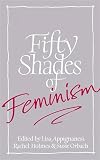
Not perfect but close, more thought provoking than thought providing it's 50 opinion pieces with other scattered snippets, quotes and some cartoons about feminism, some of them explore the elephant in the corner of 50 Shades of Grey but many of them just talk about their experience of feminism and what it is to be female in the 20th and 21st Century. Many of them are asking why it's so hard for some people to see that it's still necessary and that maybe, just maybe, we're walking into show more another series of problems instead of solutions.
The last quote: 'You can tell whether some misogynistic societal pressure is being exerted on women by calmly enquiring, "And are men doing this, as well?" If they aren't, chances are you're dealing with what we strident feminists refer to as "some total fucking bullshit".' by Caitlin Moran, resonated particularly with me. All of it opened up some thinking, some of which will take me a while to process. show less
The last quote: 'You can tell whether some misogynistic societal pressure is being exerted on women by calmly enquiring, "And are men doing this, as well?" If they aren't, chances are you're dealing with what we strident feminists refer to as "some total fucking bullshit".' by Caitlin Moran, resonated particularly with me. All of it opened up some thinking, some of which will take me a while to process. show less
Lists
Awards


You May Also Like


Associated Authors
Statistics
- Works
- 39
- Also by
- 7
- Members
- 1,585
- Popularity
- #16,274
- Rating
- 3.8
- Reviews
- 28
- ISBNs
- 162
- Languages
- 8