
Maya Arad
Author of The Hebrew Teacher
About the Author
Disambiguation Notice:
(yid) VIAF:51929267
Works by Maya Arad
Roots and Patterns: Hebrew Morpho-syntax (Studies in Natural Language and Linguistic Theory) (2005) 7 copies
תמורה נאותה 2 copies
אמן הסיפור הקצר 2 copies
מאחורי ההר 1 copy
שבע מידות רעות 1 copy
Seven Moral Failings 1 copy
Associated Works
Tagged
Common Knowledge
Members
Reviews
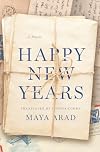
Rating: 4* of five
The Publisher Says: After emigrating to the United States in the mid-1960s, Leah maintains her connection to Israel by writing an annual letter on the Jewish new year to her old friends from a women's teaching college.
Comprising five decades of correspondence, the novel skillfully weaves together Leah's high hopes and deep disappointments as she navigates relationships, marriage, divorce, single motherhood, financial struggles, and professional ups and downs. Leah's show more relentless optimism and cheerfulness conceal disturbing truths behind her carefully crafted words. As her letters turn increasingly introspective, the secrets and shame that shaped her trajectory unravel.
This is the epistolary novel at its best, inviting the reader to play detective and probe between the lines of Leah's insistently rosy portrayal of her life. Gradually piecing together her true circumstances, we are charmed into forgiving her minor deceptions and richly rewarded with the profound insights that Leah's self-constructed narrative reveals.
I RECEIVED A DRC FROM THE PUBLISHER VIA EDELWEISS+. THANK YOU.
My Review: What does a lifetime of dissembling hide? What does a multi-decade one-sided relationship require of the one creating it? Leah, sixty years ago, made temporary friendships she mistook for real friendships (or tried to will into real friendships) in Israel before emigrating to the US. The reason she emigrated, like everything else in her life, is behind a scrim of what she wants these "friends" to see.
It's a common enough experience to commit to a relationship that the other party/s are not having, mostly in earlier life; but to continue to make the effort to inform these clearly indifferent people of what she wants them to think is her life...! The effort, the energy put into thinking of what it *should* be, this life she's crafted. I was slightly in awe at the artifice of the story as Author Arad told it.
But really now, is Leah doing anything most all of us do not do? Is the Story of Your Life the real story, or curated by memory to make your mistakes, cruelties, neglectful unkindnesses tolerable to the You doing the thinking? Leah is all of us, I think, at least those of us not doing ourselves the service of going into therapy.
I'm not all the way sure most people will bother to look past a narrative device, the epistolary novel, to look into a deeper crevice of Leah's commonality with us all: what stories is she telling herself to get through her life? Is it a life, or an existence, as she is experiencing it? And how are we all using these same means to be in any way satisfied by life as we live it? I'm guessing a lot of Leahs are just not ready or willing or able to stop writing their own letters, the literal scripts (in its multiple senses) of artifice and craftsmanship. The bulk of people are the Cleopatras of old, barging down Denial.
So it was that Leah won my sympathy as she lived the life she had to, and showed the life she wanted in letters to people who never cared much. Author Arad weaves the two together all the way through the story but it isn't obvious how until the ending. I know most of y'all wouldn't be bothered by a spoiler, but...well...the noisy ones would, so not this time.
I'll say this much: I was deeply satisfied, fulfilled even, by the resolution. That's saying a lot. show less
The Publisher Says: After emigrating to the United States in the mid-1960s, Leah maintains her connection to Israel by writing an annual letter on the Jewish new year to her old friends from a women's teaching college.
Comprising five decades of correspondence, the novel skillfully weaves together Leah's high hopes and deep disappointments as she navigates relationships, marriage, divorce, single motherhood, financial struggles, and professional ups and downs. Leah's show more relentless optimism and cheerfulness conceal disturbing truths behind her carefully crafted words. As her letters turn increasingly introspective, the secrets and shame that shaped her trajectory unravel.
This is the epistolary novel at its best, inviting the reader to play detective and probe between the lines of Leah's insistently rosy portrayal of her life. Gradually piecing together her true circumstances, we are charmed into forgiving her minor deceptions and richly rewarded with the profound insights that Leah's self-constructed narrative reveals.
I RECEIVED A DRC FROM THE PUBLISHER VIA EDELWEISS+. THANK YOU.
My Review: What does a lifetime of dissembling hide? What does a multi-decade one-sided relationship require of the one creating it? Leah, sixty years ago, made temporary friendships she mistook for real friendships (or tried to will into real friendships) in Israel before emigrating to the US. The reason she emigrated, like everything else in her life, is behind a scrim of what she wants these "friends" to see.
It's a common enough experience to commit to a relationship that the other party/s are not having, mostly in earlier life; but to continue to make the effort to inform these clearly indifferent people of what she wants them to think is her life...! The effort, the energy put into thinking of what it *should* be, this life she's crafted. I was slightly in awe at the artifice of the story as Author Arad told it.
But really now, is Leah doing anything most all of us do not do? Is the Story of Your Life the real story, or curated by memory to make your mistakes, cruelties, neglectful unkindnesses tolerable to the You doing the thinking? Leah is all of us, I think, at least those of us not doing ourselves the service of going into therapy.
I'm not all the way sure most people will bother to look past a narrative device, the epistolary novel, to look into a deeper crevice of Leah's commonality with us all: what stories is she telling herself to get through her life? Is it a life, or an existence, as she is experiencing it? And how are we all using these same means to be in any way satisfied by life as we live it? I'm guessing a lot of Leahs are just not ready or willing or able to stop writing their own letters, the literal scripts (in its multiple senses) of artifice and craftsmanship. The bulk of people are the Cleopatras of old, barging down Denial.
So it was that Leah won my sympathy as she lived the life she had to, and showed the life she wanted in letters to people who never cared much. Author Arad weaves the two together all the way through the story but it isn't obvious how until the ending. I know most of y'all wouldn't be bothered by a spoiler, but...well...the noisy ones would, so not this time.
I'll say this much: I was deeply satisfied, fulfilled even, by the resolution. That's saying a lot. show less
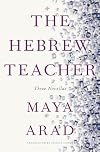
Rating: 4* of five
The Publisher Says: NATIONAL JEWISH BOOK AWARD FOR HEBREW FICTION IN TRANSLATION (2024)
Three Israeli women, their lives altered by immigration to the United States, seek to overcome crises. Ilana is a veteran Hebrew instructor at a Midwestern college who has built her life around her career. When a young Hebrew literature professor joins the faculty, she finds his post-Zionist politics pose a threat to her life’s work.
Miriam, whose son left Israel to make his fortune in show more Silicon Valley, pays an unwanted visit to meet her new grandson and discovers cracks in the family’s perfect façade. Efrat, another Israeli in California, is determined to help her daughter navigate the challenges of middle school, and crosses forbidden lines when she follows her into the minefield of social media.
In these three stirring novellas—comedies of manners with an ambitious blend of irony and sensitivity—celebrated Israeli author Maya Arad probes the demise of idealism and the generation gap that her heroines must confront.
I RECEIVED A DRC FROM THE PUBLISHER VIA EDELWEISS+. THANK YOU.
My Review: There are few things more fraught than women pursuing lives and careers of their own, not subordinate to, lesser than, or determined by, a man's life/career/convenience or a family's needs. Even in Israel, an aggressively egalitarian gender system's mothership, there are traditional religious practitioners who resist this facet of the Sabras' intent when setting the State of Israel up. Maya Arad, in these novellas, probes the roles, minds, and hearts of her "women of a certain age" whose courses in life were set to accomplish things for, well, for others but still for themselves.
What happens is a quiet-seeming, radical takedown of unquestioned, unquestioning, unquestionable "morality." It is a pity that Author Arad is not a household name in the US. Translator Cohen has made her art umistakable by exercising the translator's alchemy on it.
The Hebrew Teacher brings Ilana, whose Zionism stopped being examined in the 70s, into abrupt awareness of what younger assimilated US-raised Jews think and feel. Her new colleague at the college where she's taught Jewish Studies her entire adult life, is...not in sympathy...with her views, nor (to her startlement) is her US-born son.
The shock of realizing how much one has built and then benefited from a mountain of privilege is always existential. Ilana, in Author Arad's capable brain, discovers and processes how deep the divide in what has been her intellectual...and moral...fief for so long really runs.
Costs are exacted. Life's inexorable moving, too-often-wilfully ignored, never ever ceases. 4*
A Visit (Scenes) has family communication at its heart. It is fragmented, as the title suggests; Miriam is, possibly, suppressing or possibly simply ignoring (as we all do in older years) what comes between the moments limned clearly here.
Yoram's deeply estranged relationship to Mother Miriam is not close to unusual for immigrant parents to assimilated/assimilating children. Is Miriam the woman he's made in his mind, one he does not want his son Yonatan in close contact with, or is she simply bearing the brunt of his dissatisfaction?
In the end, this set of interrelated vignettes was not emotionally resonant with me, for no reason I can articulate at all well. 3.5*
Make New Friends is a mantra for immigrant mom Efrat to her socially awkward daughter Libby. I can understand why, since Efrat comes across as someone who never quite belonged; but more than that, Libby is in a new world that's never existed before of internet-mediated socialization and socializing that befuddles, scares, leaves behind most people older than twenty-five.
Immigrant moms are at the most unnervingly invisible-to-them disadvantage: The natural, inevitable rejection of an adolescent for a parent's wisdom and experience is exacerbated by a real cultural gap. Efrat can not possibly know what Libby faces online. It was not part of her life at that time of life, and is not part of her life now.
How does one guide a foreigner one gave birth to? Is it even possible? or is offering love and unquestioning support enough?
Extremely relevant questions in 2025's societal landscape. 4* show less
The Publisher Says: NATIONAL JEWISH BOOK AWARD FOR HEBREW FICTION IN TRANSLATION (2024)
Three Israeli women, their lives altered by immigration to the United States, seek to overcome crises. Ilana is a veteran Hebrew instructor at a Midwestern college who has built her life around her career. When a young Hebrew literature professor joins the faculty, she finds his post-Zionist politics pose a threat to her life’s work.
Miriam, whose son left Israel to make his fortune in show more Silicon Valley, pays an unwanted visit to meet her new grandson and discovers cracks in the family’s perfect façade. Efrat, another Israeli in California, is determined to help her daughter navigate the challenges of middle school, and crosses forbidden lines when she follows her into the minefield of social media.
In these three stirring novellas—comedies of manners with an ambitious blend of irony and sensitivity—celebrated Israeli author Maya Arad probes the demise of idealism and the generation gap that her heroines must confront.
I RECEIVED A DRC FROM THE PUBLISHER VIA EDELWEISS+. THANK YOU.
My Review: There are few things more fraught than women pursuing lives and careers of their own, not subordinate to, lesser than, or determined by, a man's life/career/convenience or a family's needs. Even in Israel, an aggressively egalitarian gender system's mothership, there are traditional religious practitioners who resist this facet of the Sabras' intent when setting the State of Israel up. Maya Arad, in these novellas, probes the roles, minds, and hearts of her "women of a certain age" whose courses in life were set to accomplish things for, well, for others but still for themselves.
What happens is a quiet-seeming, radical takedown of unquestioned, unquestioning, unquestionable "morality." It is a pity that Author Arad is not a household name in the US. Translator Cohen has made her art umistakable by exercising the translator's alchemy on it.
The Hebrew Teacher brings Ilana, whose Zionism stopped being examined in the 70s, into abrupt awareness of what younger assimilated US-raised Jews think and feel. Her new colleague at the college where she's taught Jewish Studies her entire adult life, is...not in sympathy...with her views, nor (to her startlement) is her US-born son.
The shock of realizing how much one has built and then benefited from a mountain of privilege is always existential. Ilana, in Author Arad's capable brain, discovers and processes how deep the divide in what has been her intellectual...and moral...fief for so long really runs.
Costs are exacted. Life's inexorable moving, too-often-wilfully ignored, never ever ceases. 4*
A Visit (Scenes) has family communication at its heart. It is fragmented, as the title suggests; Miriam is, possibly, suppressing or possibly simply ignoring (as we all do in older years) what comes between the moments limned clearly here.
Yoram's deeply estranged relationship to Mother Miriam is not close to unusual for immigrant parents to assimilated/assimilating children. Is Miriam the woman he's made in his mind, one he does not want his son Yonatan in close contact with, or is she simply bearing the brunt of his dissatisfaction?
In the end, this set of interrelated vignettes was not emotionally resonant with me, for no reason I can articulate at all well. 3.5*
Make New Friends is a mantra for immigrant mom Efrat to her socially awkward daughter Libby. I can understand why, since Efrat comes across as someone who never quite belonged; but more than that, Libby is in a new world that's never existed before of internet-mediated socialization and socializing that befuddles, scares, leaves behind most people older than twenty-five.
Immigrant moms are at the most unnervingly invisible-to-them disadvantage: The natural, inevitable rejection of an adolescent for a parent's wisdom and experience is exacerbated by a real cultural gap. Efrat can not possibly know what Libby faces online. It was not part of her life at that time of life, and is not part of her life now.
How does one guide a foreigner one gave birth to? Is it even possible? or is offering love and unquestioning support enough?
Extremely relevant questions in 2025's societal landscape. 4* show less
I found the tension between generation gaps really captivating, and it is what made me keep returning to the book after I had to put it down to do other things. These novellas are written with such humanity and I liked being in the minds of these characters so that I could understand them. They seemed so real and honest.
I think the pacing of each novella is just right, and the writing, while not outstanding, is pretty good. I would recommend it to anyone who enjoys literary fiction, but I show more only gave it three stars because I didn't find anything that stood out as special from other works of literature. It's not really quotable, there are no beautiful lines, the author didn't do anything daring or different. If those things don't matter to you, I would recommend reading it. show less
I think the pacing of each novella is just right, and the writing, while not outstanding, is pretty good. I would recommend it to anyone who enjoys literary fiction, but I show more only gave it three stars because I didn't find anything that stood out as special from other works of literature. It's not really quotable, there are no beautiful lines, the author didn't do anything daring or different. If those things don't matter to you, I would recommend reading it. show less
 This review was written for LibraryThing Early Reviewers.
I received this book from the Early Reviewers group and found it to be instantly involving. The author, Maya Arad, has published eleven fiction books in Hebrew and is adept at creating believable, sympathetic characters and situations, and the translation by Jessica Cohen was smooth and readable.
The theme of the three novellas that make up this book is the generational divide between older Israeli-born Jewish women and their younger colleagues and family members living a more Americanized show more life. In the first story, a longtime Hebrew teacher at an American university finds that the school has hired a young professor with decidedly negative opinions about Israel and the traditions of the local Jewish community. In the second, an Israeli grandmother flies to Silicon Valley to visit her son and his family and confronts the secrets they've been hiding from her. And in the third, a mother deals with her feelings about her teen daughter's unpopularity which may hit a little too close to home.
None of these stories are revelatory, but they are all well-written slices of life that reflect the changing times and attitudes of older women facing the truth of a younger generation not meeting their expectations. It's not life-changing literature, but it is a good read. show less
This review was written for LibraryThing Early Reviewers.Lists
Check Library (1)
Judaism & Israel (1)
Awards


You May Also Like
Associated Authors
Statistics
- Works
- 20
- Also by
- 1
- Members
- 136
- Popularity
- #149,925
- Rating
- 3.7
- Reviews
- 16
- ISBNs
- 20
- Languages
- 1
