
Alan Lightman
Author of Einstein's Dreams
About the Author
Alan Lightman was born in Memphis, Tennessee on November 28, 1948. After completing an A.B. at Princeton University in 1970, a Ph.D. at the California Institute of Technology in 1974, and postdoctoral studies at Cornell University in 1976, he moved directly into academia, teaching astronomy and show more physics at Harvard University, the Smithsonian Astrophysical Observatory, and the Massachusetts Institute of Technology. In the 1980s, he found a way to combine his literary and scientific interests when he began to write essays about science. He explored astronomy, cosmology, particle physics, space exploration, and the life of a scientist, writing about these topics in a way that makes them understandable to the average reader. Many of his essays can be found in the collections Time Travel and Papa Joe's Pipe and A Modern-Day Yankee in a Connecticut Court and Other Essays on Science. He is the author of Ancient Light: Our Changing View of the Universe, which won the Boston Globe's 1991 Critics' Choice award for non-fiction; and is co-author of Origins: The Lives and Worlds of Modern Cosmologists, which received an award from the Association of American Publishers in 1990. In the 1990's, he branched out into fiction, although still with a focus on science. His novels include Einstein's Dreams, Good Benito, and The Diagnosis. (Bowker Author Biography) show less
Image credit: Brian Smith
Works by Alan Lightman
The Discoveries: Great Breakthroughs in 20th-Century Science, Including the Original Papers (2005) 320 copies, 2 reviews
Great Ideas in Physics : The Conservation of Energy, The Second Law of Thermodynamics, The Theory of Relativity and Quantum Mechanics (1992) 149 copies, 1 review
Living with the Genie: Essays On Technology And The Quest For Human Mastery (2003) — Editor — 44 copies, 1 review
Reprisals (Kindle Single) 4 copies
Visurile lui Einstein 1 copy
Associated Works
Flatland: A Romance of Many Dimensions (1884) — Introduction, some editions — 10,948 copies, 202 reviews
This I Believe: The Personal Philosophies of Remarkable Men and Women (2006) — Contributor — 1,141 copies, 36 reviews
Lost Classics: Writers on Books Loved and Lost, Overlooked, Under-read, Unavailable, Stolen, Extinct, or Otherwise Out of Commission (2000) — Contributor — 320 copies, 6 reviews
The Graphic Canon, Vol. 3: From Heart of Darkness to Hemingway to Infinite Jest (2013) — Contributor — 160 copies, 1 review
Over X-jes, de zandloper en de herenbobbel. Een handleiding tot de kunsten voor Maarten Asscher (1998) — Contributor — 1 copy
Readings in Cosmology and Extragalactic Astronomy: Physics 361-01 Cosmology, Spring Semester 1995 (1995) — Contributor — 1 copy
Tagged
Common Knowledge
- Canonical name
- Lightman, Alan
- Legal name
- Lightman, Alan Paige
- Birthdate
- 1948-11-28
- Gender
- male
- Education
- Princeton University (1970 | Physics)
California Institute of Technology (1974 | Ph.D. | Theoretical Physics) - Occupations
- professor
writer
director (MIT program in writing and humanistic studies)
physicist - Organizations
- Harpswell Foundation
Phi Beta Kappa
Harvard-Smithsonian Center for Astrophysics
Massachusetts Institute of Technology - Awards and honors
- Fellow, American Academy of Arts and Sciences (1996)
Honorary Doctorate of Letters (Bowdoin College | 2005)
Honorary Doctorate of Fine Arts (Memphis College of Arts | 2006)
Honorary Doctorate of Humanities (University of Maryland | 2006)
Literary Light of the Boston Public Library (1995)
Andrew Gemant Award (1996 | American Institute of Physics) (show all 11)
Distinguished Alumni Award (California Institute of Technology | 2003)
Distinguished Arts and Humanities Medal for Literature (Germantown Arts Alliance of Tennessee | 2003)
John P. McGovern Science and Society Award (Sigma Xi | 2006)
Sydney Award (2011, 2016)
Gyorgy Kepes Prize in the Arts (1998) - Short biography
- Alan Paige Lightman is an American physicist, writer, and social entrepreneur. He has served on the faculties of Harvard University and Massachusetts Institute of Technology and is currently a professor of the practice of the humanities at the Massachusetts Institute of Technology
- Nationality
- USA
- Birthplace
- Memphis, Tennessee, USA
- Places of residence
- Memphis, Tennessee, USA (birth)
Princeton, New Jersey, USA
Pasadena, California, USA
Ithaca, New York, USA
Cambridge, Massachusetts, USA - Associated Place (for map)
- USA
Members
Reviews

Bill Chalmers is on the subway. It's a normal day, he's just going to work...that is, until he suddenly forgets which stop he's supposed to get off at. It's a little alarming, but maybe he's just getting forgetful. Where does he work again? He can't remember that either. The more Bill tries to remember who he is, the more he realizes that he doesn't know anything, and the longer he tries to remember, the looser his grip on reality becomes. Hours later he is found naked, curled up in the show more fetal position, mumbling to himself at the train station.
Bill does regain his memory, but at the cost of his physical health. As he consults doctors about what may have happened to him, he body goes numb, and over the course of several months his physical health declines just like his mental health did that day on the train. Needless to say, things aren't going well for Mr. Chalmers.
I'm surprised this book has such a bad average rating. Well, that's not entirely true, it totally makes sense that this book has a terrible rating, because it's not the type of book the modern reader is looking for. Light on plot and excitement, the book meanders for a few hundred pages and then leaves the reader with more questions than answers. The reader isn't spoon-fed, and a hundred people could probably read it and interpret the events differently. This, in my opinion, is a masterful work of literary fiction, one that I could reflect upon for ages, as the size of this review probably indicates. Alas, the book will never get the attention it deserves, I suspect, unless it's many decades from now...presuming the book isn't lost to time. It's too bad, because it's really fantastic, it's just not SATISFYING. It's deep and complex, but the openness of the story is too off-putting for most people, I think, and that is why the book has been received so poorly.
Regardless of public opinion, I highly enjoyed the book, but I don't think I would recommend it to everyone. I have a thing for stupid boring books that don't appeal to most people, and I suspect this is one of them. show less
Bill does regain his memory, but at the cost of his physical health. As he consults doctors about what may have happened to him, he body goes numb, and over the course of several months his physical health declines just like his mental health did that day on the train. Needless to say, things aren't going well for Mr. Chalmers.
I'm surprised this book has such a bad average rating. Well, that's not entirely true, it totally makes sense that this book has a terrible rating, because it's not the type of book the modern reader is looking for. Light on plot and excitement, the book meanders for a few hundred pages and then leaves the reader with more questions than answers. The reader isn't spoon-fed, and a hundred people could probably read it and interpret the events differently. This, in my opinion, is a masterful work of literary fiction, one that I could reflect upon for ages, as the size of this review probably indicates. Alas, the book will never get the attention it deserves, I suspect, unless it's many decades from now...presuming the book isn't lost to time. It's too bad, because it's really fantastic, it's just not SATISFYING. It's deep and complex, but the openness of the story is too off-putting for most people, I think, and that is why the book has been received so poorly.
Regardless of public opinion, I highly enjoyed the book, but I don't think I would recommend it to everyone. I have a thing for stupid boring books that don't appeal to most people, and I suspect this is one of them. show less
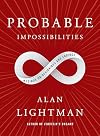
In "Probable Impossibilities," physicist and novelist Alan Lightman takes readers on a captivating journey through the enigmatic realms of space, consciousness, and the origins of life. With a keen intellect and a gift for storytelling, Lightman delves into profound questions, unraveling the mysteries that surround the universe, life, and the mind.
The book grapples with the fundamental nature of space, challenging readers to ponder whether it can be endlessly divided into smaller units or if show more it stretches infinitely into larger regions. Lightman skillfully weaves together scientific concepts and philosophical musings, inviting readers of all backgrounds to engage with these complex ideas without the need for a Ph.D. The narrative is accessible, making the incredibly vast and the remarkably minuscule aspects of our existence come alive on the pages.
One of the standout chapters is "Smile," a true masterpiece that explores the intricacies of a simple facial expression. Lightman examines the astounding number of steps our bodies take in a fraction of a second just to perceive and respond to a smile. The chapter is a testament to the author's ability to blend scientific curiosity with poetic prose, leaving readers in awe of the intricate dance between biology and emotion.
The exploration extends from the momentous event of the Big Bang to the hypothetical heat death of the universe, offering a comprehensive overview of the cosmic timeline. Lightman's narrative skillfully navigates through these grand scales, keeping readers hooked with a perfect balance of clarity and mystery.
While the author contemplates the reducibility of consciousness to the material brain and its neurons, there is a sense of uncertainty that permeates the text. This adds a layer of authenticity, acknowledging the complexity of such profound questions. Lightman's honesty in grappling with the mysteries of consciousness resonates with readers, prompting them to reflect on their own perspectives on this intricate topic.
"Probable Impossibilities" is well-written, easy to understand, and strikes the right balance between education and intrigue. It serves as an excellent introduction to the mysteries of the universe, offering a captivating blend of science, philosophy, and wonder. Lightman's exploration of the vast and the minuscule encourages readers to peer into the depths of the rabbit hole, leaving them with a profound sense of curiosity and a desire to delve further into the mysteries that surround us. In essence, this book is a celebration of the beauty and complexity inherent in the questions that define our existence. show less
The book grapples with the fundamental nature of space, challenging readers to ponder whether it can be endlessly divided into smaller units or if show more it stretches infinitely into larger regions. Lightman skillfully weaves together scientific concepts and philosophical musings, inviting readers of all backgrounds to engage with these complex ideas without the need for a Ph.D. The narrative is accessible, making the incredibly vast and the remarkably minuscule aspects of our existence come alive on the pages.
One of the standout chapters is "Smile," a true masterpiece that explores the intricacies of a simple facial expression. Lightman examines the astounding number of steps our bodies take in a fraction of a second just to perceive and respond to a smile. The chapter is a testament to the author's ability to blend scientific curiosity with poetic prose, leaving readers in awe of the intricate dance between biology and emotion.
The exploration extends from the momentous event of the Big Bang to the hypothetical heat death of the universe, offering a comprehensive overview of the cosmic timeline. Lightman's narrative skillfully navigates through these grand scales, keeping readers hooked with a perfect balance of clarity and mystery.
While the author contemplates the reducibility of consciousness to the material brain and its neurons, there is a sense of uncertainty that permeates the text. This adds a layer of authenticity, acknowledging the complexity of such profound questions. Lightman's honesty in grappling with the mysteries of consciousness resonates with readers, prompting them to reflect on their own perspectives on this intricate topic.
"Probable Impossibilities" is well-written, easy to understand, and strikes the right balance between education and intrigue. It serves as an excellent introduction to the mysteries of the universe, offering a captivating blend of science, philosophy, and wonder. Lightman's exploration of the vast and the minuscule encourages readers to peer into the depths of the rabbit hole, leaving them with a profound sense of curiosity and a desire to delve further into the mysteries that surround us. In essence, this book is a celebration of the beauty and complexity inherent in the questions that define our existence. show less
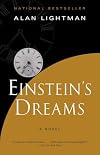
حصلت على نسخة من هذا العمل منذ خمس سنوات, ومنذ ذلك الحين وأنا أعيد قراءته مره كل عام.كتاب أحلام اينشتاين عبارة عن ثلاثين فصلاً قصيراً, كل فصل هو مزيج من القصة والفلسفة والعلم والتصوف بخصوص الزمن. كل فصل يحكي قصة عالم مختلف للزمن فيه قصة مختلفه .. في أحد العوالم يكون الزمن show more دائري يكرر نفسه إلا ما لانهاية .. وفي عالم أخر يكون الزمن عبارة عن ثلاث ابعاد في كل بعد يكون لكل شخص قصة مختلفه .. وفي عالم أخر لا يوجد مستقبل .. وفي عالم أخر يتغير الماضي .. وفي عالم أخر الزمن يسبق الماضي الحاضر .. وفي عالم اخر ينفذ الزمن .. وافكار مجنونة أخرىلا تستطيع تصنيف هذا العمل تحت تصنيف الخيال العلمي إطلاقاً لا من بعيد ولا من قريب ( رغم أن شكله يبدو كذلك ) هذا العمل في الحقيقة عمل صوفي وجودي إنساني بحت .. في كل واحدة من هذه القصص المجنونة يتخيل لايتمان شكلاً جديداً للزمن .. ثم يتخيل عالماً يحكمه هذا الشكل .. بعد ذلك ينقل لنا صورة من أفكار ومشاعر وفلسفات الناس في هذا العالم .. كيف يتصرف ويفكر ويشعر الناس لو كان الزمن لا ينتهي؟ وكيف يتصرفون لو كان المستقبل محدد سلفاً؟ وماذا لو كان الماضي متغيراً؟ وماذا لو كان الزمن سوف ينتهي بعض بضع دقائق؟ مالعلاقة بين ما نقوم به ( الأحداث ) والزمن؟ .. لا معادلات في هذا العمل ولا سيوف ليزر ولا آلالات تتنقل في الزمن .. هنا فقط الكثير الكثير من الصوفيه .. والكثير الكثير من الآلم الوجودي ... والكثير الكثير من الشجن والجمال واللذة والطرب .. show less
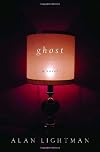
A beautiful, timely and timeless meditation on irreconcilable belief.
David Kurzweil saw something. The right word seemed to be "ghost." He couldn't not tell someone; the experience was too overwhelming to carry alone. Someone, unfortunately, told other people, people with agendas - reporters looking to break stories, believers looking to hold up David's experience as proof for their beliefs, scientists looking to debunk the proofs of the believers, individuals needing, for personal reasons, show more to feel the empowerment of knowing something outside the knowable - and not only does the ensuing media circus endanger David's job, it also places his friends and loved ones in awkward positions of having to defend their love for David while not sharing his conviction.
Woven into the story are his confrontations with other things that haunt him, such as the marriage he lost, the lie about the significance of his job that he told to his mother, his memories of his parents, and his lack of visible success relative to his peers, and with other things that only David seems to see: the redness of a toy ball, the beauty of a lake in a local park, the immense worth of his new employer, Martin, despite Martin's conviction that he would never measure up to his own father, a perpetual ghost in the fourth-generation funeral home that Martin still runs, though Martin has no children to whom he can teach the trade.
No, there isn't a thriller-satisfaction Shyamalan twist at the end. There isn't even a final explanation of what the ghost was. No, David doesn't convince any of his family or sciencey friends to believe him, and no, he isn't entirely sure what he believes besides the fact that he saw something, even at the end, when so many questions have come and gone by without clear answers. Some people think David makes a significant and positive difference. Others are glad when the story dies down.
Mr. Lightman, as seems to be his wont, isn't interested in giving us a systematic metaphysics, or even a hint about what to believe. What he wants us to see, and what David learns to see, is that even when nobody else can see what haunts one, one has everything to gain by trusting that something unusual and beautiful comes with every ghost, if one has the endurance to hold a belief in a world in which no other person can share the richness of a moment of one's own experience. The book becomes such a moment to the reader, a thing that can be shared but not mutually and exactly duplicated, a thing that is comic and clever and sad, but in the end, utterly, overwhelmingly, deeply and personally, beautiful. show less
David Kurzweil saw something. The right word seemed to be "ghost." He couldn't not tell someone; the experience was too overwhelming to carry alone. Someone, unfortunately, told other people, people with agendas - reporters looking to break stories, believers looking to hold up David's experience as proof for their beliefs, scientists looking to debunk the proofs of the believers, individuals needing, for personal reasons, show more to feel the empowerment of knowing something outside the knowable - and not only does the ensuing media circus endanger David's job, it also places his friends and loved ones in awkward positions of having to defend their love for David while not sharing his conviction.
Woven into the story are his confrontations with other things that haunt him, such as the marriage he lost, the lie about the significance of his job that he told to his mother, his memories of his parents, and his lack of visible success relative to his peers, and with other things that only David seems to see: the redness of a toy ball, the beauty of a lake in a local park, the immense worth of his new employer, Martin, despite Martin's conviction that he would never measure up to his own father, a perpetual ghost in the fourth-generation funeral home that Martin still runs, though Martin has no children to whom he can teach the trade.
No, there isn't a thriller-satisfaction Shyamalan twist at the end. There isn't even a final explanation of what the ghost was. No, David doesn't convince any of his family or sciencey friends to believe him, and no, he isn't entirely sure what he believes besides the fact that he saw something, even at the end, when so many questions have come and gone by without clear answers. Some people think David makes a significant and positive difference. Others are glad when the story dies down.
Mr. Lightman, as seems to be his wont, isn't interested in giving us a systematic metaphysics, or even a hint about what to believe. What he wants us to see, and what David learns to see, is that even when nobody else can see what haunts one, one has everything to gain by trusting that something unusual and beautiful comes with every ghost, if one has the endurance to hold a belief in a world in which no other person can share the richness of a moment of one's own experience. The book becomes such a moment to the reader, a thing that can be shared but not mutually and exactly duplicated, a thing that is comic and clever and sad, but in the end, utterly, overwhelmingly, deeply and personally, beautiful. show less
Lists
Short and Sweet (1)
Favourite Books (1)
Awards


You May Also Like


Associated Authors
Statistics
- Works
- 40
- Also by
- 15
- Members
- 11,121
- Popularity
- #2,122
- Rating
- 3.8
- Reviews
- 291
- ISBNs
- 283
- Languages
- 20
- Favorited
- 15


