
Edwin Lefèvre (1871–1943)
Author of Reminiscences of a Stock Operator
About the Author
Image credit: By not stated - The Bookman: http://babel.hathitrust.org/cgi/pt?id=uc1.$b623112;view=1up;seq=137;size=200, Public Domain, https://commons.wikimedia.org/w/index.php?curid=47457045
Works by Edwin Lefèvre
Associated Works
Lapham's Quarterly - Lines of Work: Volume IV, Number 2, Spring 2011 (2011) — Contributor — 32 copies, 2 reviews
Tagged
Common Knowledge
- Birthdate
- 1871
- Date of death
- 1943
- Gender
- male
- Education
- Lehigh University
- Organizations
- American Academy of Arts and Letters (Literature, 1916)
- Nationality
- USA
- Associated Place (for map)
- USA
Members
Reviews
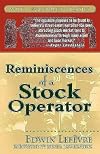
Reminiscences of a Stock Operator is a rollercoaster ride on pre SEC stock markets. It’s the wild west of finance by someone who understood every nuance of it. The book was written in the first person by Edwin Lefevre, but he refers to the hero throughout as Larry Livingston, and it is widely recognized to be the autobiography of Jesse Livermore, to whom the book is dedicated. It was first published in 1923 and republished every decade since. Human failings never go out of style. show more Especially when they’re larger than life, and well-written.
It is a refreshing tour of the markets at the turn of the last century. There were only 275 stocks on the NYSE, so it was much easier to have a handle on the day to day movements. Most stocks never traded at all, making it even easier. All the stocks could be displayed on one big board. If the market traded a quarter of a million shares, it was a huge day. There was ticker tape for data, and boys would post the latest trades on giant boards at every brokerage. There was no SEC and no taxes on profits. There was very little real news, and therefore plenty of rumors and tips. News was routinely withheld until insiders finished trading. A move of ten points in a day was a big deal. Overnight borrowings by brokers were 100 to 150 percent per annum. It was different world.
Livingston was what we would call a day trader. As a teenager, he went to bucket shops and put down margin – a dollar a share on hundred dollar stocks - and waited there for a gain of a dollar before selling. The bucket shop never actually executed the trade. It took the money and when the contract closed, it either kept the cash or paid out winnings. If there were too many bets on a stock, the shop could influence the tape by actually buying or selling the underlying stock for its own account. The fix was in, and bucket shops appeared all over the country.
As a 14 year old, Livingston was the kid posting the numbers. It was the only paying job he ever had. He remembered all the numbers every day, he said, and could predict patterns, which was his system. But it only worked well at bucket shops, where he could get an instant fill at the desk, because the order was never actually sent to the exchange floor to be executed. When he tried it at a real New York brokerage, he lost.
Livingston’s life quest was to learn from his mistakes and find the undefeatable system. It wasn’t about the money, he said, but about the self-discipline – the game. “I am so accustomed to losing money that I never think first of that phase of my mistakes. It always the play itself: the reason why.” He looked at losses as tuition fees, he said.
Incredibly, he made millions and lost them again almost immediately. He was a multimillionaire in his early twenties, in 1907. But soon had to declare personal bankruptcy on over a million dollars. He owned three yachts but soon had to rent a room – in Chicago – where he tried to start over as an unknown.
He did not practice diversification. When the tape told him something, he was all in, fully margined. So when he hit, it was gigantic. When he missed, he got wiped out. When he could not see something going up, it must therefore go down, so he sold short, massively. Once, when someone cornered a commodity, he broke it by shorting a related commodity, causing the whole edifice to crumble and allowing him to get out, at his own price. He understood it all.
The ride is dizzying. The story is engrossing. The adventures are captivating. It moves effortlessly. There is a challenge of sorts, in deciphering the jargon of the era: “reaction” is a retracement or reversal, for example. A “break” is a sharp fall in price. You quickly figure it out. Overall, it is a total delight, an education, and a warning.
The writing is often terrific. Here’s a description of the manager of a New Haven bucket shop: “He’d say good morning as though he had discovered the morning’s goodness after ten years of searching for it with a microscope and was making you a present of the discovery, as well as the sky, the sun, and the firm’s bankroll.”
Of interest might be that nearly all the famous names in the book are unknown today. The traders, the brokerages, the CEOs and directors, and even their companies sound made up to a 2018 ear. Perhaps this should not be surprising, when you realize none of the original companies in the Dow Jones Industrials are still there. The huge successes, the huge corporations – pretty much all have faded away. Above it all sits the market, Livingston’s muse. His message was that while disciplined investors can pick stocks and win, no one can beat the market. His mission to perfect his game was therefore a failure. In real life, Livermore lost it all one last time, and shot himself, the decade after this book first came out.
David Wineberg show less
It is a refreshing tour of the markets at the turn of the last century. There were only 275 stocks on the NYSE, so it was much easier to have a handle on the day to day movements. Most stocks never traded at all, making it even easier. All the stocks could be displayed on one big board. If the market traded a quarter of a million shares, it was a huge day. There was ticker tape for data, and boys would post the latest trades on giant boards at every brokerage. There was no SEC and no taxes on profits. There was very little real news, and therefore plenty of rumors and tips. News was routinely withheld until insiders finished trading. A move of ten points in a day was a big deal. Overnight borrowings by brokers were 100 to 150 percent per annum. It was different world.
Livingston was what we would call a day trader. As a teenager, he went to bucket shops and put down margin – a dollar a share on hundred dollar stocks - and waited there for a gain of a dollar before selling. The bucket shop never actually executed the trade. It took the money and when the contract closed, it either kept the cash or paid out winnings. If there were too many bets on a stock, the shop could influence the tape by actually buying or selling the underlying stock for its own account. The fix was in, and bucket shops appeared all over the country.
As a 14 year old, Livingston was the kid posting the numbers. It was the only paying job he ever had. He remembered all the numbers every day, he said, and could predict patterns, which was his system. But it only worked well at bucket shops, where he could get an instant fill at the desk, because the order was never actually sent to the exchange floor to be executed. When he tried it at a real New York brokerage, he lost.
Livingston’s life quest was to learn from his mistakes and find the undefeatable system. It wasn’t about the money, he said, but about the self-discipline – the game. “I am so accustomed to losing money that I never think first of that phase of my mistakes. It always the play itself: the reason why.” He looked at losses as tuition fees, he said.
Incredibly, he made millions and lost them again almost immediately. He was a multimillionaire in his early twenties, in 1907. But soon had to declare personal bankruptcy on over a million dollars. He owned three yachts but soon had to rent a room – in Chicago – where he tried to start over as an unknown.
He did not practice diversification. When the tape told him something, he was all in, fully margined. So when he hit, it was gigantic. When he missed, he got wiped out. When he could not see something going up, it must therefore go down, so he sold short, massively. Once, when someone cornered a commodity, he broke it by shorting a related commodity, causing the whole edifice to crumble and allowing him to get out, at his own price. He understood it all.
The ride is dizzying. The story is engrossing. The adventures are captivating. It moves effortlessly. There is a challenge of sorts, in deciphering the jargon of the era: “reaction” is a retracement or reversal, for example. A “break” is a sharp fall in price. You quickly figure it out. Overall, it is a total delight, an education, and a warning.
The writing is often terrific. Here’s a description of the manager of a New Haven bucket shop: “He’d say good morning as though he had discovered the morning’s goodness after ten years of searching for it with a microscope and was making you a present of the discovery, as well as the sky, the sun, and the firm’s bankroll.”
Of interest might be that nearly all the famous names in the book are unknown today. The traders, the brokerages, the CEOs and directors, and even their companies sound made up to a 2018 ear. Perhaps this should not be surprising, when you realize none of the original companies in the Dow Jones Industrials are still there. The huge successes, the huge corporations – pretty much all have faded away. Above it all sits the market, Livingston’s muse. His message was that while disciplined investors can pick stocks and win, no one can beat the market. His mission to perfect his game was therefore a failure. In real life, Livermore lost it all one last time, and shot himself, the decade after this book first came out.
David Wineberg show less

The jacket blurb on this book is: "One of the most highly regarded financial books ever written." Based on what, I'm not precisely sure. Certainly the anecdotes related in this book (which was originally published in the early 1920s) have little or no relevance to stock investing as it is carried on today, or indeed, even as it has been carried on since the creation of the Securities & Exchange Commission a decade after the book came out. While financial manipulation will always be with us, show more the bucket shops and market pools described in the book today are outright illegal. There would be no wisdom to be gained today; this is strictly a book for those yearning for a long-distant past, when individuals could go onto the Street and make (and lose, several) fortunes with nimble wits and a lot of gall. The book is dedicated to noted stock manipulator and great bear Jesse Livermore, and is generally regarded as a very thinly disguised biography of him. Certainly, a classic in financial biography, I would say. show less
Dated Yet Insightful
This book's contribution to the literature of the financial markets is incontrovertible. For an investing public starved of trading wisdom in a pre-Markowitz era when stock traders relied more or less on rules of thumb, "Reminiscences" stood out as a true gem. It should be read both as a source of profound insight into the workings of financial markets past and present, and as a critique of speculative activity in the years prior to the bursting of the stock market bubble show more in 1929.
One of the most important lessons mentioned in the book is that a trader does not have to be invested in the market all the time. It sounds hackneyed today, but this tenet is actually difficult to follow in practice, given the propensity of traders and investors to ride out losing positions.
It is important to remember that, having been written during a massive bull run and prior to the systemic failure of the stock market in 1929, during which the market's 'boundless hope and optimism', as described in Galbraith's "The Great Crash 1929", run roughshod over sentiments that the markets were overheating, "Reminiscences" should be read with an eye towards portfolio preservation, not injudicious speculation.
(Posted in Amazon.com, May 3, 2004) show less
This book's contribution to the literature of the financial markets is incontrovertible. For an investing public starved of trading wisdom in a pre-Markowitz era when stock traders relied more or less on rules of thumb, "Reminiscences" stood out as a true gem. It should be read both as a source of profound insight into the workings of financial markets past and present, and as a critique of speculative activity in the years prior to the bursting of the stock market bubble show more in 1929.
One of the most important lessons mentioned in the book is that a trader does not have to be invested in the market all the time. It sounds hackneyed today, but this tenet is actually difficult to follow in practice, given the propensity of traders and investors to ride out losing positions.
It is important to remember that, having been written during a massive bull run and prior to the systemic failure of the stock market in 1929, during which the market's 'boundless hope and optimism', as described in Galbraith's "The Great Crash 1929", run roughshod over sentiments that the markets were overheating, "Reminiscences" should be read with an eye towards portfolio preservation, not injudicious speculation.
(Posted in Amazon.com, May 3, 2004) show less
Written in 1923 this book is still relevant today. Lefever clearly distinguishes the differences among speculation (the subject of the book), gambling, and investing. The lessons learned 100 years ago sometimes seem simplistic. If you've never speculated in the stock market you may discount the importance of these common sense guidelines.
This is a book worth reading multiple times.
This is a book worth reading multiple times.
Lists
Awards

You May Also Like


Associated Authors
Statistics
- Works
- 11
- Also by
- 2
- Members
- 1,303
- Popularity
- #19,699
- Rating
- 4.0
- Reviews
- 12
- ISBNs
- 109
- Languages
- 9
- Favorited
- 1