
Darian Leader
Author of Introducing Lacan
About the Author
Darian Leader is a psychoanalyst practising in London. He is a member of the Centre for Freudian Analysis and Research and of the College of Psychoanalysts - UK. He is the author of Why Do Women Write More Letters Than They Post?, Promises Lovers Make When It Gets Late, Freud's Footnotes and show more Stealing the Mona Lisa, and co-author, with David Corfield, of Why Do People Get Ill'. show less
Works by Darian Leader
¿Por qué no podemos dormir?: Nuestra mente durante el sueño y el insomnio (2019) 7 copies, 2 reviews
Leader (Angel Paws) 2 copies
Qu'est-ce que cache le sexe? 1 copy
Cinsellik Seksten mi İbaret? 1 copy
Associated Works
Tagged
Common Knowledge
- Birthdate
- 1965
- Gender
- male
- Occupations
- psychoanalyst
- Organizations
- Centre for Freudian Analysis and Research (CFAR)
- Nationality
- UK
- Birthplace
- California, USA
- Places of residence
- Cambridge, Cambridgeshire, England, UK
London, England, UK
Paris, France - Associated Place (for map)
- UK
Members
Reviews

Manic-depressive illness, although serious, used to be rare (roughly 1% of the population). Yet during the past three decades more and more people have not only been diagnosed but, put on a cocktail of medication to address their 'bipolarity'. Now, are such diagnosis genuine? Or is this increase a symptom of something deeper that is, something gone wrong with our mental healthcare systems?
Darian Leader, 'a psychoanalyst (...) and a member of the Centre for Freudian Analysis and Research and show more of the College of Psychoanalysis' surely throws here a needed debate.
He may have a point in accusing the pharmaceutical companies of marketing an illness so as to sell more drugs to more people:
'Historians of psychiatry have all made the same observation here. It was precisely when the patents began to run out on the biggest-selling mainstream antidepressants in the mid-90s that bipolar suddenly became the recipient of the vast marketing budgets of the pharmaceutical industry.'
I don't know about that and, quite frankly, I feel wary of such argument tantamount (or so I felt) of accusing big pharmas of conspiracy to make profits. I personally don't want to go there.
Where I fully agree with him is, when he denounces modern psychiatry that has redefined manic-depression with ill consequences. First, it has stripped such illness of its specificity ('the flight of ideas, the special sense of connectedness to the world, the oscillation of a fault, and the effort to create a categorical separation of good and bad') to now include a new spectrum of very different mood swings each with their own features. Out with 'manic-depression'! In with the quite new 'bipolar' catch-all label (BP1, BP2, BP3, BP4, BP5, BP6 and their satellites...) which, being too simplistic, doesn't help the understanding of a complex illness. Then because, not only content to have thus airbrushed the very specifics of manic-depression, it has reduced itself to the prescription of pills, as if cocktails of medication were the best if not only way to address mental issues. As he clearly states: it isn't. Understanding patients' histories is also crucial, a human touch that modern psychiatry sadly seems to have dangerously lost touch with.
'Strictly Bipolar' is a short read, challenging at times, but nevertheless a powerful argument for a new approach to treating what remains a very serious illness. Bipolar cannot be dealt with casually thrusting pills, all the while neglecting the human factor. That such a condemnation is needed shows how cold and dehumanised (economically interested?) our healthcare systems, consciously or not, came to be. A must read for anyone interested in the topic. show less
Darian Leader, 'a psychoanalyst (...) and a member of the Centre for Freudian Analysis and Research and show more of the College of Psychoanalysis' surely throws here a needed debate.
He may have a point in accusing the pharmaceutical companies of marketing an illness so as to sell more drugs to more people:
'Historians of psychiatry have all made the same observation here. It was precisely when the patents began to run out on the biggest-selling mainstream antidepressants in the mid-90s that bipolar suddenly became the recipient of the vast marketing budgets of the pharmaceutical industry.'
I don't know about that and, quite frankly, I feel wary of such argument tantamount (or so I felt) of accusing big pharmas of conspiracy to make profits. I personally don't want to go there.
Where I fully agree with him is, when he denounces modern psychiatry that has redefined manic-depression with ill consequences. First, it has stripped such illness of its specificity ('the flight of ideas, the special sense of connectedness to the world, the oscillation of a fault, and the effort to create a categorical separation of good and bad') to now include a new spectrum of very different mood swings each with their own features. Out with 'manic-depression'! In with the quite new 'bipolar' catch-all label (BP1, BP2, BP3, BP4, BP5, BP6 and their satellites...) which, being too simplistic, doesn't help the understanding of a complex illness. Then because, not only content to have thus airbrushed the very specifics of manic-depression, it has reduced itself to the prescription of pills, as if cocktails of medication were the best if not only way to address mental issues. As he clearly states: it isn't. Understanding patients' histories is also crucial, a human touch that modern psychiatry sadly seems to have dangerously lost touch with.
'Strictly Bipolar' is a short read, challenging at times, but nevertheless a powerful argument for a new approach to treating what remains a very serious illness. Bipolar cannot be dealt with casually thrusting pills, all the while neglecting the human factor. That such a condemnation is needed shows how cold and dehumanised (economically interested?) our healthcare systems, consciously or not, came to be. A must read for anyone interested in the topic. show less
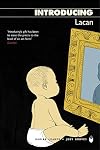
My rationale for reading 'Introducing Lacan' was that I aspire one day to finish a book by Slavoj Žižek. Žižek is a contemporary left-wing political philosopher who shares my fascination with Robespierre, so of course I want to read his books. Unfortunately, my attempts thus far have been stymied by Žižek's copious use of Lacanian terms (and other philosophical/psychological language that I don't understand). A quick internet search is insufficient to provide clarity, especially as show more I've never studied psychology.
So, did this book help me understand Lacan's ideas and, by extension, language? Yes, insofar as I previously didn't understand them at all. That said, I think I need to reread this book at least once and maybe read another similar text. I am certainly not ready to explain Lacan's graph of desire, although the idea of it appeals. That said, Lacan is supposed to be difficult, so I'm not surprised. Moreover, I now feel like I want to read more about psychoanalysis, which it turns out is rather fascinating.
The elements of Lacan's work that I found most approachable concerned language (a structure) as distinct from speech (a performance). I liked Lacan's thoughts on the process of assigning meaning to language during childhood. The idea of a chain of signifiers, which reveal meaning in the space between them, is also useful. I've always found the importance of words to human identity and personality very interesting. (At one point, I had this idea that a human soul consists of a tangle of words; I strongly identified human consciousness with use of words. Then I came across a thought experiment - a baby is born that can use none of the five senses and grows up unable to sense their surroundings or communicate. Can they be said to possess consciousness as we understand it? If so, would they spontaneously structure their thoughts in words, without any external example of language to follow? I have no answers, but that thought experiment blew my mind. And ruined any clarity I ever had about whether I believed in a human soul.)
Other terms that I now have at least some understanding of thanks to this book: jouissance, phantasy, transference (which Lacan understood differently to Freud, it seems), and the phallus. I liked the irony of the word phallus being used so frequently at one point in this book that it lost all meaning. This amused me because to Lacan 'the phallus' is (as I understand it) always an absent object, not meaningless but literally meaning nothing(ness). This also made me wonder to what extent the labelling of abstract concepts with gendered words embeds prejudices within psychoanalysis. At the time Freud and Lacan were writing, the feminist critiques of structural misogyny hadn't happened. Moreover, Lacan apparently considered the basis of men's and women's sexuality to be fundamentally different, which apart from any other problems presupposes a strict gender binary. I presume subsequent psychoanalytic theorists have addressed this? Dammit, the problem with reading an introduction to a previously unknown field is that I now want to know more about it.
I suppose in that case this book can be said to have done its work. I feel much better informed about Lacan's life and work, I have learned some of the key terms he used, and there are various concepts which I didn't grasp but might with further research (such as the castration complex, 'not-all', and 'sinthome'). The book was quick to read and flowed well, probably because the cartoons and other imagery seemed better integrated into the text than was the case in 'Introducing Focault'. I particularly liked the illustration used for the concept of a circular square. show less
So, did this book help me understand Lacan's ideas and, by extension, language? Yes, insofar as I previously didn't understand them at all. That said, I think I need to reread this book at least once and maybe read another similar text. I am certainly not ready to explain Lacan's graph of desire, although the idea of it appeals. That said, Lacan is supposed to be difficult, so I'm not surprised. Moreover, I now feel like I want to read more about psychoanalysis, which it turns out is rather fascinating.
The elements of Lacan's work that I found most approachable concerned language (a structure) as distinct from speech (a performance). I liked Lacan's thoughts on the process of assigning meaning to language during childhood. The idea of a chain of signifiers, which reveal meaning in the space between them, is also useful. I've always found the importance of words to human identity and personality very interesting. (At one point, I had this idea that a human soul consists of a tangle of words; I strongly identified human consciousness with use of words. Then I came across a thought experiment - a baby is born that can use none of the five senses and grows up unable to sense their surroundings or communicate. Can they be said to possess consciousness as we understand it? If so, would they spontaneously structure their thoughts in words, without any external example of language to follow? I have no answers, but that thought experiment blew my mind. And ruined any clarity I ever had about whether I believed in a human soul.)
Other terms that I now have at least some understanding of thanks to this book: jouissance, phantasy, transference (which Lacan understood differently to Freud, it seems), and the phallus. I liked the irony of the word phallus being used so frequently at one point in this book that it lost all meaning. This amused me because to Lacan 'the phallus' is (as I understand it) always an absent object, not meaningless but literally meaning nothing(ness). This also made me wonder to what extent the labelling of abstract concepts with gendered words embeds prejudices within psychoanalysis. At the time Freud and Lacan were writing, the feminist critiques of structural misogyny hadn't happened. Moreover, Lacan apparently considered the basis of men's and women's sexuality to be fundamentally different, which apart from any other problems presupposes a strict gender binary. I presume subsequent psychoanalytic theorists have addressed this? Dammit, the problem with reading an introduction to a previously unknown field is that I now want to know more about it.
I suppose in that case this book can be said to have done its work. I feel much better informed about Lacan's life and work, I have learned some of the key terms he used, and there are various concepts which I didn't grasp but might with further research (such as the castration complex, 'not-all', and 'sinthome'). The book was quick to read and flowed well, probably because the cartoons and other imagery seemed better integrated into the text than was the case in 'Introducing Focault'. I particularly liked the illustration used for the concept of a circular square. show less
The classic short graphic guide to Lacan is written by Darian Leader who is generally worth reading in his own right. However, the graphic format should not be confused with simplicity - this is a difficult liitle book because Lacan is very difficult. You may need to read it more than once to 'get' it.
Lacan is worth the effort but perhaps with a critical eye towards the Freudian framework within which he was writing. Perhaps he might best be thought of as someone struggling to find the show more language for what it is to be a human being and contributing significant insights without, in the end, succeeding.
A useful introduction but only the first step on a very long journey which you may not want to take - if only because life is short and there is no guarantee that the train will end up where you want to be. show less
Lacan is worth the effort but perhaps with a critical eye towards the Freudian framework within which he was writing. Perhaps he might best be thought of as someone struggling to find the show more language for what it is to be a human being and contributing significant insights without, in the end, succeeding.
A useful introduction but only the first step on a very long journey which you may not want to take - if only because life is short and there is no guarantee that the train will end up where you want to be. show less

O psicanalista Darian Leader é um exímio escritor, em Simplesmente Bipolar ele demonstra isso mais uma vez na medida certa entre o científico e o exemplo prático, tornando este livro um exemplar que todo psicanalista deveria deixar debaixo do braço para consulta. É razoavelmente curto, mas extenso em aplicabilidade teórica, por isso o marquei todo por conta das citações preciosas.
Lists
Deathreads (1)
Awards


You May Also Like


Associated Authors
Statistics
- Works
- 42
- Also by
- 1
- Members
- 1,249
- Popularity
- #20,539
- Rating
- 3.6
- Reviews
- 23
- ISBNs
- 101
- Languages
- 12
