
Richard Jenkyns
Author of A Fine Brush on Ivory: An Appreciation of Jane Austen
About the Author
Richard Jenkyns is Professor of the Classical Tradition and Fellow of Lady Margaret Hall, Oxford.
Works by Richard Jenkyns
Associated Works
Memoria Romana: Memory in Rome and Rome in Memory (Supplements To The Memoirs Of The American Academy In Rome) (2014) — Contributor — 5 copies
Concepts and Functions of Philhellenism: Aspects of a Transcultural Movement (Trends in Classics – Pathways of Reception Book 7) (2021) — Contributor — 3 copies
The Reception of Ancient Cyprus in Western Culture (Trends in Classics - Supplementary Volumes, 139) (2022) — Contributor — 1 copy
Tagged
Common Knowledge
- Birthdate
- 1949-03-18
- Gender
- male
- Occupations
- Professor of the Classical Tradition
- Organizations
- Oxford University
- Awards and honors
- Fellow of Lady Margaret Hall, Oxford
- Short biography
- Richard Jenkyns, a Fellow of Lady Margaret Hall, Professor of the Classical Tradition at Oxford.
- Nationality
- UK
- Associated Place (for map)
- UK
Members
Reviews

Richard Jenkyn's book is a thorough and unhurried exploration the influence of ancient Greece on Victorian society. Despite being a Fellow of Lady Margaret Hall of Oxford University (very classical), he succeeds in being even handed and has written an altogether fascinating book.
He sees a source of Victorian Hellenism in late 18th century romanticism with it's ideas of the "noble savage", shepherds and shepherdesses, the rural idyll etc. with ancient Greece fitting easily into this show more environment.
Of course, the rationalism and science of the 19th century industrial revolution was notably unromantic, setting up a tension that runs through the Victorian period, and which he illustrates so well. As he says, "...that scientific thought, hard remorseless and factual, was draining magic and fantasy out of the world." and he quotes from Peacock's essay, "The Four Ages of Poetry", "We know too well that there are no dryads in Hyde Park nor naiads in Regent's Canal. But barbaric manners and supernatural inventions are essential to poetry." So the modern poet (i.e. Victorian poet), ignoring the achievements of historians and philosophers, is merely "wallowing in the rubbish of departed ignorance."
Or to really turn things on their heads, he quotes Fitzgerald, "As I often think, it is not the poetical imagination, but bare Science that every day more and more unveils a greater Epic than the Iliad." Now perhaps the industrialist and scientists are the new Heroes?
In some respects he shows the Classics to be a refuge from the frantic change in Victorian society. The 19th century Mediterranean still retained it's timeless ancient landscapes of olive orchards and vineyards and offered a stark contrast to what was widely seen as the industrial ruination the British landscape and traditional life. A recurrent theme was to see late Victorian England as late Ancient Rome comparing unfavourably to a vital classical Greece. Somehow things had passed their best, the freshness of youth had gone and art had lost it's ancient purity. Both Ancient Rome and Victorian England were imperial, and the guardians of the empire were the classically educated British public school and Oxbridge elite. A classical education was undoubtedly a social advantage and it showed an allegiance to the autocratic, aristocratic, Platonic ideal of the philosopher kings and their administrations.
He shows that the new democratic, industrial and commercial world of the middle and lower classes, had little in common with their Hellenistic masters other than the uniform longing for a lost rural past. Dickens for example was a popular writer with no classical coolness (Jenkyns points out that his novels would not have been so good if they had) who hankered after earlier simpler pre-industrial times. Tolkien's hero Bilbo Baggins is not a hero in the classical mould, but is nonetheless a hero of a peculiarly understated, unassuming British type.
Jenkyns shows that the Germans didn't domesticate the Homeric model to such an extent and followed the idea more closely with the the "healthy, vigorous animalism" promoted by Nietszche, something that never quite fitted the stuffy restrictive Victorian atmosphere. They rather escaped into the exoticism of the aesthetes using a degraded classicism and orientalism as a cover for titillating art and fantasy writing.
Some writers could see value in the old and the new worlds. As he says, "Mill wanted to call the old world in to redress the balance of the new: classical literature should be studied he said, "not as being without faults, but as having contrary faults to those of our own day"; and conversely ancient states exhibited "precisely that order of virtues in which a commercial society is apt to be deficient." In other words, you need classicists to administer the democratic ideals of free speech, liberty and equality before the law.
It's interesting to think what Homer would have made of all this. He actually believed in immortals and demi-gods and unlike Gladstone didn't have to rationalise his belief with Christianity or an industrial revolution. show less
He sees a source of Victorian Hellenism in late 18th century romanticism with it's ideas of the "noble savage", shepherds and shepherdesses, the rural idyll etc. with ancient Greece fitting easily into this show more environment.
Of course, the rationalism and science of the 19th century industrial revolution was notably unromantic, setting up a tension that runs through the Victorian period, and which he illustrates so well. As he says, "...that scientific thought, hard remorseless and factual, was draining magic and fantasy out of the world." and he quotes from Peacock's essay, "The Four Ages of Poetry", "We know too well that there are no dryads in Hyde Park nor naiads in Regent's Canal. But barbaric manners and supernatural inventions are essential to poetry." So the modern poet (i.e. Victorian poet), ignoring the achievements of historians and philosophers, is merely "wallowing in the rubbish of departed ignorance."
Or to really turn things on their heads, he quotes Fitzgerald, "As I often think, it is not the poetical imagination, but bare Science that every day more and more unveils a greater Epic than the Iliad." Now perhaps the industrialist and scientists are the new Heroes?
In some respects he shows the Classics to be a refuge from the frantic change in Victorian society. The 19th century Mediterranean still retained it's timeless ancient landscapes of olive orchards and vineyards and offered a stark contrast to what was widely seen as the industrial ruination the British landscape and traditional life. A recurrent theme was to see late Victorian England as late Ancient Rome comparing unfavourably to a vital classical Greece. Somehow things had passed their best, the freshness of youth had gone and art had lost it's ancient purity. Both Ancient Rome and Victorian England were imperial, and the guardians of the empire were the classically educated British public school and Oxbridge elite. A classical education was undoubtedly a social advantage and it showed an allegiance to the autocratic, aristocratic, Platonic ideal of the philosopher kings and their administrations.
He shows that the new democratic, industrial and commercial world of the middle and lower classes, had little in common with their Hellenistic masters other than the uniform longing for a lost rural past. Dickens for example was a popular writer with no classical coolness (Jenkyns points out that his novels would not have been so good if they had) who hankered after earlier simpler pre-industrial times. Tolkien's hero Bilbo Baggins is not a hero in the classical mould, but is nonetheless a hero of a peculiarly understated, unassuming British type.
Jenkyns shows that the Germans didn't domesticate the Homeric model to such an extent and followed the idea more closely with the the "healthy, vigorous animalism" promoted by Nietszche, something that never quite fitted the stuffy restrictive Victorian atmosphere. They rather escaped into the exoticism of the aesthetes using a degraded classicism and orientalism as a cover for titillating art and fantasy writing.
Some writers could see value in the old and the new worlds. As he says, "Mill wanted to call the old world in to redress the balance of the new: classical literature should be studied he said, "not as being without faults, but as having contrary faults to those of our own day"; and conversely ancient states exhibited "precisely that order of virtues in which a commercial society is apt to be deficient." In other words, you need classicists to administer the democratic ideals of free speech, liberty and equality before the law.
It's interesting to think what Homer would have made of all this. He actually believed in immortals and demi-gods and unlike Gladstone didn't have to rationalise his belief with Christianity or an industrial revolution. show less
This is an excellent coverage of the Victorian reception of classical Greek literature, language, and art. It extends itself a bit in time, looking back to the Romantics (Shelley and Byron both playing significant roles) and forward to the Modernists (Eliot and Jones, in particular) to better situate the Victorians themselves. By restricting itself to the Victorians proper -- principally English, a few Scots and Irish -- the book gains strength, because the interconnectedness of that show more intellectual world prevents the observations from being a detached set of discrete observations: Jowett, Farrar, Disraeli, Gladstone, (George) Eliot, Pater, Ruskin, Wilde, Hardy et al. were all influencing and being influenced by each other (which is, of course, why we recognize "Victorian" as having a more substantive value than just a chronological tag).
Jenkyns has a wide and deep understanding not only of the period but of the classical sources in question, and is effective in delineating the differences between the Victorians' views and ours, notably of classical tragedy and Homer.
This is in many ways an irretrievably vanished world: between that world and ours is fixed the great gulf represented by Dodds (The Greeks and the Irrational) and Milman Parry, to say nothing of the evacuation of classical education from the general curricula of humane letters; but that doesn't mean that it's not both interesting in itself and enlightening as a contrast to our own. show less
Jenkyns has a wide and deep understanding not only of the period but of the classical sources in question, and is effective in delineating the differences between the Victorians' views and ours, notably of classical tragedy and Homer.
This is in many ways an irretrievably vanished world: between that world and ours is fixed the great gulf represented by Dodds (The Greeks and the Irrational) and Milman Parry, to say nothing of the evacuation of classical education from the general curricula of humane letters; but that doesn't mean that it's not both interesting in itself and enlightening as a contrast to our own. show less
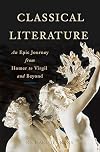
Classical Literature is a good, readable overview of the history of Greek and Latin literature from Homer through the AD 100s. He touches on all of the major authors: Homer, Hesiod, Herodotus, Thucydides, Vergil, Ovid, Horace, inter alios. There's an entire chapter dedicated to Greek drama. But at the same time he also remembers the writers who are less well known, mostly because their work has not come down to us, but were key to the development of literature at the time. I, for one, show more appreciate that. I also really enjoyed his section on the Apostle Paul and his place as a classical writer. All too often, I think we forget that the New Testament was not written in a vacuum and that it has a place in literature as well as religion. So if you're at all interested in classical literature, this a book worth picking up. Highly recommended for anyone with an interest in Greek or Latin literature, the Classics, or the history of literature. show less

I've been a fan of Jane Austen ever since I read Pride and Prejudice for the first time (back in school and in Bulgarian). And because she was part of the standard school program in English, I got to read some of the criticism about her as well. As the years passed I started enjoying criticism a lot more - it was no more the thing that you had to read so you know what the teacher expects you to think, it became a way to look into a book from a different angle - even if you disagree with it show more occasionally (and as long as the critic does not ignore half of the book in order to make a point, disagreeing is just fine).
Richard Jenkyns does not concentrate only on the more popular novels - he spends a full chapter on Mansfield Park in addition to mentioning it quite often almost everywhere else and he goes on to analyze all 4 finished novels that she sees published in her life (although he does mention Persuasion and Northanger Abbey occasionally, they are there more for illustration than for anything else - he even makes a case of them not being fully Austen novels in some ways - for she might have changed them - or at least being different in dynamics and structure because of variety of reasons; in the same way he brings up some of the shorter works... to illustrate a point but not to study them). And even Sense and Sensibility is mostly used as counterpart of the other three novels (and his opinion about this novel is where I slightly disagree with him although he makes some good points).
The study of Emma, Pride and Prejudice and Mansfield Park allows Jenkyns to show the diversity of Austen (and this is where all other works make appearance - as most of them are different). At the same time he managed to show her compared to some of the other masters of the written word - from Dickens to Wodehouse. And it is an extensive study - into the main premise of the books (so similar and so different), into the characters building and Austen choices of them, into the concept of place in her novels (or lack of in the case of Emma). Nothing in that book is revolutionary but at the same time there are no ideas coming out of nowhere; nor he tried to show himself as cleverer than the rest of the critics (and he did cite quite a lot of them and not always in situations where he could agree with them).
I enjoyed the book a lot -- I've read all of the Austen novels, as it turned out I've read most of the books he was comparing against as well so I was not just relying on his thoughts and the passages that were cited in the book. I might disagree about some of the points in the book but that is not a reason not to recommend the book. show less
Richard Jenkyns does not concentrate only on the more popular novels - he spends a full chapter on Mansfield Park in addition to mentioning it quite often almost everywhere else and he goes on to analyze all 4 finished novels that she sees published in her life (although he does mention Persuasion and Northanger Abbey occasionally, they are there more for illustration than for anything else - he even makes a case of them not being fully Austen novels in some ways - for she might have changed them - or at least being different in dynamics and structure because of variety of reasons; in the same way he brings up some of the shorter works... to illustrate a point but not to study them). And even Sense and Sensibility is mostly used as counterpart of the other three novels (and his opinion about this novel is where I slightly disagree with him although he makes some good points).
The study of Emma, Pride and Prejudice and Mansfield Park allows Jenkyns to show the diversity of Austen (and this is where all other works make appearance - as most of them are different). At the same time he managed to show her compared to some of the other masters of the written word - from Dickens to Wodehouse. And it is an extensive study - into the main premise of the books (so similar and so different), into the characters building and Austen choices of them, into the concept of place in her novels (or lack of in the case of Emma). Nothing in that book is revolutionary but at the same time there are no ideas coming out of nowhere; nor he tried to show himself as cleverer than the rest of the critics (and he did cite quite a lot of them and not always in situations where he could agree with them).
I enjoyed the book a lot -- I've read all of the Austen novels, as it turned out I've read most of the books he was comparing against as well so I was not just relying on his thoughts and the passages that were cited in the book. I might disagree about some of the points in the book but that is not a reason not to recommend the book. show less
Lists
Awards

You May Also Like


Associated Authors
Statistics
- Works
- 18
- Also by
- 10
- Members
- 682
- Popularity
- #37,082
- Rating
- 3.8
- Reviews
- 9
- ISBNs
- 37
- Languages
- 3