
About the Author
Dilip Hiro is the author of more than thirty books, including After Empire, Blood of the Earth, and War Without End. He contributes regularly to The New York Times, The Guardian, The Washington Post, and The Observer, and is a commentator for CNN and the BBC. He lives in London.
Image credit: Wikipedia
Works by Dilip Hiro
Inside Central Asia: A Political and Cultural History of Uzbekistan, Turkmenistan, Kazakhstan, Kyrgyzstan, Tajikistan, Turkey, and Iran (2009) 162 copies, 3 reviews
Secrets and Lies: Operation "Iraqi Freedom" and After: A Prelude to the Fall of U.S. Power in the Middle East? (2003) 42 copies
Cold War in the Islamic World: Saudi Arabia, Iran and the Struggle for Supremacy (2018) 40 copies, 2 reviews
Associated Works
The World According to Tomdispatch: America In The New Age of Empire (2008) — Contributor — 30 copies
Tagged
Common Knowledge
- Canonical name
- Hiro, Dilip
- Gender
- male
- Education
- Virginia Polytechnic Institute and State University (M.A.)
- Occupations
- historian
journalist
playwright
writer - Nationality
- British India (birth)
UK - Birthplace
- Larkana, Sindh, Pakistan
- Places of residence
- London, England, UK
- Map Location
- England, UK
Members
Reviews
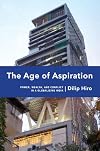
(Reprinted from the Chicago Center for Literature and Photography [cclapcenter.com]. I am the original author of this essay, as well as the owner of CCLaP; it is not being reprinted illegally.)
I was disappointed to stop by the Goodreads page for Dilip Hiro's The Age of Aspiration, as part of researching this review, and see that not a single writeup besides mine has been posted there; that's a real shame, because out of the half-dozen or so books I've read in the last several years on show more contemporary Indian society, this is easily the smartest and most insightful out of all of them, an incredibly dense 400 pages that attempts to tie together the rising capitalist middle-class in that soon-to-be-superpower nation, the decaying remnants of the old socialist system that still mainly informs the governmental agencies, the uncontrollable corruption within that system that has inspired this completely separated new layer of middle-class capitalism (one that's essentially being slapped on top of the old layer, with no attempts whatsoever to integrate the two), the rising Maoist terrorist activities within the rural mining regions that is a direct result of this new capitalist layer, the complicated ties between Indian business and the Western partnerships in America and Great Britain, and a whole lot more, all by a veteran journalist whose controversial 1976 India Today originally got him banned by a very unhappy Indira Gandhi. Now, granted, this is a difficult book to get through; loaded down with facts and figures, and nimbly dancing across a century-plus of history mostly unknown to Americans (ugh, and all those hundreds of unpronounceable names), this is not going to be an easy read for Westerners like me who know only the absolute basics about Indian politics, business and culture; but believe me when I say that the slog is worth it, or at least for those who want a data-heavy, policy-oriented look at why things in the Subcontinent are so complicated and fractured here in the 2010s. For those people, this comes strongly recommended; but for those who don't think they're up for the task, you would be best off staying away from this book altogether.
Out of 10: 7.8, or 9.3 for fans of wonky, policy-heavy nonfiction show less
I was disappointed to stop by the Goodreads page for Dilip Hiro's The Age of Aspiration, as part of researching this review, and see that not a single writeup besides mine has been posted there; that's a real shame, because out of the half-dozen or so books I've read in the last several years on show more contemporary Indian society, this is easily the smartest and most insightful out of all of them, an incredibly dense 400 pages that attempts to tie together the rising capitalist middle-class in that soon-to-be-superpower nation, the decaying remnants of the old socialist system that still mainly informs the governmental agencies, the uncontrollable corruption within that system that has inspired this completely separated new layer of middle-class capitalism (one that's essentially being slapped on top of the old layer, with no attempts whatsoever to integrate the two), the rising Maoist terrorist activities within the rural mining regions that is a direct result of this new capitalist layer, the complicated ties between Indian business and the Western partnerships in America and Great Britain, and a whole lot more, all by a veteran journalist whose controversial 1976 India Today originally got him banned by a very unhappy Indira Gandhi. Now, granted, this is a difficult book to get through; loaded down with facts and figures, and nimbly dancing across a century-plus of history mostly unknown to Americans (ugh, and all those hundreds of unpronounceable names), this is not going to be an easy read for Westerners like me who know only the absolute basics about Indian politics, business and culture; but believe me when I say that the slog is worth it, or at least for those who want a data-heavy, policy-oriented look at why things in the Subcontinent are so complicated and fractured here in the 2010s. For those people, this comes strongly recommended; but for those who don't think they're up for the task, you would be best off staying away from this book altogether.
Out of 10: 7.8, or 9.3 for fans of wonky, policy-heavy nonfiction show less
Inside Central Asia : a political and cultural history of Uzbekistan, Turkmenistan, Kazakhstan, Kyrgyzstan, Tajikistan, Turkey, and Iran by Dilip Hiro
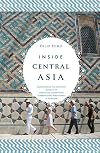
I only read the Introduction, which was jam packed with information about how the region ended up as the states we see now. I found the section on the Soviet Union's role in the process particularly interesting, and got a lot of new insight into the Soviet Union's role in World War II and how much Central Asia helped.
Recommended for anyone with a current interest in the area.
Recommended for anyone with a current interest in the area.
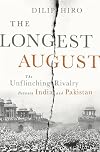
A tome by the iconoclastic historian telling the story of India/Pakistani relations since before the end of British rule. Always a masterful story teller.
Inside Central Asia: A Political and Cultural History of Uzbekistan, Turkmenistan, Kazakhstan, Kyrgyz stan, Tajikistan, Turkey, and Iran by Dilip Hiro
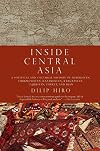
Very dense political history but I'm glad I read it.
Lists
Awards

You May Also Like


Associated Authors
Statistics
- Works
- 35
- Also by
- 2
- Members
- 1,037
- Popularity
- #24,830
- Rating
- 3.7
- Reviews
- 9
- ISBNs
- 107
- Favorited
- 1