
Taiyo Fujii
Author of Gene Mapper
About the Author
Works by Taiyo Fujii
[No title] 1 copy
Associated Works
The Apex Book of World SF: Volume 5 (Apex World of Speculative Fiction) (2018) — Contributor — 45 copies, 9 reviews
The Digital Aesthete: Human Musings on the Intersection of Art and AI (2023) — Contributor — 6 copies
サイボーグ009トリビュート — Contributor — 2 copies
Sci-Fire 2019 — Contributor — 1 copy
AIと人類は共存できるか? 人工知能SFアンソロジー — Contributor — 1 copy
世界SF作家会議 — Contributor — 1 copy
SFマガジン 2021年 06 月号 異常論文特集 — Contributor — 1 copy
行き先は特異点 (年刊日本SF傑作選) (創元SF文庫) — Contributor — 1 copy
NOVA+ The League of Corpses: A Collection of Original Japanese SF Works (2015) — Contributor — 1 copy
Tagged
Common Knowledge
- Legal name
- 藤井太洋
- Birthdate
- 1971
- Gender
- male
- Nationality
- Japan
- Birthplace
- Amami Oshima Island, Japan
- Associated Place (for map)
- Amami Oshima Island, Japan
Members
Reviews
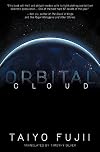
I enjoyed Cixin Liu's trilogy and started actively looking for some foreign SF when I came across several sites promoting Orbital Cloud. The teaser looked interesting enough and I bought it as a digital book, since the local book store didn't have it. That probably should have been a red flag. At least this wont end up in a donation bin and be inflicted on someone else.
I haven't finished the book, and I will never finish the book. From the get go it annoyed me. The rich investor/rocket show more industrialist/entrepreneur is such a blatant copy of Elon Musk, I don't know why he's not named Elon Musk. Except that he lacks any actual character to make him interesting. The nerd of questionable morals is the stereotype of the morbidly obese extreme loner with no social skills. The female characters are described first by their physical attributes: "a black pantsuit and long coat concealed her toned body." And it turns out that character is the female spy-runner who has to have sex with her asset once a week to keep him from wandering off. She's running an economic scam that sells "more than a million" crappy computer cables for $300 each, "are practically free to manufacture" and only netted $2.2 million. So, gross of over $300 million. Profit 0.7% Less than one percent. That's the WORST SCAM EVER. And this is supposed to show her as this manipulative evil genius. And apparently every part of the US has even more surveillance than central London.
But the part where I just put it down and was done was when I read "One thousand and twenty-four, that's two to the power of seven." NO. IT BLODDY WELL ISN'T. And the line isn't from a character that is supposed to not know that. It is one programmer explaining it to another. Which no programmer would ever need to explain. And the (egregiously incorrect) explanation does nothing to inform the reader or further the plot. Ok, the author is Japanese, the novel was written in Japanese and translated to English. That might explain some of the clumsy language. But I'm pretty sure base two math works the same way no matter what country you're in. I don't care if it is the author, the translator or both that is criminally incompetent. At page 54/327 I'm done and I'm not reading another single word. I just wish I could get my time and my money back. show less
I haven't finished the book, and I will never finish the book. From the get go it annoyed me. The rich investor/rocket show more industrialist/entrepreneur is such a blatant copy of Elon Musk, I don't know why he's not named Elon Musk. Except that he lacks any actual character to make him interesting. The nerd of questionable morals is the stereotype of the morbidly obese extreme loner with no social skills. The female characters are described first by their physical attributes: "a black pantsuit and long coat concealed her toned body." And it turns out that character is the female spy-runner who has to have sex with her asset once a week to keep him from wandering off. She's running an economic scam that sells "more than a million" crappy computer cables for $300 each, "are practically free to manufacture" and only netted $2.2 million. So, gross of over $300 million. Profit 0.7% Less than one percent. That's the WORST SCAM EVER. And this is supposed to show her as this manipulative evil genius. And apparently every part of the US has even more surveillance than central London.
But the part where I just put it down and was done was when I read "One thousand and twenty-four, that's two to the power of seven." NO. IT BLODDY WELL ISN'T. And the line isn't from a character that is supposed to not know that. It is one programmer explaining it to another. Which no programmer would ever need to explain. And the (egregiously incorrect) explanation does nothing to inform the reader or further the plot. Ok, the author is Japanese, the novel was written in Japanese and translated to English. That might explain some of the clumsy language. But I'm pretty sure base two math works the same way no matter what country you're in. I don't care if it is the author, the translator or both that is criminally incompetent. At page 54/327 I'm done and I'm not reading another single word. I just wish I could get my time and my money back. show less
Sci-fi thriller where a group of people join together to attempt to fight against terrorism from low Earth orbit. Plot itself was interesting & fun to read. I also appreciated the incorporation of physics & CS (though I admit that, as someone who has studied CS, some of that was difficult for me to believe). The story is told by switching between point of view of several different characters, to the point where it could get confusing. The characters themselves often felt like caricatures as show more well. But enjoyable overall show less
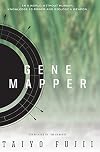
In the world of Gene Mapper, much of the world's natural crops have fallen to a blight called Red Rust, leading to a rise in genetically engineered foods. Mamoru Hayashida is a gene mapper who works for a company, L&B, developing Super Rice 6, or SR06. Only the field of SR06 that's been planted appears to have some sort of invader, which could spell trouble not only for L&B, or Mamoru's career, but genetically engineered (or in L&B's preferred nomenclature, genetically distilled) plants show more entirely. It's Mamoru's job, with the help of Takashi (a victim of a side effect of L&B's super rice zero), to figure out who and what the invader is and whether or not they can stop it. It's a high-tech mystery, a whodunit of virtual reality proportions.
I think it's the translation that hinder this book for me. It's as if something is being lost in going from Japanese to English, and I have a certain sense of being lost. I really like Fujii's concept of augmented reality, using AR stages for conversations and work and broadcasts and all kinds of things, but I don't really understand how it works. I can see someone entering an AR Stage and seeing the augmented reality, but what would someone not on any stage see them doing? They're talking and moving in their stage, sometimes having private conversations, and so wouldn't they be talking and moving in the real world as well? I guess I don't understand the privacy factor of that, just as an example. And again, I think this is partly due to the translation. The worldbuilding, while interesting, is not very clear in english, and more difficult to really engage with.
In another part of the book, Mamoru goes into the SR06 field wearing a special suit that has a weird kind of emotional control built in. The 'augmented reality' turns into a real hindrance, but that whole portion just makes no sense to me. I don't understand why they're wearing the suits in the first place--maybe to prevent contaminating the field, though I'm not sure with what, if the genetically distilled rice is supposed to be so stable--but also, I really don't understand why they would need or even want emotional control in the first place. That just makes no logical sense when you look at how it completely derailed Mamoru's mission. The only purpose I can see it serving is a plot point that reveals Takashi's true nature, which really, it needs to make sense on the surface as well as move the plot forward. Thumbs down.
I found the ending to be a little forced, but I won't go into that here because spoilers. I appreciate the effort to provide an ending that isn't just black/white everything's-fixed-now-everything's-ok but this one just didn't work well for me.
Overall though, if you don't mind feeling a little lost in a sea of buzzwords, it's not a bad read. I think a lot of other fantasy and scifi I've read has primed me to be okay with not necessarily understanding everything that's going on, though I like clarity more. It's a fun read on it's own, and high-concept, which is always nice. But somehow it also doesn't necessarily stand out to me. Not bad; but not necessarily great, either.
http://tealeafbooks.blogspot.com/ show less
I think it's the translation that hinder this book for me. It's as if something is being lost in going from Japanese to English, and I have a certain sense of being lost. I really like Fujii's concept of augmented reality, using AR stages for conversations and work and broadcasts and all kinds of things, but I don't really understand how it works. I can see someone entering an AR Stage and seeing the augmented reality, but what would someone not on any stage see them doing? They're talking and moving in their stage, sometimes having private conversations, and so wouldn't they be talking and moving in the real world as well? I guess I don't understand the privacy factor of that, just as an example. And again, I think this is partly due to the translation. The worldbuilding, while interesting, is not very clear in english, and more difficult to really engage with.
In another part of the book, Mamoru goes into the SR06 field wearing a special suit that has a weird kind of emotional control built in. The 'augmented reality' turns into a real hindrance, but that whole portion just makes no sense to me. I don't understand why they're wearing the suits in the first place--maybe to prevent contaminating the field, though I'm not sure with what, if the genetically distilled rice is supposed to be so stable--but also, I really don't understand why they would need or even want emotional control in the first place. That just makes no logical sense when you look at how it completely derailed Mamoru's mission. The only purpose I can see it serving is a plot point that reveals Takashi's true nature, which really, it needs to make sense on the surface as well as move the plot forward. Thumbs down.
I found the ending to be a little forced, but I won't go into that here because spoilers. I appreciate the effort to provide an ending that isn't just black/white everything's-fixed-now-everything's-ok but this one just didn't work well for me.
Overall though, if you don't mind feeling a little lost in a sea of buzzwords, it's not a bad read. I think a lot of other fantasy and scifi I've read has primed me to be okay with not necessarily understanding everything that's going on, though I like clarity more. It's a fun read on it's own, and high-concept, which is always nice. But somehow it also doesn't necessarily stand out to me. Not bad; but not necessarily great, either.
http://tealeafbooks.blogspot.com/ show less
I really enjoyed this novel! The jargon took a bit to get used to, but the world that was created was intriguing, and plausible, and scary. The concepts of gene mapping, and engineered, "distilled" crops, were super cool, and I liked the fast pace of this novel as well.
Can't wait to read more from this author.
3.5/5 stars
Can't wait to read more from this author.
3.5/5 stars
Lists
Awards

You May Also Like


Associated Authors
Statistics
- Works
- 6
- Also by
- 22
- Members
- 229
- Popularity
- #98,339
- Rating
- 3.5
- Reviews
- 8
- ISBNs
- 6
- Languages
- 1