
Mamta Nainy
Author of Rainbow Hands (Lantana Global Picture Books)
About the Author
Mamta Nainy explodes diverse artistic periods, explains different art forms and gives insights into the lives of artists, one curious case at a time.
Works by Mamta Nainy
Granny's Purse 1 copy
Tagged
Common Knowledge
There is no Common Knowledge data for this author yet. You can help.
Members
Reviews
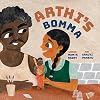
This colorfully illustrated book tells the story of dolls made in India and their role in the culture. When Arthi takes her favorite wooden doll to school, her mates tease her about the doll, saying that no one plays with them any more. Arthi tells her dad about this situation, and his explanation leads to more questions. Arthi speaks with other family members to learn more about the dolls and their role in the culture of her people.
I liked the illustrations, as they seemed reflective of the show more culture in the story. They were flat, almost like paper cutouts that were embellished. The book contains a glossary in the back to explain unfamiliar words, and includes several pages (designed for adults) that tell the history and backstory of the dolls and their makers and their roles in the culture of India and the Hindu religion. I think this would be an excellent read-aloud story, with the repetition of phrases. However, I also would have liked a more definitive ending to the story.
I received this book from LibraryThing Early Reviewers, and these are my own opinions. show less
I liked the illustrations, as they seemed reflective of the show more culture in the story. They were flat, almost like paper cutouts that were embellished. The book contains a glossary in the back to explain unfamiliar words, and includes several pages (designed for adults) that tell the history and backstory of the dolls and their makers and their roles in the culture of India and the Hindu religion. I think this would be an excellent read-aloud story, with the repetition of phrases. However, I also would have liked a more definitive ending to the story.
I received this book from LibraryThing Early Reviewers, and these are my own opinions. show less
 This review was written for LibraryThing Early Reviewers.
The pictures in this book are boldly colored, flat (without perspective) and provide a lot of clues to the local culture that could be explored with the children reading this: bare feet in homes, sitting on the floor rather than chairs, satellite dish above a clothesline, the 'bindi' on some foreheads, school children wear uniform clothing, a classmate wearing a 'hijab', the script on the blackboard (Tamil?)...
The first sentence is a great lead in, giving the necessary background that this show more is Arthi's first day in a new school, so we can expect there will be some getting acquainted to do.
Arthi comes storming home from school because classmates teased her about her old-fashioned doll. Instead of focusing on the teasing, her father tells her one thing about his work that is important to him. When Arthi can't figure out why the 'bomma' (traditional doll) is important to her family, each person she asks gives a reason & then tells her "there is more, much more". It is when she decides to make her own bomma that she realizes what that 'more' is.
Perhaps it is a reflection on my cultural background, but her realization was not apparent to me at first. I would have expected her to get more frustrated by each person not fully answering. There wasn't a strong cue that she sees this as an opportunity to discover the answer. A child in a consumerist culture may need more words...either by parent/teacher, or added to the book...to specify that her involvement in creating something allowed her to experience the joy and satisfaction; it developed that vital connection which is an answer to why these bommalu are still made.
The introduction on the first page mentions these wooden dolls are used during the Hindu festivals of Navaratri and Sankaranti, but there is no further mention of those festivals or their importance or commonality in Indian culture. Apparently it is something that was not known by Arthi's classmates.
Glossary at end of book with pronunciation guide.
Author's note at the end describes her interest (geared more to adults than children) and provides the history of this craft. show less
The first sentence is a great lead in, giving the necessary background that this show more is Arthi's first day in a new school, so we can expect there will be some getting acquainted to do.
Arthi comes storming home from school because classmates teased her about her old-fashioned doll. Instead of focusing on the teasing, her father tells her one thing about his work that is important to him. When Arthi can't figure out why the 'bomma' (traditional doll) is important to her family, each person she asks gives a reason & then tells her "there is more, much more". It is when she decides to make her own bomma that she realizes what that 'more' is.
Perhaps it is a reflection on my cultural background, but her realization was not apparent to me at first. I would have expected her to get more frustrated by each person not fully answering. There wasn't a strong cue that she sees this as an opportunity to discover the answer. A child in a consumerist culture may need more words...either by parent/teacher, or added to the book...to specify that her involvement in creating something allowed her to experience the joy and satisfaction; it developed that vital connection which is an answer to why these bommalu are still made.
The introduction on the first page mentions these wooden dolls are used during the Hindu festivals of Navaratri and Sankaranti, but there is no further mention of those festivals or their importance or commonality in Indian culture. Apparently it is something that was not known by Arthi's classmates.
Glossary at end of book with pronunciation guide.
Author's note at the end describes her interest (geared more to adults than children) and provides the history of this craft. show less
This review was written for LibraryThing Early Reviewers.Arthi's Bomma is about a little girl who takes her homemade doll to school and is made fun of. At home she learns the history of handmade dolls in her culture and learns to respect them. The story is a good life lesson for children to respect other cultures, learn about their histories and be respectful of other's feelings. The illustrations weren't enjoyable to me but children will like the simplicity.
This review was written for LibraryThing Early Reviewers.This story reminds me a bit of “Coat of Many Colors” by Dolly Parton. I think the 2 stories would work well together in a story time. Arthi is embarrassed by her simple doll that her father made when she pulls it out at school. She goes home and starts getting information about how and why the doll is made. I love the way the author has Arthi call her grandfather thatha and then the narrator refers to him as grandfather so that the reader learns the meaning of thatha without interrupting show more the story with an explanation. If flows well this way. I like how Arthi finally gets a true appreciation for bommalu. My only complaints are that sometimes the words were difficult to read because of the background and the illustrations were just ok. They also had some blending into the background problems for me. show less
This review was written for LibraryThing Early Reviewers.Awards


You May Also Like
Associated Authors
Statistics
- Works
- 23
- Members
- 165
- Popularity
- #128,475
- Rating
- 3.7
- Reviews
- 8
- ISBNs
- 32
