
Martin MacInnes
Author of In Ascension
About the Author
Works by Martin MacInnes
Tagged
Common Knowledge
- Birthdate
- 1983
- Gender
- male
- Awards and honors
- Manchester Fiction Prize (2014)
Scottish Book Trust New Writers Award (2014) - Nationality
- Scotland
UK - Birthplace
- Inverness, Scotland, UK
- Places of residence
- Edinburgh, Scotland, UK
- Associated Place (for map)
- Scotland, UK
Members
Reviews
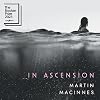
45. In Ascension by Martin MacInnes
reader: Freya Miller
OPD: 2023
format: 13:38-audible audio book (512 pages in hardcover)
acquired: August 1 listened: Aug 1-18
rating: 5
genre/style: contemporary fiction theme: Booker 2023
locations: Rotterdam around 2000, and somewhere in California around 2030.
about the author: Scottish author of three novels, born 1983.
A literary sci-fi book of tone. What I mean is that if you take to the language, a cold, careful, logical tone that can bring out something show more both distant and beautiful, then this book is a 5-star listen. It's read beautifully on audio by Freya Miller.
The book itself has elements of DeLillo's [Ratner's Star]. But whereas DeLillo used adolescent wry humor, satire and sex, this is all restrained tone. It takes place mostly about 10 years in the future, where a Dutch marine biologist studying algae finds herself involved in a newly created ocean chasm with ancient microscopic life forms, and then later a for-profit space agency in California looking to for self-creating food supplies for long missions.
I loved this, loved listening to it, could relisten to it again, starting at any point and ending at any point. Would I feel differently, if I read it? I suspect I would still have liked it a lot, but maybe not at 5-stars, as I have given it here. Those 5-stars in this case are partially for the experience and enjoyment of listening to this.
Recommended to anyone who likes the Audible sample.
----
one quote: "The silence that surrounds us, the un-meaning of deep space. Terrifying, endless directionless plane. It wasn't possible to domesticate and cultivate this non-place."
2023
https://www.librarything.com/topic/351556#8216640 show less
reader: Freya Miller
OPD: 2023
format: 13:38-audible audio book (512 pages in hardcover)
acquired: August 1 listened: Aug 1-18
rating: 5
genre/style: contemporary fiction theme: Booker 2023
locations: Rotterdam around 2000, and somewhere in California around 2030.
about the author: Scottish author of three novels, born 1983.
A literary sci-fi book of tone. What I mean is that if you take to the language, a cold, careful, logical tone that can bring out something show more both distant and beautiful, then this book is a 5-star listen. It's read beautifully on audio by Freya Miller.
The book itself has elements of DeLillo's [Ratner's Star]. But whereas DeLillo used adolescent wry humor, satire and sex, this is all restrained tone. It takes place mostly about 10 years in the future, where a Dutch marine biologist studying algae finds herself involved in a newly created ocean chasm with ancient microscopic life forms, and then later a for-profit space agency in California looking to for self-creating food supplies for long missions.
I loved this, loved listening to it, could relisten to it again, starting at any point and ending at any point. Would I feel differently, if I read it? I suspect I would still have liked it a lot, but maybe not at 5-stars, as I have given it here. Those 5-stars in this case are partially for the experience and enjoyment of listening to this.
Recommended to anyone who likes the Audible sample.
----
one quote: "The silence that surrounds us, the un-meaning of deep space. Terrifying, endless directionless plane. It wasn't possible to domesticate and cultivate this non-place."
2023
https://www.librarything.com/topic/351556#8216640 show less
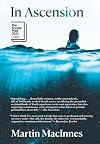
Sprawling epic literary science fiction that traverses the depths of oceanic trenches to the far reaches of the solar system. Protagonist Leigh is a microbiologist who has written a thesis on algae and its connections to primitive lifeforms. Due to her expertise, she earns a role on the submarine Endeavor, exploring the ocean’s floor, where a thermal vent deeper than any previously known is being studied. Initially they are told they are analyzing possible mining opportunities, but it is show more soon evident that their research has to do with the origins of life, and their exposure to the mysterious glowing lights cause side-effects, including loss of consciousness. After her experience on the maritime expedition, she works on determining if the algae they discovered can be used as a source of food. This work is supported by an organization studying mining on certain of Saturn’s moons. The storyline also provides Leigh’s background, growing up in a dysfunctional family in Rotterdam with her younger sister, Helena, and delicate mother.
There are many moving parts in this story and the author balances them beautifully. Pieces of the maritime story are used in the segment pertaining to space exploration. Parts of her family’s story come into play in both environments. If you enjoy lots of science in your science fiction, this book should have great appeal. There is futuristic technology, astrophysics, ecology, biology, botany, as well as the possibility of extraterrestrial existence. Themes also include isolation, interpersonal dynamics, and the desire to find meaning and purpose in one’s life.
It is beautifully written and constructed. It serves as a reminder to care for our home planet. The ending contains a few surprises that added a dimension I was not expecting. This complex narrative is so well executed, and I am super impressed. This is a book that can (and should in my opinion) win literary awards. It will make my short list of favorites for the year. show less
There are many moving parts in this story and the author balances them beautifully. Pieces of the maritime story are used in the segment pertaining to space exploration. Parts of her family’s story come into play in both environments. If you enjoy lots of science in your science fiction, this book should have great appeal. There is futuristic technology, astrophysics, ecology, biology, botany, as well as the possibility of extraterrestrial existence. Themes also include isolation, interpersonal dynamics, and the desire to find meaning and purpose in one’s life.
It is beautifully written and constructed. It serves as a reminder to care for our home planet. The ending contains a few surprises that added a dimension I was not expecting. This complex narrative is so well executed, and I am super impressed. This is a book that can (and should in my opinion) win literary awards. It will make my short list of favorites for the year. show less
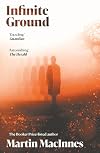
Here is a book that I judged by its cover and was rewarded for doing so with an excellent read. Dear publishers, you can reliably attract my attention with a green cover (my favourite colour) that includes an image reminding me of the film Annihilation. Upon reading the blurb I learned that the main character is a police inspector, but it sounded strange enough not to be a crime procedural so I borrowed it from the library. Indeed, ‘Infinite Ground’ is absolutely not a crime procedural. show more It is an account of searching for a missing person and finding the uncanny in offices, homes, people, and rainforest. I read the majority of ‘Infinite Ground’ after nine hours sleep and vivid dreams; its dreamlike atmosphere of malleable reality definitely prolonged the pleasant feeling of long sleep. I’m deeply impressed that this is a first novel, as I think it stands up with Auster’s [b:The New York Trilogy|431|The New York Trilogy|Paul Auster|https://i.gr-assets.com/images/S/compressed.photo.goodreads.com/books/1386924429l/431._SX50_.jpg|2343071] and Ishiguro’s [b:The Unconsoled|40117|The Unconsoled|Kazuo Ishiguro|https://i.gr-assets.com/images/S/compressed.photo.goodreads.com/books/1342193138l/40117._SY75_.jpg|6372970] in its evocation of the uncanny and unsettling. I loved it.
Horror fiction is not generally to my taste, vampires aside, but I really enjoy novels about spatially specific incursions of the uncanny into ordinary life. Such books only work if create a convincingly dreamlike odd atmosphere. They generally involve a search for a lost person or object, which sprawls into a search for any meaning or grounding in reality. The characters can be drawn in broad strokes, however the settings must be detailed and evoked with rich texture. ‘Infinite Ground’ does just this for an unnamed South American country, first in a city then the jungle.
The search for Carlos, a seemingly normal office worker, proceeds at a measured pace. The inspector encounters actors playing office workers and disturbingly specific forensics, then tries to precisely replicate the missing man’s work and to speak with a serial killer he put in jail years before. As the search continues, the inspector himself becomes more and more lost. Small yet disturbing incidents and strange urges suggest a general unravelling. This is gradually and elegantly done, with the deceptively naturalistic atmosphere of a dream. Capturing such an ambiguous and abstract feeling on a page is very difficult. MacInnes plays some little games with words, particularly ‘corporation’: both a business and a living body. Duplication and imitation are recurring themes:
The inspector’s third person narration is periodically interspersed with other, wilder theories about what might be going on, sometimes echoing or prefiguring the wider plot. The incursion of decay and rot is another motif, one that all the best uncanny fiction plays with, including [b:Annihilation|17934530|Annihilation (Southern Reach #1)|Jeff VanderMeer|https://i.gr-assets.com/images/S/compressed.photo.goodreads.com/books/1403941587l/17934530._SX50_.jpg|24946895]. (I’ve actually experienced fungi growing out of my bathroom floorboards and that was definitely unsettling on a fundamental level. As well as symptomatic of negligent rental agents.) The rainforest in this novel is mysterious and visceral in the manner I’d hoped [b:The Vorrh|16071377|The Vorrh (The Vorrh Trilogy, #1)|Brian Catling|https://i.gr-assets.com/images/S/compressed.photo.goodreads.com/books/1349600836l/16071377._SY75_.jpg|42459978] would be but was not:
I don’t think quotes really convey the atmosphere of novel as a whole, so you will have to take my word for it. Finally, I was delighted to discover an acknowledgement thanking Edinburgh libraries, where I found the book in the first place. I’m delighted that my favourite haunts fostered such an absorbingly weird novel. I’ll keep my eyes open for more fiction by MacInnes. show less
Horror fiction is not generally to my taste, vampires aside, but I really enjoy novels about spatially specific incursions of the uncanny into ordinary life. Such books only work if create a convincingly dreamlike odd atmosphere. They generally involve a search for a lost person or object, which sprawls into a search for any meaning or grounding in reality. The characters can be drawn in broad strokes, however the settings must be detailed and evoked with rich texture. ‘Infinite Ground’ does just this for an unnamed South American country, first in a city then the jungle.
The search for Carlos, a seemingly normal office worker, proceeds at a measured pace. The inspector encounters actors playing office workers and disturbingly specific forensics, then tries to precisely replicate the missing man’s work and to speak with a serial killer he put in jail years before. As the search continues, the inspector himself becomes more and more lost. Small yet disturbing incidents and strange urges suggest a general unravelling. This is gradually and elegantly done, with the deceptively naturalistic atmosphere of a dream. Capturing such an ambiguous and abstract feeling on a page is very difficult. MacInnes plays some little games with words, particularly ‘corporation’: both a business and a living body. Duplication and imitation are recurring themes:
The possibilities afforded by the use of the performers were impressive. There was nothing, for instance - except money - stopping him from hiring a full cast who could then perform a successful resolution to Carlos’ disappearance. It would be something very special indeed to be privy to the scene where Carlos walked back in. They’d all benefit from it. That kind of positive mental reinforcement was said to be tremendously advantageous.
He barely had time to consider one possibility when another burst in. Imagine a full reconstruction of the evening in question at La Cueva - they could script all of it, based on thorough interrogations of the extended family, the staff, the other diners, leaving only to chance the moment when Carlos left the bathroom. Perhaps the actor, living for that night exactly as Carlos had, would begin automatically reconstructing his actions, intuiting them, that is, without being told. Watching him closely enough, for once - and wishing, too late, that they had done so on the night in question - they would at last find out what had happened.
[...]
He could direct the cast in reverse, beginning from the moment they first realised Carlos hadn’t come back. It would be therapeutic. If done well enough a sufficient number of times it could even establish itself as a viable alternative to history.
The inspector’s third person narration is periodically interspersed with other, wilder theories about what might be going on, sometimes echoing or prefiguring the wider plot. The incursion of decay and rot is another motif, one that all the best uncanny fiction plays with, including [b:Annihilation|17934530|Annihilation (Southern Reach #1)|Jeff VanderMeer|https://i.gr-assets.com/images/S/compressed.photo.goodreads.com/books/1403941587l/17934530._SX50_.jpg|24946895]. (I’ve actually experienced fungi growing out of my bathroom floorboards and that was definitely unsettling on a fundamental level. As well as symptomatic of negligent rental agents.) The rainforest in this novel is mysterious and visceral in the manner I’d hoped [b:The Vorrh|16071377|The Vorrh (The Vorrh Trilogy, #1)|Brian Catling|https://i.gr-assets.com/images/S/compressed.photo.goodreads.com/books/1349600836l/16071377._SY75_.jpg|42459978] would be but was not:
Metal washed out in rain and drifted through the trees and wildflowers. He saw copper tints in new giant ferns, each frond exceeding the height of his body.
He entered what had been the café and stepped through the rotten wooden floor as if into a river. The floor was webbed in larva, worms, and purple-black beetles. He dragged his feet forward without raising them and found he dug long, brief lines through the water-wood. The smell was incredible. He would have said he was in the body of something that was changing state. The lifted roofs were vast and uncertain, stretching out to the trees and the canopy.
I don’t think quotes really convey the atmosphere of novel as a whole, so you will have to take my word for it. Finally, I was delighted to discover an acknowledgement thanking Edinburgh libraries, where I found the book in the first place. I’m delighted that my favourite haunts fostered such an absorbingly weird novel. I’ll keep my eyes open for more fiction by MacInnes. show less
I found both of [a:Martin MacInnes|8337709|Martin MacInnes|https://images.gr-assets.com/authors/1681224170p2/8337709.jpg]' previous novels so incredible that I deliberately saved [b:In Ascension|81360004|In Ascension|Martin MacInnes|https://i.gr-assets.com/images/S/compressed.photo.goodreads.com/books/1674231481l/81360004._SX50_.jpg|98911813] until the weekend. I knew that it would be impossible to put down after starting to read, and so it was. Earlier this evening I tried to explain to my show more Mum what is so distinctive and special about his writing. It's something about his ability to capture the vertiginous wonder and terror of life at all scales, from bacteria all the way up to the whole ecosystem of the Earth. He writes ecologically, somehow, despite human characters and plots that follow them. [b:Gathering Evidence|48508077|Gathering Evidence|Martin MacInnes|https://i.gr-assets.com/images/S/compressed.photo.goodreads.com/books/1571511185l/48508077._SX50_.jpg|73821695] and [b:In Ascension|81360004|In Ascension|Martin MacInnes|https://i.gr-assets.com/images/S/compressed.photo.goodreads.com/books/1674231481l/81360004._SX50_.jpg|98911813] are near future sci-fi that treat the environment in an extraordinarily powerful yet subtle way. In [b:The Great Derangement: Climate Change and the Unthinkable|29362082|The Great Derangement Climate Change and the Unthinkable|Amitav Ghosh|https://i.gr-assets.com/images/S/compressed.photo.goodreads.com/books/1625688572l/29362082._SY75_.jpg|49607520], Amitav Ghosh argued that literary fiction is failing to capture the uncanny nature of environmental breakdown. MacInnes is the only author I've found who manages to do this. Literary fiction is starting to capture human turmoil in response to climate change, pollution, and species extinction, but only MacInnes somehow conveys the environmental uncanny on its own terms. I'm not explaining this very well, so just take my word for it as someone who reads a lot of fiction with environmental themes: all three of his novels are uniquely brilliant.
[b:In Ascension|81360004|In Ascension|Martin MacInnes|https://i.gr-assets.com/images/S/compressed.photo.goodreads.com/books/1674231481l/81360004._SX50_.jpg|98911813] follows a Dutch woman called Leigh, whose research into algae and interest in marine biology land her on experimental expeditions to the far edges of human understanding. The narrative is thus much concerned with the scientific pursuit of knowledge and its constraints:
The enormous difficulty of understanding the deepest ocean depths is paralleled by similar difficulty in understanding the furthest reaches of space that probes have reached:
Type I and type II errors, crudely speaking. This meeting of the uncanny and intellectual enquiry is explored with great insight throughout, via Leigh's experiences. Do not let me give the impression that this consists largely of abstract discussions. Although I've quoted two because I particularly enjoyed them, the narrative is also visceral, grounded in emotion and bodily sensation. A single paragraph moves between human and abstract scales effortlessly:
One aspect that I didn't fully appreciate during initial reading is that much of [b:In Ascension|81360004|In Ascension|Martin MacInnes|https://i.gr-assets.com/images/S/compressed.photo.goodreads.com/books/1674231481l/81360004._SX50_.jpg|98911813] is told in the first person, yet somehow still doesn't centre the human. That's quite an achievement. Leigh is a fascinating, fully-realised character and her interactions with and curiosity about the world she moves through drive the book. The reader sees her juxtaposed with tiny life (her algae garden) and with the incomprehensible distances of outer space. The ending is moving and astonishing.After the disappearance of the spaceship Nereus, Leigh's sister Helena tries to make sense of her sister's life and death. The reader knows how limited Helena's understanding is, both of the abuse Leigh suffered in childhood and of her work on the space mission. Yet the exploration of Ascension island feels momentous, as it demonstrates the Earth that Leigh would have returned to and that carries on without her. Instead Leigh and the other two astronauts are sent back in time, seemingly to seed the first life on Earth. This has a satisfying yet profoundly mysterious circularity about it.
I highly recommend all of MacInnes' fiction. There is nothing else quite like it, and believe me I have looked. show less
[b:In Ascension|81360004|In Ascension|Martin MacInnes|https://i.gr-assets.com/images/S/compressed.photo.goodreads.com/books/1674231481l/81360004._SX50_.jpg|98911813] follows a Dutch woman called Leigh, whose research into algae and interest in marine biology land her on experimental expeditions to the far edges of human understanding. The narrative is thus much concerned with the scientific pursuit of knowledge and its constraints:
Sonar readings were always unreliable, but Amy said you could mitigate errors by programming the device according to the characteristics of the water. What lived there, what composed it, what its character was. 1,500 metres per second as a standard measurement of sound velocity wasn't helpful, because speed varies in different conditions, and every part of the ocean is unique. So to get a reliable depth, you need to know the area already. The paradox again. As a general rule, you couldn't learn anything radically new, rate of progress capped from the start by inertia, inability to recognise anything past the limits of present imagination. You could only see, essentially, the world as you already knew it.
"If something unprecedented does exist in the vent," I said to Felix, as we made our way back upstairs, "there's no guarantee we'd acknowledge it. Even it moves right past us."
The enormous difficulty of understanding the deepest ocean depths is paralleled by similar difficulty in understanding the furthest reaches of space that probes have reached:
"It's not a perfect system. In my opinion, it's not even a very good system. Like many of the systems here, it has its roots in the military. Tier software was developed for use on human crowds. One of the more obvious flaws is that it relies too heavily on upward trafficking. Basically, it's guided by what it's already seen. An object acts in an unusual way, it's studied more, further anomalous data comes in, leading to still greater attention; the process feeds back on itself. But as a rule, any object studied in sufficient depth will eventually exhibit anomalous behaviour. Objects will be anomalous largely because they were the ones picked out, when really it could be the reverse. This creates at least two possible categories of error: false attribution, and blindness."
Type I and type II errors, crudely speaking. This meeting of the uncanny and intellectual enquiry is explored with great insight throughout, via Leigh's experiences. Do not let me give the impression that this consists largely of abstract discussions. Although I've quoted two because I particularly enjoyed them, the narrative is also visceral, grounded in emotion and bodily sensation. A single paragraph moves between human and abstract scales effortlessly:
It's the most unbearable time of day. My shirt sticks to my shoulders and I go off for a shower and rare privacy. The ice water unfastens my body in a travelling line, and my thoughts follow it. The power is a form of contact; that's what I said to Uria. We activate it, we build this thing from it, the first step in a sustained encounter. It's volatile because it's sufficiently new to us. It resists containment because it is itself a container. Circles inside circles. A technology that enables other technologies, an unlimited application. A thing that can carry other things, two hands together as a cup, a receptacle for water, a signal of generosity, passing something to another. Protect the precious interior. Language, introspection, technology. Agriculture, medicine, weapons and cities and global heating, spacecraft and the exploration of the outer solar system. But should we do any of this?
The power, as we attempt and fail to observe it, resists us like it is itself alive. Life is not necessarily carried in a body. And what is a body, in the loosest terms, but a set of agreements among matter and energy that endures for a period and exhibits a metabolic response?
One aspect that I didn't fully appreciate during initial reading is that much of [b:In Ascension|81360004|In Ascension|Martin MacInnes|https://i.gr-assets.com/images/S/compressed.photo.goodreads.com/books/1674231481l/81360004._SX50_.jpg|98911813] is told in the first person, yet somehow still doesn't centre the human. That's quite an achievement. Leigh is a fascinating, fully-realised character and her interactions with and curiosity about the world she moves through drive the book. The reader sees her juxtaposed with tiny life (her algae garden) and with the incomprehensible distances of outer space. The ending is moving and astonishing.
I highly recommend all of MacInnes' fiction. There is nothing else quite like it, and believe me I have looked. show less
Lists
Awards


You May Also Like


Associated Authors
Statistics
- Works
- 3
- Members
- 891
- Popularity
- #28,764
- Rating
- 3.7
- Reviews
- 40
- ISBNs
- 28
- Languages
- 5