
Ken Abraham
Author of Let's Roll! Ordinary People, Extraordinary Courage
About the Author
Ken Abraham was educated at Indiana University of Pennsylvania, Asbury College, and Asbury Theological Seminary. He is a former professional musician and the former Senior Pastor of Christian Fellowship Center in Greensburg, Pennsylvania. He is a New York Times best-selling author, known for his show more collaborations with popular celebrities and fascinating, high-profile public figures. He co-wrote numerous books including Let's Roll! with Lisa Beamer, Racing to Win with Joe Gibbs, The Right Thing with Scott Waddle, and When Will the Heaven Begin?: This Is Ben Breedlove's Story with Ally Breedlove. (Bowker Author Biography) show less
Series
Works by Ken Abraham
Armed and Dangerous (Ephesians 6:11: Straight Answers from the Bible; Inspirational Library) (1991) 253 copies
When Your Parent Becomes Your Child: A Journey of Faith Through My Mother's Dementia (2012) 52 copies, 2 reviews
A Treasury of Wisdom: Daily Inspiration from Favorite Christian Authors (Inspirational Library Series) (1998) 32 copies
More Than Rivals: A Championship Game and a Friendship That Moved a Town Beyond Black and White (2016) 18 copies, 2 reviews
Cuando tu padre se vuelve tu hijo: Un viaje de fe durante la demencia de mi madre (Spanish Edition) (2013) 2 copies
[Data Missing] 1 copy
Associated Works
Falling in Love for All the Right Reasons: How to Find Your Soul Mate (2005) — some editions — 93 copies
Tagged
Common Knowledge
- Canonical name
- Abraham, Ken
- Legal name
- Abraham, Abram Kenneth
- Other names
- Abraham, Kenneth
- Birthdate
- 1951-09-03
- Gender
- male
Members
Reviews
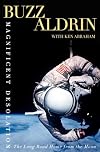
In Magnificent Desolation: The Long Journey Home from the Moon, Buzz Aldrin chronicles both his personal struggles and continued aerospace work following his historic Apollo 11 mission. He writes of the period following the moon landing, "With no mission or goal on which to focus, those words I'd uttered on the moon - 'magnificent desolation' - mocked me as a poignant description of my life on Earth" (p. 144). Aldrin's autobiographical account of his life after returning to Earth focuses on show more two main subjects: his struggles with depression and alcoholism, which he candidly discusses in the hope that his honesty will help others; and his work to further space exploration and develop space tourism.
In chronicling his struggle with depression and alcoholism, Aldrin demonstrates that even those people who are nearly universally adored are still human. He does not shy away from his bleaker moments and does not make excuses. In taking responsibility for his past, Aldrin shows how others can follow his example and seek the help they need and overcome their own struggles.
In discussing the future of space travel, Aldrin writes, "I truly believe that we have the universe at our fingertips. We were on the right track when we took the challenge laid down by President Kennedy, and we will continue on the right track if we expand upon that commitment" (p. 307). Aldrin remains among the hardest working (and smartest) people in aerospace, continually thinking up new methods to improve America's space program or spark an interest in young people to pursue privatized space travel. His continued commitment should stand as a challenge to NASA and America to reinvigorate our space program. Aldrin implores his readers, "Please keep this dream alive; please keep going; Mars is there waiting for your footsteps" (p. 309).
Those looking for an account of NASA in the 1960s and the early years of Project Apollo should read Men from Earth, also by Aldrin. Magnificent Desolation is, as the subtitle suggests, about Aldrin's life following his Apollo mission, though it will still be interesting to those interested in space travel, both historic and prospective ideas for the future. show less
In chronicling his struggle with depression and alcoholism, Aldrin demonstrates that even those people who are nearly universally adored are still human. He does not shy away from his bleaker moments and does not make excuses. In taking responsibility for his past, Aldrin shows how others can follow his example and seek the help they need and overcome their own struggles.
In discussing the future of space travel, Aldrin writes, "I truly believe that we have the universe at our fingertips. We were on the right track when we took the challenge laid down by President Kennedy, and we will continue on the right track if we expand upon that commitment" (p. 307). Aldrin remains among the hardest working (and smartest) people in aerospace, continually thinking up new methods to improve America's space program or spark an interest in young people to pursue privatized space travel. His continued commitment should stand as a challenge to NASA and America to reinvigorate our space program. Aldrin implores his readers, "Please keep this dream alive; please keep going; Mars is there waiting for your footsteps" (p. 309).
Those looking for an account of NASA in the 1960s and the early years of Project Apollo should read Men from Earth, also by Aldrin. Magnificent Desolation is, as the subtitle suggests, about Aldrin's life following his Apollo mission, though it will still be interesting to those interested in space travel, both historic and prospective ideas for the future. show less
For most of us, whether we want to admit it or not, the highlight of our lives, the event which we define ourselves, the successful summit to the Mt. Olympus of our existence, happened before we were 25.
For an aerospace engineer with an inquisitive and fertile mind it seemed a disappointment that it happened at age 39.
This book is divided into three parts.
Part 1: Getting to the moon and back.
A fascinating first hand account which I, for one, cannot get enough and worth the price of the show more book.
I can't begin imagine going on a mission where "plan B" is to cut off communications and let me die - or that 1,000 things need to go absolutely right for a success - all run by a ... 74K computer?????
I can't imagine what not being afraid to die feels like.
Part 2: Dr. Aldrin's fight with depression and alcoholism.
I can certainly understand how being in space, looking down on earth and realizing how insignificant we all are is a crushing blow to any human being and especially ones with huge egos...you know...like astronauts.
It is fascinating to read about Dr. Aldrin's depression, his understanding of the problem and his long term solutions to dealing with it.
Even though I don't understand addicts, nor do I think that there is anything heroic about fighting an addiction (because you shouldn't have became an addict in the first place) I do recognize the achievement of beating addictions as well as the strength, perseverance and emotional toll it took for Dr. Aldrin to admit to it publicly and, in that act alone, help multitudes of people.
Part 3: Dr. Aldrin's push to make space travel affordable.
The first two parts of the book are very interesting, this part falls short.
We get a glimpse into the genius which is Buzz Aldrin and his fight to promote space travel (as well as himself, but who could blame him).
I think the book could use a bit of re-writing by a "commoner". It's almost insulting to read that Dr. Aldrin and his lovely wife say they had no income in one paragraph, yet they travel the globe, take ski vacations, go diving around the world and drive luxury cars in the next paragraph.
It just doesn't make sense and takes away from the inspirational story.
Newsflash: Most people don't make a quarter million dollars a year so it's hard to feel bad for someone who does even if they should make more or all their friends are multi-millionaires.
It just doesn't resonate.
The last few pages have a problem that most of us encounter on almost a daily base - what's written doesn't translate to the way it was meant to be read.
Ever had someone misunderstand an e-mail you wrote because they read it in the wrong "tone" of which you wrote it, or didn't get the sarcasm?
These pages come off as boasting and name dropping which I'm sure wasn't the intention.
For example, Dr. Aldrin's great anecdote about giving a speech in Madrid, Spain and not knowing anyone in town with a few hours to kill so he called King Juan Carlos.
I found it to be funny and I can only imagine the look on his wife's face - but it reads more like boasting than a light hearted anecdote.
By the way, I think personal anecdotes, like the story mentioned above, are great and what make an autobiography worth reading.
Even though there has been criticism of Dr. Aldrin's behavior in the past there is not a single person in the astronaut corps who has done more to promote space than the good doctor.
Not a single one!
Funny enough, the one thing which might have pushed Dr. Aldrin's agenda further into the future and get kids interested in space and science was not his doing, but Disney paying him homage in Toy Story.
Dr. Aldrin recognized the opportunity and instead of picking a fight with "the Mouse" he embraced it with both hand, not only for himself, but also for the future astronauts of this nation.
I hope Dr. Aldrin will keep working tirelessly to promote his agenda for the Mars orbiter, space tourism and educating our youth.
Keep appearing on Sesame Street, keep the late night appearances and keep being a friend to Buzz Lightyear - the best ambassador of math and science we currently have.
By the way - Dr. Aldrin can rest at ease. The big achievement of Apollo 11 was to land the Eagle on the moon, not to step off a ladder. show less
For an aerospace engineer with an inquisitive and fertile mind it seemed a disappointment that it happened at age 39.
This book is divided into three parts.
Part 1: Getting to the moon and back.
A fascinating first hand account which I, for one, cannot get enough and worth the price of the show more book.
I can't begin imagine going on a mission where "plan B" is to cut off communications and let me die - or that 1,000 things need to go absolutely right for a success - all run by a ... 74K computer?????
I can't imagine what not being afraid to die feels like.
Part 2: Dr. Aldrin's fight with depression and alcoholism.
I can certainly understand how being in space, looking down on earth and realizing how insignificant we all are is a crushing blow to any human being and especially ones with huge egos...you know...like astronauts.
It is fascinating to read about Dr. Aldrin's depression, his understanding of the problem and his long term solutions to dealing with it.
Even though I don't understand addicts, nor do I think that there is anything heroic about fighting an addiction (because you shouldn't have became an addict in the first place) I do recognize the achievement of beating addictions as well as the strength, perseverance and emotional toll it took for Dr. Aldrin to admit to it publicly and, in that act alone, help multitudes of people.
Part 3: Dr. Aldrin's push to make space travel affordable.
The first two parts of the book are very interesting, this part falls short.
We get a glimpse into the genius which is Buzz Aldrin and his fight to promote space travel (as well as himself, but who could blame him).
I think the book could use a bit of re-writing by a "commoner". It's almost insulting to read that Dr. Aldrin and his lovely wife say they had no income in one paragraph, yet they travel the globe, take ski vacations, go diving around the world and drive luxury cars in the next paragraph.
It just doesn't make sense and takes away from the inspirational story.
Newsflash: Most people don't make a quarter million dollars a year so it's hard to feel bad for someone who does even if they should make more or all their friends are multi-millionaires.
It just doesn't resonate.
The last few pages have a problem that most of us encounter on almost a daily base - what's written doesn't translate to the way it was meant to be read.
Ever had someone misunderstand an e-mail you wrote because they read it in the wrong "tone" of which you wrote it, or didn't get the sarcasm?
These pages come off as boasting and name dropping which I'm sure wasn't the intention.
For example, Dr. Aldrin's great anecdote about giving a speech in Madrid, Spain and not knowing anyone in town with a few hours to kill so he called King Juan Carlos.
I found it to be funny and I can only imagine the look on his wife's face - but it reads more like boasting than a light hearted anecdote.
By the way, I think personal anecdotes, like the story mentioned above, are great and what make an autobiography worth reading.
Even though there has been criticism of Dr. Aldrin's behavior in the past there is not a single person in the astronaut corps who has done more to promote space than the good doctor.
Not a single one!
Funny enough, the one thing which might have pushed Dr. Aldrin's agenda further into the future and get kids interested in space and science was not his doing, but Disney paying him homage in Toy Story.
Dr. Aldrin recognized the opportunity and instead of picking a fight with "the Mouse" he embraced it with both hand, not only for himself, but also for the future astronauts of this nation.
I hope Dr. Aldrin will keep working tirelessly to promote his agenda for the Mars orbiter, space tourism and educating our youth.
Keep appearing on Sesame Street, keep the late night appearances and keep being a friend to Buzz Lightyear - the best ambassador of math and science we currently have.
By the way - Dr. Aldrin can rest at ease. The big achievement of Apollo 11 was to land the Eagle on the moon, not to step off a ladder. show less
More Than Rivals: A Championship Game and a Friendship That Moved a Town Beyond Black and White by Ken Abraham

I am an avid basketball fan and this book had me from the first page! You don't need to be one to see the amazing drive early in the lives of these two young men . The historical background of black meeting white in a time and place in the United States added a heavy yet ironic statement. The details the author included were crisp and key to fully grasp the dimensions of the contrasts and similarities of Eddie Sherlin and Bill Ligon, their families, their faith, and neighborhoods.
This is a show more rare treat for me to read a non-fiction book. It fascinated and rewarded me. I had not known of their lives and feel richer now that I do. I grew up in the same era they did but lived in an area of the United States where the tensions between races were minimal and almost non-existent. Learning more about the reality of what others experienced was definitely worth reading this book.
I received a copy of More Than Rivals: A Championship Game and a Friendship that Moved a Town Beyond Black and White from Net Galley in exchange for my honest review which I have given. show less
This is a show more rare treat for me to read a non-fiction book. It fascinated and rewarded me. I had not known of their lives and feel richer now that I do. I grew up in the same era they did but lived in an area of the United States where the tensions between races were minimal and almost non-existent. Learning more about the reality of what others experienced was definitely worth reading this book.
I received a copy of More Than Rivals: A Championship Game and a Friendship that Moved a Town Beyond Black and White from Net Galley in exchange for my honest review which I have given. show less

This was an excellent book until the end. It gave a good picture of what life was like living with George Jones. Going through his addiction to both alcohol and drugs was something not many people could endure. The author felt that there was always a good man underneath of all that and through the years Jones eventually gave up alcohol and drugs and found the Lord. The author also helped in his business management and getting him to show up at concerts. It was really a good look at what show more George Jones was like. However, the author began the book with her bout with covid and ended with some of the complications she had. Her illness was very severe. However, she made a statement about not being willing to take the vaccine because it was developed too quickly and her friend had done research and also recommended she not get the vaccine. How many folks who read this book are going to now take this attitude and jeopardize themselves and those they associate with by not getting a vaccine? The mRNA technology that speeded up development of the vaccine. A physician told me this mRNA technology had been around for decades and the increased funding for development of a vaccine provided by the government was what allowed it to be developed so quickly. Without the vaccine, tens of thousands more would have died. I just wish the author had not ruined an excellent biography of George Jones by spouting misinformation. show less
Lists
Awards


You May Also Like


Associated Authors
Statistics
- Works
- 49
- Also by
- 8
- Members
- 3,666
- Popularity
- #6,903
- Rating
- 3.5
- Reviews
- 62
- ISBNs
- 166
- Languages
- 4
