
Neil Walker (2)
Author of Victor Pasmore: Towards a New Reality
For other authors named Neil Walker, see the disambiguation page.
Works by Neil Walker
Tagged
Common Knowledge
- Occupations
- art historian
museum curator - Organizations
- University of Nottingham
Members
Reviews
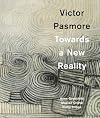
Focussing on the period from 1930 to 1960, this fascinating publication considers the transition of Victor Pasmore (1908-1998) from one of Britain's leading figurative painters to one of its foremost exponents of abstract art.
From Pasmore's own writings and those of his contemporaries, a fascinating picture emerges of the years in the late 1940s and early 1950s when lyrical landscapes – incorporating increasingly suggestive formal structures - were suddenly superseded by abstract paintings show more and collages, and then by constructed reliefs.
Seeking to explore these decades and later years, the book's visual narrative traces a path from the artist's earliest canvases through to his engagement in the 1960s with the controversial Apollo Pavilion in Peterlee, County Durham. This important publication will renew interest in an important period in British art history and shed new light on a crucial stage in Pasmore's long career.
In the late 1940s, figurative British artist Victor Pasmore (1908–1998) reinvented himself as an exponent of abstract art.
This major exhibition focused for the first time on this radical change of direction in the artist’s career. Through 50 works, it explored the progression of Pasmore’s output between the 1930s and mid-1960s, particularly his experimentation in a new pictorial language and representation of reality.
Working under the private patronage of Kenneth Clark, Director of the National Gallery, Pasmore was quickly established in the late 1930s and early 1940s as a painter of lyrical landscapes, figures and still-life studies. Pasmore was devoted to his art and teaching at the Euston Road School.
From the artist’s own writings and those of his critics and contemporaries, a fascinating picture emerges of the years from the late 1940s to the early 1950s when landscapes incorporating suggestive formal structures led to his first fully abstract paintings and thereafter to a series of authoritative collages, spiral paintings, and constructed reliefs made from pre-formed industrial materials.
‘Victor Pasmore: Towards a New Reality’ was curated by independent curator Anne Goodchild with Neil Walker, Head of Visual Arts Programming at Djanogly Gallery. The exhibition toured from the Djanogly Gallery, Nottingham and was a partnership project between the Djanogly Gallery and Pallant House Gallery. show less
From Pasmore's own writings and those of his contemporaries, a fascinating picture emerges of the years in the late 1940s and early 1950s when lyrical landscapes – incorporating increasingly suggestive formal structures - were suddenly superseded by abstract paintings show more and collages, and then by constructed reliefs.
Seeking to explore these decades and later years, the book's visual narrative traces a path from the artist's earliest canvases through to his engagement in the 1960s with the controversial Apollo Pavilion in Peterlee, County Durham. This important publication will renew interest in an important period in British art history and shed new light on a crucial stage in Pasmore's long career.
In the late 1940s, figurative British artist Victor Pasmore (1908–1998) reinvented himself as an exponent of abstract art.
This major exhibition focused for the first time on this radical change of direction in the artist’s career. Through 50 works, it explored the progression of Pasmore’s output between the 1930s and mid-1960s, particularly his experimentation in a new pictorial language and representation of reality.
Working under the private patronage of Kenneth Clark, Director of the National Gallery, Pasmore was quickly established in the late 1930s and early 1940s as a painter of lyrical landscapes, figures and still-life studies. Pasmore was devoted to his art and teaching at the Euston Road School.
From the artist’s own writings and those of his critics and contemporaries, a fascinating picture emerges of the years from the late 1940s to the early 1950s when landscapes incorporating suggestive formal structures led to his first fully abstract paintings and thereafter to a series of authoritative collages, spiral paintings, and constructed reliefs made from pre-formed industrial materials.
‘Victor Pasmore: Towards a New Reality’ was curated by independent curator Anne Goodchild with Neil Walker, Head of Visual Arts Programming at Djanogly Gallery. The exhibition toured from the Djanogly Gallery, Nottingham and was a partnership project between the Djanogly Gallery and Pallant House Gallery. show less
You May Also Like
Associated Authors
Statistics
- Works
- 2
- Members
- 8
- Popularity
- #1,038,910
- Rating
- 5.0
- Reviews
- 1
- ISBNs
- 31