
Adam Thirlwell
Author of Politics
About the Author
Adam Thirlwell was born in on August 22, 1978 the U.K. He was educated at the independent Haberdashers' Aske's Boys' School, He was a Prize Fellow of All Souls College, Oxford between 2000 and 2007, and worked as assistant editor at the literary magazine Areté. His work has been translated into show more thirty languages. He has twice been named as one of Granta's Best of Young British Novelists. In 2015 he received the E.M. Forster Award from the American Academy of Arts and Letters. He is the London editor of The Paris Review. He was also announced as an Honorary Fellow of the Metaphysical Club at the Domus Academy in Milan. Adam Thirlwell is the author of Lurid & Cute, which made the Goldsmiths Prize 2015 shortlist. (Bowker Author Biography) show less
Works by Adam Thirlwell
Associated Works
Dancing Lessons for the Advanced in Age (1964) — Introduction, some editions — 482 copies, 12 reviews
Bard: The Short Story Collection: 6 Original Contemporary Fiction Short Stories (2018) — Contributor — 8 copies
Tagged
Common Knowledge
- Birthdate
- 1978-08-22
- Gender
- male
- Education
- University of Oxford (New College ∙ All Souls College)
Haberdashers' Aske's School for Boys, Hertfordshire, England, UK - Occupations
- novelist
assistant editor - Awards and honors
- Granta's Best of Young British Novelists (2003)
Granta's Best of Young British Novelists (2013) - Nationality
- UK
- Places of residence
- Islington, London, England, UK
- Associated Place (for map)
- England, UK
Members
Reviews

The thing is that there's a plot in this book but it is obfuscated behind a drug-addled, self-obsessed, neurotic, passive, genius asshole that's completely unreliable. So, as the reader we have no sense of what's actually occurring nor how we might want to feel about it. This is a fascinating state to be in and the dipping and diving, rope-a-dope language of the narrator is beautiful to behold even as you sense his inexorable self-destruction. It's not a masterpiece. It's difficult to read. show more It's infuriating. It's stunning. It's probably quite a deft example to be used in some post-grad deconstruction of perspective and narratorial motives. Definitely a book for a certain few but one I've glad to have read. show less
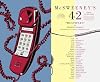
I absolutely love the imagination that goes into some McSweeney's issues, and this one is definitely one of my favorites so far. Edited by Adam Thirlwell, this volume consists of 42 "Multiples," or twelve stories, appearing in up to six versions each. Sixty-one authors contributed, and the texts come in eighteen different languages. Say what now? Each of the twelve stories goes through a couple rounds of "translator telephone" (as one example, A.L. Snijders' story "Geluk" is translated from show more the original Dutch into English by Lydia Davis, then Davis' English text is translated into French by Yannick Haenel. Haenel's French text is translated back into English by Heidi Julavits, then Julavits' text into German by Peter Stamm, Stamm's into English by Jeffrey Eugenides, and finally Eugenides' English is translated into Icelandic by Sjón). Each translator can only see the version immediately preceding, and can't read the original text. This makes for some fascinating changes, interpretations, markedly different readings, &c.
Since I read only English fluently (plus a smattering of a few other languages) I mostly concentrated on comparing the different English versions, reading them closely (and sometimes multiples times) to see where the versions differed and where the changes originated. While occasionally the translators just struck out on their own right away, leaving very little of the previous reading in their own version, I was quite surprised at how closely a few of the stories resembled each other even after repeated re-translations, sometimes right down to the same very distinctive phrase passing through multiple languages but returning to the same English wording.
After the whole chain of translations had been finished all the contributors got to read the different versions, and their notes on the experience, which appear after each story, make for great reading. Sometimes they lay out their philosophy about translation in general or the process they used for this project in particular, often they highlight parts that were interesting or problematic for them as they worked, and frequently they discuss their version in the context of all the others.
Really enjoyable, both for the stories themselves and as a study of the translation process and its role in our perception of translated literature. show less
Since I read only English fluently (plus a smattering of a few other languages) I mostly concentrated on comparing the different English versions, reading them closely (and sometimes multiples times) to see where the versions differed and where the changes originated. While occasionally the translators just struck out on their own right away, leaving very little of the previous reading in their own version, I was quite surprised at how closely a few of the stories resembled each other even after repeated re-translations, sometimes right down to the same very distinctive phrase passing through multiple languages but returning to the same English wording.
After the whole chain of translations had been finished all the contributors got to read the different versions, and their notes on the experience, which appear after each story, make for great reading. Sometimes they lay out their philosophy about translation in general or the process they used for this project in particular, often they highlight parts that were interesting or problematic for them as they worked, and frequently they discuss their version in the context of all the others.
Really enjoyable, both for the stories themselves and as a study of the translation process and its role in our perception of translated literature. show less
The Delighted States: A Book of Novels, Romances, & Their Unknown Translators, Containing Ten Languages, Set on Four Continents, & Accompanied by ... Illustrations, & a Variety of Helpful Indexes by Adam Thirlwell
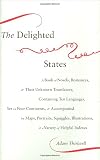
The Delighted States is a book about writers and writing — but not about just any writers. It concentrates on those innovative writers of fiction whose work put a mark on the art of imaginative writing, that overcame language barriers and impacted the ways in which novels and stories that followed were written, read and understood.
The "delighted states" is a metaphor for the place where all ground-breaking international writers meet — regardless of time and origination.
Adam Thirlwell show more explores the relationship between authorial style and translation, and what, if anything, is lost in the process of translation. This exploration becomes a history of the novel, "a history of an elaborate and intricate art form," as it unfolded through the works of Laurence Sterne, Gustave Flaubert, James Joyce and Vladimir Nabokov primarily, but also a number of others. What he gives us are biographies of the novelists' styles. And as it turns out, style is timeless and placeless. "The very term 'émigré author,'" wrote Nabokov, "sounds somewhat tautological. Any genuine writer emigrates into his art and abides there."
A style is not just a matter of technique. It develops as a function of the writer's choice of subject matter. Throughout the discussion of style is a thread weaving its way along that concerns translation. In the process of exploring the problems of translation, much is learned about how both style and content are handled in transmitting a work from one language to another.
We learn, for example, of how the digressive quirkiness of Sterne's Tristram Shandy was quickly understood and adapted by French writer Denise Diderot in Jacques the Fatalist, and then later by Brazilian writer Machado de Assis in Memórias póstumas de Brás Cubas. But that is pretty much where the tradition of novels consisting merely of digression ended.
We see how Flaubert's creation of realism in Madame Bovary through the presentation of detail influenced Guy de Maupassant, Anton Chekhov, Gertrude Stein, James Joyce and many others who followed.
We see how even through deeply flawed translations the essence of unprecedented works like Sterne's Tristram Shandy and Joyce's Ulysses overcame language barriers.
This is a book that will appeal to everyone who is interested in exploring what are the components of style and how they contribute to the greatness of a piece of writing. Thirlwell states at the outset that he likes to think of his book as a novel, but it is a work of imagination only in the clever way novelists and their individual styles are juxtaposed against each other. In the process, much is revealed about what "difficult" writers like Franz Kafka, Italo Svevo, Robert Walser, Bruno Schulz, Witold Gombrowicz and others were up to in attempting to create something new.
Thirwell has done something new and thought-provoking in the realm of stylistic analysis. I can only think of one other book that reveals as much about style, and that is Robert Alter's Imagined Cities: Urban Experience and the Language of the Novel. This book, The Delighted States, which is beautifully written, demands to be dipped into again and again. show less
The "delighted states" is a metaphor for the place where all ground-breaking international writers meet — regardless of time and origination.
Adam Thirlwell show more explores the relationship between authorial style and translation, and what, if anything, is lost in the process of translation. This exploration becomes a history of the novel, "a history of an elaborate and intricate art form," as it unfolded through the works of Laurence Sterne, Gustave Flaubert, James Joyce and Vladimir Nabokov primarily, but also a number of others. What he gives us are biographies of the novelists' styles. And as it turns out, style is timeless and placeless. "The very term 'émigré author,'" wrote Nabokov, "sounds somewhat tautological. Any genuine writer emigrates into his art and abides there."
A style is not just a matter of technique. It develops as a function of the writer's choice of subject matter. Throughout the discussion of style is a thread weaving its way along that concerns translation. In the process of exploring the problems of translation, much is learned about how both style and content are handled in transmitting a work from one language to another.
We learn, for example, of how the digressive quirkiness of Sterne's Tristram Shandy was quickly understood and adapted by French writer Denise Diderot in Jacques the Fatalist, and then later by Brazilian writer Machado de Assis in Memórias póstumas de Brás Cubas. But that is pretty much where the tradition of novels consisting merely of digression ended.
We see how Flaubert's creation of realism in Madame Bovary through the presentation of detail influenced Guy de Maupassant, Anton Chekhov, Gertrude Stein, James Joyce and many others who followed.
We see how even through deeply flawed translations the essence of unprecedented works like Sterne's Tristram Shandy and Joyce's Ulysses overcame language barriers.
This is a book that will appeal to everyone who is interested in exploring what are the components of style and how they contribute to the greatness of a piece of writing. Thirlwell states at the outset that he likes to think of his book as a novel, but it is a work of imagination only in the clever way novelists and their individual styles are juxtaposed against each other. In the process, much is revealed about what "difficult" writers like Franz Kafka, Italo Svevo, Robert Walser, Bruno Schulz, Witold Gombrowicz and others were up to in attempting to create something new.
Thirwell has done something new and thought-provoking in the realm of stylistic analysis. I can only think of one other book that reveals as much about style, and that is Robert Alter's Imagined Cities: Urban Experience and the Language of the Novel. This book, The Delighted States, which is beautifully written, demands to be dipped into again and again. show less
The Delighted States: A Book of Novels, Romances, & Their Unknown Translators, Containing Ten Languages, Set on Four Continents, & Accompanied by ... Illustrations, & a Variety of Helpful Indexes by Adam Thirlwell
Lit-crit pretending to be a novel. An extended, maybe too extended, essay on story and the novel. A discussion of style in literature. Not a linear book; any page is a good page to start on, and the "Index of Themes and Motifs" near the end of the book is a better guide than the table of contents at the beginning. Best taken in small doses, but a very interesting book.
Most revealing to me was Thirwell's theme of translation and all the ways it can be done. His two examples of different show more English translations of one paragraph from Gogol's story, "Coat," together with the romanized text of the Russian, opened my eyes to many things about language, literary style, and translations. show less
Most revealing to me was Thirwell's theme of translation and all the ways it can be done. His two examples of different show more English translations of one paragraph from Gogol's story, "Coat," together with the romanized text of the Russian, opened my eyes to many things about language, literary style, and translations. show less
Awards


You May Also Like


Associated Authors
Statistics
- Works
- 22
- Also by
- 9
- Members
- 952
- Popularity
- #27,036
- Rating
- 4.2
- Reviews
- 19
- ISBNs
- 79
- Languages
- 13
- Favorited
- 3