
Paige Embry
Author of Our Native Bees: North America's Endangered Pollinators and the Fight to Save Them
Works by Paige Embry
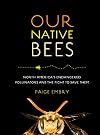
Our Native Bees: North America's Endangered Pollinators and the Fight to Save Them (2018) 124 copies, 7 reviews
Tagged
Common Knowledge
- Gender
- female
Members
Reviews
Beeing Paige Embry
Bee lovers are set for life. There are so many native varieties and we know so very little about them, that anyone interested can devote a lifetime to learning, and teaching the rest of us. Pretty much anyone can add to the knowledge base, just by observing and reporting. Our Native Bees is a voyage of discovery rather than a science book. Lots of great photos right where you need them, too.
Bees are not just hive residents; that’s a honeybee trait. And honeybees are show more European imports. Native bees seem to be mostly solitary and earth/hole dwellers. They come in a blizzard of colors and sizes, from smaller than grain of rice to a full inch. They have unique properties and habits, and have peculiarities and preferences in climate, foods and child rearing. There are four thousand native species of bee and 20,000 worldwide. Typically, we can name a handful at best.
We depend on the Paige Embrys of the world to catalog it all, because bees are just not a zoological priority for scientists. Embry says bees have broken her out of her own introspective cocoon, and this book has forced her to fly and drive far to meet the bee-loving celebrities and experts. Her enthusiasm is genuine and infectious. She has learned a ton, and is sharing it. On the other hand, she is clearly obsessive.
Bees are beset by all kinds of problems, not all of them manmade, though the manmade ones are truly unfortunate. Monocultures mean bees only get food while that one pant blooms. The rest of the year is a famine. Golf courses and manicured lawns are no help either, though the pesticide maker Syngenta is working with golf courses to line them with natural greenery outside the playing area. Pesticides don’t select to save bees, and we overspray something fierce. We need to just ease up and share the planet a little. It will pay huge dividends. The alternative is a well-known and predicted disaster for our food sources.
And it turns out Melissa is Greek for honeybee.
David Wineberg show less
Bee lovers are set for life. There are so many native varieties and we know so very little about them, that anyone interested can devote a lifetime to learning, and teaching the rest of us. Pretty much anyone can add to the knowledge base, just by observing and reporting. Our Native Bees is a voyage of discovery rather than a science book. Lots of great photos right where you need them, too.
Bees are not just hive residents; that’s a honeybee trait. And honeybees are show more European imports. Native bees seem to be mostly solitary and earth/hole dwellers. They come in a blizzard of colors and sizes, from smaller than grain of rice to a full inch. They have unique properties and habits, and have peculiarities and preferences in climate, foods and child rearing. There are four thousand native species of bee and 20,000 worldwide. Typically, we can name a handful at best.
We depend on the Paige Embrys of the world to catalog it all, because bees are just not a zoological priority for scientists. Embry says bees have broken her out of her own introspective cocoon, and this book has forced her to fly and drive far to meet the bee-loving celebrities and experts. Her enthusiasm is genuine and infectious. She has learned a ton, and is sharing it. On the other hand, she is clearly obsessive.
Bees are beset by all kinds of problems, not all of them manmade, though the manmade ones are truly unfortunate. Monocultures mean bees only get food while that one pant blooms. The rest of the year is a famine. Golf courses and manicured lawns are no help either, though the pesticide maker Syngenta is working with golf courses to line them with natural greenery outside the playing area. Pesticides don’t select to save bees, and we overspray something fierce. We need to just ease up and share the planet a little. It will pay huge dividends. The alternative is a well-known and predicted disaster for our food sources.
And it turns out Melissa is Greek for honeybee.
David Wineberg show less
Honeybees have been in the news a lot over the past several years, which isn't surprising considering their crucial role in industrial scale agriculture and the very survival of many crops. Often ignored, however, is the fact that these bees are actually European imports, and that there are many many native species that have been largely overlooked. This book aims to change our perception, and investigate the possibilities to reduce our reliance on a single species and instead encourage the show more native bee population.
The writing is delightful, not shying away from the science, but retaining a folksy sense of humour that makes the potentially dry material accessible, relevant, and interesting. show less
The writing is delightful, not shying away from the science, but retaining a folksy sense of humour that makes the potentially dry material accessible, relevant, and interesting. show less
Beautifully illustrated and a very enjoyable and interesting read about bees native to the United States, their role in the ecosystem, and the opportunities and challenges they face.
Fun pop science book on a topic rarely contemplated by most people (I assume, since no one talks to me about it).
As a format note: I read this in the Kindle edition, and I think my appreciation suffered because of it. The format clearly would be better in the dead-format, as would the pictures (which I assume are in color when on paper).
As a format note: I read this in the Kindle edition, and I think my appreciation suffered because of it. The format clearly would be better in the dead-format, as would the pictures (which I assume are in color when on paper).
Awards

You May Also Like
Associated Authors
Statistics
- Works
- 1
- Members
- 124
- Popularity
- #161,164
- Rating
- 3.9
- Reviews
- 7
- ISBNs
- 4