
Ryan Kelly (1) (1976–)
Author of Local
For other authors named Ryan Kelly, see the disambiguation page.
Series
Works by Ryan Kelly
Lucifer # 16 — Illustrator — 3 copies
Lucifer, Book Five 2 copies
Survivors' Club #1 2 copies
Local #6: Megan and Gloria, Apartment 5a — Illustrator — 1 copy
Local #2: Polaroid Boyfriend — Illustrator — 1 copy
Local #3: Theories and Defenses — Illustrator — 1 copy
Local #4: Two Brothers — Illustrator — 1 copy
Local #8: Food as Substitute — Illustrator — 1 copy
Coffin Hill #14 — Illustrator — 1 copy
Local #7: Hazardous Youth — Illustrator — 1 copy
Local #5: The Last Lonely Days at the Oxford Theatre — Illustrator — 1 copy
Survivors' Club #2 1 copy
Associated Works
The Unwritten Vol. 03: Dead Man's Knock (2011) — Illustrator, some editions — 552 copies, 30 reviews
The Unwritten #17 — Illustrator — 3 copies
Tagged
Common Knowledge
- Birthdate
- 1976-29-01
- Gender
- male
- Nationality
- USA
- Associated Place (for map)
- USA
Members
Reviews
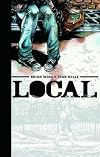
Local by Brian Wood
http://andalittlewine.blogspot.com/2012/05/review-of-local-by-brian-wood-and-rya...
Imagine your life broken into short stories. One story each year, starting when you're 18 for the twelve years until you turn 30.
Would you like the story? Could you trace uninterrupted growth, or would you find yourself backsliding into the old habits and same mistakes year after year?
These questions are woven throughout Local, written by Brian Wood and illustrated by Ryan Kelly. Intricate, lush and show more compelling, Local follows Megan McKeenan as she runs away from home and never stops running: each year brings her to a new city, a new set of struggles, the same old worries and fears.
This is my favorite kind of graphic novel: no superheroes, no doomsday devices, no trick endings. Wood and Kelly set out to depict life, and it is intricate and gorgeous and dirty.
Local makes a fairly easy read from a visual standpoint; the frames tend to feature clear middle to close shots of the characters in action. Unlike a Chris Ware, we're never left twisting the book around to figure out what we're seeing, and unlike an R. Crumb, the characters are photo-realistic, never twisting into the caricature of human that conveys more emotion.
As narrative, it takes a few stories to become engrossed in the plot. I feel, though, that this is true of most short stories, which might explain why I think of Local as a collection of short stories, rather than as a single novel. Although Megan is a central character in each episode, she is often peripheral to the actual dramatic tension. Much like Wineburg, Ohio or The Imperfectionists, each chapter is complete while a larger story unfolds around them. It's an interesting approach to writing and book, and one that could have backfired on Wood and Kelly. Kudos for pulling it off.
This was my third or fourth reading of Local, but the first time I've picked it up in a year or more, and I was (again) surprised by how much I had missed or forgotten. I was surprised by how engaged I was in watching Megan grow up; in past readings, I focused on the men in the stories (many and deeply flawed) or on the glamor and grit of each new city. This time was the first time that Megan kept pulling me deeper into the story. For most of her life, she is not someone I admire, and I'm not sure, even at thirty, that she is a person I could understand or like. But, having watched her grow, she's someone I empathize with because she's someone I recognize.
It's a must read if you love graphic novels, but are ready to move beyond the books they make into movies. show less
Imagine your life broken into short stories. One story each year, starting when you're 18 for the twelve years until you turn 30.
Would you like the story? Could you trace uninterrupted growth, or would you find yourself backsliding into the old habits and same mistakes year after year?
These questions are woven throughout Local, written by Brian Wood and illustrated by Ryan Kelly. Intricate, lush and show more compelling, Local follows Megan McKeenan as she runs away from home and never stops running: each year brings her to a new city, a new set of struggles, the same old worries and fears.
This is my favorite kind of graphic novel: no superheroes, no doomsday devices, no trick endings. Wood and Kelly set out to depict life, and it is intricate and gorgeous and dirty.
Local makes a fairly easy read from a visual standpoint; the frames tend to feature clear middle to close shots of the characters in action. Unlike a Chris Ware, we're never left twisting the book around to figure out what we're seeing, and unlike an R. Crumb, the characters are photo-realistic, never twisting into the caricature of human that conveys more emotion.
As narrative, it takes a few stories to become engrossed in the plot. I feel, though, that this is true of most short stories, which might explain why I think of Local as a collection of short stories, rather than as a single novel. Although Megan is a central character in each episode, she is often peripheral to the actual dramatic tension. Much like Wineburg, Ohio or The Imperfectionists, each chapter is complete while a larger story unfolds around them. It's an interesting approach to writing and book, and one that could have backfired on Wood and Kelly. Kudos for pulling it off.
This was my third or fourth reading of Local, but the first time I've picked it up in a year or more, and I was (again) surprised by how much I had missed or forgotten. I was surprised by how engaged I was in watching Megan grow up; in past readings, I focused on the men in the stories (many and deeply flawed) or on the glamor and grit of each new city. This time was the first time that Megan kept pulling me deeper into the story. For most of her life, she is not someone I admire, and I'm not sure, even at thirty, that she is a person I could understand or like. But, having watched her grow, she's someone I empathize with because she's someone I recognize.
It's a must read if you love graphic novels, but are ready to move beyond the books they make into movies. show less

Access a version of the below that includes illustrations on my blog.
The second (or fourth, depending on how you count) and final volume of Dead Boy Detectives pays off some plot threads left dangling from the previous volume. Dead boy Charles Rowland meets the half-sister he never knew he had, a Buddhist monk with a rationalist daughter. His sister tells him his father may have directly caused the dead of his mother, so it's up to the Dead Boy Detectives to investigate with the help of new show more friend Crystal Palace. At the same time, Crystal's comatose childhood friend Rosa is trapped in the dimension of the half-dead, the Neitherlands, along with another one of her friends, Hana, where a mysterious power is amassing to invade our reality. But Rosa's parents are read to pull the plug on her life support, which could doom both her and the universe.
I kind of like this set-up for the Dead Boy Detectives. Crystal Palace is great, as is Charles's skeptical rationalist niece, and the two cats that are each half a philosopher are fun. I'm less into the Buddhist sister, though at least Litt stops her from being a serene cliche. But I'd rather see the dead boys out in the world solving supernatural mysteries, not plunging the depths of their own backstories: I don't think we gain anything from Charles's family being anything other than an ordinary human family. Their deaths should have been an entry point into a weird world after banal yet horrifying lives, and involving Charles's family so much with ghosts and murder plots and mystical meditations undercuts that; it's like how Steven Moffat Doctor Who companions all have these complicated backstories where they're splintered across time or grow up near cracks in reality when Russell T Davies showed us all they really need is a life boring enough to want to leave it behind. This is a good set-up, but it's only being used to generate insular stories.
That said, the story about the ghost snow and Hana frankly is not very interesting, and a little too similar to the plot from Schoolboy Terrors, with a specter threatening to crack through reality, only this one has an incredibly overcomplicated backstory that made my eyes glaze over. Smaller scale threats would be better, too. The way the story integrates this into the story about Charles's family is awkward, too; it often feels like the characters are rushing back and forth between the two plots just to grab a new revelation, and then switching again. Still, this is the most I've ever cared about the dead boys themselves since Gaiman's original story, and Crystal Palace is a great addition to the team, as Mark Buckingham makes her adorable. If the Dead Boy Detectives are revived for a fourth go, I hope she's there again.
After the five-issue story that comprises the bulk of the volume, there's a one-issue coda that ties up a couple remaining loose threads, pitting the dead boys against their demon headmaster while a monster threatens Crystal's MMORPG and Hana tries to break out of the Neitherlands. Cute but insubstantial, and the series hasn't quite earned the sappiness it's going for on the last two pages. Charles observes, "There she was, the MISSING PIECE of the puzzle," but as much as I like her, I'm not exactly sure how she improves the dynamic in such a way. Oh well.
Neil Gaiman's The Sandman Spin-Offs: « Previous in sequence show less
The second (or fourth, depending on how you count) and final volume of Dead Boy Detectives pays off some plot threads left dangling from the previous volume. Dead boy Charles Rowland meets the half-sister he never knew he had, a Buddhist monk with a rationalist daughter. His sister tells him his father may have directly caused the dead of his mother, so it's up to the Dead Boy Detectives to investigate with the help of new show more friend Crystal Palace. At the same time, Crystal's comatose childhood friend Rosa is trapped in the dimension of the half-dead, the Neitherlands, along with another one of her friends, Hana, where a mysterious power is amassing to invade our reality. But Rosa's parents are read to pull the plug on her life support, which could doom both her and the universe.
I kind of like this set-up for the Dead Boy Detectives. Crystal Palace is great, as is Charles's skeptical rationalist niece, and the two cats that are each half a philosopher are fun. I'm less into the Buddhist sister, though at least Litt stops her from being a serene cliche. But I'd rather see the dead boys out in the world solving supernatural mysteries, not plunging the depths of their own backstories: I don't think we gain anything from Charles's family being anything other than an ordinary human family. Their deaths should have been an entry point into a weird world after banal yet horrifying lives, and involving Charles's family so much with ghosts and murder plots and mystical meditations undercuts that; it's like how Steven Moffat Doctor Who companions all have these complicated backstories where they're splintered across time or grow up near cracks in reality when Russell T Davies showed us all they really need is a life boring enough to want to leave it behind. This is a good set-up, but it's only being used to generate insular stories.
That said, the story about the ghost snow and Hana frankly is not very interesting, and a little too similar to the plot from Schoolboy Terrors, with a specter threatening to crack through reality, only this one has an incredibly overcomplicated backstory that made my eyes glaze over. Smaller scale threats would be better, too. The way the story integrates this into the story about Charles's family is awkward, too; it often feels like the characters are rushing back and forth between the two plots just to grab a new revelation, and then switching again. Still, this is the most I've ever cared about the dead boys themselves since Gaiman's original story, and Crystal Palace is a great addition to the team, as Mark Buckingham makes her adorable. If the Dead Boy Detectives are revived for a fourth go, I hope she's there again.
After the five-issue story that comprises the bulk of the volume, there's a one-issue coda that ties up a couple remaining loose threads, pitting the dead boys against their demon headmaster while a monster threatens Crystal's MMORPG and Hana tries to break out of the Neitherlands. Cute but insubstantial, and the series hasn't quite earned the sappiness it's going for on the last two pages. Charles observes, "There she was, the MISSING PIECE of the puzzle," but as much as I like her, I'm not exactly sure how she improves the dynamic in such a way. Oh well.
Neil Gaiman's The Sandman Spin-Offs: « Previous in sequence show less
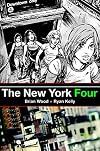
This little OGN from Brian Wood and Ryan Kelly almost got a fifth star, but little things kept yanking me out of the story, namely the little guidebook/status updates. At first I thought they were cute ("New York 101: Broadway & Houston Streets... If you pronounced it like Houston, Texas, you are most likely a tourist. Say "house-tin" instead") but by the time they were explaining what a spider roll is, I was rolling my eyes and feeling condescended to, and annoyed to have my eye and show more thoughts diverted from a story that stood very nicely on its own. It concerns an NYU freshman, a young woman whose parents overbear, whose sister is estranged but newly in her life, whose friends are counting on her to come through with a place to live, and who is being secretly wooed via text message by someone who snuck his email address into her pocket at a show. Wood does a lovely job of ratcheting the tension to the breaking point and exploding it nicely, and Kelly's character designs, crowd scenes and cityscapes are all a comics fan would wish for. That the book is a nice little digest-size (fits in the pocket) and tells a compact, stand-alone story makes me consider it almost an American manga. It's a pretty darned good read. show less
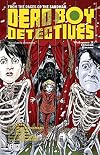
The 'Ghost Snow' story arc killed me.
Charles (d. 1990), Edwin (d. 1916), and Crystal Palace (living: somewhere between the ages of 13 and 20 depending on the panel and issue, usually sexualized) stumble into a secret hospital ward down the street from Crystal's parents' house hidden behind or underneath an old folks' home. This depressing home contains a) Charles' secret half-sister's mother who, we just discovered, murdered Charles' mom long before, and b) a gaggle of ghosts who by existing show more break Sandman lore re: Death established only a couple issues earlier.
[N.B. This review includes images, and was formatted for my site, dendrobibliography -- located here.]
It should be noted that Charles' half-sister is a walking Buddhist stereotype -- bald head, orange robes, one-liner wisdom -- who lives in a windmill with her steampunk daughter, who exists for no other reason than to poke fun of science and scientists for not believing in supernatural junk.
The secret hospital happens to contain Crystal's supposedly-dead childhood friend, who's been in a secret coma for the last 5 or 7 years (depending on the issue). The comatose friend's spirit, it turns out, has been trapped in what's known as the Neitherworld with, coincidentally, Crystal's new best friend's spirit -- her body's been hijacked: long story --, a meditating Buddhist who lives next door to the aforementioned windmill, and, occasionally, Tragic Mick, a proprietor of a ghost store Charles and Edwin frequent.
The coincidences are building.
Unfortunately, as soon as our heroes learn of the comatose friend, she's only minutes away from death. (As is the guilt-ridden mother in the old folks' home.)
Of course they save the friend. Of course. And not only does she bounce awake, totally fine, she's mentally just as old as Crystal Palace and her gang of ghosts. Because being in a coma since the age of 6 (or 8) wouldn't have any consequences.
I can't imagine how the above scenario was storyboarded. It makes no sense.
It only gets worse when the series concludes on a one-shot ('Yonda') that takes place in a fictional video game as imagined by a clueless, middle-aged parent stuck in 1993. Excuses for ignorant story-telling like this ran out after Y2K. show less
Charles (d. 1990), Edwin (d. 1916), and Crystal Palace (living: somewhere between the ages of 13 and 20 depending on the panel and issue, usually sexualized) stumble into a secret hospital ward down the street from Crystal's parents' house hidden behind or underneath an old folks' home. This depressing home contains a) Charles' secret half-sister's mother who, we just discovered, murdered Charles' mom long before, and b) a gaggle of ghosts who by existing show more break Sandman lore re: Death established only a couple issues earlier.
[N.B. This review includes images, and was formatted for my site, dendrobibliography -- located here.]
It should be noted that Charles' half-sister is a walking Buddhist stereotype -- bald head, orange robes, one-liner wisdom -- who lives in a windmill with her steampunk daughter, who exists for no other reason than to poke fun of science and scientists for not believing in supernatural junk.
The secret hospital happens to contain Crystal's supposedly-dead childhood friend, who's been in a secret coma for the last 5 or 7 years (depending on the issue). The comatose friend's spirit, it turns out, has been trapped in what's known as the Neitherworld with, coincidentally, Crystal's new best friend's spirit -- her body's been hijacked: long story --, a meditating Buddhist who lives next door to the aforementioned windmill, and, occasionally, Tragic Mick, a proprietor of a ghost store Charles and Edwin frequent.
The coincidences are building.
Unfortunately, as soon as our heroes learn of the comatose friend, she's only minutes away from death. (As is the guilt-ridden mother in the old folks' home.)
Of course they save the friend. Of course. And not only does she bounce awake, totally fine, she's mentally just as old as Crystal Palace and her gang of ghosts. Because being in a coma since the age of 6 (or 8) wouldn't have any consequences.
I can't imagine how the above scenario was storyboarded. It makes no sense.
It only gets worse when the series concludes on a one-shot ('Yonda') that takes place in a fictional video game as imagined by a clueless, middle-aged parent stuck in 1993. Excuses for ignorant story-telling like this ran out after Y2K. show less
Lists
Awards


You May Also Like
Associated Authors
Statistics
- Works
- 25
- Also by
- 21
- Members
- 1,357
- Popularity
- #18,943
- Rating
- 4.0
- Reviews
- 57
- ISBNs
- 47
- Languages
- 6