
Kathryn Stockett
Author of The Help
About the Author
Kathryn Stockett was born in 1969 in Mississippi. She graduated from the University of Alabama with a degree in English and Creative Writing. She soon got a job in magazine marketing and publishing in New York City. She became famous in 2009 with her debut novel, The Help. Her book tells the story show more of African-American Maids working in white households in Jackson Mississippi during the 1960's. It sold over ten million copies and spent more than 100 weeks on The New York Times Best Seller List. (Bowker Author Biography) show less
Works by Kathryn Stockett
Associated Works
Tagged
Common Knowledge
- Legal name
- Stockett, Kathryn
- Birthdate
- 1969
- Gender
- female
- Education
- University of Alabama
- Occupations
- novelist
- Agent
- Susan Ramer (Don Congdon Associates)
- Nationality
- USA
- Birthplace
- Jackson, Mississippi, USA
- Places of residence
- Jackson, Mississippi, USA
New York, New York, USA
Atlanta, Georgia, USA - Associated Place (for map)
- USA
Members
Discussions
The Help in Orange January/July (February 2012)
Reviews
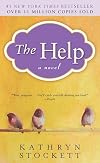
While this book isn't perfect - at least one character (ahem, Miss Hilly) deserved a lot more pain than she got - it does bring 1960s Jackson, Mississippi, alive. The segregation between the black and white community looms large in this book, especially as a few characters start to cross the barriers between the two communities. The structures of power and relationships that transcend race are also woven into the compelling narrative. As much as I enjoyed this book, I couldn't help but think show more that this is exactly the story a white woman would tell about this era and I wonder how different the story a black woman would write would be. show less
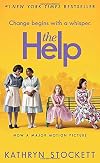
I finished this midweek but waited a few days to write about it in order to clarify some things in my head first because my reaction to it was so emotionally charged and visceral. This is a story of a young white woman, a recent college graduate living on a "plantation" not far from Jackson, Mississippi in the early 1960s. Eugenia, better known as Skeeter, wants nothing more than to move to New York City and become a writer, while her mother's dearest hope is for her to marry well and have a show more perfect son and daughter and be a stalward member of white southern society. Mainly as a way to realize her dream, and perhaps also in part because she sees the inherent evils of the Jim Crow laws and wants to help change those laws as well as the attitudes of the whites to the coloreds, she convinces some of the "colored" maids to tell her their stories which she intends to use in a book. As for the maids themselves, they refuse at first to have anything to do with the crazy white lady and her dangerous project, but certain events occur that convince them to overcome their terror and their distrust and to tell their stories to Miz Skeeter. The first to do so is the highly educated, thoughtful, and kind-hearted Abilene, who works for one of Skeeter's best friends, Elizabeth, raising Elizabeth's baby daughter Mae Mobley and trying to instill in the child a sense of self-worth that is sadly lacking due to her parents' neglect. Minnie Jackson, a fiesty outspoken woman with a hard home life, is the second maid to join the project. Minnie, who is well-known for her culinary skills and even more well-known for her mouthiness, worked for the elderly mother of Skeeter's other best friend, Ms. Hilly Holbrook, until she is unjustly accused of theft and fired. Skeeter's mother's maid Constantine, although no longer with the family, also features prominently in the story.
In the audio version, the voices of the three woman who narrate the main characters in the story ~ Skeeter. Abilene and Minnie ~ are so spot-on and wonderful that I could have listened to them recite grocery lists. They made the characters so real, their sorrows and happiness, fears and courage, foibles and insightfulness. Skeeter comes off at first as weak and self-serving, but the growth she experiences throughout the novel resulted in a compassionate young woman with the beginnings of a real backbone. Abilene is the rock upon which everyone else seemed to anchor themselves, though it is Minnie who turns out to have the most faith and courage. I loved the way she talks about Miz Celia and Mistah Johnny, about Miz Hilly the other society ladies. For all her antagonism, I could hear the deep pain and deeper compassion that, for all she tries to keep it hidden, peeks through everything she does.
I've heard some reviewers say that is not the way people talked back then, but it sure worked for this story. I've also heard some reviewers protest that life was not that way back in the 60s in Mississippi. All I know is that I was in my early 20s during that period, and the rendering in this novel is much as I remember it, though I lived in Chicago at the time. Still, that's very much that way I remember life being in Chicago, when first Ashland Avenue and then Damon Avenue were the lines of demarcation (black neighborhoods were east and white neighborhoods west of those streets) and talk in the white neighborhoods included words like "white flight," and I sincerely doubt that Chicago was worse than Jackson, Mississippi when it came to how black Americans were treated, the attitudes of whites toward blacks and segregation, or the violent reaction of the white segregationists to the civil rights movement.
The novel worked for me on so many different levels: as a picture of what life was like in the south in the early 60s, as a character study of people on both sides of the civil rights/segregation question, and as a ripping good story. It made me laugh, it made me cry, and it made me feel shamed and proud, both at the same time. Because ultimately this was a novel about the human spirit, about how everyone's got a story yet how many of those stories are very much alike, and how a few people working for the good of all can make a huge difference.
This has been adapted for film, and it's one film adaptation I am looking forward to seeing.
Highly recommended. show less
In the audio version, the voices of the three woman who narrate the main characters in the story ~ Skeeter. Abilene and Minnie ~ are so spot-on and wonderful that I could have listened to them recite grocery lists. They made the characters so real, their sorrows and happiness, fears and courage, foibles and insightfulness. Skeeter comes off at first as weak and self-serving, but the growth she experiences throughout the novel resulted in a compassionate young woman with the beginnings of a real backbone. Abilene is the rock upon which everyone else seemed to anchor themselves, though it is Minnie who turns out to have the most faith and courage. I loved the way she talks about Miz Celia and Mistah Johnny, about Miz Hilly the other society ladies. For all her antagonism, I could hear the deep pain and deeper compassion that, for all she tries to keep it hidden, peeks through everything she does.
I've heard some reviewers say that is not the way people talked back then, but it sure worked for this story. I've also heard some reviewers protest that life was not that way back in the 60s in Mississippi. All I know is that I was in my early 20s during that period, and the rendering in this novel is much as I remember it, though I lived in Chicago at the time. Still, that's very much that way I remember life being in Chicago, when first Ashland Avenue and then Damon Avenue were the lines of demarcation (black neighborhoods were east and white neighborhoods west of those streets) and talk in the white neighborhoods included words like "white flight," and I sincerely doubt that Chicago was worse than Jackson, Mississippi when it came to how black Americans were treated, the attitudes of whites toward blacks and segregation, or the violent reaction of the white segregationists to the civil rights movement.
The novel worked for me on so many different levels: as a picture of what life was like in the south in the early 60s, as a character study of people on both sides of the civil rights/segregation question, and as a ripping good story. It made me laugh, it made me cry, and it made me feel shamed and proud, both at the same time. Because ultimately this was a novel about the human spirit, about how everyone's got a story yet how many of those stories are very much alike, and how a few people working for the good of all can make a huge difference.
This has been adapted for film, and it's one film adaptation I am looking forward to seeing.
Highly recommended. show less

I recently finished the audio version of The Help with Bahni Turpin and Octavia Spencer as two of the narrators. Their part of the narration was exceptional. The novel itself was embarrassing and not particularly well written. I didn’t read any reviews before listening to it or writing down my reactions. I was uncomfortable with the idea of a book written by a white woman that presumed to speak directly for Black folks and I wanted to form my own opinion without being influenced. I am show more still uncomfortable with much about the novel. The only reason I give it 2 stars is that it may, with all its faults, give a glimpse of what Black maids live(d) through as seen through Stockett’s eyes. Apparently, these experiences are surprising to many people so I suppose that’s something.
The Help is a feel-good fairy tale for white folks. The setting is Jackson, Mississippi in the early 1960s. Eugenia “Skeeter” Phelan, free, white, and 23, has graduated from Ole Miss University. She lives at home on her family’s cotton plantation but she doesn’t want to stay there. She wants to go to New York and become an author but first she needs to write a book.
Fortunately for Skeeter, Hilly Holbrook, a prominent and almost caricatured member of Jackson's white community, provides the topic. Hilly determines to get a law passed that will require white families to have outdoor bathrooms built for their “colored” help—separate but equal. 1963 seems a bit late in the day for Hilly to have come up with this idea, but she does.
Skeeter is struck by the injustice of Hilly’s actions and their effect on Hilly’s maid, Aibileen. Lordy, where has Skeeter been all this long time? Has she just noticed segregation and its consequences in Mississippi? Did she somehow miss, among many other things, the 1962 riots following the admission of African-American student James Meredith to her own white, segregated Alma Mater, Ole Miss?
Well, whatever. Now Skeeter’s had segregation brought to her attention and, I guess, has seen some of its consequences a bit more clearly than before and what lo! This is the topic she’s been looking for. She decides to write a book about the experiences of Black maids in white homes.
She’s determined to enlist the maids themselves to help with the book and to get them to tell her their stories. To this end, she invades the lives of these Black women, starting with Hilly Holbrook’s maid, Aibileen Clark, then Minny Jackson, a maid with a bad rep among white folks, and, eventually, pulls in a number of others.
Skeeter relentlessly badgers them into helping her with her book. In so doing, we are given to believe, she empowers these women to speak out, albeit anonymously. She continually infringes upon these women’s private lives and pleads for their help. Even when Aibileen is so exhausted after a day’s work that she can barely stand, Skeeter comes uninvited to her home at night to beg her to work on the stories. I wanted to smack Skeeter upside the head for bringing the demands of the white world into the privacy of Black women's homes.
Of course the women, starting with Aibileen, give in to Skeeter's importuning. And so it comes to pass that a skinny white girl leads these Black women to tell all, the good, the bad and the ugly, about being Black maids in Jackson. I am agog at the problems with this premise.
I guess I could understand if the toilet incident were a wake-up call for Skeeter, but for the maids? Really? The novel takes place in the ‘60s in the South. Even after legislation in the ‘50s aimed at bringing about integration, almost everything was still segregated. In many states, schools, colleges, medical facilities, drinking fountains, bathrooms, buses, parks, eating establishments, libraries, theatres, ballparks, and beaches were still separated into those for “whites” and those for “colored.” The penalties for trying to cross color lines were severe, sometimes fatal. The Klan was lethally active. Even The Help mentions the assassination of Medgar Evers, a civil rights activist and field secretary of the NAACP, in Jackson in June 1963 and touches on the fear this causes Aibileen.
Frankly, though, despite the fear they would have suffered, I hate to think that Aibileen Clark and Minny Jackson would need some young white woman to show them how to stand up for themselves if they were ready to do so. C’mon. These women have better options than Miss Skeeter and her book, however well-intentioned.
In the 60s, Black women and men, as well as whites, were coming together throughout the South to engage in nonviolent civil disobedience to bring about change in the face of strong, violent white resistance. There were also groups in existence founded by Blacks to help bring about integration and ensure civil rights for Blacks. Groups like the NAACP, SNCC, CORE, and SCLC were on the ground. The Freedom riders visited Jackson in 1961. The March on Washington took place in 1963.
Set in this context, the way these women attempt to redress the evils they face seems to me to be purely a white person’s solution. It’s petty. It trivializes the enormity of what was happening to Black folks and the scope of the changes for which the Movement was aiming.
Stockett attempts to convey the fear the women feel at the thought of reprisals for what they’re doing, but she clearly hasn’t felt that kind of fear herself and she falls far short in imagining or representing it. She does make clear, though, that the maids’ livelihoods, if not indeed their lives, are endangered by participating in Skeeter’s project, or by any behavior not condoned by whites. This makes it even harder to feel good about Skeeter’s self-serving determination to put these women at risk so she can get her book written. It is harder still to accept, first, their willingness to help her and then their protestations of gratitude toward her for giving them this opportunity. Oh please!
There is some acknowledgment of relevant events that are occurring in the South during the period covered by the novel, such as a sit in at a drug store counter, Medgar Evers’ assassination and the March on Washington, but they’re not given enough prominence or weight. For example, Skeeter plays a tacky trick on one of the tacky white folks at around the time of the killings of 4 Black girls by a KKK terrorist on Birmingham Sunday (September 15, 1963). The story of the trick supposedly makes even the New York Times. Aibileen allows that perhaps this happens because there just wasn’t much news that day and that, after all, there’s only so much you can say about the deaths of those 4 girls. Oh really? This is what a Black woman would say about the murder of 4 Black girls by the Klan? Wow.
I do think there’s a book lurking somewhere in Stockett’s experience that might be interesting if she could find and write it. I didn’t really glimpse it until I listened to Stockett’s Too little, too late Afterward to the audio book.
Stockett was raised by Demetrie, a Black nanny whom she loved very much and who died when Stockett was 16. I believe her relationship to Demetrie is probably reflected in the relationship between Aibileen and Hilly Holbrook’s 2-year-old daughter, Mae Mobley. Stockett would probably have been about Mae Mobley’s age in the early 70s. My guess is that Stockett created a character in Aibileen who feels about Mae Mobley as Stockett hopes Demetrie may have felt about her. Given the nature of their relationship, Stockett will never know. Nor do we.
If the depiction of the relationship between Aibileen and Mae Mobley is an accurate reflection of that between Demetrie and Stockett as Stockett envisioned it, there is indeed a painful and complex story there and it’s not a fairy tale.
I would be interested to know what it’s like to be that little white girl, raised by and loving a Black woman, coming to terms with the complexities and implications of that relationship, perhaps with the desire to be Demetrie’s daughter and maybe to be Black herself. Stockett strongly suggests this possibility in Aibileen’s relationship with Mae Mobley. If this was Stockett’s experience and she had told that story, I’d have been interested. Unlike The Help, it wouldn’t have necessitated speaking for Blacks, would have been less self-serving and, if done insightfully, could have been a coming-of-age story worth reading.
As far as the purported subject of the book itself, if you want to know what was really going on during the Civil Rights Movement in the ‘60s, read someone besides Stockett. There are a lot of books out there, but don't expect any of them to make you feel good. show less
The Help is a feel-good fairy tale for white folks. The setting is Jackson, Mississippi in the early 1960s. Eugenia “Skeeter” Phelan, free, white, and 23, has graduated from Ole Miss University. She lives at home on her family’s cotton plantation but she doesn’t want to stay there. She wants to go to New York and become an author but first she needs to write a book.
Fortunately for Skeeter, Hilly Holbrook, a prominent and almost caricatured member of Jackson's white community, provides the topic. Hilly determines to get a law passed that will require white families to have outdoor bathrooms built for their “colored” help—separate but equal. 1963 seems a bit late in the day for Hilly to have come up with this idea, but she does.
Skeeter is struck by the injustice of Hilly’s actions and their effect on Hilly’s maid, Aibileen. Lordy, where has Skeeter been all this long time? Has she just noticed segregation and its consequences in Mississippi? Did she somehow miss, among many other things, the 1962 riots following the admission of African-American student James Meredith to her own white, segregated Alma Mater, Ole Miss?
Well, whatever. Now Skeeter’s had segregation brought to her attention and, I guess, has seen some of its consequences a bit more clearly than before and what lo! This is the topic she’s been looking for. She decides to write a book about the experiences of Black maids in white homes.
She’s determined to enlist the maids themselves to help with the book and to get them to tell her their stories. To this end, she invades the lives of these Black women, starting with Hilly Holbrook’s maid, Aibileen Clark, then Minny Jackson, a maid with a bad rep among white folks, and, eventually, pulls in a number of others.
Skeeter relentlessly badgers them into helping her with her book. In so doing, we are given to believe, she empowers these women to speak out, albeit anonymously. She continually infringes upon these women’s private lives and pleads for their help. Even when Aibileen is so exhausted after a day’s work that she can barely stand, Skeeter comes uninvited to her home at night to beg her to work on the stories. I wanted to smack Skeeter upside the head for bringing the demands of the white world into the privacy of Black women's homes.
Of course the women, starting with Aibileen, give in to Skeeter's importuning. And so it comes to pass that a skinny white girl leads these Black women to tell all, the good, the bad and the ugly, about being Black maids in Jackson. I am agog at the problems with this premise.
I guess I could understand if the toilet incident were a wake-up call for Skeeter, but for the maids? Really? The novel takes place in the ‘60s in the South. Even after legislation in the ‘50s aimed at bringing about integration, almost everything was still segregated. In many states, schools, colleges, medical facilities, drinking fountains, bathrooms, buses, parks, eating establishments, libraries, theatres, ballparks, and beaches were still separated into those for “whites” and those for “colored.” The penalties for trying to cross color lines were severe, sometimes fatal. The Klan was lethally active. Even The Help mentions the assassination of Medgar Evers, a civil rights activist and field secretary of the NAACP, in Jackson in June 1963 and touches on the fear this causes Aibileen.
Frankly, though, despite the fear they would have suffered, I hate to think that Aibileen Clark and Minny Jackson would need some young white woman to show them how to stand up for themselves if they were ready to do so. C’mon. These women have better options than Miss Skeeter and her book, however well-intentioned.
In the 60s, Black women and men, as well as whites, were coming together throughout the South to engage in nonviolent civil disobedience to bring about change in the face of strong, violent white resistance. There were also groups in existence founded by Blacks to help bring about integration and ensure civil rights for Blacks. Groups like the NAACP, SNCC, CORE, and SCLC were on the ground. The Freedom riders visited Jackson in 1961. The March on Washington took place in 1963.
Set in this context, the way these women attempt to redress the evils they face seems to me to be purely a white person’s solution. It’s petty. It trivializes the enormity of what was happening to Black folks and the scope of the changes for which the Movement was aiming.
Stockett attempts to convey the fear the women feel at the thought of reprisals for what they’re doing, but she clearly hasn’t felt that kind of fear herself and she falls far short in imagining or representing it. She does make clear, though, that the maids’ livelihoods, if not indeed their lives, are endangered by participating in Skeeter’s project, or by any behavior not condoned by whites. This makes it even harder to feel good about Skeeter’s self-serving determination to put these women at risk so she can get her book written. It is harder still to accept, first, their willingness to help her and then their protestations of gratitude toward her for giving them this opportunity. Oh please!
There is some acknowledgment of relevant events that are occurring in the South during the period covered by the novel, such as a sit in at a drug store counter, Medgar Evers’ assassination and the March on Washington, but they’re not given enough prominence or weight. For example, Skeeter plays a tacky trick on one of the tacky white folks at around the time of the killings of 4 Black girls by a KKK terrorist on Birmingham Sunday (September 15, 1963). The story of the trick supposedly makes even the New York Times. Aibileen allows that perhaps this happens because there just wasn’t much news that day and that, after all, there’s only so much you can say about the deaths of those 4 girls. Oh really? This is what a Black woman would say about the murder of 4 Black girls by the Klan? Wow.
I do think there’s a book lurking somewhere in Stockett’s experience that might be interesting if she could find and write it. I didn’t really glimpse it until I listened to Stockett’s Too little, too late Afterward to the audio book.
Stockett was raised by Demetrie, a Black nanny whom she loved very much and who died when Stockett was 16. I believe her relationship to Demetrie is probably reflected in the relationship between Aibileen and Hilly Holbrook’s 2-year-old daughter, Mae Mobley. Stockett would probably have been about Mae Mobley’s age in the early 70s. My guess is that Stockett created a character in Aibileen who feels about Mae Mobley as Stockett hopes Demetrie may have felt about her. Given the nature of their relationship, Stockett will never know. Nor do we.
If the depiction of the relationship between Aibileen and Mae Mobley is an accurate reflection of that between Demetrie and Stockett as Stockett envisioned it, there is indeed a painful and complex story there and it’s not a fairy tale.
I would be interested to know what it’s like to be that little white girl, raised by and loving a Black woman, coming to terms with the complexities and implications of that relationship, perhaps with the desire to be Demetrie’s daughter and maybe to be Black herself. Stockett strongly suggests this possibility in Aibileen’s relationship with Mae Mobley. If this was Stockett’s experience and she had told that story, I’d have been interested. Unlike The Help, it wouldn’t have necessitated speaking for Blacks, would have been less self-serving and, if done insightfully, could have been a coming-of-age story worth reading.
As far as the purported subject of the book itself, if you want to know what was really going on during the Civil Rights Movement in the ‘60s, read someone besides Stockett. There are a lot of books out there, but don't expect any of them to make you feel good. show less

From little things, big things grow...
This book made me so mad! Let me re-phrase that: the subject of this book made me so mad - and sad, while altogether mesmerised. What an emotional roller-coaster ride this was. I had to keep reminding myself that these extremely well-written, profoundly well-captured experiences were from 50 years ago (!) - though, unfortunately, similar attitudes are still the norm in places today. But how illuminating and how honest is this memoir; shaped simply as a show more legitimate rendition from three perspectives about shared life-changing, momentous circumstances in (what I consider is) a bleak chapter of history; with a candour and an openness that is to be lauded.
Seemingly, from out of nowhere, and emanating from a juxtaposition of unplanned elements, an unusual alliance is formed within the lives of three women, living in race-divided Jackson, Mississippi, circa 1962; leading to a young white woman, Skeeter, beginning a frank and forthright written history of the ordeals of black maids under their white Southern mistresses’ indenture. And hence a biography of the times. But the story belongs to brave, canny, sensible Aibileen raising her seventeenth white child (and counting), while still grieving the loss of her only son; and her best friend Minny, seventeen years younger and at once sassy, solid and susceptible - both a strength to each other, and to their community. As each rails internally, though more openly in Minny’s case, against their increasingly difficult and demeaning situation, a precarious rebellion is triggered - the consequences to all three, and to all those around them, meticulously detailed in the constant horrors dealt to any who dare defy the ‘natural order’ of this state.
I cannot emphasise enough how well this narrative works! From the moment I poked my nose inside this book, I was hooked. By employing the three discrete, distinct viewpoints and oscillating cleverly between, Ms Stockett creates a fascinating, intertwined chronicle of events - wholly genuine in tone, inexorably believable in total; and well...so very real, despite the seemingly (to me) perverse unreality at play! From these conversations emerges a reasoning, a comprehension, an instruction - albeit somewhat irrational, absurd and downright unfair in many instances - behind the every action of both ‘sides’ in this discourse; ultimately providing a deft scrutiny of the rigid hypocrisy of the times, but an understanding nonetheless. And as the enterprise gathers apace, almost beyond the participants control, the tension and foreboding in the story-line ratchet up accordingly - I was beside myself with worry as I rapidly turned the pages in anticipated dread; sharing every concern, every small victory, and every emotion alongside these wonderful women. I laughed, I cried and I willed them on regardless. Their personal endeavours begged to be told!
Furthermore, I love the title - and the parallel of this account with the genesis of the book as the premise, and its underscoring of the whole tale:
Aibileen scratches her nose, says, “What do think about just calling it...Help?
“Help, Minny repeats, like she’s never heard of the word.....
“I like...Help,” I say, because I really do.... I think that‘s a good title”....
“Good is right,” says Minny. “Cause if the thing gets printed, Lord knows we gone need some.” (p. 356)
Which, in fact, is not true. Little help will be necessary to sell this book; the hype is well and truly deserved, the book worthy of its accolades. And yes, the situations unveiled here are not limited to only one country, to one society; decidedly similarities are ongoing around the world today. My wish (and possibly the author's) is that this story, along with many others, will conceivably help expose the appalling inequities imposed on undeserving and unwilling participants in the past, help to resist such predicaments in the future and help provide a culture of enlightenment...and hope.
Now that's some Help indeed!
(Jan 1, 2011) show less
This book made me so mad! Let me re-phrase that: the subject of this book made me so mad - and sad, while altogether mesmerised. What an emotional roller-coaster ride this was. I had to keep reminding myself that these extremely well-written, profoundly well-captured experiences were from 50 years ago (!) - though, unfortunately, similar attitudes are still the norm in places today. But how illuminating and how honest is this memoir; shaped simply as a show more legitimate rendition from three perspectives about shared life-changing, momentous circumstances in (what I consider is) a bleak chapter of history; with a candour and an openness that is to be lauded.
Seemingly, from out of nowhere, and emanating from a juxtaposition of unplanned elements, an unusual alliance is formed within the lives of three women, living in race-divided Jackson, Mississippi, circa 1962; leading to a young white woman, Skeeter, beginning a frank and forthright written history of the ordeals of black maids under their white Southern mistresses’ indenture. And hence a biography of the times. But the story belongs to brave, canny, sensible Aibileen raising her seventeenth white child (and counting), while still grieving the loss of her only son; and her best friend Minny, seventeen years younger and at once sassy, solid and susceptible - both a strength to each other, and to their community. As each rails internally, though more openly in Minny’s case, against their increasingly difficult and demeaning situation, a precarious rebellion is triggered - the consequences to all three, and to all those around them, meticulously detailed in the constant horrors dealt to any who dare defy the ‘natural order’ of this state.
I cannot emphasise enough how well this narrative works! From the moment I poked my nose inside this book, I was hooked. By employing the three discrete, distinct viewpoints and oscillating cleverly between, Ms Stockett creates a fascinating, intertwined chronicle of events - wholly genuine in tone, inexorably believable in total; and well...so very real, despite the seemingly (to me) perverse unreality at play! From these conversations emerges a reasoning, a comprehension, an instruction - albeit somewhat irrational, absurd and downright unfair in many instances - behind the every action of both ‘sides’ in this discourse; ultimately providing a deft scrutiny of the rigid hypocrisy of the times, but an understanding nonetheless. And as the enterprise gathers apace, almost beyond the participants control, the tension and foreboding in the story-line ratchet up accordingly - I was beside myself with worry as I rapidly turned the pages in anticipated dread; sharing every concern, every small victory, and every emotion alongside these wonderful women. I laughed, I cried and I willed them on regardless. Their personal endeavours begged to be told!
Furthermore, I love the title - and the parallel of this account with the genesis of the book as the premise, and its underscoring of the whole tale:
Aibileen scratches her nose, says, “What do think about just calling it...Help?
“Help, Minny repeats, like she’s never heard of the word.....
“I like...Help,” I say, because I really do.... I think that‘s a good title”....
“Good is right,” says Minny. “Cause if the thing gets printed, Lord knows we gone need some.” (p. 356)
Which, in fact, is not true. Little help will be necessary to sell this book; the hype is well and truly deserved, the book worthy of its accolades. And yes, the situations unveiled here are not limited to only one country, to one society; decidedly similarities are ongoing around the world today. My wish (and possibly the author's) is that this story, along with many others, will conceivably help expose the appalling inequities imposed on undeserving and unwilling participants in the past, help to resist such predicaments in the future and help provide a culture of enlightenment...and hope.
Now that's some Help indeed!
(Jan 1, 2011) show less
Lists
First Novels (1)
Connie53 (1)
2023 Reads (1)
To Read (1)
Female Author (1)
Women's Stories (1)
Southern Fiction (1)
Pageturners (1)
Favourite Books (1)
Unread books (1)
Awful Books (1)
A Novel Cure (1)
To Read (1)
Best Audiobooks (1)
Great Audiobooks (1)
1960s (1)
Carole's List (1)
. (1)
Awards


You May Also Like


Associated Authors
Statistics
- Works
- 4
- Also by
- 2
- Members
- 34,494
- Popularity
- #549
- Rating
- 4.4
- Reviews
- 1,562
- ISBNs
- 177
- Languages
- 22
- Favorited
- 33

