
Molière (1622–1673)
Author of Tartuffe or The Hypocrite [Squid Ink Classics Edition]
About the Author
The French dramatist Moliere was born Jean-Baptiste Poquelin on January 15, 1622, in Paris. The son of a wealthy tapestry merchant, he had a penchant for the theater from childhood. In 1636, he was sent off to school at the Jesuit College of Claremont and in 1643, he embarked upon a 13-year career show more touring in provincial theater as a troupe member of Illustre Theatre, a group established by the family Bejarts. He married a daughter of the troupe, Armande Bejart, in 1662 and changed his name to Moliere. The French King Louis XIV, becoming entranced with the troupe after seeing a performance of The Would-Be Gentleman, lent his support and charged Moliere with the production of comedy ballets in which he often used real-life human qualities as backdrops rather than settings from church or state. Soon, Moliere secured a position at the Palais-Royal and committed himself to the comic theater as a dramatist, actor, producer, and director. Moliere is considered to be one of the preeminent French dramatists and writers of comedies; his work continues to delight audiences today. With L'Ecole des Femmes (The School for Wives) Moliere broke with the farce tradition, and the play, about the role played by women in society and their preparation for it, is regarded by many as the first great seriocomic work of French literature. In Tartuffe (1664), Moliere invented one of his famous comic types, that of a religious hypocrite, a character so realistic that the king forbade public performance of the play for five years. Moliere gave psychological depth to his characters, engaging them in facial antics and slapstick comedy, but with an underlying pathos. Jean Baptiste Moliere died in 1673. (Bowker Author Biography) show less
Image credit: Wikipédia France
Series
Works by Molière
Critique of the School for Wives / Learned Women / Misanthrope / School for Wives / Tartuffe / Versailles Impromptu (2001) 384 copies, 2 reviews
Bourgeois Gentleman / Dom Juan / Doctor in Spite of Himself / George Dandin / Miser / Pretentious Young Ladies / Scapin (1989) — Author — 191 copies, 1 review
Imaginary Invalid / Misanthrope / Miser / School for Wives / Tartuffe (1982) — Author — 76 copies, 1 review
School For Husbands and Sganarelle, or The Imaginary Cuckold, by Moliere (1994) — Author — 73 copies
El avaro; El enfermo imaginario (Letras Universales) (Spanish Edition) (1996) — Author — 45 copies, 2 reviews
George Dandin / Imaginary Invalid / Learned Ladies / Miser / Pretentious Young Ladies / Tartuffe (1975) 30 copies
Molière: The Complete Richard Wilbur Translations, Volume 2: The Misanthrope / Amphitryon / Tartuffe / The Learned Ladies (2022) 30 copies
Bourgeois Gentleman / Imaginary Invalid / Misanthrope / Miser / School for Husbands / School for Wives / Tartuffe (1980) 27 copies
Bourgeois Gentleman / Doctor in Spite of Himself / Miser / Pretentious Young Ladies (1999) — Author — 16 copies
Critique of the School for Wives / School for Husbands / School for Wives / Versailles Impromptu (1985) — Author — 16 copies
The slave of truth (Le misanthrope) Tartuffe. The imaginary invalid. New English versions (1973) — Author — 9 copies
Bourgeois Gentleman / Dom Juan / Imaginary Invalid / Learned Ladies / Misanthrope / Miser / Tartuffe (2009) 9 copies
Doctor in Spite of Himself / Love's the Best Doctor / Monsieur de Pourceaugnac / Scapin (1978) 9 copies
Molière : Oeuvres complètes et annexes - 45 titres (Nouvelle édition enrichie) (French Edition) (2013) 8 copies
[Title missing] 7 copies
Select Comedies of Moliere 7 copies
Théâtre complet tome 2 6 copies
The Imaginary Invalid 6 copies
Les Œuvres complètes 6 copies
The Complete Works of Molière 6 copies
Commedie scelte 6 copies
Las preciosas ridículas la escuela de los maridos ; La escuela de las mujeres ; Don Juan o El convidado de piedra ; El médico a la fuerza ; Tartufo o El impostor ;… (1973) — Author — 6 copies
Comedies, Vol. 1 6 copies
Théatre complet 5 copies
Classical French theatre — Contributor — 5 copies
Theatre Complet, Tome IV 5 copies
Il misantropo e Sganarello — Author — 4 copies
3 Great French Plays — Contributor — 4 copies
Obres de Molière 4 copies
Il teatro: La scuola delle mogli, L'avaro, Il misantropo, Il tartufo, Il malato immaginario. Con Segnalibro (2018) 4 copies
Boulevard comedies : free adaptations of Becque, Feydeau, and Molière (2000) — Contributor — 4 copies
Oeuvres de Moliere 4 copies
Hat színmű. A fösvény. Kényeskedők. Képzelt beteg. Tudós nők. Dandin György vagy a megcsúfolt férj. Tartuffe. (2016) 4 copies
Bourgeois Gentleman / School for Wives / Tartuffe — Author — 4 copies
Der Wirrkopf. Die lächerlichen Schwärmerinnen. Sganarell oder Der vermeintlich Betrogene (1988) — Author — 4 copies
Teatro 4 copies
Les Fourberies de Scapin, 192 pages 3 copies
Le Malade Imaginaire (Texte Intégral) et Elomire Hypocondre (extraits) avec des Notes Explicatives par Yves Hucher (1965) 3 copies
Tartufo. La escuela de los maridos 3 copies
El atolondrado o los contratiempos comedia en cinco actos ; Las trapacerías de Scapin: comedia en tres actos (1977) 3 copies
Doctor in Spite of Himself / Learned Ladies / Miser / Pretentious Young Ladies / School for Wives (2010) 3 copies
The Affected Misses / Don Juan / Tartuffe / The Misanthrope / the Doctor by Compulsion / The Miser / The Tradesman Turned Gentleman / The Learned Ladies (1908) — Author — 3 copies
Plays 3 copies
The Miser 3 copies
Avarul. Tartuffe. Don Juan 3 copies
Doctor in Spite of Himself / Miser / Scapin — Author — 3 copies
Oeuvres de Molière 3 copies
KOPRACI 3 copies
Moliere: Oeuvres Completes - Tome II 3 copies
La Malade Imaginaire 3 copies
Oeuvres complètes en six volumes 3 copies
L'Amor metge ; El Metge per força ; El Malalt imaginari — Author — 2 copies
Le Misanthrope - Molière - Edition pédagogique Lycée - Nouvelle édition BAC - Carrés classiques Nathan (2019) 2 copies
Le medecin volant. L'amour medecin 2 copies
Moliere: Comedies 2 copies
Dom Juan (notices de Paul Arbelet) - L'ecole des femmes (notices de G. Sablayrolles) - Le Misanthrope (notices de Felix Guirand) (1959) — Author — 2 copies
Hat szn̕m 2 copies
Moliére összes színművei 2 copies
Les oeuvres de Monsieur de Moliere 2 copies
Les précieuses ridicules. La comtesse d'Escarbagnas : Texte intégral, texte intégral, une oeuvre, un thème (1997) 2 copies
Theatre choisi 2 copies
Théâtre choisi 2 copies
Näidendid 2 copies
Théâtre tome 1 2 copies
Moliere (comedies) 2 copies
El avaro/Las preciosas ridículas 2 copies
Tres Comedias. La Escuela de Los Maridos, La Escuela De Las Mujeres, Tartufo o El Hipócrita (1977) — Author — 2 copies
Oeuvres Completes, 3 vols. 2 copies
Théâtre - 5 2 copies
Chef d'oevres de Molière 2 copies
O Burguês Ridículo 2 copies
THEATRE COMPLET DE MOLIERE Tome 3 — Author — 2 copies
Oevres de Moliere. 2 copies
Les oeuvres de Molière 2 copies
Teatro I: La escuela de las mujeres / El tartufo / Don Juan / El misántropo / Anfitrión (2021) 2 copies
Théâtre complet illustré 2 copies
Teatro II: Georges Dandin / El avaro / El burgués gentilhombre / Las mujeres sabias / El enfermo imaginario (2021) 2 copies
O Medico Volante. As Preciosas Ridiculas. Os Ciúmes Do Barbouille - Colecao Os Grandes Dramaturgos (2007) 2 copies
Les Précieuses ridicules La Jalousie du Barbouillé Sganarelle ou le Cocu imaginaire (Univers des lettres) (1979) 2 copies
Théatre complet de Molière 2 copies
Le Medecin Malgre Lui (comedie) 2 copies
Komedijos 2 copies
Molière Le Médecin malgré lui: oeuvre pour le BAC ou bien pour une lecture personnelle. (French Edition) (2020) 2 copies
L'Amour médecin: comédie 2 copies
The Would-Be Invalid. 2 copies
Théâtre complet, de Molière. Notices et Annotations, par Th. Comte, agrégé de l'Université (1922) 2 copies
Oeuvres de Molière, tome III 1 copy
Oeuvres de Molière, tome II 1 copy
Komedi të zgjedhura 1 copy
Oeuvres Complètes de Molierè 1 copy
El Amor Medico 1 copy
I SËMURI PËR MEND 1 copy
Oeuvres de Molière, tome IV 1 copy
Komedii. 1 copy
Oeuvres de Molière, tome VI 1 copy
Teatre complet I 1 copy
Oeuvres de Molière, tome V 1 copy
The plays of Molière : in French with an English translation and notes by A.R. Waller, volume I 1 copy
Don Juan : mit dem Text der Komödie Don Juan von Molière in der Übersetzung von Eugen Neresheimer 1 copy
The plays of Molière : in French with an English translation and notes by A.R. Waller, volume IV 1 copy
Molier. Dzieła [T. 1-6] 1 copy
Dzieła (I - VI) 1 copy
Teatro I: La escuela de las mujeres / El tartufo / Don Juan / El misántropo / Anfitrión (Spanish Edition) (2021) 1 copy
The plays of Molière : in French with an English translation and notes by A.R. Waller, volume V 1 copy
The plays of Molière : in French with an English translation and notes by A.R. Waller, volume VI 1 copy
Oeuvers complete De Molier 1 copy
KOMEDI 1 copy
Oeuvres Completes de Moliere. Tome 4. Melicerte. Pastorale Comique. Le Sicilien. Le Tartufe (Litterature) (French Edition) (2013) 1 copy
Mizantropul 1 copy
Trưởng-giả học làm sang 1 copy
The Miser / The Would-Be Gentleman / That Scoundrel Scapin / Love's The Best Doctor / Don Juan (1968) — Author — 1 copy
The Plays of Molière 1 copy
Oeuvres de Molière : illustrées de gravures anciennes et publiées d'après les textes originaux 1 copy
L'école des femmes, Le malade Imaginaire, Les précieuses ridicules, Alceste, Lysistrata 1 copy, 1 review
Az úrhatnám polgár 1 copy
Moli�re: Le Tartuffe (Moliere: Le Tartuffe) — Author — 1 copy
Theatre complet tome 1 1 copy
La Comèdia de l'olla de Plaute / El metge a garrotades de Molière (adaptacions de Nel·lo, Francesc) 1 copy
Komedier 1-2. 1 copy
Škola za žene, Mizantrop 1 copy
Theatre Complet de J.-B. Poquelin de Moliere, Vol. 7 of 8 (Classic Reprint) (French Edition) (2018) 1 copy
THEATRE EN 9 VOLUMES. LES TRESORS DE LA LITTERATURE FRANCAISE COLLECTION DIRIGEE PAR EDMOND JALOUX (1947) 1 copy
Moliere Five Plays: "The School for Wives", "Tartuffe", "The Misanthrope", "The Miser", "The Hypocho [Paperback] (1982) 1 copy
Tartuffe albo Szalbierz 1 copy
Teatro I: La escuela de las mujeres / El tartufo / Don Juan / El misántropo / Anfitrión (Spanish Edition) (2021) 1 copy
Les Precieuses Ridicules. 1 copy
O tartuffo ou o impostor 1 copy
Le Médecin malgré lui (Edition pédagogique) : Dossier thématique : L'autorité (Classiques Pédago) 1 copy
Don Juan / Tartufo 1 copy
Ouvres Complétes de Molière 1 copy
Tartuffe ; Act 1-5 1 copy
Scapin’in Dolapları 1 copy
Mizantrop 1 copy
Hat színmű 1 copy
Oeuvres completes de Moliere 1 copy
Le burgeois gentilhomme 1 copy
L'Avare: suivi d'un groupement thématique « La figure de l'avare dans la littérature et les arts » (2022) 1 copy
Teatro (Vol. II). 1 copy
The Misanthrope and Other Plays (Penguin Classics) by Moli¨¨re published by Penguin Classics Mass Market Paperback (1995) 1 copy
The Precious Damsels 1 copy
Le Medicin Malgre Lui 1 copy
Plays, Vol. 1-4 1 copy
Molière Les Fourberies de Scapin: oeuvre pour le BAC ou bien pour une lecture personnelle. (French Edition) (2020) 1 copy
Oeuvres Complètes Tome I-VI 1 copy
Le Bourgeois Gentil-Homme 1 copy
Molière válogatott színművei 1 copy
Fiche de lecture Le Misanthrope de Molière (Analyse littéraire de référence et résumé complet) (2019) 1 copy
Théâtre 1 copy
Comédies-Ballets [sound recording] — Author — 1 copy
OUVRES COMPLÈTES DE MOLIÉRE 1 copy
Cimri 1 copy
Moliere Five Plays 1 copy
Théâtre II 1 copy
Classic French Drama: 21 plays by Molière in English translation, in a single file, improved 9/1/2010 (2009) 1 copy
Las mujeres sabias 1 copy
Dom João Livro 1 1 copy
O Impromptu de Versalhes 1 copy
The dramatic works of Moliere / with a prefatory memoir, introductory notices, appendices and notes 1 copy
L'Žcole des femmes 1 copy
Théâtre I 1 copy
Oeuvres Completes I 1 copy
Le Médecin Malgré Lui, Comédie En 3 Actes Nouvelle Édition Conforme À La Représentation (Litterature) (French Edition) (2016) 1 copy
Le Misanthrope / L'Avare — Author — 1 copy
Oeuvres Completes Iv 1 copy
El burgès gentilhome 1 copy
Moliére Comedies 1 copy
Moliere: Comedies 1 copy
School for Husbands - Acting Edition by Molière, translated into English verse by Richard Wilbur (1991) Paperback (1707) 1 copy
œuvres complètes 1 copy
Monsieur de Pouceaugnac 1 copy
Théatre complet III 1 copy
Casados à Força 1 copy
The Tricks of Scapin 1 copy
MOL Tartufo 1 copy
Contes tirés de Molière 1 copy
The Middle-Class Gentleman 1 copy
El Álvaro 1 copy
Le Malade imaginaire comedie-ballet en trois actes AND La Comtesse d'Escarbagnas comedie en un acte 1 copy
Le Misanthrope - comedie en cinq actes AND suivi de La Jalousie du Barbouille - farce en un acte 1 copy
Molière remekei 1. köt 1 copy
Tartuff and other plays 1 copy
El médico a palos y tartufo 1 copy
MOLIERE-RACINE 1 copy
Embergyűlölő - vígjáték 1 copy
EL ALVARO TARTUFO 1 copy
Teatro, 2 voll. 1 copy
Moliere Oeuvres Completes I 1 copy
The Misanthrope, Tartuffe, and Other Plays (with an Introduction by Henry Carrington Lancaster) (2017) 1 copy
50 Obras Maestras que Debes Leer Antes de Morir: Vol.8 (Los Más Vendidos en Español) (Spanish Edition) (2020) 1 copy
Hry I. - II. 1 copy
Oeuvres complètes T. 3 [...] 1 copy
Le Tartuffe . comédie. Avec une notice biographique... des notes... par J.-P. [Jean-Pol] Caput,.. 1 copy
Les Femmes savantes , comédie. Avec une notice biographique... des notes... par Jean Lecomte,.. 1 copy
Oeuvres complètes T. 2 [...] 1 copy
Tales of Molière [adapted - Je roconte] — Contributor — 1 copy
Théâtre complet 1 copy
Moliere remekei 1 copy
Oeuvres complètes T. 1 [...] 1 copy
Oeuvres complètes de Molière - L'estourdy, Le dépit amoureux, Les précieuses ridicules, Sganarelle (1951) 1 copy
Hry. II 1 copy
Oeuvres completes 1 copy
Komedioja 2 1 copy
Theatre Complet De Moliere N° 2 : Notices Et Annotations Par Th Comte 6 Gtavures Hors Texte (1937) 1 copy
Oeuvres de Moliere, Tome 2 1 copy
Izabrana djela 1 copy
Tartuffe - Programm 1 copy
Molière összes színművei 1 copy
Theatre Choisi vol.2 1 copy
MOLIERE PLAYS 1 copy
Poetry and the Drama 1 copy
Countess of Escarbagnas / Imaginary Invalid — Author — 1 copy
Teatro (volume 2) 1 copy
The Works of Moliere - XV: Misanthrope, Physician in Spite of Himself, Melicerte Comic Pastoral 1 copy
KOMEDIER 1 1 copy
Miser and Other Plays 1 copy
The Works of Moliere - XXX: Imaginary Invalid, Countess of Escarbagnas, Thanks to The King, Etc. 1 copy
Théâtre de Molière 1 copy
Teatro Escolhido - Volume 1 1 copy
THEATRE COMPLET 2 1 copy
Moliere obras 1 copy
THEATRE COMPLET DE MOLIERE 1 1 copy
Obras Inmortales Don Juan 1 copy
The Moliere collection 1 copy
Théâtre choisi 1 copy
[Works] 1 copy
La comedie au XVIIe siecle 1 copy
Le intellettuali 1 copy
Oeuvres complètes, Tome 2 1 copy
Molière : Werke [aus der Reihe: Die großen Klassiker – Literatur der Welt in Bildern, Texten, Daten] (1981) — Author — 1 copy
Théâtre complet VIII 1 copy
Molière, théâtre complet - tome premier -La jalousie du barbouillé, Le médecin volant, L'étourdi, Dépit amoureux, Les précieuses ridicules, Dom Garcie de Navarre, L'école… (1962) — Author — 1 copy
The plays of Molière : in French with an English translation and notes by A.R. Waller, volume VIII 1 copy
Théâtre complet VII 1 copy
La scuola delle mogli - Il Tartuffo - Don Giovanni — Author — 1 copy
The School for Husbands and The Imaginary Cuckold (Library Edition Audio CDs) (L.A. Theatre Works Audio Theatre Collections) (2010) 1 copy
Les Œuvres 1 copy
Ihnus : komöödia viies vaatuses — Author — 1 copy
Théâtre complet illustré I 1 copy
Théâtre complet illustré II 1 copy
Oeuvres de Moulière 1 copy
Oeuvres Complètes de Molière. Nouvelle Édition Accompagnée de Notes Tirées de Tous les Commentateurs avec des Remarques Nouvelle par M.… (1880) — Author — 1 copy
Théâtre, tome 3 1 copy
Misantroop ja Ebahaige — Author — 1 copy
Oeuvres De Molière Tome II. 1 copy
Oeuvres De Molière Tome III. 1 copy
Oeuvres De Molière Tome VII. 1 copy
Oeuvres De Molière. Avec Un Commentaire, Un Discours Préliminaire, Et Une Vie De Molière T. 2 1 copy
Théâtre, tome 2 1 copy
Théâtre, tome 4 1 copy
Théâtre, tome 5 1 copy
El Tartufo = Le Tartuffe : comedia en cinco actos ; Las preciosas ridículas = Les précieuses ridicules : comedia en un acto — Author — 1 copy
Filamini na Ndịotu ya 1 copy
Oeuvres completes bibliothëque de la pleiade . 2 volumes , 1414 et 1559 pages . présente et annote par georges couton. (1972) 1 copy
ŒUVRES COMPLETES.THEATRE.1668-1669 George Dandin. L'avare. Le Tartuffe. TEXTE ETABLI ET PRESENTE PAR RENE BRAY — Author — 1 copy
Les chefs d'œuvre de Molière 1 copy
Plays of Moliere: The School for Wives, Tartuffe, The Misanthrope, The Miser, The Physician In Spite of Himself (Art Type Edition) (1940) — Author — 1 copy
Pensamientos 1 copy
Molière--extraits 1 copy
Molière's Character-Komödien 1 copy
Oeuvres 1 1 copy
Oeuvres 2 1 copy
Teatro vol. 1 e 2 1 copy
Teatro. 2 voll. 1 copy
Oeuvres complètes - Tome 1 1 copy
Oeuvres completes: psiche, les fourberies de scapin, la comtesse d'escarbagnas (1950) — Author — 1 copy
The Flying Doctor 1 copy
Five plays 1 copy
Komēdijas 1 copy
Las preciosas ridículas 1 copy
El Metge per força 1 copy
Les Précieuses ridicules /Die lächerlichen Preziösen: Comèdie en un acte /Komödie in einem Akt: Komödie / Comedie (1997) 1 copy
Moliére Comedies 1 copy
The works of Molière 1 copy
Oeuvres 1 copy
Le Misanthrope, une comédie par Molière avec des notes explicatives par G. Sablayrolles (1965) 1 copy
Les Fourberies de Scapin 1 copy
Théâtre Tome 1,4,5,6,7,8 1 copy
Oeuvres complètes V 1 copy
Poésies 1 copy
Miser / Scapin 1 copy
Molières Lystspil 1 copy
Théâtre - 2 1 copy
Komedier 1 copy
Moliere Komedier II 1 copy
Tutto il teatro (vol. 3) 1 copy
Oeuvres complètes VI 1 copy
Nebodinamjihtreba 1 copy
Amphitryon / Bourgeois Gentleman / Dom Juan / Imaginary Invalid / Misanthrope / Miser / Tartuffe 1 copy
Jealous Husband / Misanthrope — Author — 1 copy
Tutto il teatro (vol. 2) 1 copy
Œuvres vol.2 1 copy
Œuvres vol.3 1 copy
Les Précieuses ridicules , comédie. Avec une notice biographique... des notes... par Jean Balcou,.. 1 copy
Ouvres completes 1 copy
l'avare le tartuffe vi 1 copy
Théâtres Français. Oeuvres de Molière. Tome 5. Monsieur de Pourceaugnac (Litterature) (French Edition) (2013) 1 copy
Le Médecin malgré lui 1 copy
Théâtre choisi 1 copy
Comedies: Volume Two 1 copy
La scuola delle mogli 1 copy
Собрание сочинений 1 copy
Associated Works
Continental Drama: Calderon; Corneille; Racine; Molière; Lessing; Schiller (2004) — Contributor — 250 copies
Nine Great Plays: From Aeschylus to Eliot (Revised Edition) (1956) — Contributor; Contributor — 28 copies
The Middle Ages to the 17th Century: Literature of the Western World (1962) — Contributor, some editions — 24 copies
Oogst Der Tijden. keur uit de werken van schrijvers en dichters aller volken en eeuwen (1940) — Contributor — 12 copies
Berliner Ensemble Adaptations : The tutor {Manheim/Sauerlander} + Coriolanus {Manheim} + The trial of Joan of Arc at Rouen, 1431 {Manheim/Sauerlander} + Don Juan {Manheim} +… (2014) — Original author [Don Juan] — 7 copies
The Delphian Course : Part Seven : Story of the Drama, Nature Study — Contributor — 4 copies
Profil d'une œuvre. Les précieuses ridicules ; Les femmes savantes, Molière (1984) — Contributor — 3 copies
Profil d'une oeuvre : Les précieuses ridicules, Les femmes savantes, Molière (1996) — Contributor — 2 copies
Tagged
Common Knowledge
- Legal name
- Poquelin, Jean-Baptiste
- Other names
- Molière
Molière, Jean-Baptiste - Birthdate
- 1622-01-15
- Date of death
- 1673-02-17
- Gender
- male
- Education
- Collège de Clermont, Paris
Lycée Louis-le-Grand, Paris - Occupations
- actor
dramatist
playwright
lawyer
theatrical manager - Awards and honors
- Intendant des spectacles du Roy
- Relationships
- Lully, Jean-Baptiste (Collaborteur)
- Nationality
- France
- Birthplace
- Paris, Île-de-France, France
- Places of residence
- Paris, Île-de-France, France
Pézenas, France - Place of death
- Paris, Île-de-France, France
- Burial location
- Cemetery Saint Joseph, Paris, Île-de-France, France (1673-1817)
Cimetière du Père-Lachaise, Paris, France (since 1817) - Map Location
- France
Members
Reviews

“To be flawlessly monstrous is, thank heaven, not easy.”
“life, happily, will not have it.”
It is a bit surreal reading Tartuffe during the first 100 days of this new administration in the United States. These two lines are from the introduction to the Arion Press Tartuffe by translator Richard Wilbur. They give me hope. I haven’t read Moliere before and just wasn’t expecting it to be so relevant 350 years later. At the same time, it seems strange that the play was censored so show more strongly back in its day because even with its portrayal of Tartuffe as a religious hypocrite, it would seem a stretch for the French Roman Catholic Church to take enough offense to almost excommunicate the author. Seems pretty innocuous by the standards of our day. But one of the signs of great literature is when parallels can still be drawn and the relevance can still be there so many years later.
The play was an easy and quick read in Wilbur’s translation and the use of verse did not seem forced or awkward as it does in some translations. Wilbur gives some of his reasons for keeping the rhymes (and making his translation task that much harder, no doubt), saying that “... rhyme and verse are required for other good reasons: to pay out the long speeches with clarifying emphasis, and at an assimilable rate; to couple farcical sequences to passages of greater weight and resonance; and to give a purely formal pleasure,...” His summary of the storyline, from which comes the quote above, breaks it down well:
Tartuffe is only incidentally satiric; what we experience in reading or seeing it, as several modern critics have argued, is not a satire but a "deep" comedy in which (1) a knave tries to control life by cold chicanery, (2) a fool tries to oppress life by unconscious misuse of the highest values, and (3) life, happily, will not have it.
Our own personal experiences, inclinations, and interests obviously affect the parallels and relevance we see in the literature we read. Being in the tea business, I always love running across tea references or quotes above and beyond the ones everyone has heard. So Dorine’s two lines here have already been used a couple times and look to have a long future in appropriate places. This exchange occurs while chiding her mistress for her docile compliance to her father’s wish that she marry Tartuffe despite her love for Valere:
DORINE: Tartuffe's your cup of tea, and you shall drink him.
MARIANCE: I've always told you everything, and relied...
DORINE:No. You deserve to be tartuffified.
Then the clash of the patriarchy and the effects of a father’s (misuse of) authority with respect to a daughter’s morals definitely made me think about my own daughter and how she might respond to something of this sort. Again, it’s Dorine who seems to have one of the most reasonable heads in the play, as she berates Orgon about his decision:
A young girl's virtue is imperilled, Sir,
When such a marriage is imposed on her;
For if one's bridegroom isn't to one's taste,
It's hardly an inducement to be chaste,
And many a man with horns upon his brow
Has made his wife the thing that she is now.
It's hard to be faithful wife, in short,
To certain husbands of a certain sort,
And he who gives his daughter to a man she hates
Must answer for her sins at Heaven's gates.
Think, Sir, before you play so risky a role.
Finally, as a yogi and student of yogic philosophy, I was reminded of one definition of yoga as the “middle path”, when Cleante asks his mad brother Orgon
Ah, there you go--extravagant as ever!
Why can you not be rational? You never
Manage to take the middle course, it seems,
But jump, instead, between absurd extremes.
While that question could be made from the standpoint of many a rational philosophic system, I couldn’t help thinking that Cleante (or Moliere) might have a little yogi in them.
Drama is not something I read a lot of but I have discovered that when I do read it, I really like to read it in folio size, like this edition of Tartuffe. The Letterpress Shakespeare from the Folio Society are similarly sized, and I’ve been reading quite a few of those lately. The large page size allows for a large type for easy reading and that is also easy to read aloud while walking or standing, something I find myself doing fairly often with drama as well as verse.
This Arion Press edition is beautifully designed and crafted. The burgundy moiré silk over boards binding is beautiful, creating a wave-like pattern as light hits it. Instead of a slipcase, it is protected by a stiff Mylar(?) cover. The text is printed in two colors, black for the regular dialogue and a rich burgundy for the decorative type, the text below the illustrations, and the undulating rule that divides the character and dialogue on each page. The Arches mould-made paper is very nice to the touch as you read through the play, maybe even more so than usual since the quick reading of the dialogue gives ample opportunity for turning the page.
The illustrations are well fitted to the play, and reminded me of New Yorker or Playboy ink and pen illustrations even before I learned that William Hamilton has done much work for the former. Unlike a good portion of the Arion Press catalogue, where the illustrations fall more in the “Livres de Artiste” style where the artist does not always seem to have an easily seen direct correlation with the author, these illustrations correspond closely with the characters and action of the plot.
All in all, this book would definitely make it on the list of books I would like to own from the press. It’s place in the canon of Western Literature, its applicability and relevance to our world today, and the beautiful design of this edition make it a no-brainer for me.
AVAILABILITY: This 2004 edition is limited to 300 copies and is still available from the press. The price is $600.
NOTE: The Whole Book Experience would like to thank Andrew Hoyem and the Arion Press for the generosity that made this review possible.
For more book reviews, including photos of the physical book and overall reading experience, visit my blog The Whole Book Experience at http://www.thewholebookexperience.com/ show less
“life, happily, will not have it.”
It is a bit surreal reading Tartuffe during the first 100 days of this new administration in the United States. These two lines are from the introduction to the Arion Press Tartuffe by translator Richard Wilbur. They give me hope. I haven’t read Moliere before and just wasn’t expecting it to be so relevant 350 years later. At the same time, it seems strange that the play was censored so show more strongly back in its day because even with its portrayal of Tartuffe as a religious hypocrite, it would seem a stretch for the French Roman Catholic Church to take enough offense to almost excommunicate the author. Seems pretty innocuous by the standards of our day. But one of the signs of great literature is when parallels can still be drawn and the relevance can still be there so many years later.
The play was an easy and quick read in Wilbur’s translation and the use of verse did not seem forced or awkward as it does in some translations. Wilbur gives some of his reasons for keeping the rhymes (and making his translation task that much harder, no doubt), saying that “... rhyme and verse are required for other good reasons: to pay out the long speeches with clarifying emphasis, and at an assimilable rate; to couple farcical sequences to passages of greater weight and resonance; and to give a purely formal pleasure,...” His summary of the storyline, from which comes the quote above, breaks it down well:
Tartuffe is only incidentally satiric; what we experience in reading or seeing it, as several modern critics have argued, is not a satire but a "deep" comedy in which (1) a knave tries to control life by cold chicanery, (2) a fool tries to oppress life by unconscious misuse of the highest values, and (3) life, happily, will not have it.
Our own personal experiences, inclinations, and interests obviously affect the parallels and relevance we see in the literature we read. Being in the tea business, I always love running across tea references or quotes above and beyond the ones everyone has heard. So Dorine’s two lines here have already been used a couple times and look to have a long future in appropriate places. This exchange occurs while chiding her mistress for her docile compliance to her father’s wish that she marry Tartuffe despite her love for Valere:
DORINE: Tartuffe's your cup of tea, and you shall drink him.
MARIANCE: I've always told you everything, and relied...
DORINE:No. You deserve to be tartuffified.
Then the clash of the patriarchy and the effects of a father’s (misuse of) authority with respect to a daughter’s morals definitely made me think about my own daughter and how she might respond to something of this sort. Again, it’s Dorine who seems to have one of the most reasonable heads in the play, as she berates Orgon about his decision:
A young girl's virtue is imperilled, Sir,
When such a marriage is imposed on her;
For if one's bridegroom isn't to one's taste,
It's hardly an inducement to be chaste,
And many a man with horns upon his brow
Has made his wife the thing that she is now.
It's hard to be faithful wife, in short,
To certain husbands of a certain sort,
And he who gives his daughter to a man she hates
Must answer for her sins at Heaven's gates.
Think, Sir, before you play so risky a role.
Finally, as a yogi and student of yogic philosophy, I was reminded of one definition of yoga as the “middle path”, when Cleante asks his mad brother Orgon
Ah, there you go--extravagant as ever!
Why can you not be rational? You never
Manage to take the middle course, it seems,
But jump, instead, between absurd extremes.
While that question could be made from the standpoint of many a rational philosophic system, I couldn’t help thinking that Cleante (or Moliere) might have a little yogi in them.
Drama is not something I read a lot of but I have discovered that when I do read it, I really like to read it in folio size, like this edition of Tartuffe. The Letterpress Shakespeare from the Folio Society are similarly sized, and I’ve been reading quite a few of those lately. The large page size allows for a large type for easy reading and that is also easy to read aloud while walking or standing, something I find myself doing fairly often with drama as well as verse.
This Arion Press edition is beautifully designed and crafted. The burgundy moiré silk over boards binding is beautiful, creating a wave-like pattern as light hits it. Instead of a slipcase, it is protected by a stiff Mylar(?) cover. The text is printed in two colors, black for the regular dialogue and a rich burgundy for the decorative type, the text below the illustrations, and the undulating rule that divides the character and dialogue on each page. The Arches mould-made paper is very nice to the touch as you read through the play, maybe even more so than usual since the quick reading of the dialogue gives ample opportunity for turning the page.
The illustrations are well fitted to the play, and reminded me of New Yorker or Playboy ink and pen illustrations even before I learned that William Hamilton has done much work for the former. Unlike a good portion of the Arion Press catalogue, where the illustrations fall more in the “Livres de Artiste” style where the artist does not always seem to have an easily seen direct correlation with the author, these illustrations correspond closely with the characters and action of the plot.
All in all, this book would definitely make it on the list of books I would like to own from the press. It’s place in the canon of Western Literature, its applicability and relevance to our world today, and the beautiful design of this edition make it a no-brainer for me.
AVAILABILITY: This 2004 edition is limited to 300 copies and is still available from the press. The price is $600.
NOTE: The Whole Book Experience would like to thank Andrew Hoyem and the Arion Press for the generosity that made this review possible.
For more book reviews, including photos of the physical book and overall reading experience, visit my blog The Whole Book Experience at http://www.thewholebookexperience.com/ show less

"... Everywhere I find nothing but base flattery, injustice, self-interest, deceit, roguery. I cannot bear it any longer; I am furious; and my intention is to break with all mankind.” – Alceste, Act 1, Scene 1
I started reading the book before election results; after the elections, these words take on a whole new meaning.
Alceste is the protagonist and the official “misanthrope” of the story. A straight-shooter and brutally candid, he criticizes the love verses of a fellow nobleman, show more Oronte, who takes him to court over such an insult. Meanwhile, the reader learns Alceste, Oronte, Acaste, and Clitandre all favor one twenty-year-old socialite – Célimène, who is charismatically vocal and a flirt. Meanwhile, Célimène’s jealous older friend, Arsinoé, pines for Alceste and adds salt to every wound she can find. Two characters, Philinte (friend of Alceste) and Éliante (cousin of Célimène) were the only two honest and faithful’s, who were rewarded with each other’s love.
Molière’s 1666 ‘The Misanthrope’ play is more focused on character development than plot progression. Having had two previous plays (‘Tartuffe’ and ‘Dom Juan’) banned by the French government, this one is typically viewed as one of Molière’s more restrained tales even though once again, the nobility is ridiculed (who then complains to the government). Officially a comedy, I must admit that I did not laugh once; I even winced. Reading this, I have visions of Kirsten Dunst in ‘Marie Antoninette’ in the role of Célimène. Surrounded by her admirers, Célimène criticizes various acquaintances as they all laugh at her verbal abuses for entertainment. To their surprise, dun-dun-dun, Célimène has a few choice words about them too, and they all abandon her. Despite Alceste with his misanthropic tendencies being the supposed humor of this comedy, I found some of his words as well as those of Philinte’s to be thought-provoking. When the world is going haywire, does it make sense to retreat and do a ‘Captain Fantastic’? As for Célimène, not an angel herself, she took the blunt of the hate, even though everyone had encouraged and endorsed her behavior. All in all, except for the last scene, this play had saddened me.
Some quotes:
On love:
Éliante: “…in the beloved all things become lovable. They think their faults perfections, and invent sweet terms to call them by. The pale one vies with the jessamine in fairness; another, dark enough to frighten people, become an adorable brunette; the lean one has a good shape and is lithe; the stout one has a portly and majestic bearing; the slattern, who has few charms, passes under the name of a careless beauty; the giantess seems a very goddess in their sight; the dwarf is an epitome of all the wonders of Heaven; the proud one has a soul worthy of a diadem; the artful brims with wit; the silly one is very good-natured; the chatterbox is good-tempered; and the silent one modest and reticent. Thus a passionate swain loves even the very faults of those of whom he is enamored.”
On virtue:
Philinte: “All human failings give us, in life, the means of exercising our philosophy. It is the best employment for virtue; and if probity reigned everywhere, if all hearts were candid, just, and tractable, most of our virtues would be useless to us, inasmuch as their functions are to bear, without annoyance, the injustice of others in our good cause; and just in the same way as a heart full of virtue.” show less
I started reading the book before election results; after the elections, these words take on a whole new meaning.
Alceste is the protagonist and the official “misanthrope” of the story. A straight-shooter and brutally candid, he criticizes the love verses of a fellow nobleman, show more Oronte, who takes him to court over such an insult. Meanwhile, the reader learns Alceste, Oronte, Acaste, and Clitandre all favor one twenty-year-old socialite – Célimène, who is charismatically vocal and a flirt. Meanwhile, Célimène’s jealous older friend, Arsinoé, pines for Alceste and adds salt to every wound she can find. Two characters, Philinte (friend of Alceste) and Éliante (cousin of Célimène) were the only two honest and faithful’s, who were rewarded with each other’s love.
Molière’s 1666 ‘The Misanthrope’ play is more focused on character development than plot progression. Having had two previous plays (‘Tartuffe’ and ‘Dom Juan’) banned by the French government, this one is typically viewed as one of Molière’s more restrained tales even though once again, the nobility is ridiculed (who then complains to the government). Officially a comedy, I must admit that I did not laugh once; I even winced. Reading this, I have visions of Kirsten Dunst in ‘Marie Antoninette’ in the role of Célimène. Surrounded by her admirers, Célimène criticizes various acquaintances as they all laugh at her verbal abuses for entertainment. To their surprise, dun-dun-dun, Célimène has a few choice words about them too, and they all abandon her. Despite Alceste with his misanthropic tendencies being the supposed humor of this comedy, I found some of his words as well as those of Philinte’s to be thought-provoking. When the world is going haywire, does it make sense to retreat and do a ‘Captain Fantastic’? As for Célimène, not an angel herself, she took the blunt of the hate, even though everyone had encouraged and endorsed her behavior. All in all, except for the last scene, this play had saddened me.
Some quotes:
On love:
Éliante: “…in the beloved all things become lovable. They think their faults perfections, and invent sweet terms to call them by. The pale one vies with the jessamine in fairness; another, dark enough to frighten people, become an adorable brunette; the lean one has a good shape and is lithe; the stout one has a portly and majestic bearing; the slattern, who has few charms, passes under the name of a careless beauty; the giantess seems a very goddess in their sight; the dwarf is an epitome of all the wonders of Heaven; the proud one has a soul worthy of a diadem; the artful brims with wit; the silly one is very good-natured; the chatterbox is good-tempered; and the silent one modest and reticent. Thus a passionate swain loves even the very faults of those of whom he is enamored.”
On virtue:
Philinte: “All human failings give us, in life, the means of exercising our philosophy. It is the best employment for virtue; and if probity reigned everywhere, if all hearts were candid, just, and tractable, most of our virtues would be useless to us, inasmuch as their functions are to bear, without annoyance, the injustice of others in our good cause; and just in the same way as a heart full of virtue.” show less

Beautiful rhymed poetic translations of four Molière plays. These transcriptions provide a great introduction to the dramatic world of Molière. First, Tartuffe: One of the most divisive comedies ever written, Tartuffe was the focus of the biggest censorship dispute of the 17th century. Molière's remarkably beautiful drama concerning religious belief fundamentally altered the purposes and goals of comedy. It was extremely brave, if not foolish, of Molière to humorously tackle such a show more subject in a religiously sensitive era that still dealt with heresy at the stake. Tartuffe may have struck a nerve when his detractors interpreted the play's portrayal of religious hypocrisy and fake piety as an assault on religion in general. Still raw from Tartuffe's sting, it is easy to criticize the prejudice and blindness of his contemporaries. At the time of his passing, Molière's fellow clergymen were still resentful of Tartuffe. But the drama still manages to jolt and move spectators in tender places, and the urgency of being able to discern genuine devotion from fakery is as great now as it was in 17th-century France.
Moliere demonstrated that the caricatures of Farce facilitated rather than hindered the investigation of human nature and social experience and that both comedy and tragedy could delve into profound psychological depths and fundamental human concerns. It was a unique character comedy that drew laughs heartily at the mistakes and pretenses of human nature while portraying modern manners in a lifelike manner. Not everyone found it funny. show less
Moliere demonstrated that the caricatures of Farce facilitated rather than hindered the investigation of human nature and social experience and that both comedy and tragedy could delve into profound psychological depths and fundamental human concerns. It was a unique character comedy that drew laughs heartily at the mistakes and pretenses of human nature while portraying modern manners in a lifelike manner. Not everyone found it funny. show less
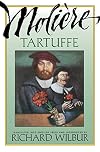
Hilarious satire! My Kindle edition, acquired from Project Gutenberg, didn't have the best translation but the humor still shines in this play. Orgon (and his mother) is completely taken in by Tartuffe, whom the rest of the household dislike. Tartuffe and his hypocrisy are really just foils Molière uses to display the folly of Orgon's gullibility. The saying "There is none so blind as those who will not see" could have been coined to describe Orgon & Madame Pernelle! The most comic scenes show more in the play are when Dorine (his daughter´s maid) and later Damis (his son) try to convince him of his foolishness. I thought Cleante, Orgon's brother-in-law, portrayed the voice of reason & his description of how Orgon had a temperament which flew to extremes was so apt.
Molière has a keen eye for human nature & although Orgon & Tartuffe are exaggerated for comic effect, they still display characteristics which I can recognize in people today. I will certainly be reading more of his plays! show less
Molière has a keen eye for human nature & although Orgon & Tartuffe are exaggerated for comic effect, they still display characteristics which I can recognize in people today. I will certainly be reading more of his plays! show less
Lists
My Play Collection (11)
bound (1)
AP Lit (1)
Awards


You May Also Like


Associated Authors
Statistics
- Works
- 1,094
- Also by
- 27
- Members
- 22,558
- Popularity
- #942
- Rating
- 3.7
- Reviews
- 292
- ISBNs
- 2,107
- Languages
- 32
- Favorited
- 41


