
Joe Nickell (1944–2025)
Author of Looking for a Miracle: Weeping Icons, Relics, Stigmata, Visions & Healing Cures
About the Author
Joe Nickell has been on the trail of man-beasts and other mysterious creatures and phenomena for four decades. Since 1995 he has been the world's only full-time, professional, science-based paranormal investigator. His careful, often innovative investigations have won him international respect in a show more field charged with controversy. He is the author of numerous books, including Psychic Sleuths, Looking for a Miracle, Secrets of the Supernatural, and most recently Real or Fake? Studies in Authentication and Adventures in Paranormal Investigation. See JoeNickell.com for more. show less
Image credit: Fresh Fiction
Works by Joe Nickell
Looking for a Miracle: Weeping Icons, Relics, Stigmata, Visions & Healing Cures (1993) 129 copies, 2 reviews
Pen, Ink, & Evidence: A Study of Writing and Writing Materials for the Penman, Collector, and Document Detective (1990) 59 copies
The UFO Invasion: The Roswell Incident, Alien Abductions, and Government Coverups (1997) — Editor — 26 copies
American Hauntings: The True Stories behind Hollywood's Scariest Movies―from The Exorcist to The Conjuring (2015) 11 copies
Morgan County, KY Cemetery Records 3 copies
Decipherment 1 copy
Associated Works
Hoax: Hitler's Diaries, Lincoln's Assassins, and Other Famous Frauds (2013) — Foreword — 63 copies, 2 reviews
In Search of Hannah Crafts: Critical Essays on the Bondwoman's Narrative (2003) — Contributor — 61 copies
Tagged
Common Knowledge
- Legal name
- Nickell, Joe Herman
- Birthdate
- 1944-12-01
- Date of death
- 2025-03-06
- Gender
- male
- Education
- University of Kentucky (B.A., 1967)
University of Kentucky (M.A., 1982)
University of Kentucky (Ph.D., 1987) - Occupations
- paranormal investigator
writer
teacher
volunteer worker (Volunteers in Service to America ∙ VISTA)
stage musician (Toronto ∙ Ontario ∙ Canada ∙ 1968-1973)
private investigator (1973-1975) (show all 9)
museologist (Dawson City Museum ∙ Dawson City ∙ Yukon Territory ∙ Canada ∙ 1975-1976)
instructor (technical writing ∙ University of Kentucky ∙ Lexington ∙ 1980-1995)
senior research fellow (Committee for the Scientific Investigation of Claims of the Paranormal ∙ Amherst ∙ NY ∙ 1995) - Organizations
- Historical Confederation of Kentucky
Committee for the Scientific Investigation of Claims of the Paranormal - Awards and honors
- Fellow, Committee for the Scientific Investigation of Claims of the Paranormal (1988)
Distinguished Skeptic Award, Committee for Skeptical Inquiry (2000)
Isaac Asimov Award, American Humanist Association (2004) - Relationships
- Harris, Diana Gawen (wife)
- Short biography
- Son of J. Wendell (a postmaster) and Ella Kathleen (a bookkeeper) Nickell. Married Diana Gawen Harris; children: Cherette, Roycroft.
- Nationality
- USA
- Birthplace
- West Liberty, Kentucky, USA
- Places of residence
- Lexington, Kentucky, USA
Carroll County, Georgia, USA
Toronto, Ontario, Canada
Amherst, New York, USA
Dawson City, Yukon Territory, Canada - Associated Place (for map)
- USA
Members
Reviews
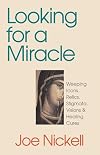
The author is a former stage magician and private investigator (jacket blurb). The book is, in the words of Dan Ackroyd, deliciously bad. Nickell tries to group authentic Catholic phenomena with paranormal claims and thereby discredit both. The only claims he seems to accept as valid are from the Old Testament such as the Witch of Endor and the hungry and thirsty idol of Baal which Daniel proved to be a hoax. Nickell feels that he has debunked the Tilma of Guadalupe (modeled and stolen from show more Spain), Catherine of Siena (anorexic), Bernadette Soubirous (healing water won't always cure), St Francis of Assisi, Nickell wrongly calls La Verna (location of the appearance of the stigmata), Mount Alverno, and says that there are differing accounts of the event. Apparently Nickell doesn't know that the Four Gospels do not all coincide either in every detail. Nickell says that Francis' stigmata came at a time of morbid fascination with the crucifixion of Christ, thereby disposing all to believe it whether or not it was true.
The aim of the book is to show that people are gullible and that frauds exist to take advantage of the gullible. To believe in miracles is to look for them and by looking for them anywhere, including those validated by the Catholic Church, is asking to be defrauded. Roman Catholicism is therefore categorized with the paranormal and to be dismissed as such. Simplistic and not worth reading by any serious person. show less
The aim of the book is to show that people are gullible and that frauds exist to take advantage of the gullible. To believe in miracles is to look for them and by looking for them anywhere, including those validated by the Catholic Church, is asking to be defrauded. Roman Catholicism is therefore categorized with the paranormal and to be dismissed as such. Simplistic and not worth reading by any serious person. show less

My reaction to reading this in 1993.
I enjoyed this book as much, if not more, than Nickell’s Ambrose Bierce is Missing.
Nickell is an impressive figure: an investigtor of many varying enigmas and anomalies, a PhD in literature, an ex-private detective, ex-reporter, ex-stage magician. As usual with most matters hawked by mystery mongerers, conspiracy mongerors, paranormalists, and writers to Fate magazine (though “The Case of the Shrinking Bullet” results from a medical examiner jumping show more to an honest, but hasty conclusion and calling a suicide a murder), the mystery evaporates when the basic facts (documents, witnesses, physical evidence) are examined, and the engimas turn out to be contradicted by reality or a multitude of facts pointing to a more prosaic reality are brought to light. Perhaps even worse than the hoaxes uncovered are the people who persist in self-delusion. I liked reading about the multitude of investigatory techniques and resources available (from forensic monographs to monographs on how to use a balance beam scale from looking at Lee Harvey Oswald’s ears to positively verify the dead assassin’s identity. I particularly liked the detailed stylometric analysis of the forged MJ-12 documents and comparing them to an identical Harry S. Truman document lifted from another government document. Facts in alleged cases of spontaneous combustion were examined. A computer analysis shows a suspicious concentration of crop circles in Hampshire County England. I liked the many odd tidbits I picked up besides basic investigatory techniques: ears as ID; why Charles Dawson, discoverer of Piltdown Man, is the best candidate for the hoaxer; keyhole bullet wounds in bone; and the vast bulk of evidence showing crop circles are a hoax. show less
I enjoyed this book as much, if not more, than Nickell’s Ambrose Bierce is Missing.
Nickell is an impressive figure: an investigtor of many varying enigmas and anomalies, a PhD in literature, an ex-private detective, ex-reporter, ex-stage magician. As usual with most matters hawked by mystery mongerers, conspiracy mongerors, paranormalists, and writers to Fate magazine (though “The Case of the Shrinking Bullet” results from a medical examiner jumping show more to an honest, but hasty conclusion and calling a suicide a murder), the mystery evaporates when the basic facts (documents, witnesses, physical evidence) are examined, and the engimas turn out to be contradicted by reality or a multitude of facts pointing to a more prosaic reality are brought to light. Perhaps even worse than the hoaxes uncovered are the people who persist in self-delusion. I liked reading about the multitude of investigatory techniques and resources available (from forensic monographs to monographs on how to use a balance beam scale from looking at Lee Harvey Oswald’s ears to positively verify the dead assassin’s identity. I particularly liked the detailed stylometric analysis of the forged MJ-12 documents and comparing them to an identical Harry S. Truman document lifted from another government document. Facts in alleged cases of spontaneous combustion were examined. A computer analysis shows a suspicious concentration of crop circles in Hampshire County England. I liked the many odd tidbits I picked up besides basic investigatory techniques: ears as ID; why Charles Dawson, discoverer of Piltdown Man, is the best candidate for the hoaxer; keyhole bullet wounds in bone; and the vast bulk of evidence showing crop circles are a hoax. show less
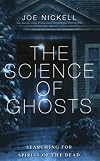
This book had me all excited the very first moment I read its title. I have a great ''affection'' for the paranormal and supernatural, especially for the scientific aspect of it. I started reading The Science of Ghosts at a slow pace to absorb the details and the plethora of information that Joe Nickell provided. So far, so good, eh? Not. By the time I had reached about half of the book, my excitement began to wear off.
Nickell's effort is remarkable; each chapter is embellished with photos show more of the people and the places ''under investigation'' and the research is meticulous. However, it is one thing to state the scientific evidence in an attempt to bust the myths and another to be so dismissive, so abrupt, to accept no other truth but your own. I am aware that the writer wanted to envoke his deep scepticism over the paranormal evidence, but I strongly disliked his constant "calling names" attitude. I found his treatment of the people involved rude, full of contempt, hardly an example of what I perceive as ''scientific'' writing. Instead, it reveils one who is too full of himself. It comes across as bitter and, frankly, I don't believe that each and every experience described can be explained as a result of "waking dreams''. After all, what is the evidence for it? show less
Nickell's effort is remarkable; each chapter is embellished with photos show more of the people and the places ''under investigation'' and the research is meticulous. However, it is one thing to state the scientific evidence in an attempt to bust the myths and another to be so dismissive, so abrupt, to accept no other truth but your own. I am aware that the writer wanted to envoke his deep scepticism over the paranormal evidence, but I strongly disliked his constant "calling names" attitude. I found his treatment of the people involved rude, full of contempt, hardly an example of what I perceive as ''scientific'' writing. Instead, it reveils one who is too full of himself. It comes across as bitter and, frankly, I don't believe that each and every experience described can be explained as a result of "waking dreams''. After all, what is the evidence for it? show less
Then, I read this from CNN's Fareed Zakaria (one of the few reasons I miss cable):
"High Time for Conspiracy Theories"
Global crises are fertile ground for conspiracy theories, Budapest-based social psychologist
Péter Krekó writes for Eurozine and the pandemic is no different.
Amid moments of upheaval, “a sense of losing control, the information and knowledge vacuum, and anxiety triggered by negative events” drive the tendency, Krekó writes, pointing to events like 9/11, the London bombings, Princess Diana’s death, and US forces’ killing of Osama bin Laden. “When people feel they cannot influence happenings that pose a threat to their daily lives, they may try to recreate an illusion of control by overzealously seeking explanations. … Extraordinary events require extraordinary interpretations that reach beyond traditional and official narratives. Further, in historical times riddled with frustration and uncertainty, the need to identify an enemy or culprit can be overwhelming.”
This is a baker's dozen of articles from the CSICOP journal Skeptical Inquirer from the '80s. I actually subscribed back then and some I believe I recall reading, such as "The Moon was Full and Nothing Happened" and a pair of astrology debunking articles. It is refreshing to see basic science and math in a clear sense of bunk. The further archive research in sussing out the details of fake Majestic 12 and simple surveys and behavioral experiments exposing cold reading techniques employed by psychics is also engaging. At this point, it feels like - where were the engaged investigative journalists or at least responsible reporters? These feels even more underscored in the studies of "spontaneous human combustion", faked Bigfoot evidence, and especially in the sensational photographed poltergeist activity of Tina Resch. It appears even after a significant period of time those originally on the scene, professional or bystander, find something mysterious just too good a story to fact check. This predilection for illusion over the landing on Earth via "disillusionment" seems to be an enigma even CSICOP dare not address.
Lists
Awards

You May Also Like


Associated Authors
Statistics
- Works
- 39
- Also by
- 2
- Members
- 1,172
- Popularity
- #21,960
- Rating
- 3.8
- Reviews
- 24
- ISBNs
- 82
- Favorited
- 3