
Ian Newton (1)
Author of Bird Migration
For other authors named Ian Newton, see the disambiguation page.
About the Author
Ian Newton OBE, FRS, FRSE is an ornithologist and applied scientist, and a leading expert on bird ecology and biogeography, specialising in finches, waterfowl and birds of prey. He graduated from Bristol University and gained his doctorate at the University of Oxford, working on the feeding ecology show more of finches. He joined the Natural Environment Research Council (NERC) in 1967 and initially studied the ecology of geese on farmland, followed by the impact of pesticides on predatory birds. Among other books, he has written four previous New Naturalist volumes, on Finches (1972), Bird Migration (2010), Bird Populations (2013) and Farming and Birds (2017). show less
Works by Ian Newton
Associated Works
Tagged
Common Knowledge
There is no Common Knowledge data for this author yet. You can help.
Members
Reviews
Bird Populations (Collins New Naturalist Library, Book 124): A Definitive Non-Fiction Work on British Birds and Their Habitats by Ian Newton
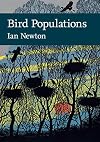
The content of this excellent book is summed up by the author himself: “This book is about bird numbers. It discusses why particular species are as numerous as they are... and why some species are increasing while others are decreasing.”
Newton distinguishes between short-term fluctuations in bird numbers (for example when there is a particularly bad winter) and long-term changes (such as those being caused by global warming).
He also draws a distinction between “natural” factors which show more affect bird population levels (those that do not involve human activities) and those factors which are the result of the impact that humans are having on nature.
“Natural” factors include: the availability of food and nest sites; competitors, predators, parasites and pathogens; and the weather. (Though some of these factors can be affected by humans, too.)
Examples of the human impact on bird population levels include: climate change; habitat destruction; modern agricultural practices; direct killing, such as the unlawful persecution of raptors; pesticides and pollution; domestic cats; and accidental deaths involving cars, overhead wires, wind-turbines, fences and fishing gear.
It makes my blood boil to read that: “On some estates where game shooting is important, continued killing of raptors is evident from the reduced densities of certain species there, the disappearance of breeding pairs during the nesting season, the finding of traps and poisoned baits, and the occasional prosecutions of gamekeepers who get caught.”
Of course, “...where game shooting is important...” in this quotation means where landowners make big profits by indulging those strange people (often rich city dwellers) who get pleasure from blasting large numbers of birds out of the sky!
This book is very readable, but it does have over 500 pages, and it is densely packed with information. So I’m not sure how many people will read it cover to cover. Personally I have read the opening and closing chapters in full, and then I have dipped into the rest, focusing on those topics which particularly interest me.
So far I have mainly studied the sections which deal with the human impact on bird populations. After all, as Newton says: “No birds in Britain and Ireland can now live in wholly natural environments (in the sense of being unperturbed by human activity)." show less
Newton distinguishes between short-term fluctuations in bird numbers (for example when there is a particularly bad winter) and long-term changes (such as those being caused by global warming).
He also draws a distinction between “natural” factors which show more affect bird population levels (those that do not involve human activities) and those factors which are the result of the impact that humans are having on nature.
“Natural” factors include: the availability of food and nest sites; competitors, predators, parasites and pathogens; and the weather. (Though some of these factors can be affected by humans, too.)
Examples of the human impact on bird population levels include: climate change; habitat destruction; modern agricultural practices; direct killing, such as the unlawful persecution of raptors; pesticides and pollution; domestic cats; and accidental deaths involving cars, overhead wires, wind-turbines, fences and fishing gear.
It makes my blood boil to read that: “On some estates where game shooting is important, continued killing of raptors is evident from the reduced densities of certain species there, the disappearance of breeding pairs during the nesting season, the finding of traps and poisoned baits, and the occasional prosecutions of gamekeepers who get caught.”
Of course, “...where game shooting is important...” in this quotation means where landowners make big profits by indulging those strange people (often rich city dwellers) who get pleasure from blasting large numbers of birds out of the sky!
This book is very readable, but it does have over 500 pages, and it is densely packed with information. So I’m not sure how many people will read it cover to cover. Personally I have read the opening and closing chapters in full, and then I have dipped into the rest, focusing on those topics which particularly interest me.
So far I have mainly studied the sections which deal with the human impact on bird populations. After all, as Newton says: “No birds in Britain and Ireland can now live in wholly natural environments (in the sense of being unperturbed by human activity)." show less
Lists
You May Also Like


Associated Authors
Statistics
- Works
- 14
- Also by
- 1
- Members
- 269
- Popularity
- #85,898
- Rating
- 3.9
- Reviews
- 1
- ISBNs
- 56
- Languages
- 2