
Audrey Clare Farley
Author of The Unfit Heiress: The Tragic Life and Scandalous Sterilization of Ann Cooper Hewitt
About the Author
Works by Audrey Clare Farley
The Unfit Heiress: The Tragic Life and Scandalous Sterilization of Ann Cooper Hewitt (2021) 148 copies, 5 reviews
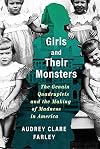
Girls and Their Monsters: The Genain Quadruplets and the Making of Madness in America (2023) 137 copies, 9 reviews
Tagged
Common Knowledge
- Birthdate
- 20th Century
- Gender
- female
- Nationality
- USA
- Associated Place (for map)
- USA
Members
Reviews
Girls and Their Monsters: The Genain Quadruplets and the Making of Madness in America by Audrey Clare Farley
3.5 stars. Horrifying and infuriating biography of four identical female quadruplets born in 1930, who were studied like lab rats when they all developed schizophrenia as teenagers. Researchers hoped to solve the nature vs. nurture question through observation, testing, and interviews. But the National Institute for Mental health scientists didn't know the truth about the quadruplets' lives. After a early childhood of being dragged across the country like a traveling freak show to be gawked show more at, the girls were subjected to brutal physical and sexual abuse by their parents. Unfortunately, nobody was talking about the impact of trauma on the mind and body 70 years ago.
The author falters by attempting to use the quadruplets' story to illustrate the broad history of severe mental illness treatment in the 20th century. Although she makes some strong points, especially about racial disparities in care, it's impossible to do this topic justice in 250 pages.
For a more compelling read, I'd recommend [b:Hidden Valley Road: Inside the Mind of an American Family|50088631|Hidden Valley Road Inside the Mind of an American Family|Robert Kolker|https://i.gr-assets.com/images/S/compressed.photo.goodreads.com/books/1569289026l/50088631._SX50_SY75_.jpg|57757323], which did a better job of foregrounding a family in which six of the twelve kids were diagnosed with schizophrenia. show less
The author falters by attempting to use the quadruplets' story to illustrate the broad history of severe mental illness treatment in the 20th century. Although she makes some strong points, especially about racial disparities in care, it's impossible to do this topic justice in 250 pages.
For a more compelling read, I'd recommend [b:Hidden Valley Road: Inside the Mind of an American Family|50088631|Hidden Valley Road Inside the Mind of an American Family|Robert Kolker|https://i.gr-assets.com/images/S/compressed.photo.goodreads.com/books/1569289026l/50088631._SX50_SY75_.jpg|57757323], which did a better job of foregrounding a family in which six of the twelve kids were diagnosed with schizophrenia. show less
Girls and Their Monsters: The Genain Quadruplets and the Making of Madness in America by Audrey Clare Farley
This book is about the famous (though I hadn't heard of them) Morlock identical quadruplets. Born to a mother (who was confrontation-avoidant) and a crazy, alcoholic, misogynist father they lived their life being emotionally and sexually abused and were all diagnosed as schizophrenic in their 20s. The book is about the nature-vs nurture controversy with everyone ignoring the abuse they suffered because abuse was thought to come from strangers (or later, Satanists) not family or friends, show more following Freud's attitude about abuse and hysteria. They came to the attention of David Rosenthal and spent 3 years at the National Institute of Mental Health being studied in every psychological way. The idea was that nature was the culprit, since they were identical quadruplets there must be a genetic cause for their problems. Of course, they also thought there might be a psychological cause - their cold schizophrenogenic mother. They were abused by their father, the boys and men they met at school, their co-workers and bosses but since these were all white men, they were never seen as the cause. The book also covers the rise of psychopharmacology and the abandonment of personal interaction as a treatment. It's a depressing but enlightening book. show less
Girls and Their Monsters: The Genain Quadruplets and the Making of Madness in America by Audrey Clare Farley
This book is a well-researched history of a set of American quadruplets who grew up in Lansing, Michigan and were part of the burgeoning research into the origins of schizophrenia. Is it nature or nurture? What does the science of psychology gain from these studies? And most importantly, how has the care of the mentally disturbed become so abysmal?
The parents of these quadruplets married in the 1920's, with many warnings pre-marriage that the young bride, Sadie, failed to heed. One wonders show more what her life would have been had she not listened to her employer, a doctor, who decided that Carl was a "good man" even though her intuition told her differently. And as one can guess, the abuse started early with one bizarre twist: Carl was a biter.
They eventually have their quadruplet girls and like so many children they learned to perform on stage and were the family's breadwinners for several years. But as they began to enter school their differences became much more discernible: Helen became inert and would not finish school, Edna became a second spouse to Carl. Wilma discovered her own body, and Sarah just wanted to be able to have friends outside her family. But Carl would have none of it, and the abuse became more physical and sexual as the sisters entered puberty.
By the 1950's, their story included mental health institutions, which eventually brought all 4 sisters to the attention of a brilliant psychologist, David Rosenthal, and his new facility, the National Institute of Mental Health (NIMH).
The four sisters lived on the NIMH campus for several years, their parents were also studied, to see whether their schizophrenia was genetic or tied to their upbringing. The author shows how it could easily be both.
Also presented in the book's timeline are the strides that were made in the care of those suffering from mental illness that came to a crashing halt with 1980's Reaganomics. Once mental health facilities turned to profits for themselves instead of care for the mentally challenged, there was nowhere else to turn but the streets. show less
The parents of these quadruplets married in the 1920's, with many warnings pre-marriage that the young bride, Sadie, failed to heed. One wonders show more what her life would have been had she not listened to her employer, a doctor, who decided that Carl was a "good man" even though her intuition told her differently. And as one can guess, the abuse started early with one bizarre twist: Carl was a biter.
They eventually have their quadruplet girls and like so many children they learned to perform on stage and were the family's breadwinners for several years. But as they began to enter school their differences became much more discernible: Helen became inert and would not finish school, Edna became a second spouse to Carl. Wilma discovered her own body, and Sarah just wanted to be able to have friends outside her family. But Carl would have none of it, and the abuse became more physical and sexual as the sisters entered puberty.
By the 1950's, their story included mental health institutions, which eventually brought all 4 sisters to the attention of a brilliant psychologist, David Rosenthal, and his new facility, the National Institute of Mental Health (NIMH).
The four sisters lived on the NIMH campus for several years, their parents were also studied, to see whether their schizophrenia was genetic or tied to their upbringing. The author shows how it could easily be both.
Also presented in the book's timeline are the strides that were made in the care of those suffering from mental illness that came to a crashing halt with 1980's Reaganomics. Once mental health facilities turned to profits for themselves instead of care for the mentally challenged, there was nowhere else to turn but the streets. show less
Girls and Their Monsters: The Genain Quadruplets and the Making of Madness in America by Audrey Clare Farley
Drawing on publications, newspaper articles, personal papers, medical records and interviews, Audrey Clare Farley exposes the tragic lives of the Morlok sisters in the context of the era’s cultural and social milieu in Girls and Their Monsters: The Genain Quadruplets and the Making of Madness in America.
Girls and Their Monsters tells the story of the pseudonymous ‘Genain’ quadruplets, Edna, Sarah, Wilma, and Helen, born in 1930 in midwestern USA to working class couple, Sadie and Carl show more Morlok. Named by way of a public competition, housed for free by city officials, and displayed in the front window of their home for crowds eager to marvel at their identical features, the girls became local celebrities. As they grew, the quadruplets continued to attract public attention, becoming regulars on the talent show circuit, and the subject of numerous newspaper features and articles.
Photographs show four blonde haired, blue eyed, demure little girls, and later teens, dressed alike, beaming for the camera, the picture of health and innocence, but behind closed doors, the girls were subject to horrifying abuse. Carl was a violent, misogynistic, drunkard who terrorised both his wife and the girls, while Sadie, unprepared for the challenges of mothering and desperate to maintain appearances, did little to protect them. Denied individualism and personal agency, Edna, Sarah, Wilma, and Helen, were treated as if living dolls, controlled, exploited and violated by both family and strangers alike.
Society by and large were complicit in their abuse, demanding a performance, ignoring the obvious signs of dysfunction, eager to blame any ills on anything except their own behaviour, all while maintaining an egregious double standard. Farley highlights how the socio-political norms of the time permitted the trauma, exploring the contributions of issues such as sexism, racism, political will, economics and religion.
By the time the sisters were 24, all four girls had been labeled as schizophrenic, and became subjects of study at the newly formed National Institute of Mental Health. Psychologists, like lead researcher David Rosenthal, were thrilled with the opportunity to prove a heredity link, but given the reality of the girls lives, it seems obvious the line between nature (genetics) and nurture (environment) in this case cannot be distinctly drawn. Farley examines the flaws in Rosenthal’s study, and, within the context of the history of mental health diagnosis, the field’s vulnerability to political and cultural influence.
I found the writing to be a little dense at times, particularly in the latter half, and the tone overall quite dry, but still I found the book to be fascinating as a whole. The story of Edna, Sarah, Wilma, and Helen Morlok is heartbreaking, and Farley makes some insightful connections between their experience and society that provide context I’d not really considered. show less
Girls and Their Monsters tells the story of the pseudonymous ‘Genain’ quadruplets, Edna, Sarah, Wilma, and Helen, born in 1930 in midwestern USA to working class couple, Sadie and Carl show more Morlok. Named by way of a public competition, housed for free by city officials, and displayed in the front window of their home for crowds eager to marvel at their identical features, the girls became local celebrities. As they grew, the quadruplets continued to attract public attention, becoming regulars on the talent show circuit, and the subject of numerous newspaper features and articles.
Photographs show four blonde haired, blue eyed, demure little girls, and later teens, dressed alike, beaming for the camera, the picture of health and innocence, but behind closed doors, the girls were subject to horrifying abuse. Carl was a violent, misogynistic, drunkard who terrorised both his wife and the girls, while Sadie, unprepared for the challenges of mothering and desperate to maintain appearances, did little to protect them. Denied individualism and personal agency, Edna, Sarah, Wilma, and Helen, were treated as if living dolls, controlled, exploited and violated by both family and strangers alike.
Society by and large were complicit in their abuse, demanding a performance, ignoring the obvious signs of dysfunction, eager to blame any ills on anything except their own behaviour, all while maintaining an egregious double standard. Farley highlights how the socio-political norms of the time permitted the trauma, exploring the contributions of issues such as sexism, racism, political will, economics and religion.
By the time the sisters were 24, all four girls had been labeled as schizophrenic, and became subjects of study at the newly formed National Institute of Mental Health. Psychologists, like lead researcher David Rosenthal, were thrilled with the opportunity to prove a heredity link, but given the reality of the girls lives, it seems obvious the line between nature (genetics) and nurture (environment) in this case cannot be distinctly drawn. Farley examines the flaws in Rosenthal’s study, and, within the context of the history of mental health diagnosis, the field’s vulnerability to political and cultural influence.
I found the writing to be a little dense at times, particularly in the latter half, and the tone overall quite dry, but still I found the book to be fascinating as a whole. The story of Edna, Sarah, Wilma, and Helen Morlok is heartbreaking, and Farley makes some insightful connections between their experience and society that provide context I’d not really considered. show less
Lists
Awards

You May Also Like


Associated Authors
Statistics
- Works
- 2
- Members
- 285
- Popularity
- #81,814
- Rating
- 3.4
- Reviews
- 14
- ISBNs
- 12