
Elizabeth Laird
Author of Kiss the Dust
About the Author
Series
Works by Elizabeth Laird
Where's Toto?/Donde esta Toto?: Spanish/English Edition (Let's Read! Series) (Spanish Edition) (2009) 15 copies, 1 review
Eddy and the Movie Star: Elementary Level (Heinemann ELT guided readers: Elementary level) (1999) 9 copies
Anna and the Fighter/The House on the Hill: Beginner Level (Heinemann Guided Readers) (1992) 4 copies
Das rosa Gespenst aus Lamont 1 copy
ANITA´S BIG DAY Level 1 1 copy
Un fratello da nascondere 1 copy
Big Green Star 1 copy
ባይተዋሩ ልዑል 1 copy
සරණ පතා මහපාරට 1 copy
Secrets of the Fearies 1 copy
Storm (Mystery) - Elementary 1 copy
Associated Works
Tagged
Common Knowledge
- Birthdate
- 1943-10-21
- Gender
- female
- Education
- University of Bristol
Institute of Education London
University of Edinburgh (Applied Linguistics) - Occupations
- teacher
author
violinist
folktale collector - Short biography
- Ms. Laird was born in New Zealand and has taught English in Malaysia, Ethiopia, and India. She and her husband, a specialist in Middle Eastern affairs, now live in England with their two children. [from Kiss the Dust (1991)]
- Nationality
- New Zealand (birth)
- Birthplace
- New Zealand
- Places of residence
- New Zealand
Purley, Surrey, England, UK
Seremban, Malaysia
Addis Ababa, Ethiopia
India
Baghdad, Iraq (show all 10)
Beirut, Lebanon
Vienna, Austria
Richmond, Surrey, England, UK
Edinburgh, Scotland, UK
Members
Discussions
1990s Children's/YA Book boy left in France - cave in Name that Book (May 2011)
Reviews
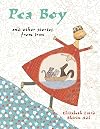
I thoroughly enjoyed these Persian folk tales. As with all folk tales, it seems, there are certain elements: cruel rich people, young people trying to find their own path, magical helpers like fairies, and wicked spells cast creating beasts and then broken by selfless true love.
But all with a Persian sensibility. Like the a chickpea who was sent on an errand by his father to get the long owed penny payment from the Shah. Along the route, the little chickpea was able to absorb a river, a show more leopard, a wolf, and a jackal--all which came to his rescue when the Shah wanted to punish him for asking for the penny that was due to his father.
My favorite was the first story in the collection, "Miss Cockroach and Mister Mouse," being perhaps the one with a message and sensibility that I have not encountered before. A silly, but beautiful and uniquely adorned Miss Cockroach is sent out by her father to find herself a suitable a husband. Each possible suitor she encounters would love to have her for her beauty, but warn her that if she is unable to do specific wifely chores, he will treat her ill for failing. She declines each offer of marriage (smart cockroach). Then, she meets Mister Mouse, who will love her, adore her, and care for her without any quid pro quo. He just wants to love her and be with her. She is happy and silly with Mister Mouse. But due to a mishap, during her rescue and subsequent making of soup for her, Mister Mouse falls in the soup and drowns. Miss Cockroach never again adorns herself so beautifully and goes back to her father where she is the humdrum, dutiful daughter.
To me, that was the level of a Shakespearian tragedy!
On a personal note, I am sad. I have been reading Iranian stories (I have more to read) because I made an Iranian online friend, an intelligent, quirky, young person with an immense appetite for life. A cultural and generational exchange, if you will. The person has gone missing from my inbox for a couple of months now. I worry but do understand these things happen. Indeed, I recall being remiss in my international penpal correspondences in my own youth and hope it is no more than that, that life has naturally become very full and sweet.
I will continue to read my Iranian books, feel connected to a dear Iranian friend (and Nanaie too), through the ether, heart to heart.
“You are not just the drop in the ocean. You are the mighty ocean in the drop.”
— Rumi show less
But all with a Persian sensibility. Like the a chickpea who was sent on an errand by his father to get the long owed penny payment from the Shah. Along the route, the little chickpea was able to absorb a river, a show more leopard, a wolf, and a jackal--all which came to his rescue when the Shah wanted to punish him for asking for the penny that was due to his father.
My favorite was the first story in the collection, "Miss Cockroach and Mister Mouse," being perhaps the one with a message and sensibility that I have not encountered before. A silly, but beautiful and uniquely adorned Miss Cockroach is sent out by her father to find herself a suitable a husband. Each possible suitor she encounters would love to have her for her beauty, but warn her that if she is unable to do specific wifely chores, he will treat her ill for failing. She declines each offer of marriage (smart cockroach). Then, she meets Mister Mouse, who will love her, adore her, and care for her without any quid pro quo. He just wants to love her and be with her. She is happy and silly with Mister Mouse. But due to a mishap, during her rescue and subsequent making of soup for her, Mister Mouse falls in the soup and drowns. Miss Cockroach never again adorns herself so beautifully and goes back to her father where she is the humdrum, dutiful daughter.
To me, that was the level of a Shakespearian tragedy!
On a personal note, I am sad. I have been reading Iranian stories (I have more to read) because I made an Iranian online friend, an intelligent, quirky, young person with an immense appetite for life. A cultural and generational exchange, if you will. The person has gone missing from my inbox for a couple of months now. I worry but do understand these things happen. Indeed, I recall being remiss in my international penpal correspondences in my own youth and hope it is no more than that, that life has naturally become very full and sweet.
I will continue to read my Iranian books, feel connected to a dear Iranian friend (and Nanaie too), through the ether, heart to heart.
“You are not just the drop in the ocean. You are the mighty ocean in the drop.”
— Rumi show less
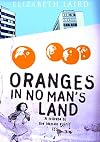
In 1976, on an eerily deserted section in Beirut, bright oranges roll down the middle of the street, only very recently abandoned.
In the Preface, Scottish author Elizabeth Laird recounts that vision as being the personal nagging memory that inspired this tense and inspiring middle grade fictional account of a Muslim girl and her family in the early part of the Lebanese Civil War (1975-1990).
Ayesha, her two younger brothers, and their grandmother have fled their home where Ayesha's mother who show more had remained to finish packing, was killed. With hundreds of other refugees, they now live in an abandoned, once exclusive apartment with falling chandeliers, no glass in the windows, large bullet holes in the walls gaping to the street. A small corner of it is now where they live, grateful to simply survive.
When the grandmother's medicine runs out and she becomes very ill, 10 year old Ayesha knows what she must do, alone. With great courage she must find the doctor who prescribed the medicine. In order to do that she will have to traverse Beirut's infamous "Green Line," navigating through and beyond multiple risky militia checkpoints, leaving the Muslim-held part of the city into the now opposing Christian part.
If somehow successful getting medicine, she will then have to traverse all the same dangers back again.
From what I know having lived in Lebanon, leaving after only the first 6 months of the war--like everyone, we erroneously thought we'd be returning shortly--from following the news closely for years, and from a few accounts from Lebanese friends, it is with terrible accuracy this story depicts the real conditions for the 1.5 million Beirut inhabitants at that time. They had been the bustling, vibrant residents of the city that was called "the Paris of the Middle East." For the right middle grader, reading this book with a guiding adult, could launch important, difficult discussions about refugees and the extreme ravages of war.
The story ends on a hopeful note, a very short account that Ayesha and her family are reunited with her father and escape Beirut to safety. Although certainly there were many families who did just that, it should leave a sensitive reader to wonder about all those other refugee families that remained, not having even a hope of that option.
On the whole Laird offers a true life perspective, an age appropriate introduction to the vitally important and tragic experiences of non-combatants during war. show less
In the Preface, Scottish author Elizabeth Laird recounts that vision as being the personal nagging memory that inspired this tense and inspiring middle grade fictional account of a Muslim girl and her family in the early part of the Lebanese Civil War (1975-1990).
Ayesha, her two younger brothers, and their grandmother have fled their home where Ayesha's mother who show more had remained to finish packing, was killed. With hundreds of other refugees, they now live in an abandoned, once exclusive apartment with falling chandeliers, no glass in the windows, large bullet holes in the walls gaping to the street. A small corner of it is now where they live, grateful to simply survive.
When the grandmother's medicine runs out and she becomes very ill, 10 year old Ayesha knows what she must do, alone. With great courage she must find the doctor who prescribed the medicine. In order to do that she will have to traverse Beirut's infamous "Green Line," navigating through and beyond multiple risky militia checkpoints, leaving the Muslim-held part of the city into the now opposing Christian part.
If somehow successful getting medicine, she will then have to traverse all the same dangers back again.
From what I know having lived in Lebanon, leaving after only the first 6 months of the war--like everyone, we erroneously thought we'd be returning shortly--from following the news closely for years, and from a few accounts from Lebanese friends, it is with terrible accuracy this story depicts the real conditions for the 1.5 million Beirut inhabitants at that time. They had been the bustling, vibrant residents of the city that was called "the Paris of the Middle East." For the right middle grader, reading this book with a guiding adult, could launch important, difficult discussions about refugees and the extreme ravages of war.
The story ends on a hopeful note, a very short account that Ayesha and her family are reunited with her father and escape Beirut to safety. Although certainly there were many families who did just that, it should leave a sensitive reader to wonder about all those other refugee families that remained, not having even a hope of that option.
On the whole Laird offers a true life perspective, an age appropriate introduction to the vitally important and tragic experiences of non-combatants during war. show less
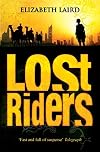
Rashid is eight years old when his uncle convinces his mother to let him take he and his little brother to Dubai where they can be child companions to the children of very rich people, and play cars and eat lots of good food all day. In reality, Rashid and his brother have been sold into slavery as camel jockeys. Rashid is separated from his brother, and actually ends up at a nicer camel farm than his little brother, who ends up at a place where they frequently use electric shocks to punish show more the children who don't try hard enough. According to the author, the practice of using small children for camel jockeys has been outlawed, but the book still provided a really interesting look into a practice that I never knew existed. Heart breaking at times, I was stunned by what Rashid had to endure, and found myself hoping desperately that someone would save him and his brother. Definitely worth reading. show less
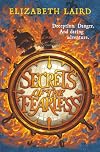
Set during the Napoleonic War, when twelve-year-old John Barr and his father are falsely accused of murder they are forced to run for their lives through the streets of Edinburgh. At Leith harbour they are pressed into the Navy and posted to different ships. John is sent to join HMS Fearless where a chance discovery thrusts him and his shipmate Kit into the shadowy world of secrets, spies and adventure.
Now I should point out that I'm at least 40 years past the true target audience for this show more book but a friend who knows I'm a sucker for naval yarns sent it to me saying that I should give it a try. I wasn't disappointed. It's a quick read with a plot that rattles along at a decent pace and whilst it requires a bit of a leap of imagination it is at least credible; John and Kit's characters are reasonably developed; the historical details are interesting without being too detailed as are the on-ship elements. So, whilst this book probably won't live that long in the memory it did provide me with a decent piece of escapism, that I can imagine younger readers enjoying. show less
Now I should point out that I'm at least 40 years past the true target audience for this show more book but a friend who knows I'm a sucker for naval yarns sent it to me saying that I should give it a try. I wasn't disappointed. It's a quick read with a plot that rattles along at a decent pace and whilst it requires a bit of a leap of imagination it is at least credible; John and Kit's characters are reasonably developed; the historical details are interesting without being too detailed as are the on-ship elements. So, whilst this book probably won't live that long in the memory it did provide me with a decent piece of escapism, that I can imagine younger readers enjoying. show less
Lists
THE WAR ROOM (1)
Awards


You May Also Like


Associated Authors
Statistics
- Works
- 151
- Also by
- 1
- Members
- 3,472
- Popularity
- #7,325
- Rating
- 3.7
- Reviews
- 171
- ISBNs
- 425
- Languages
- 14
- Favorited
- 1