
Melody Razak
Author of Moth: A Novel
Works by Melody Razak
Tagged
Common Knowledge
There is no Common Knowledge data for this author yet. You can help.
Members
Reviews
Moth by Melody Razak
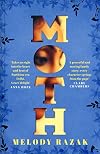
The enigmatic title of British-Iranian author Melody Razak's debut novel Moth puzzled me at first. My Dictionary of Symbols (Paladin, 1982) advised me only that butterflies signify transformation, which is apt for a book set during India's 1947 Partition, but not quite adequate to explain the title. A quick search online, however, revealed a plethora of spirituality sites devoted to the meaning of moths. It seems that in addition to symbolising change, moths also signify endings, death, and show more the mystery of the night. They are delicate and represent the fragility of life and the vulnerability of the human soul, and they can also represent fertility, immediacy, attachment, disguise, and unconditional love. These symbolic meanings make perfect sense in Razak's novel...
Set in 1946-47 during the tumultuous end of the British Raj, Moth traces the fortunes of a liberal Brahmin family. Ma and Bappu teach at the local university in Delhi, and they have brought their daughters Alma and Roop up to be independent. Also in the household is the malevolent mother-in-law Daadee Ma who resents her son's choice of wife and adheres strictly to the old ways; and the faithful servants. Dilchain is an exemplary cook who was rescued at seventeen from an abusive husband who accidentally set himself on fire instead of her. Fatima Begum — after her husband was killed in a grotesque traffic accident — came into the household as a wet nurse and stayed as an ayah who has cared for the two girls since they were infants. She is Muslim, and her presence in the house has to be defended against Daadee Ma who is furious about it.
According to the traditions of the time which still persist today, these three widows can never marry again. Widows are expected to withdraw from the world as if their lives are over, even if they are widowed very young. Daadee Ma is very unsympathetic to Fatima Begum still mourning her only child who died a week after her husband. She herself lost many children in their infancy but Bappu and his sister Cookie Auntie survived and she has grandchildren. She also has strength and agency.
This agency extends to a dubious role as matchmaker for Alma. Alma is only fourteen and still a very bright student at school but as the extent of atrocities triggered by Partition become clear, her parents' liberalism is revealed to be limited. A distant cousin is tortured, mutilated and killed and they naïvely think that marriage will protect Alma from dangers to come. A girl's reputation for purity is essential to make a good marriage, so Daadee Ma is authorised to find a suitable match and when the novel opens, preparations for the marriage are under way. Cookie Auntie (who married unhappily for money) turns up from Bombay with deep pockets for wedding jewellery along with the trousseau sewing skills that Ma lacks. Alma, too young to realise the implications of leaving one household for another not necessarily as congenial, is enthusiastic and indulges herself with romantic dreams about the young man. (Who is 22.)
The character of Roop, aged about five, is very interesting.
To read the rest of my review please visit https://anzlitlovers.com/2023/02/25/moth-2021-by-melody-razak/ show less
Set in 1946-47 during the tumultuous end of the British Raj, Moth traces the fortunes of a liberal Brahmin family. Ma and Bappu teach at the local university in Delhi, and they have brought their daughters Alma and Roop up to be independent. Also in the household is the malevolent mother-in-law Daadee Ma who resents her son's choice of wife and adheres strictly to the old ways; and the faithful servants. Dilchain is an exemplary cook who was rescued at seventeen from an abusive husband who accidentally set himself on fire instead of her. Fatima Begum — after her husband was killed in a grotesque traffic accident — came into the household as a wet nurse and stayed as an ayah who has cared for the two girls since they were infants. She is Muslim, and her presence in the house has to be defended against Daadee Ma who is furious about it.
Ma said it would be complementary to have an Islamic influence in an otherwise strictly Brahmin household and Bappu agreed. Hiring a Muslim ayah felt like progress.
Daadee Ma was livid. But she was also wary of displeasing Bappu's pa, who'd been dead less than a year. And it was not often that Bappu was so firm. His was a natural male authority she could not go against. She simmered down, but insisted that she would starve herself to death if there was to be any co-dining. If Gandhi-ji could do it, all stick and bone, so could she. (p.76)
According to the traditions of the time which still persist today, these three widows can never marry again. Widows are expected to withdraw from the world as if their lives are over, even if they are widowed very young. Daadee Ma is very unsympathetic to Fatima Begum still mourning her only child who died a week after her husband. She herself lost many children in their infancy but Bappu and his sister Cookie Auntie survived and she has grandchildren. She also has strength and agency.
This agency extends to a dubious role as matchmaker for Alma. Alma is only fourteen and still a very bright student at school but as the extent of atrocities triggered by Partition become clear, her parents' liberalism is revealed to be limited. A distant cousin is tortured, mutilated and killed and they naïvely think that marriage will protect Alma from dangers to come. A girl's reputation for purity is essential to make a good marriage, so Daadee Ma is authorised to find a suitable match and when the novel opens, preparations for the marriage are under way. Cookie Auntie (who married unhappily for money) turns up from Bombay with deep pockets for wedding jewellery along with the trousseau sewing skills that Ma lacks. Alma, too young to realise the implications of leaving one household for another not necessarily as congenial, is enthusiastic and indulges herself with romantic dreams about the young man. (Who is 22.)
The character of Roop, aged about five, is very interesting.
To read the rest of my review please visit https://anzlitlovers.com/2023/02/25/moth-2021-by-melody-razak/ show less
Set in India in the late 1940's at a time when the British are pulling out and India is achieving independence and the country is partitioned off creating Pakistan. 14 year old Alma is the daughter of educated, modernized Hindu parents; however, she is to be married soon mainly to protect her from what the parents might consider danger to come. Due to her grandmother's doings, the marriage is called off and Alma is distraught.
Gradually violence between the Muslims and Hindus increases show more making life more and more dangerous. Agreement is made for Alma to go to Bombay to live with her Aunt even though the trip will be extremely dangerous.
The third section of the book centers on her life after being raped and taken from the train. She is pregnant and being carried for four kindly Muslim women. Alma takes up a friendship with a man of a low chaste which is unheard of.
The book was interesting but difficult to read and I had to look up so many names for food, items, war, etc. and a better understanding of the history of the country during that time would have been helpful. There was one character, Roop, Alma's little sister, who is almost a savage hurting animals (especially moths), that she just doesn't seem believable. Still glad for learning something of the background of that time. show less
Gradually violence between the Muslims and Hindus increases show more making life more and more dangerous. Agreement is made for Alma to go to Bombay to live with her Aunt even though the trip will be extremely dangerous.
The third section of the book centers on her life after being raped and taken from the train. She is pregnant and being carried for four kindly Muslim women. Alma takes up a friendship with a man of a low chaste which is unheard of.
The book was interesting but difficult to read and I had to look up so many names for food, items, war, etc. and a better understanding of the history of the country during that time would have been helpful. There was one character, Roop, Alma's little sister, who is almost a savage hurting animals (especially moths), that she just doesn't seem believable. Still glad for learning something of the background of that time. show less
Awards

You May Also Like
Associated Authors
Statistics
- Works
- 1
- Members
- 127
- Popularity
- #158,247
- Rating
- 3.4
- Reviews
- 2
- ISBNs
- 12