
Daniel Suarez
Author of Daemon
About the Author
Image credit: Joi Ito
Series
Works by Daniel Suarez
Associated Works
Tagged
Common Knowledge
- Canonical name
- Suarez, Daniel
- Legal name
- Suarez, Daniel
- Other names
- Zeraus, Leinad
- Birthdate
- 1964-12-21
- Gender
- male
- Occupations
- IT consultant
Software Programmer - Agent
- Rafe Sagalyn (Sagalyn Literary)
- Nationality
- USA
- Places of residence
- Los Angeles, California, USA
- Associated Place (for map)
- California, USA
Members
Reviews
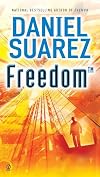
Daniel Suarez takes the egalitarian utopia fantasy of the Flower Power generation and repackages it as a sadistic revolutionary wet dream in this sequel to "Daemon" which pits slackers against plutocrats while a string of computer code calls the shots. How much you enjoy this story depends on how much you're willing to swallow, so here's a little quiz: do you believe that all things blue collar working class are GOOD and all things white collar corporate are BAD? Are you willing to accept show more ludicrous narrative gimmicks like scimitar-wielding ninja motorcycles and villains so cartoonish they should be twirling their (virtual) moustaches? Do you believe "the end justifies the means" no matter what? Was chairman Mao just a poor misunderstood visionary? If you answered "yes" to any of the above then give it a shot. Personally my head still hurts from all the eye-rolling. show less
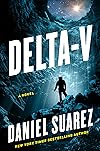
For those unfamiliar with the term, Delta-v (ΔV) is a key concept in spaceflight and orbital mechanics that represents the change in velocity required for a spacecraft to perform maneuvers such as entering orbit, changing orbits, or escaping a gravitational field. It is a fitting title for a book that involves the goal of mining asteroids and returning the products to earth.
This is a science fiction thriller set in the 2030s. Protagonist James Tighe (JT) is recruited by charismatic tech show more billionaire Nathan Joyce to compete for a position on an innovative deep space mission involving computer technology, which he has kept secret through illegal maneuverings. JT and his fellow adventurers attend a rigorous training program intended to whittle down the competitors to the top candidates. They must not only compete but also work as a team and undergo psychological evaluation. The payoff promised by the billionaire is enormous personal wealth and fame. The results are unexpected.
It is an intriguing concept, and well-executed. It is obvious that the scientific principles are well researched (if not entirely achievable at present). It is ultimately a story of adventure and survival, with a good mix of action and character development. It pushes boundaries of what might be possible for the future of space exploration. In addition, it is a critique of the power wielded by billionaires, and the lengths they will go to accomplish their often outlandish and egocentric objectives. I could have done without the cartoonish helicopter scene, but overall, I found it engaging and entertaining. The ending is a satisfying conclusion to this story and sets up the sequel. It would make a good mini-series.
4.5 show less
This is a science fiction thriller set in the 2030s. Protagonist James Tighe (JT) is recruited by charismatic tech show more billionaire Nathan Joyce to compete for a position on an innovative deep space mission involving computer technology, which he has kept secret through illegal maneuverings. JT and his fellow adventurers attend a rigorous training program intended to whittle down the competitors to the top candidates. They must not only compete but also work as a team and undergo psychological evaluation. The payoff promised by the billionaire is enormous personal wealth and fame. The results are unexpected.
It is an intriguing concept, and well-executed. It is obvious that the scientific principles are well researched (if not entirely achievable at present). It is ultimately a story of adventure and survival, with a good mix of action and character development. It pushes boundaries of what might be possible for the future of space exploration. In addition, it is a critique of the power wielded by billionaires, and the lengths they will go to accomplish their often outlandish and egocentric objectives. I could have done without the cartoonish helicopter scene, but overall, I found it engaging and entertaining. The ending is a satisfying conclusion to this story and sets up the sequel. It would make a good mini-series.
4.5 show less

Put your thinking cap on
How much do you know about technology? Economics? Video games? Agriculture? The military-industrial complex? I hope it's a lot, because Daniel Suarez explores those subjects and many more in his latest thriller, and he's not talking down to anyone. I'll be honest, at times it was a real struggle to keep up.
Freedom (TM) is the sequel to his debut, Daemon. The first thing I'll tell you is this: Under no circumstances should you attempt to read this novel without having show more read the first. You won't understand a thing. As for what it's about, one of Suarez's characters summarizes it far better than I ever could: "There is an open-source cybernetic organism called the Daemon that is spreading across the globe. It's created an encrypted social network based on an online video game. Millions of people are joining that network and using it to reinvent human society."
And that's about all you need to know, because while plenty of stuff happens, this is not a plot-driven novel. Nor is it character-driven (though all the main players from the first novel are back). No, this is the rarest sort of novel; it's idea-driven, or philosophy-driven. Characters spend large segments of the book having conversations like:
"America is just another brand purchased for its goodwill value. For its excellent ____ing logo."
"And it's all a big conspiracy..."
"No conspiracy necessary. It's a process that's been happening for thousands of years. Wealth aggregates and becomes political power. Simple as that. 'Corporation' is just the most recent name for it. In the Middle Ages it was the Catholic Church. They had a great logo, too. You might have seen it, and they had more branches than Starbucks. Go back before that, and it was Imperial Rome. It's a natural process as old as humanity."
There's a worldwide, covert cyberwar going down. Intriguingly, it's not taking place in the fabled halls of power; it's happening in middle America. Suarez has created a scenario I couldn't have imagined, and in fact, a new world order that's like some Comic-con fantasy come to life. The ideas his novel explores are fascinating and worthy of exploration. Five stars all the way for sheer intelligence and creativity. The loss of one star in my rating is due to some small issues of pace, character development, and plotting. But any quibbles are relatively minor, and the end of the novel was deeply satisfying.
As noted above, this is a novel of ideas. As such, it deserves to be widely read. Freedom (TM) is highly recommended for fans of Daemon. And if you haven't read Daemon yet, get crackin'! show less
How much do you know about technology? Economics? Video games? Agriculture? The military-industrial complex? I hope it's a lot, because Daniel Suarez explores those subjects and many more in his latest thriller, and he's not talking down to anyone. I'll be honest, at times it was a real struggle to keep up.
Freedom (TM) is the sequel to his debut, Daemon. The first thing I'll tell you is this: Under no circumstances should you attempt to read this novel without having show more read the first. You won't understand a thing. As for what it's about, one of Suarez's characters summarizes it far better than I ever could: "There is an open-source cybernetic organism called the Daemon that is spreading across the globe. It's created an encrypted social network based on an online video game. Millions of people are joining that network and using it to reinvent human society."
And that's about all you need to know, because while plenty of stuff happens, this is not a plot-driven novel. Nor is it character-driven (though all the main players from the first novel are back). No, this is the rarest sort of novel; it's idea-driven, or philosophy-driven. Characters spend large segments of the book having conversations like:
"America is just another brand purchased for its goodwill value. For its excellent ____ing logo."
"And it's all a big conspiracy..."
"No conspiracy necessary. It's a process that's been happening for thousands of years. Wealth aggregates and becomes political power. Simple as that. 'Corporation' is just the most recent name for it. In the Middle Ages it was the Catholic Church. They had a great logo, too. You might have seen it, and they had more branches than Starbucks. Go back before that, and it was Imperial Rome. It's a natural process as old as humanity."
There's a worldwide, covert cyberwar going down. Intriguingly, it's not taking place in the fabled halls of power; it's happening in middle America. Suarez has created a scenario I couldn't have imagined, and in fact, a new world order that's like some Comic-con fantasy come to life. The ideas his novel explores are fascinating and worthy of exploration. Five stars all the way for sheer intelligence and creativity. The loss of one star in my rating is due to some small issues of pace, character development, and plotting. But any quibbles are relatively minor, and the end of the novel was deeply satisfying.
As noted above, this is a novel of ideas. As such, it deserves to be widely read. Freedom (TM) is highly recommended for fans of Daemon. And if you haven't read Daemon yet, get crackin'! show less
Last year, Daniel Suarez's "Daemon" left us on one heck of a cliffhanger.
Now, "Freedom (TM)" picks up that cliffhanger, resolves it and delves even further into a scary but all too possible near future in which a computer bot can seemingly take over the world.
In terms of story and characters, "Freedom (TM)" picks up right where "Daemon" left off. The bot is still lurking, exerting its power and group of humanity is trying to fight against it before it's too late. Watching as the bot is able show more to attack and manipulate systems operated strictly by computing power is both fascinating and scary as you realize that a similar thing happening could happen in the not too distant future.
At its core, "Freedom (TM)" is a techno-thriller with elements of cyberpunk thrown in for fun. Suarez keeps the story moving at a good clip, creating some nicely done action sequences that could translate well to the big-screen whenever the movie version of the novels is made. But he also balances that out with sections examining the implications of technology and an over reliance on it. Suarez isn't saying that technology is a bad thing, but he does offer some stern warnings about it. Those implications and thoughts will stay with you long after the last page is turned.
The story directly follows the events of "Daemon" and if you haven't read that novel, odds are you will be completely lost. While I'd read book a year ago, I did find myself having to surf back to my original review to remember some of the plot threads. Like Frank Herbert's "Dune" series, Suarez doesn't spoon-feed readers but instead assumes the reader is smart enough to recall details and figure out what's going on without having large info-dumps or the constant need for recap.
Both books serve as one long, epic story that is chilling, fascinating and one of the more memorable author debuts in a long time. It should be intriguing to see what Suarez offers next. show less
Now, "Freedom (TM)" picks up that cliffhanger, resolves it and delves even further into a scary but all too possible near future in which a computer bot can seemingly take over the world.
In terms of story and characters, "Freedom (TM)" picks up right where "Daemon" left off. The bot is still lurking, exerting its power and group of humanity is trying to fight against it before it's too late. Watching as the bot is able show more to attack and manipulate systems operated strictly by computing power is both fascinating and scary as you realize that a similar thing happening could happen in the not too distant future.
At its core, "Freedom (TM)" is a techno-thriller with elements of cyberpunk thrown in for fun. Suarez keeps the story moving at a good clip, creating some nicely done action sequences that could translate well to the big-screen whenever the movie version of the novels is made. But he also balances that out with sections examining the implications of technology and an over reliance on it. Suarez isn't saying that technology is a bad thing, but he does offer some stern warnings about it. Those implications and thoughts will stay with you long after the last page is turned.
The story directly follows the events of "Daemon" and if you haven't read that novel, odds are you will be completely lost. While I'd read book a year ago, I did find myself having to surf back to my original review to remember some of the plot threads. Like Frank Herbert's "Dune" series, Suarez doesn't spoon-feed readers but instead assumes the reader is smart enough to recall details and figure out what's going on without having large info-dumps or the constant need for recap.
Both books serve as one long, epic story that is chilling, fascinating and one of the more memorable author debuts in a long time. It should be intriguing to see what Suarez offers next. show less
Lists
To Read (1)
Awards


You May Also Like


Associated Authors
Statistics
- Works
- 11
- Also by
- 1
- Members
- 6,917
- Popularity
- #3,532
- Rating
- 3.9
- Reviews
- 351
- ISBNs
- 107
- Languages
- 10
- Favorited
- 17
