
Christopher Bray
Author of 1965: The Year Modern Britain Was Born
About the Author
Christopher Bray has written on movies, books, music, and art for the Daily Telegraph, the Times Literary Supplement, the Literary Review, the New York Times, and the New Statesman. Also the author of Michael Caine: A Class Act, Christopher lives and works in southeast London.
Works by Christopher Bray
Associated Works
Tagged
Common Knowledge
- Gender
- male
Members
Reviews
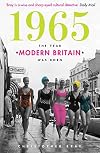
I don't remember much of 1965, having only been born in 1963. Christopher Bray has, however, written an engaging and entertaining account of the year, identifying it as the watershed in which what we now recognise as modern Britain emerged. He focuses on several different aspects of life, building up a comprehensive picture of an evolving society, gradually stepping out of the shadow of post-war austerity, with disposable income starting to rise.
The year opened with the death of two show more established figures from the past. Winston Churchill, still revered as the leader who had secured victory in the Second World War, and T S Eliot. The latter was less well known to the general public, though to the world of art and literature he had cast a long shadow, being a central figure in the development of the modernist movement, following his publication in 1922 of ‘The Waste Land’.
Meanwhile The Beatles were set to take their musical conquest of the world to a new dimension, moving on from the simple, wholesome music of their earlier albums, to experiment with a more surreal approach, as evidenced by their ‘Help!’ album, and accompanying film. This was also the year the Bob Dylan ‘went electric’ releasing his iconic album ‘Highway 61 Revisited’ to acclaim from the critics, even if it provoked disdain from his folk music coteries.
In the field of literature, the year saw the publication of John Fowles’s ‘The Magus’, but also witnessed a major change in the field of espionage. 1965 saw the issue of the last James Bond novel from Ian Fleming (‘The Man With The Golden Gun) while John le Carre continued his exploration of the more realistic aspect of the medium with ‘The Looking Glass War’. Le Carre’is earlier book, ‘The Spy Who Came In From The Cold’ translated to the silver screen with Richard Burton offering a career defining performance as Alec Leamas, the down at heel intelligence office locked in a chase after double- or triple-agents.
Within the world of politics, two grammar school boys were at the fore. Harold Wilson was prime minister, while Edward Heath secured the leadership of the Conservative party, succeeding the defeated fourteenth Earl of Home (Sir Alec Douglas).
Bray draws all these disparate threads, and many more, together into a coherent and compelling account. He writes with a lightness of touch that counterbalances his obviously comprehensive research. show less
The year opened with the death of two show more established figures from the past. Winston Churchill, still revered as the leader who had secured victory in the Second World War, and T S Eliot. The latter was less well known to the general public, though to the world of art and literature he had cast a long shadow, being a central figure in the development of the modernist movement, following his publication in 1922 of ‘The Waste Land’.
Meanwhile The Beatles were set to take their musical conquest of the world to a new dimension, moving on from the simple, wholesome music of their earlier albums, to experiment with a more surreal approach, as evidenced by their ‘Help!’ album, and accompanying film. This was also the year the Bob Dylan ‘went electric’ releasing his iconic album ‘Highway 61 Revisited’ to acclaim from the critics, even if it provoked disdain from his folk music coteries.
In the field of literature, the year saw the publication of John Fowles’s ‘The Magus’, but also witnessed a major change in the field of espionage. 1965 saw the issue of the last James Bond novel from Ian Fleming (‘The Man With The Golden Gun) while John le Carre continued his exploration of the more realistic aspect of the medium with ‘The Looking Glass War’. Le Carre’is earlier book, ‘The Spy Who Came In From The Cold’ translated to the silver screen with Richard Burton offering a career defining performance as Alec Leamas, the down at heel intelligence office locked in a chase after double- or triple-agents.
Within the world of politics, two grammar school boys were at the fore. Harold Wilson was prime minister, while Edward Heath secured the leadership of the Conservative party, succeeding the defeated fourteenth Earl of Home (Sir Alec Douglas).
Bray draws all these disparate threads, and many more, together into a coherent and compelling account. He writes with a lightness of touch that counterbalances his obviously comprehensive research. show less
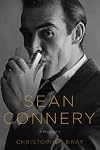
Much good research, but author opinions often obtrusive
Lists
You May Also Like
Associated Authors
Statistics
- Works
- 6
- Also by
- 1
- Members
- 86
- Popularity
- #213,012
- Rating
- 2.6
- Reviews
- 2
- ISBNs
- 20