
Kristen R. Lee
Author of Required Reading for the Disenfranchised Freshman
Works by Kristen R. Lee
Tagged
Common Knowledge
There is no Common Knowledge data for this author yet. You can help.
Members
Reviews
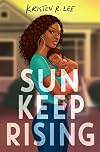
The gripping story of a young teenage mother who’ll do anything to keep her small family together.
Sun Keep Rising is a riveting contemporary young adult novel about a teenage mother trying to keep body and soul, and family together. With its fresh and genuine voice, I was immediately drawn into B’onca’s life. As a mother, I could relate to many of her new mom problems, which, in her case, were exacerbated by her young age, limited resources and options.
The character of B’onca was so show more real, a typical teen. You could feel her vitality and personality, keeping her hopeful for the future but realistic no matter what came her way. Her story is a familiar one: a bullying boyfriend, a first sexual experience, and an unplanned pregnancy. Then there is the ultimate betrayal of him accusing her of sleeping around (he was the one doing that) and his cowardly abandonment. But worse by far was the subplot involving her mother. It was painful reading.
The story has so much going on, and the level of tension throughout the book is gripping! Not only is there the teen mother and her family storyline, but there is the subplot of the changes occurring in the neighborhood. The impact of gentrification is far-reaching. It doesn’t just affect the single property owner selling out to the new buyers. A snowball effect creates significant collateral damage to those remaining behind; local businesses are bought out or sold, employees lose their jobs and have to make ends meet in the lull before new businesses can open, and prices increase for everything. In addition, readers get a glimpse into the illegal businesses that flourish in the shadows of depressed areas of the city. However, all is not completely grim. There is a hopeful note in the story coming from the feeling of community and family running strong through the Ridgecrest neighborhood, where everyone knows everyone else’s name and has their back.
I recommend SUN KEEP RISING to readers of contemporary young adult fiction, especially those who may have read and appreciated the 70s novel, Go Ask Alice.
I voluntarily reviewed this after receiving an Advanced Review Copy from the author or publisher through TBR and Beyond Book Tours. show less
Sun Keep Rising is a riveting contemporary young adult novel about a teenage mother trying to keep body and soul, and family together. With its fresh and genuine voice, I was immediately drawn into B’onca’s life. As a mother, I could relate to many of her new mom problems, which, in her case, were exacerbated by her young age, limited resources and options.
The character of B’onca was so show more real, a typical teen. You could feel her vitality and personality, keeping her hopeful for the future but realistic no matter what came her way. Her story is a familiar one: a bullying boyfriend, a first sexual experience, and an unplanned pregnancy. Then there is the ultimate betrayal of him accusing her of sleeping around (he was the one doing that) and his cowardly abandonment. But worse by far was the subplot involving her mother. It was painful reading.
The story has so much going on, and the level of tension throughout the book is gripping! Not only is there the teen mother and her family storyline, but there is the subplot of the changes occurring in the neighborhood. The impact of gentrification is far-reaching. It doesn’t just affect the single property owner selling out to the new buyers. A snowball effect creates significant collateral damage to those remaining behind; local businesses are bought out or sold, employees lose their jobs and have to make ends meet in the lull before new businesses can open, and prices increase for everything. In addition, readers get a glimpse into the illegal businesses that flourish in the shadows of depressed areas of the city. However, all is not completely grim. There is a hopeful note in the story coming from the feeling of community and family running strong through the Ridgecrest neighborhood, where everyone knows everyone else’s name and has their back.
I recommend SUN KEEP RISING to readers of contemporary young adult fiction, especially those who may have read and appreciated the 70s novel, Go Ask Alice.
I voluntarily reviewed this after receiving an Advanced Review Copy from the author or publisher through TBR and Beyond Book Tours. show less
WARNING. SPOILERS AHEAD.
Fantastic Story. This is the first book I've read from Kristen R. Lee, and I'm currently reading Required Reading for the Disenfranchised Freshman because of how much I loved this one. So, there's a reason I took two stars off.
This story does an excellent job of explaining what gentrification looks like. It does an excellent job of taking a look into generational curses, the awful effects of poverty, and how so many blacks, both men and women, are pushed into the show more street hustling for protection and keeping a roof over their heads. It gives a good insight into why so many low-income black communities are plagued with crime: Because it's what helps people who are struggling to get by deal with their problems.
It was so short. A quick and enjoyable read. My kind of novel.
However, there were some things I didn't like. Which is why I took off two stars.
#1: Unlikeable Main Character
B'onca Johnson is struggling, sure, as a teen mother who got pregnant by that awful garbage of a baby daddy/boyfriend called Scooter ( I think his real name is Christian). However, she seems to have such an attitude and appears to be a stereotypical angry black girl. Her mouth is foul, (I'm not saying this because of cursing but because she is rude in general), and she seems to think she is justified in whatever she does. She isn't a good role model for her daughter, Mia, and is annoying. I love how she is very protective and caring of Mia. It's adorable to see a teen mother who genuinely loves and cares for her baby and will go through a living hell at the age of seventeen to change her daughter's life. (I'm currently reading Required Reading for the Disenfranchised Freshman, and wow, B'onca is an embodiment of the angry black woman stereotype.
Even in this book, her behavior makes her unlikable, which makes it very hard to relate to her as the one telling the story. She complains about the pay at the salon being too low when she's working for Ms. Dubois and seems to hate being told what to do, but she's always absent and is engaging in criminal activity for money, instead of politely asking for a raise. B'onca expects respect but offers none. A hypocrite. I didn't expect a perfect character, but if you ask me, I like Savannah better because she's easier to relate to.
It was hard for me to read the book at times because of B'onca, and it shouldn't be that way. I don't feel comfortable forcing myself to read a book because the main character is too annoying and I can't even relate to their perspective.
#2: Unclear Resolutions/ Unsatisfying Endings
In the novel, as we're nearing the end, the book suddenly takes a very fast pace. The author seems to be in a hurry to wrap things up and finish the story before reaching the two-hundred-page mark, and the story just ends without a clear resolution as to what B'onca will do to change her life and ensure Mia will live a good one. B'onca ends up being caught for shoplifting and spends a night locked up, is released on bail, and is driven to a party by her older sister, Shana, and that party is where the story ends. What? We don't know who killed B'onca's baby daddy, Scooter (I didn't care anyway because him dying made the book easier to read 🤭), and we have no idea what happens to B'onca's mom (another awful character I'm glad is gone). We don't even know if B'onca will succeed in summer school and go on to college or cosmetology school or what will happen to Mia, considering the fact that Soocter's parents, (the Canes), want to take custody of her because of B'onca's financial situation.
I just found the ending unsatisfying because there are so many questions and so few answers.
(I apologize for this long rant.)
Other than B'onca's gross attitude and the lack of resolution at the end, this story is awesome. I'd recommend it to many young black students. It'll give them an insight into the issues in their community and the possible solutions. Books like these are raw. Although they have some strong language and maybe some graphic scenes, they offer a good look into what is needed in society.
Change.
You and I are the ones who have the power to change society for the better. For young pregnant teen girls abandoned by their baby daddies and their own families. For young children who don't have fathers that care about them. For people who are being dragged into street business because they can't find jobs that feed their families and pay rent. For people who are watching their neighborhoods change and transform—and not in good ways. And for people who are losing everything. We have the power to change all of this if we stand together and take a raw, pure, and unfiltered look into the issues addressed in this book.
Do you want to change your community? show less
Fantastic Story. This is the first book I've read from Kristen R. Lee, and I'm currently reading Required Reading for the Disenfranchised Freshman because of how much I loved this one. So, there's a reason I took two stars off.
This story does an excellent job of explaining what gentrification looks like. It does an excellent job of taking a look into generational curses, the awful effects of poverty, and how so many blacks, both men and women, are pushed into the show more street hustling for protection and keeping a roof over their heads. It gives a good insight into why so many low-income black communities are plagued with crime: Because it's what helps people who are struggling to get by deal with their problems.
It was so short. A quick and enjoyable read. My kind of novel.
However, there were some things I didn't like. Which is why I took off two stars.
#1: Unlikeable Main Character
B'onca Johnson is struggling, sure, as a teen mother who got pregnant by that awful garbage of a baby daddy/boyfriend called Scooter ( I think his real name is Christian). However, she seems to have such an attitude and appears to be a stereotypical angry black girl. Her mouth is foul, (I'm not saying this because of cursing but because she is rude in general), and she seems to think she is justified in whatever she does. She isn't a good role model for her daughter, Mia, and is annoying. I love how she is very protective and caring of Mia. It's adorable to see a teen mother who genuinely loves and cares for her baby and will go through a living hell at the age of seventeen to change her daughter's life. (I'm currently reading Required Reading for the Disenfranchised Freshman, and wow, B'onca is an embodiment of the angry black woman stereotype.
Even in this book, her behavior makes her unlikable, which makes it very hard to relate to her as the one telling the story. She complains about the pay at the salon being too low when she's working for Ms. Dubois and seems to hate being told what to do, but she's always absent and is engaging in criminal activity for money, instead of politely asking for a raise. B'onca expects respect but offers none. A hypocrite. I didn't expect a perfect character, but if you ask me, I like Savannah better because she's easier to relate to.
It was hard for me to read the book at times because of B'onca, and it shouldn't be that way. I don't feel comfortable forcing myself to read a book because the main character is too annoying and I can't even relate to their perspective.
#2: Unclear Resolutions/ Unsatisfying Endings
In the novel, as we're nearing the end, the book suddenly takes a very fast pace. The author seems to be in a hurry to wrap things up and finish the story before reaching the two-hundred-page mark, and the story just ends without a clear resolution as to what B'onca will do to change her life and ensure Mia will live a good one. B'onca ends up being caught for shoplifting and spends a night locked up, is released on bail, and is driven to a party by her older sister, Shana, and that party is where the story ends. What? We don't know who killed B'onca's baby daddy, Scooter (I didn't care anyway because him dying made the book easier to read 🤭), and we have no idea what happens to B'onca's mom (another awful character I'm glad is gone). We don't even know if B'onca will succeed in summer school and go on to college or cosmetology school or what will happen to Mia, considering the fact that Soocter's parents, (the Canes), want to take custody of her because of B'onca's financial situation.
I just found the ending unsatisfying because there are so many questions and so few answers.
(I apologize for this long rant.)
Other than B'onca's gross attitude and the lack of resolution at the end, this story is awesome. I'd recommend it to many young black students. It'll give them an insight into the issues in their community and the possible solutions. Books like these are raw. Although they have some strong language and maybe some graphic scenes, they offer a good look into what is needed in society.
Change.
You and I are the ones who have the power to change society for the better. For young pregnant teen girls abandoned by their baby daddies and their own families. For young children who don't have fathers that care about them. For people who are being dragged into street business because they can't find jobs that feed their families and pay rent. For people who are watching their neighborhoods change and transform—and not in good ways. And for people who are losing everything. We have the power to change all of this if we stand together and take a raw, pure, and unfiltered look into the issues addressed in this book.
Do you want to change your community? show less
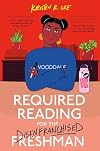
Eye-opening book. This book exposes us to many uncomfortable topics. It lets us know that the black community is disadvantaged and is shunned when speaking out on these disadvantages. Black people in this novel are presented in fantastic ways.
After reading Lee's Sun Keep Rising, I just knew I had to read this book. This book offers me a wonderful perspective of a black girl trying to fit in and find her way into a white-majority campus. The book highlights topics that most white people feel show more uncomfortable talking about and are easily offended by. Many white characters in this book are ignorant and don't understand the dangerous effects of racism. Black characters are treated with disrespect and are dismissed. Whatever happens to them is covered up. Many things I've noticed that have happened to black people in real life happen in this book.
Lucas represents the privileged, white, wealthy, people. Meggie, although not as privileged as Lucas, is still privileged. She doesn't have to deal with racial discrimination of any kind. Tasha, one of my favorite characters, is stylish, appears to be rich, well-spoken, and incredibly smart— but she has faced so much discrimination on campus and hid it— because blacks are underrepresented and underappreciated on campus.
Wooddale represents blatant institutional racism. One of the privileged white students, Elaina, does drugs because of her boyfriend, Lucas, the same boy who is very popular around campus for his fraternity parties, which are so... ugh. Elaina does drugs and nothing is done about it until the end of the book. They don't do anything when Savannah reports Lucas for defacing the statue of George Clive or spray-painting a racial slur on her door, even though there is a lot of evidence that points out to him. Lucas and other white boys on campus openly say the n-word, which is a slur that can only be reclaimed by black people. When black boys fight back, they're punished and one is even at risk of losing his scholarship. Savannah is falsely accused of vandalizing Lucas's car and the campus is quick to open an investigation on her, but whenever white children are caught doing anything, or whenever racism against blacks is the topic, they do very little.
During a peaceful protest against racism in Wooddale, Savannah and other fellow protestors are maced. Tear gas is thrown at them. The police use violence to disperse a peaceful protest where black students are demanding fair treatment at that horrible, sloppy, nasty university.
I liked how in the end, Savannah decides to expose Lucas and his family using evidence, and how Tasha changes her mind and shows her story. I love how black students end up teaming together against racism, debunking the popular stereotype that blacks can't get along at all.
I only took one star off for the fact that racism is all that's focused on in this book. I understand that racism is a serious topic and can't be watered down at all. But the racism sometimes felt like it was unrealistic because of how in every chapter, we never got to get away from it for a minute. All Savannah thought about was Lucas. Lucas seemed to be more of the main character than Savannah. I didn't like how the author gave him unnecessary extra attention. Savannah thought more about Lucas than she did herself. Another issue related to racism was the ending. Just like that, Lucas and Elaina got what was coming for them. But there isn't a move to change Wooddale for the better. Despite all of Savannah's efforts, all of the evidence, the radio interview, and the protest, we don't see any changes at Wooddale. At all. I'm so proud of Savannah for leaving Wooddale for Booker T. Washington University, a place where she will be respected as a young black girl and won't be surrounded by snobby white students who are ignorant and fuel anti-black racism.
The ending was very good. Savannah came to terms with being herself, decided that she was;t going to let the white supremacy win, exposed Lucas and other racists at her university, (or trash-versity as I call it) and makes the decision to leave Wooddale. But I wish the ending had more to it. For instance, I wanted to see more of Savannah's mother's reaction to her daughter's decisions. I wanted to see Savannah's mother open her eyes and be more accepting of her daughter's perspective. I wanted to see Savannah, Tasha, and Benji talk to each other about this decision and decide what this all meant for their friendship.
Still a great story, though! 4.5 stars out of 5! show less
After reading Lee's Sun Keep Rising, I just knew I had to read this book. This book offers me a wonderful perspective of a black girl trying to fit in and find her way into a white-majority campus. The book highlights topics that most white people feel show more uncomfortable talking about and are easily offended by. Many white characters in this book are ignorant and don't understand the dangerous effects of racism. Black characters are treated with disrespect and are dismissed. Whatever happens to them is covered up. Many things I've noticed that have happened to black people in real life happen in this book.
Lucas represents the privileged, white, wealthy, people. Meggie, although not as privileged as Lucas, is still privileged. She doesn't have to deal with racial discrimination of any kind. Tasha, one of my favorite characters, is stylish, appears to be rich, well-spoken, and incredibly smart— but she has faced so much discrimination on campus and hid it— because blacks are underrepresented and underappreciated on campus.
Wooddale represents blatant institutional racism. One of the privileged white students, Elaina, does drugs because of her boyfriend, Lucas, the same boy who is very popular around campus for his fraternity parties, which are so... ugh. Elaina does drugs and nothing is done about it until the end of the book. They don't do anything when Savannah reports Lucas for defacing the statue of George Clive or spray-painting a racial slur on her door, even though there is a lot of evidence that points out to him. Lucas and other white boys on campus openly say the n-word, which is a slur that can only be reclaimed by black people. When black boys fight back, they're punished and one is even at risk of losing his scholarship. Savannah is falsely accused of vandalizing Lucas's car and the campus is quick to open an investigation on her, but whenever white children are caught doing anything, or whenever racism against blacks is the topic, they do very little.
During a peaceful protest against racism in Wooddale, Savannah and other fellow protestors are maced. Tear gas is thrown at them. The police use violence to disperse a peaceful protest where black students are demanding fair treatment at that horrible, sloppy, nasty university.
I liked how in the end, Savannah decides to expose Lucas and his family using evidence, and how Tasha changes her mind and shows her story. I love how black students end up teaming together against racism, debunking the popular stereotype that blacks can't get along at all.
I only took one star off for the fact that racism is all that's focused on in this book. I understand that racism is a serious topic and can't be watered down at all. But the racism sometimes felt like it was unrealistic because of how in every chapter, we never got to get away from it for a minute. All Savannah thought about was Lucas. Lucas seemed to be more of the main character than Savannah. I didn't like how the author gave him unnecessary extra attention. Savannah thought more about Lucas than she did herself. Another issue related to racism was the ending. Just like that, Lucas and Elaina got what was coming for them. But there isn't a move to change Wooddale for the better. Despite all of Savannah's efforts, all of the evidence, the radio interview, and the protest, we don't see any changes at Wooddale. At all. I'm so proud of Savannah for leaving Wooddale for Booker T. Washington University, a place where she will be respected as a young black girl and won't be surrounded by snobby white students who are ignorant and fuel anti-black racism.
The ending was very good. Savannah came to terms with being herself, decided that she was;t going to let the white supremacy win, exposed Lucas and other racists at her university, (or trash-versity as I call it) and makes the decision to leave Wooddale. But I wish the ending had more to it. For instance, I wanted to see more of Savannah's mother's reaction to her daughter's decisions. I wanted to see Savannah's mother open her eyes and be more accepting of her daughter's perspective. I wanted to see Savannah, Tasha, and Benji talk to each other about this decision and decide what this all meant for their friendship.
Still a great story, though! 4.5 stars out of 5! show less
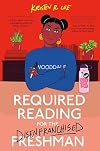
Savannah moves from Memphis to attend the prestigious, predominantly white, university, Wooddale. Once there, she learns that it's not all that it's cracked up to be & has to fight for her spot at the university. She begins to fight back to prove that she and all other persons of color have earned the right to attend Wooddale, and to prove to herself that she belongs, anywhere she wants.
A very powerful voice in the YA book community. One that had me cringing and then rooting for Savannah. show more This is a book for anyone who feels that they don't belong. Savannah & her actions prove that they do. show less
A very powerful voice in the YA book community. One that had me cringing and then rooting for Savannah. show more This is a book for anyone who feels that they don't belong. Savannah & her actions prove that they do. show less
Lists
VBL YA (1)
Awards


Statistics
- Works
- 2
- Members
- 120
- Popularity
- #165,355
- Rating
- 4.2
- Reviews
- 6
- ISBNs
- 10