
Brother Lawrence (1614–1691)
Author of The Practice of the Presence of God
About the Author
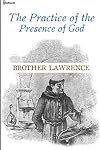
Brother Lawrence (1611-1691) was born Nicholas Herman in the Lorraine region of France. As a young man, he fought in the Thirty Years' War before joining the Carmelite order. Immediately after his death, The Practice of the Presence of God was compiled from his letters and conversations.
Image credit: Image of Brother Lawrence from a book published by Fleming Revell Co. in 1900.
Works by Brother Lawrence
The Brother Lawrence Collection: Practice and Presence of God, Spiritual Maxims, The Life of Brother Lawrence (2008) 35 copies, 1 review
The Christian Classics: A 700 Club Edition (With Christ in the School of Prayer By Andrew Murray, and the Practice of th (1979) 15 copies
CCEL Classics CD: works by Saint Augustine, John Calvin, John Donne, Julian of Norwich, Brother Lawrence, Martin Luther, (2006) — Author — 10 copies
The Practice of the Presence of God: The Complete Works of Brother Lawrence with Notes and Scripture References (2009) 3 copies
The spiritual maxims of Brother Lawrence,: Together with The character, by the Chronicler of the Conversations and Gathe (1928) 3 copies, 1 review
The Works of Brother Lawrence : Practice and Presence of God; Spiritual Maxims; The Life of Brother Lawrence (2017) 2 copies
Die Gegenwart Gottes eine wirkliche Erfahrung: Gespräche und Grundsätze von Bruder Laurentius (2022) 2 copies
Associated Works
God Makes the Rivers To Flow: Sacred Literature of the World (1982) — Contributor — 230 copies, 2 reviews
The Greatest Thing in the World / Acres of Diamonds / As a Man Thinketh / The Practice of the Presence of God / The Imitation of Christ (1980) — Contributor — 66 copies
Inspiration Three: Three Famous Classics in One Book, Volume II [The Greatest Thing in the World, The Song of Our Syrian Guest, The Practice of the Presence of God] (1973) — Contributor — 6 copies
Art et société à Tours au début de la Renaissance (Études Renaissantes) (French Edition) (2016) — Contributor — 1 copy
Tagged
Common Knowledge
- Other names
- Lawrence of the Resurrection
Herman, Nicholas (birth name)
Frato Laŭrenco
Lawrence of the Resurrection, Brother - Birthdate
- 1614
- Date of death
- 1691-02-12
- Gender
- male
- Occupations
- lay brother
cook
shoemaker - Organizations
- Discalced Carmelites
Roman Catholic Church - Nationality
- France
- Birthplace
- Hériménil, France
- Places of residence
- Paris, France
- Place of death
- Paris, France
- Associated Place (for map)
- Paris, France
Members
Reviews
This is an old classic, an insight into how Brother Lawrence lived. I found it deeply challenging in that it painted a picture of what a life can look like when constantly in a state of prayer and communion with God, and what it takes to live there. The language can be hard to follow at times, but it is well worth the effort for the wisdom it shares.
Brother Lawrence was a 17th-century Carmelite monk who lived in a monastery in Paris. Though a mere lay brother who worked in the kitchens for most of his life, Brother Lawrence gained a reputation over the years as one who knew and loved God intimately. People began to seek him out, and he wrote several letters to various supplicants. Those letters comprise The Practice of the Presence of God. This volume also contains his Spiritual Maxims, which is a more formal distillation of his show more practical theology. Brother Lawrence defines the practice of the presence of God as "the schooling of the soul to find its joy in His Divine Companionship" (70), and lays out various practical ways to attain this lofty goal. This volume also includes a brief bio by one M. Beaufort, who knew Brother Lawrence.
I'm finding this a singularly difficult book to review. It's unpleasant to come down on someone who breathes such sincerity and humility in his writing. And there is so much to like about Brother Lawrence's writings; it's clear he loved God deeply and found Him to be the source of all joy and hope. So much of what he wrote is so true:
I have no pain or difficulty about my state, because I have no will but that of God, which I endeavor to accomplish in all things, and to which I am so resigned that I would not take up a straw from the ground against His order, or from any other motive than purely that of love for Him. (35)
Lift up your heart to Him, sometimes even at your meals, and when you are in company; the least little remembrance will be acceptable to Him. You need not cry very loud; He is nearer to us than we are aware of. (47)
Accustom yourself, therefore, by degrees thus to worship Him, to beg His grace, to offer Him your heart from time to time in the midst of your business, even every moment, if you can. Do not always scrupulously confine yourself to certain rules, or particular forms of devotion, but act with a general confidence in God, with love and humility. (48)
We cannot escape the dangers that abound in life without the actual and continual help of God. Let us, then, pray to Him for it continually. How can we pray to Him without being with Him? How can we be with Him but in thinking of Him often? And how can we think of Him but by a holy habit which we should form of it? You will tell me that I am always saying the same thing. It is true, for this is the easiest and best method I know; and as I use no other, I advise all the world to do it. We must know before we can love. (51)
You would think it rude to leave a friend alone who came to visit you; why, then, must God be neglected? Do not, then, forget Him, but think on Him often, adore Him continually, live and die with Him; this is the glorious employment of a Christian. (52–3)
He often sends diseases of the body to cure those of the soul. (54)
A soul is the more dependent on grace, the higher the perfection to which it aspires; and the grace of God is the more needful for each moment, as without it the soul can do nothing. (70)
But in other places, the sharp bones of his Roman Catholic theology stick through. He says he loves to read the Scriptures above books written by men, but there is little Scripture in his own writing. Also, he claims that his principles for closeness with God can be used by anyone, monk or not, but what about statements like this?
Having found in many books different methods of going to God, and divers practices of the spiritual life, I thought this would serve rather to puzzle me than facilitate what I sought after, which was nothing but how to become wholly God's. This made me resolve to give the all for the all; so after having given myself wholly to God, that He might take away my sin, I renounced, for the love of Him, everything that was not He; and I began to live as if there was none but He and I in the world. (31)
There are a couple things wrong with this. God doesn't take away our sin because of anything good we do. No surrender of self, no matter how radical, will be enough to earn forgiveness. This is a theological problem underlying much of Brother Lawrence's thought.
As for living as if there were "none but He and I in the world," is that really a biblical way to live? That is not a state I desire; is that unspiritual of me? I am a daughter and wife and sister and friend as well as a lover of Christ, and I would not wish away those relationships or the joys and responsibilities they entail so that I can contemplate God. I don't believe that the God who created relationships desires us to live as if other people don't even exist.
The idea of God and I being the only two beings in the world is a false one; why should I seek a false idea to augment my spiritual life? Knowing Christ is about knowing truth, not finding comfort in theological or emotional delusions. I guess I just don't see how Brother Lawrence's sanctification took place in the context of the Body of Christ. We know from Scripture that the Body needs all its parts to function, and that other Christians are vital in God's work of our personal sanctification. So how does someone arrive at spiritual maturity without even mentioning how God has used other believers in his life?
In keeping with his Roman Catholicism (but oddly out of character for one who exudes such joy in God's presence), Brother Lawrence desired to suffer physical pain. This seems strange in one who talks so rapturously of the wonders of the divine and who seems so in tune with the whole concept of pleasing God by enjoying Him deeply, but so it is. Beaufort writes,
His one desire was that he might suffer something for the love of God, for all his sins, and finding in his last illness a favorable occasion for suffering in this life, embraced it heartily. Purposely he bade the brethren to turn him on to his right side; he knew that this position gave great pain, and therefore wished to remain therein to satisfy his burning desire to suffer. (98–9)
Brother Lawrence saw physical suffering as a way to draw near to God, and so it can be. But the Bible never teaches us to deliberately seek out physical suffering for the sake of knowing Christ. We are to bear infirmity in patience and grace, with the strength God provides, and know Him better in the trials He sends. We aren't to create trials for ourselves, or damage our physical bodies in pursuit of a spiritual high.
Another problem is the idea that God will abandon us if we turn from Him:
I know not how He can leave me alone, because faith gives me as strong a conviction as sense can do that He never forsakes us until we have first forsaken Him. (56)
God does not forsake us if we forsake Him (II Timothy 2:13: "If we are faithless, He remains faithful, for He cannot deny Himself"). Brother Lawrence is spouting a Roman Catholic doctrine that is directly contradicted by Scripture — a reminder that no matter how spiritual he was, his words are not divinely inspired.
There is also a focus on faith at the expense of written revelation; Beaufort writes,
Faith was the one light he took for his path; not only did it afford him his first glimpse of God, but he never desired any other lamp to give him light in all the many ways of God. Often he has told me... "In the depths of our soul, God reveals Himself, could we but realize it, yet we will not look there for Him." (87)
It sounds rather New Age, doesn't it? I guess the mystical concept of looking within for the life-source is not really a new one. And it's still wrong.
So I'm divided on this book. Can I admire Brother Lawrence's devotion and learn from him without ascribing to all his teachings? Yes... but it does complicate things a bit. And I think that's where I'll have to leave it. show less
I'm finding this a singularly difficult book to review. It's unpleasant to come down on someone who breathes such sincerity and humility in his writing. And there is so much to like about Brother Lawrence's writings; it's clear he loved God deeply and found Him to be the source of all joy and hope. So much of what he wrote is so true:
I have no pain or difficulty about my state, because I have no will but that of God, which I endeavor to accomplish in all things, and to which I am so resigned that I would not take up a straw from the ground against His order, or from any other motive than purely that of love for Him. (35)
Lift up your heart to Him, sometimes even at your meals, and when you are in company; the least little remembrance will be acceptable to Him. You need not cry very loud; He is nearer to us than we are aware of. (47)
Accustom yourself, therefore, by degrees thus to worship Him, to beg His grace, to offer Him your heart from time to time in the midst of your business, even every moment, if you can. Do not always scrupulously confine yourself to certain rules, or particular forms of devotion, but act with a general confidence in God, with love and humility. (48)
We cannot escape the dangers that abound in life without the actual and continual help of God. Let us, then, pray to Him for it continually. How can we pray to Him without being with Him? How can we be with Him but in thinking of Him often? And how can we think of Him but by a holy habit which we should form of it? You will tell me that I am always saying the same thing. It is true, for this is the easiest and best method I know; and as I use no other, I advise all the world to do it. We must know before we can love. (51)
You would think it rude to leave a friend alone who came to visit you; why, then, must God be neglected? Do not, then, forget Him, but think on Him often, adore Him continually, live and die with Him; this is the glorious employment of a Christian. (52–3)
He often sends diseases of the body to cure those of the soul. (54)
A soul is the more dependent on grace, the higher the perfection to which it aspires; and the grace of God is the more needful for each moment, as without it the soul can do nothing. (70)
But in other places, the sharp bones of his Roman Catholic theology stick through. He says he loves to read the Scriptures above books written by men, but there is little Scripture in his own writing. Also, he claims that his principles for closeness with God can be used by anyone, monk or not, but what about statements like this?
Having found in many books different methods of going to God, and divers practices of the spiritual life, I thought this would serve rather to puzzle me than facilitate what I sought after, which was nothing but how to become wholly God's. This made me resolve to give the all for the all; so after having given myself wholly to God, that He might take away my sin, I renounced, for the love of Him, everything that was not He; and I began to live as if there was none but He and I in the world. (31)
There are a couple things wrong with this. God doesn't take away our sin because of anything good we do. No surrender of self, no matter how radical, will be enough to earn forgiveness. This is a theological problem underlying much of Brother Lawrence's thought.
As for living as if there were "none but He and I in the world," is that really a biblical way to live? That is not a state I desire; is that unspiritual of me? I am a daughter and wife and sister and friend as well as a lover of Christ, and I would not wish away those relationships or the joys and responsibilities they entail so that I can contemplate God. I don't believe that the God who created relationships desires us to live as if other people don't even exist.
The idea of God and I being the only two beings in the world is a false one; why should I seek a false idea to augment my spiritual life? Knowing Christ is about knowing truth, not finding comfort in theological or emotional delusions. I guess I just don't see how Brother Lawrence's sanctification took place in the context of the Body of Christ. We know from Scripture that the Body needs all its parts to function, and that other Christians are vital in God's work of our personal sanctification. So how does someone arrive at spiritual maturity without even mentioning how God has used other believers in his life?
In keeping with his Roman Catholicism (but oddly out of character for one who exudes such joy in God's presence), Brother Lawrence desired to suffer physical pain. This seems strange in one who talks so rapturously of the wonders of the divine and who seems so in tune with the whole concept of pleasing God by enjoying Him deeply, but so it is. Beaufort writes,
His one desire was that he might suffer something for the love of God, for all his sins, and finding in his last illness a favorable occasion for suffering in this life, embraced it heartily. Purposely he bade the brethren to turn him on to his right side; he knew that this position gave great pain, and therefore wished to remain therein to satisfy his burning desire to suffer. (98–9)
Brother Lawrence saw physical suffering as a way to draw near to God, and so it can be. But the Bible never teaches us to deliberately seek out physical suffering for the sake of knowing Christ. We are to bear infirmity in patience and grace, with the strength God provides, and know Him better in the trials He sends. We aren't to create trials for ourselves, or damage our physical bodies in pursuit of a spiritual high.
Another problem is the idea that God will abandon us if we turn from Him:
I know not how He can leave me alone, because faith gives me as strong a conviction as sense can do that He never forsakes us until we have first forsaken Him. (56)
God does not forsake us if we forsake Him (II Timothy 2:13: "If we are faithless, He remains faithful, for He cannot deny Himself"). Brother Lawrence is spouting a Roman Catholic doctrine that is directly contradicted by Scripture — a reminder that no matter how spiritual he was, his words are not divinely inspired.
There is also a focus on faith at the expense of written revelation; Beaufort writes,
Faith was the one light he took for his path; not only did it afford him his first glimpse of God, but he never desired any other lamp to give him light in all the many ways of God. Often he has told me... "In the depths of our soul, God reveals Himself, could we but realize it, yet we will not look there for Him." (87)
It sounds rather New Age, doesn't it? I guess the mystical concept of looking within for the life-source is not really a new one. And it's still wrong.
So I'm divided on this book. Can I admire Brother Lawrence's devotion and learn from him without ascribing to all his teachings? Yes... but it does complicate things a bit. And I think that's where I'll have to leave it. show less
If one gets past the repetition and the Catholic theology regarding the means of salvation and forgiveness of sins, the work can be quite helpful to our daily lives. How does one keep ever aware of God, which we should? By practice. It is a discipline to be mindful of God, to disallow those things into our minds which distract us from loving the one who first loved us.
This can be a helpful challenge along those lines.
This can be a helpful challenge along those lines.
This book is more suited for people who are already devout Christians. It's so steeped with Christian ideology that if you're trying to approach it from any other faith you really need to stretch your metaphors to make it even slightly palatable. Also not really suited for anyone who has just become interested in Christianity because brother Lawrence was just SO devout. I found it ironic that brother Lawrence was apparently so humble, but the last chapter of the book is his friend praising show more him for how perfect he was (although, it can be forgiven as it was written by a close friend of his after his death - so of course it is going to be praising him). show less
Lists
Ambleside Books (1)
Awards


You May Also Like


Associated Authors
Statistics
- Works
- 57
- Also by
- 4
- Members
- 8,123
- Popularity
- #2,978
- Rating
- 4.0
- Reviews
- 73
- ISBNs
- 238
- Languages
- 7
- Favorited
- 5