
Rob Hart (1) (1982–)
Author of The Warehouse
For other authors named Rob Hart, see the disambiguation page.
About the Author
Rob Hart is the author of the Ash McKenna series: New Yorked, City of Rose, South Village, The Woman from Prague, and Potter's Field. He also co-wrote Scott Free with James Parterson. His next novel, The Warehouse, has been optioned for film by Ron Howard. He lives in New York City with his wife show more and daughter. Find more at www.robwhart.com and on Twitter at @robwhart. show less
Image credit: Photo of author Rob Hart with a copy of his novel, The Woman From Prague.
Series
Works by Rob Hart
The Gift of the Wiseguy 1 copy
Associated Works
From a Certain Point of View: 40 Stories Celebrating 40 Years of The Empire Strikes Back (2020) — Contributor — 515 copies, 8 reviews
Tagged
Common Knowledge
- Birthdate
- 1982
- Gender
- male
- Nationality
- USA
- Birthplace
- New York, USA
- Places of residence
- Staten Island, New York, USA
- Associated Place (for map)
- New York, USA
Members
Reviews
I received an advance copy via NetGalley.
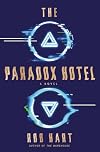
The Paradox Hotel is a locked-room murder mystery set in a snowed-in hotel for time travelers. It's a scifi thriller with breathless tension and incredible heart--really, it's an exploration of grief and anger in an utterly innovative way. It's the month of January and I already know this book will be one of my best reads this year.
January is head of security at a hotel where the wealthiest of the wealthy stay before embarking on time travel show more adventures throughout the past. The American government-run facility is about to go for sale, and tensions are high as the most elite people in the world come together to place their bids. January has her own problems, though. She's Unstuck, meaning her past work deploying as a time cop has left her slightly unmoored from the current timeline--not necessarily a bad thing, as her increasingly instability enables her to relive moments with her dead girlfriend. However, when she sees a murdered man that no one else can see--and time begins to skip around for everyone in the hotel, even as heavy snow entraps them all--January realizes there's more at stake than her job or her sanity.
I love a good time travel story, not only for the sheer fun of it, but because I respect the difficulties in writing it. Time travel is tricky to get right because it can end up a snarled, confusing mess. But author Rob Hart--wow. I've never read him before, but he's earned my awe and respect. He plays with so many mystery and scifi genre tropes here and makes them WORK. I mean, he even brings in dinosaurs! There's a straight-up ode to Jurassic Park. Even more, as the action races along, the book explores serious emotional issues around grief, love, and friendship. The hotel staff is like a big found-family for January, even though she treats them terribly in her grief. The ending escalates everything in an action-packed profound way.
This novel is the first one to go on my awards shortlist for books released in 2022. If it's not on everyone's lists, I'll be sorely disappointed. show less
The Paradox Hotel is a locked-room murder mystery set in a snowed-in hotel for time travelers. It's a scifi thriller with breathless tension and incredible heart--really, it's an exploration of grief and anger in an utterly innovative way. It's the month of January and I already know this book will be one of my best reads this year.
January is head of security at a hotel where the wealthiest of the wealthy stay before embarking on time travel show more adventures throughout the past. The American government-run facility is about to go for sale, and tensions are high as the most elite people in the world come together to place their bids. January has her own problems, though. She's Unstuck, meaning her past work deploying as a time cop has left her slightly unmoored from the current timeline--not necessarily a bad thing, as her increasingly instability enables her to relive moments with her dead girlfriend. However, when she sees a murdered man that no one else can see--and time begins to skip around for everyone in the hotel, even as heavy snow entraps them all--January realizes there's more at stake than her job or her sanity.
I love a good time travel story, not only for the sheer fun of it, but because I respect the difficulties in writing it. Time travel is tricky to get right because it can end up a snarled, confusing mess. But author Rob Hart--wow. I've never read him before, but he's earned my awe and respect. He plays with so many mystery and scifi genre tropes here and makes them WORK. I mean, he even brings in dinosaurs! There's a straight-up ode to Jurassic Park. Even more, as the action races along, the book explores serious emotional issues around grief, love, and friendship. The hotel staff is like a big found-family for January, even though she treats them terribly in her grief. The ending escalates everything in an action-packed profound way.
This novel is the first one to go on my awards shortlist for books released in 2022. If it's not on everyone's lists, I'll be sorely disappointed. show less
Another 4.5 Stars!
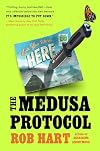
Having loved the first book, this second installment about killers who choose to kill no more was just as entertainingly suspenseful and poignantly heartbreaking. The struggle is very real as all members of Assassins Anonymous fight years of intense dopamine hits and rigidly honed muscle memory to consciously decide every day to fight the dark pull of what they do best, and that’s unaliving people.
Here, the story continues with Mark, Booker, and Valencia where last we saw show more them, they had welcomed Astrid into their circle, supporting each other in ways that only shared experiences can. When Astrid doesn’t show up to their regularly scheduled meetings, Mark must face the harsh truth that perhaps she wasn’t quite ready to “retire” or maybe sadly, her past caught up to her. The worst thing about the situation is just not knowing the truth and facing the reality that they may never know.
One day though, Mark and company get a cryptic delivery which can only mean one thing. Astrid is alive, and she’s calling for help.
What unfolds is a compelling read as Hart weaves in Astrid's origin story along with the present day dual storyline of Astrid methodically planning to get out of her dire predicament and Mark going to extensive lengths to get her back, all of which makes for propulsive reading as they are both committed to their recovery despite the deadly challenges that lay ahead of them.
Full of expected action and mostly nonlethal fight scenes, this expands on the world of hired killers (and the mysterious Agency), bringing some good ole fun along with hitting the angsty notes with painful precision. I loved Astrid, who just like Mark, tries to live with her regrets, who tries to make healthier decisions and atone for her actions which have brought, and will continue to bring, many difficult challenges. Never though is she, nor Mark, weak, nor should one mistake mercy for kindness as they do what must be done to save each other and survive.
Overall, this series is about choices, choices that destroy, condemn, forgive, and redeem. It’s about the consequences of one’s past and how that past shapes who they are and the future they want for themselves. It’s about deciding what you want and how you choose a path forward with the found family you’ve now built.
Again, Assassin's Anonymous was my introduction to Rob Hart, and this sequel just proves that I’m still a major fan of his work. This ends on a triumphant note, where Hart has set up this engaging addictive series to delve into many more characters seeking a different path and all the players and factors that don’t want them to.
More please!
Thank you to the author and GP Putnam’s Sons via NetGalley for a copy in exchange for an honest review show less
Having loved the first book, this second installment about killers who choose to kill no more was just as entertainingly suspenseful and poignantly heartbreaking. The struggle is very real as all members of Assassins Anonymous fight years of intense dopamine hits and rigidly honed muscle memory to consciously decide every day to fight the dark pull of what they do best, and that’s unaliving people.
Here, the story continues with Mark, Booker, and Valencia where last we saw show more them, they had welcomed Astrid into their circle, supporting each other in ways that only shared experiences can. When Astrid doesn’t show up to their regularly scheduled meetings, Mark must face the harsh truth that perhaps she wasn’t quite ready to “retire” or maybe sadly, her past caught up to her. The worst thing about the situation is just not knowing the truth and facing the reality that they may never know.
One day though, Mark and company get a cryptic delivery which can only mean one thing. Astrid is alive, and she’s calling for help.
What unfolds is a compelling read as Hart weaves in Astrid's origin story along with the present day dual storyline of Astrid methodically planning to get out of her dire predicament and Mark going to extensive lengths to get her back, all of which makes for propulsive reading as they are both committed to their recovery despite the deadly challenges that lay ahead of them.
Full of expected action and mostly nonlethal fight scenes, this expands on the world of hired killers (and the mysterious Agency), bringing some good ole fun along with hitting the angsty notes with painful precision. I loved Astrid, who just like Mark, tries to live with her regrets, who tries to make healthier decisions and atone for her actions which have brought, and will continue to bring, many difficult challenges. Never though is she, nor Mark, weak, nor should one mistake mercy for kindness as they do what must be done to save each other and survive.
Overall, this series is about choices, choices that destroy, condemn, forgive, and redeem. It’s about the consequences of one’s past and how that past shapes who they are and the future they want for themselves. It’s about deciding what you want and how you choose a path forward with the found family you’ve now built.
Again, Assassin's Anonymous was my introduction to Rob Hart, and this sequel just proves that I’m still a major fan of his work. This ends on a triumphant note, where Hart has set up this engaging addictive series to delve into many more characters seeking a different path and all the players and factors that don’t want them to.
More please!
Thank you to the author and GP Putnam’s Sons via NetGalley for a copy in exchange for an honest review show less
Time travel is dangerous. It's ok if you just try it once or twice as a tourist, but if you do it professionally the radiation generated by the machinery will get you. You get Unstuck. Phase 1 means quick, juddery time misalignment and temporal hallucinations. In Phase 1 you can still work but you can't travel any more and you need to take suppression drugs. Phase 2 is more severe and you need to stop working and get on some serious meds under observation by neural specialists. In Phase 3 show more you are a glassy-eyed goner in a hospital ward.
January Cole is a former time cop who has invalided out; Unstuck, although only Phase 1. Whew. If she reaches Phase 2 she will be barred from working as the Head of Security at the Paradox Hotel, the glamorous staging area for time tourists, and the place where January's lover was killed in a gas explosion in the kitchen. Except, of course, January is far into Phase 2 but hiding it with meds that she swallows like candy. But she likes Phase 2 because she sees her lover everywhere, and can even talk to her. It eases the pain a little bit.
Work this week is its own pain. The hotel has been commandeered by the govt for a special event: The sale of the hotel to the private sector. The hotel is losing money and the govt wants to gain loads of quick cash.
The four contenders and high-ranking govt officers and their retinues in all their obnoxious glory descend on the hotel, pushing out paying guests, and generally being horrible. January meets them at the door and is horrible right back. Great wealth doesn't grant any great privileges in her book. Behave yourselves, you jerks.
January is being extra brusque because there is something wrong that she can't tell these rich guys and she especially can't tell the guests. The hotel is slipping and sliding around in time like a water drop on a hot griddle. The atomic clock in the lobby ticks backwards sometimes. Yikes. And the hotel ghosts (this very modern hotel can't have ghosts!!) are showing up all over the place. And there are 3 baby velociraptors in the basement. And the security cameras are shutting on and off. The building is going nuts and January is supposed to fix it whilst trying not to slip into insanity.
It's a good book. It has an interesting philosophical grounding which is an added treat, although I am not sure I buy it 100%. The characters in the book are well drawn and not boring, even though the factions involved in the auction are archetypes.
Read it. You will like it.
I received a review copy of "The Paradox Hotel" by Rob Hart from Ballantine through NetGalley.com. show less
January Cole is a former time cop who has invalided out; Unstuck, although only Phase 1. Whew. If she reaches Phase 2 she will be barred from working as the Head of Security at the Paradox Hotel, the glamorous staging area for time tourists, and the place where January's lover was killed in a gas explosion in the kitchen. Except, of course, January is far into Phase 2 but hiding it with meds that she swallows like candy. But she likes Phase 2 because she sees her lover everywhere, and can even talk to her. It eases the pain a little bit.
Work this week is its own pain. The hotel has been commandeered by the govt for a special event: The sale of the hotel to the private sector. The hotel is losing money and the govt wants to gain loads of quick cash.
The four contenders and high-ranking govt officers and their retinues in all their obnoxious glory descend on the hotel, pushing out paying guests, and generally being horrible. January meets them at the door and is horrible right back. Great wealth doesn't grant any great privileges in her book. Behave yourselves, you jerks.
January is being extra brusque because there is something wrong that she can't tell these rich guys and she especially can't tell the guests. The hotel is slipping and sliding around in time like a water drop on a hot griddle. The atomic clock in the lobby ticks backwards sometimes. Yikes. And the hotel ghosts (this very modern hotel can't have ghosts!!) are showing up all over the place. And there are 3 baby velociraptors in the basement. And the security cameras are shutting on and off. The building is going nuts and January is supposed to fix it whilst trying not to slip into insanity.
It's a good book. It has an interesting philosophical grounding which is an added treat, although I am not sure I buy it 100%. The characters in the book are well drawn and not boring, even though the factions involved in the auction are archetypes.
Read it. You will like it.
I received a review copy of "The Paradox Hotel" by Rob Hart from Ballantine through NetGalley.com. show less
Rating: 3.5* of five
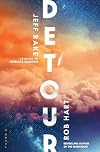
The Publisher Says: A space shuttle flight crew discovers that the Earth they’ve returned to is not the home they left behind in the first book of this emotional, mind-bending thriller series from the creator of the hit Netflix show Manifest and the bestselling author of The Warehouse.
Ryan Crane wasn’t looking for trouble—just a cup of coffee. But when this cop spots a gunman emerging from an unmarked van, he leaps into action and unknowingly saves John Ward, a show more billionaire with presidential aspirations, from an assassination attempt.
As thanks for Ryan’s quick thinking, Ward offers him the chance of a lifetime: to join a group of lucky civilians chosen to accompany three veteran astronauts on the first manned mission to Saturn’s moon Titan.
A devoted family man, Ryan is reluctant to leave on this two-year expedition, yet with the encouragement of his loving wife—and an exorbitant paycheck guaranteeing lifetime care for their disabled son—he crews up and ventures into a new frontier.
But as the ship is circling Titan, it is rocked by an unexplained series of explosions. The crew works together to get back on course, and they return to Earth as heroes.
When the fanfare dies down, Ryan and his fellow astronauts notice that things are different. Some changes are good, such as lavish upgrades to their homes, but others are more disconcerting. Before the group can connect, mysterious figures start tailing them, and their communications are scrambled.
Separated and suspicious, the crew must uncover the truth and decide how far they’re willing to go to return to their normal lives. Just when their space adventure seemingly ends, it shockingly begins.
I RECEIVED A DRC FROM THE PUBLISHER VIA NETGALLEY. THANK YOU.
My Review: I'd never heard of the Netflix show Manifest before I picked up this DRC. I'd never heard of the imprint that publishes it, either, and I'm old enough that imprints matter to me. I track them and their subject-matter focuses so I can ask for DRCs I'm happy to read and review. Surprise! There's an entire LitRPG-inspired publishing world, that now subsumes to old movie novelizations and TV-show expansions. This had escaped my attention until now because I've never played these games. I got hooked on Dark Shadows novels and Doctor Who novels back in the day, but found most Star Trek novels pretty hit-or-miss, and gave up on them. So this rediscovery was pleasant because now I've watched Manifest and really like it. I hasten to add that this novel is reminiscent of the TV show's premise but is not directly related to the show you can see on Netflix.
This story started out with a cool-to-me hook: six random people are lightly trained after being plucked from richly deserved obscurity to travel to Saturn's moon Titan. Terrible, tragic explosions on their craft occur; they're brought safely back to Earth but them isolated from each other very stringently, instructed not to attempt to contact each other or to discuss their experiences.
From here we're in the PoV of the six people separately as they experience...oddness, off-kilter alterations in what their memories of Earth tell them should be present in the world around them. It is unsettling to them. The...can't call them changes, that implies violated continuity, can't call them alterations because that implies known agency...discontinuities in their realty versus their memories of reality are strange, undirected by a moral compass, some make things better some worse yet the people are left with a sense that they're suffering from Capgras Syndrome. I suppose you're already assuming the characters ignore, and circumvent, the orders to stay out of contact with their fellow survivors of the trip. Of course this is the case.
The *real* story here is in the returnees' efforts to provide each other with support, you aren't crazy the world is-level support. It's not a space-sci fi story at all; it's a Sliders-meets-Sliding Doors narrative of roads not taken. This ties in to the many-worlds interpretation of quantum mechanics, and the Hindu, and later Buddhist, concept of Indra's net. This is more fun for me as a reader but might very well cause some disappointment for others. Understanding going in that space travel and hard sci-fi are honored more in their absence as igniting events than bases for the continuing action will help you decide if this is the read for you.
As each character has unique struggles to adapt to their individual changed circumstances they're all, as a unit, required to look at the common underlying altered reality of the world they collectively remember. It's this facet of their experience that most recalls the earlier media franchises I reference in tge paragraph above. It creates among these six people, so randomly assorted and so very different in personality, training, and character, a found family with the most powerful ties imaginable. Their shared bedrock assumptions have been whisked out from under them.
It's in this that the authors choose to emphasize the shared nature of their trauma, and its developing coping mechanisms. The six PoVs are not dealt with chapter-by-chapter, which could easily lead to dilution and confusion among the characters, but with chapters that entertain similar attempts to cope by varying constellations of people. There are chat threads, emails, news articles, and other such media insertions into various parts of the narrative. This is a narrative technique as old as Tristram Shandy yet we still act as though this is somehow new and fresh and surprising. It worked beautifully in Stand on Zanzibar nearly sixty years ago. It still works now. Its worldbuilding is useful; the technique of said worldbuilding functions as commentary on both message and medium.
I was happy enough with the characters' varying arcs in this series-starting volume as they reached obviously temporary resolution points in some way. The story overall, of the gestalt formed by our six folks, ends on a cliffhanger. I'm now going to explain why, despite enjoying the read, I'm only giving it three and a half stars. Nowhere is it said that this is the first in a series of stories because publishers know how much many readers hate starting series that are not completed. Ask George RR Martin and Patrick Rothfuss why that might be the case; consult with Adam Christopher's novel publisher as to why amputating series before they conclude might result in blowback. (I want more Ray Electromatic stories!) So instead of learning the right lesson from this and publicly committing to the entire series in advance, greed rules and there's a tiny little detail omitted from the sales bunf in the hopes you will get hooked and buy them all as they come out. This is scummy.
I also detest cliffhangers because there is never a narrative reason for them. Ever. It's purely marketing. So, three and a half stars for those dickhead marketing-driven moves draining a lot of my pleasure in reading this iteration of a story whose bones I very much enjoy seeing fleshed out. show less
The Publisher Says: A space shuttle flight crew discovers that the Earth they’ve returned to is not the home they left behind in the first book of this emotional, mind-bending thriller series from the creator of the hit Netflix show Manifest and the bestselling author of The Warehouse.
Ryan Crane wasn’t looking for trouble—just a cup of coffee. But when this cop spots a gunman emerging from an unmarked van, he leaps into action and unknowingly saves John Ward, a show more billionaire with presidential aspirations, from an assassination attempt.
As thanks for Ryan’s quick thinking, Ward offers him the chance of a lifetime: to join a group of lucky civilians chosen to accompany three veteran astronauts on the first manned mission to Saturn’s moon Titan.
A devoted family man, Ryan is reluctant to leave on this two-year expedition, yet with the encouragement of his loving wife—and an exorbitant paycheck guaranteeing lifetime care for their disabled son—he crews up and ventures into a new frontier.
But as the ship is circling Titan, it is rocked by an unexplained series of explosions. The crew works together to get back on course, and they return to Earth as heroes.
When the fanfare dies down, Ryan and his fellow astronauts notice that things are different. Some changes are good, such as lavish upgrades to their homes, but others are more disconcerting. Before the group can connect, mysterious figures start tailing them, and their communications are scrambled.
Separated and suspicious, the crew must uncover the truth and decide how far they’re willing to go to return to their normal lives. Just when their space adventure seemingly ends, it shockingly begins.
I RECEIVED A DRC FROM THE PUBLISHER VIA NETGALLEY. THANK YOU.
My Review: I'd never heard of the Netflix show Manifest before I picked up this DRC. I'd never heard of the imprint that publishes it, either, and I'm old enough that imprints matter to me. I track them and their subject-matter focuses so I can ask for DRCs I'm happy to read and review. Surprise! There's an entire LitRPG-inspired publishing world, that now subsumes to old movie novelizations and TV-show expansions. This had escaped my attention until now because I've never played these games. I got hooked on Dark Shadows novels and Doctor Who novels back in the day, but found most Star Trek novels pretty hit-or-miss, and gave up on them. So this rediscovery was pleasant because now I've watched Manifest and really like it. I hasten to add that this novel is reminiscent of the TV show's premise but is not directly related to the show you can see on Netflix.
This story started out with a cool-to-me hook: six random people are lightly trained after being plucked from richly deserved obscurity to travel to Saturn's moon Titan. Terrible, tragic explosions on their craft occur; they're brought safely back to Earth but them isolated from each other very stringently, instructed not to attempt to contact each other or to discuss their experiences.
From here we're in the PoV of the six people separately as they experience...oddness, off-kilter alterations in what their memories of Earth tell them should be present in the world around them. It is unsettling to them. The...can't call them changes, that implies violated continuity, can't call them alterations because that implies known agency...discontinuities in their realty versus their memories of reality are strange, undirected by a moral compass, some make things better some worse yet the people are left with a sense that they're suffering from Capgras Syndrome. I suppose you're already assuming the characters ignore, and circumvent, the orders to stay out of contact with their fellow survivors of the trip. Of course this is the case.
The *real* story here is in the returnees' efforts to provide each other with support, you aren't crazy the world is-level support. It's not a space-sci fi story at all; it's a Sliders-meets-Sliding Doors narrative of roads not taken. This ties in to the many-worlds interpretation of quantum mechanics, and the Hindu, and later Buddhist, concept of Indra's net. This is more fun for me as a reader but might very well cause some disappointment for others. Understanding going in that space travel and hard sci-fi are honored more in their absence as igniting events than bases for the continuing action will help you decide if this is the read for you.
As each character has unique struggles to adapt to their individual changed circumstances they're all, as a unit, required to look at the common underlying altered reality of the world they collectively remember. It's this facet of their experience that most recalls the earlier media franchises I reference in tge paragraph above. It creates among these six people, so randomly assorted and so very different in personality, training, and character, a found family with the most powerful ties imaginable. Their shared bedrock assumptions have been whisked out from under them.
It's in this that the authors choose to emphasize the shared nature of their trauma, and its developing coping mechanisms. The six PoVs are not dealt with chapter-by-chapter, which could easily lead to dilution and confusion among the characters, but with chapters that entertain similar attempts to cope by varying constellations of people. There are chat threads, emails, news articles, and other such media insertions into various parts of the narrative. This is a narrative technique as old as Tristram Shandy yet we still act as though this is somehow new and fresh and surprising. It worked beautifully in Stand on Zanzibar nearly sixty years ago. It still works now. Its worldbuilding is useful; the technique of said worldbuilding functions as commentary on both message and medium.
I was happy enough with the characters' varying arcs in this series-starting volume as they reached obviously temporary resolution points in some way. The story overall, of the gestalt formed by our six folks, ends on a cliffhanger. I'm now going to explain why, despite enjoying the read, I'm only giving it three and a half stars. Nowhere is it said that this is the first in a series of stories because publishers know how much many readers hate starting series that are not completed. Ask George RR Martin and Patrick Rothfuss why that might be the case; consult with Adam Christopher's novel publisher as to why amputating series before they conclude might result in blowback. (I want more Ray Electromatic stories!) So instead of learning the right lesson from this and publicly committing to the entire series in advance, greed rules and there's a tiny little detail omitted from the sales bunf in the hopes you will get hooked and buy them all as they come out. This is scummy.
I also detest cliffhangers because there is never a narrative reason for them. Ever. It's purely marketing. So, three and a half stars for those dickhead marketing-driven moves draining a lot of my pleasure in reading this iteration of a story whose bones I very much enjoy seeing fleshed out. show less
Lists
Awards


You May Also Like


Associated Authors
Statistics
- Works
- 22
- Also by
- 7
- Members
- 1,932
- Popularity
- #13,330
- Rating
- 3.8
- Reviews
- 129
- ISBNs
- 95
- Languages
- 10
