
Jyoti Rajan Gopal
Author of American Desi
About the Author
Works by Jyoti Rajan Gopal
Tagged
Common Knowledge
There is no Common Knowledge data for this author yet. You can help.
Members
Reviews
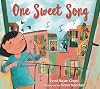
"One note trills...
floating in the air.
A little girl listens,
perched on a chair."
People all over the world play music at their windows, using instruments (real or improvised) and their voices. Note by note, up to ten and back down again, the music crescendos into one sweet song.
Conceived and crafted during the pandemic, the flap copy indicates that the story was inspired by the balcony singing in Italy, but the text of the book doesn't mention COVID, only music.
floating in the air.
A little girl listens,
perched on a chair."
People all over the world play music at their windows, using instruments (real or improvised) and their voices. Note by note, up to ten and back down again, the music crescendos into one sweet song.
Conceived and crafted during the pandemic, the flap copy indicates that the story was inspired by the balcony singing in Italy, but the text of the book doesn't mention COVID, only music.
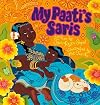
ATamil child finds love and solace in their grandmother’s saris.
The child watches as their paati opens her cupboard and out come tumbling saris in gorgeous colors, patterns, and weaves, each seeming to tell the story of where it comes from. Each sari beckons the young child as they and their grandmother explore different spaces—the market, the kitchen, festivities, and more. The book ends with the child—with Paati’s help—donning a sari and proudly displaying it to the rest of the show more family. Though gender isn’t explicitly mentioned in the text, the young narrator presents male, and the book seems to hint that the protagonist initially feels some hesitancy at wearing a sari in front of others; ultimately they’re joyous when their family embraces them (“They see me. ME”). There’s little tension in the story. However, the art makes up for the text. It’s glorious, each sari resplendently rendered, the textiles telling a powerful story by themselves. The last sari, the one the child chooses for themself, is stunning. Tigers leap across the fabric as dazzling suns offer highlights to the blue and pink of the material, an invitation to the child to explore and be themself: “My paati’s saris are my shelter, my home.” Many readers will be especially heartened to see a tale of LGBTQ+ identity—and acceptance—in a South Asian setting. (This book was reviewed digitally.)
A simple yet empowering journey through a cupboard of saris and stories. (Picture book. 4-6)
-Kirkus Review show less
The child watches as their paati opens her cupboard and out come tumbling saris in gorgeous colors, patterns, and weaves, each seeming to tell the story of where it comes from. Each sari beckons the young child as they and their grandmother explore different spaces—the market, the kitchen, festivities, and more. The book ends with the child—with Paati’s help—donning a sari and proudly displaying it to the rest of the show more family. Though gender isn’t explicitly mentioned in the text, the young narrator presents male, and the book seems to hint that the protagonist initially feels some hesitancy at wearing a sari in front of others; ultimately they’re joyous when their family embraces them (“They see me. ME”). There’s little tension in the story. However, the art makes up for the text. It’s glorious, each sari resplendently rendered, the textiles telling a powerful story by themselves. The last sari, the one the child chooses for themself, is stunning. Tigers leap across the fabric as dazzling suns offer highlights to the blue and pink of the material, an invitation to the child to explore and be themself: “My paati’s saris are my shelter, my home.” Many readers will be especially heartened to see a tale of LGBTQ+ identity—and acceptance—in a South Asian setting. (This book was reviewed digitally.)
A simple yet empowering journey through a cupboard of saris and stories. (Picture book. 4-6)
-Kirkus Review show less
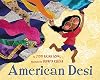
Colors explode in an exciting dance through texture, possibility, and all those things, which make us who we are.
This book is a celebration of variety: cultural, heritage, and much more. It takes an American girl, whose family stemmed from India. Since the two cultures can be very different, she swings through a world of variety to show all the wonderful things, which make her who she is...and that is good.
The energy and positivity swell from every page as a girl dances, hops, and skips from show more one artistic background to the other. The illustrations make this a whirlwind with whimsical flair as a color is presented in every scene before morphing into a little more detailed atmosphere with different foods, languages and such. The artist has added a huge variety of textures, which really makes each page shine. Sometimes, there's a touch of humor, too, but always a cheerful feeling. It's really a feel-good book with a positive message
The text flows with a musical flair, drawing in and inviting to the same fun. It's written in flowing rhyme and always ends with a phrase similar to 'The colors of me.' It's catchy and ties everything up nicely.
This is also a lovely way to touch upon the topic of being multi-cultural. While these pages swing toward the South-Asian culture (which is a bonus and lovely aspect all in itself), the same thoughts apply to other mixes just with different details. Thanks to the more indirect manner used in these pages, applying it to all mixes really isn't difficult. But then, it even can be tied to those, who aren't multi-cultured in the traditional sense, since this 'different colors of me' aspect can apply in so many ways.
This is a up-beat read, which works great in a group or single setting, inspires, and offers tons of self-confidence. I received an ARC and found this to be an uplifting read. show less
This book is a celebration of variety: cultural, heritage, and much more. It takes an American girl, whose family stemmed from India. Since the two cultures can be very different, she swings through a world of variety to show all the wonderful things, which make her who she is...and that is good.
The energy and positivity swell from every page as a girl dances, hops, and skips from show more one artistic background to the other. The illustrations make this a whirlwind with whimsical flair as a color is presented in every scene before morphing into a little more detailed atmosphere with different foods, languages and such. The artist has added a huge variety of textures, which really makes each page shine. Sometimes, there's a touch of humor, too, but always a cheerful feeling. It's really a feel-good book with a positive message
The text flows with a musical flair, drawing in and inviting to the same fun. It's written in flowing rhyme and always ends with a phrase similar to 'The colors of me.' It's catchy and ties everything up nicely.
This is also a lovely way to touch upon the topic of being multi-cultural. While these pages swing toward the South-Asian culture (which is a bonus and lovely aspect all in itself), the same thoughts apply to other mixes just with different details. Thanks to the more indirect manner used in these pages, applying it to all mixes really isn't difficult. But then, it even can be tied to those, who aren't multi-cultured in the traditional sense, since this 'different colors of me' aspect can apply in so many ways.
This is a up-beat read, which works great in a group or single setting, inspires, and offers tons of self-confidence. I received an ARC and found this to be an uplifting read. show less
There are many possibly unfamiliar Indian words and concepts in this book that the reader might often need to pause and explain to a young listener. That's not a bad thing at all! On the other hand, one of those terms that's actually not explicitly defined is "sari." (Also "Paati," but that's not what I'm getting at right now.) Through context clues, it's obvious that a sari is a piece of clothing, but it's not necessarily obvious that only women typically wear them. An observant kid might show more get there but it's not a point emphasized, which makes it all the better when it's clear that the main character child himself doesn't see them that way, either. It's a very gently nuanced part of the story, and I really appreciated that. show less
Lists
Awards


Statistics
- Works
- 9
- Members
- 200
- Popularity
- #110,007
- Rating
- 4.0
- Reviews
- 12
- ISBNs
- 17