
Laura Numeroff
Author of If You Give a Mouse a Cookie
About the Author
Laura Joffe Numeroff was born in Brooklyn, New York on July 14, 1953. When the time came for her to choose a college, she only applied to Pratt Institute, in Brooklyn for fashion design. She hated everything about it and ended up taking a class in writing and illustrating books for children because show more it sounded like a great class. She received an assignment to write and illustrate a children's book, and after completing it, made several attempts to get it published. After only 4 rejections, Macmillan bought it. She graduated from college with a degree and a contract for her first book. Since then she has written over twenty books including If You Give a Mouse a Cookie; What Mommies Do Best, What Daddies Do Best; Laura Numeroff's Ten Step Guide to Living with Your Monster; Phoebe Dexter Has Harriet Peterson's Sniffles; Ponyella; If You Give a Dog a Donut; and It's Pumpkin Day, Mouse! She has received numerous awards including the Buckeye Children's Book Award in 1989, the Quill Award for If You Give a Pig a Party in 2006, and the Milner Award in 2007. (Bowker Author Biography) show less
Series
Works by Laura Numeroff
If You Give a Moose a Muffin (COPY 2) 106 copies
If You Give a . . . Set of 5 Books: If You Give a Mouse a Cookie, If You Take a Mouse to the Movies, (2010) 2 copies
Ponyella 1 copy
if You Mouse A cookie 1 copy
Read With Me Volume 9 1 copy
If You Give a Mouse a Cookie / If You Give a Moose a Muffin / If You Take a Mouse to the Movies 1 copy
If You Give A rise A Muffin 1 copy
Lo mejor de mama 1 copy
Lo mejor de papa 1 copy
Author Study: Laura Numeroff 1 copy
מה שאבא יודע לעשות הכי טוב 1 copy
Associated Works
The Book That Changed My Life: 71 Remarkable Writers Celebrate the Books That Matter Most to Them (2006) — Contributor — 411 copies, 18 reviews
Tagged
Common Knowledge
- Legal name
- Numeroff, Laura Joffe
- Birthdate
- 1953-07-14
- Gender
- female
- Education
- Pratt Institute
- Occupations
- children's book author
illustrator - Nationality
- USA
- Birthplace
- Brooklyn, New York, USA
- Places of residence
- Brooklyn, New York, USA
Los Angeles, California, USA - Associated Place (for map)
- USA
Members
Reviews
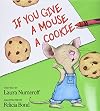
Hilarious and endearing tale that introduces young readers to the concept of cause and effect. The story follows the chain reaction of events that unfolds when a generous boy offers a cookie to a very demanding mouse. Themes of generosity, friendship, and the unexpected consequences of small actions are cleverly woven into the story. Whimsical illustrations perfectly capture the humor and energy of the mouse's antics, keeping readers engaged from start to finish. This story causes children show more to critically think and predict what may happen next. My children love this story, it is a staple in our home. show less
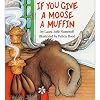
This was one of my favorite books growing up. I love this story for several reasons. The language is descriptive and patterned. Every time the moose starts an activity, he thinks of something else he wants to do. An example of this is, “When he opens the door and feels how chilly it is, he’ll ask to borrow a sweater. When he puts the sweater on, he’ll notice one of the buttons is loose. He’ll ask for a needle and thread.” These cause and effect sequence of events keep the reader show more engaged in the story because the reader will want to know what the moose does next. The writing is organized and engaging. The moose’s actions transition smoothly into one another, creating a story that flows nicely. The moose is very well developed. He has a lively and animated personality and gets very excited when he thinks of a new activity to do. The moose is full of energy, which sometimes makes it hard for the boy to keep up with him. Many of the activities mentioned in the book are relatable to children, such as eating delicious muffins, putting on a puppet show, and painting. I think the plot is well organized. The moose is constantly being reminded of new activities he wants to do. The boy is kept on his feet during the whole story because the fun activities are always changing. I love that in the end, the moose goes back to wanting a muffin, which is the thing he wanted in the beginning of the story. Evidence of this is located on the last page, which reads, “And chances are…if you give him jam, he’ll want a muffin to go with it.” The illustrations are very colorful and animated. They perfectly depict the moose’s energetic personality. All the activities are drawn as if they are occurring right then and there. You can see the action and motion in the illustrations, which is very engaging for readers. There is not central message in this story. It is simply a fun book that children read for entertainment. The reader can see how all the activities can turn into new activities. show less
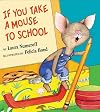
If You Take a Mouse to School by Laura Numeroff and Illustrated by Felica Bond looks different as an adult reading than it than having it read to me at a young age. While the big picture of the book is just referring to cause and effect of small things in life but when applying it to my life and seeing what others are doing it makes me think deeper. While the mouse is just asking for the boy's lunch or school supplies it makes me think of friends asking for favors and never returning show more something and only come around for when it is convenient to them. While the author also does leave some of the story for the children up for infer for children to keep the guessing which helps them learn and understand more. Bond also paints the picture of each descriptive word and makes all the drawings big and bold with bright colors and dramatic visuals like on page 10 showing the mouse do a science experiment that is exploding to draw attention of kids making the book more exciting due to the dramatic display. show less
If You Give a Mouse a Cookie: A Silly Circular Story About a Mouse and a Craving for Cookies Late Into the Night by Laura Numeroff
In If You Give a Mouse a Cookie by Laura Numeroff, the central theme of cause and effect is developed through a circular narrative structure that highlights how one small action can lead to a chain of increasingly complex events. The story follows the mouse’s escalating requests, demonstrating a clear pattern that reinforces sequencing and prediction, which are key concepts in early literacy development.
Although the mouse does not undergo traditional character development, his behavior show more reflects a consistent personality driven by curiosity and impulse. This characterization allows readers to anticipate his actions, making the narrative both engaging and interactive. Numeroff’s use of repetition and predictable structure serves as an effective literary device, helping young readers recognize patterns and build comprehension skills.
Felicia Bond’s illustrations play a significant role in supporting the text, offering visual cues that enhance understanding of the sequence of events and the mouse’s motivations. The soft, detailed illustrations contribute to the tone of the story and provide additional context beyond the written words.
As a children’s picture book, it adheres to genre conventions such as repetition and simplicity while also introducing a more sophisticated narrative technique through its circular structure. This book is especially relevant for young readers because it teaches logical thinking, sequencing, and consequences in an engaging way. As a future educator, I see this book as a valuable tool for teaching cause-and-effect relationships and encouraging prediction skills in the classroom. show less
Although the mouse does not undergo traditional character development, his behavior show more reflects a consistent personality driven by curiosity and impulse. This characterization allows readers to anticipate his actions, making the narrative both engaging and interactive. Numeroff’s use of repetition and predictable structure serves as an effective literary device, helping young readers recognize patterns and build comprehension skills.
Felicia Bond’s illustrations play a significant role in supporting the text, offering visual cues that enhance understanding of the sequence of events and the mouse’s motivations. The soft, detailed illustrations contribute to the tone of the story and provide additional context beyond the written words.
As a children’s picture book, it adheres to genre conventions such as repetition and simplicity while also introducing a more sophisticated narrative technique through its circular structure. This book is especially relevant for young readers because it teaches logical thinking, sequencing, and consequences in an engaging way. As a future educator, I see this book as a valuable tool for teaching cause-and-effect relationships and encouraging prediction skills in the classroom. show less
Lists
Childhood books (1)
Christmas Books (1)
Five in a Row (1)
Best Dog Stories (2)
Reading Rainbow (2)
Sonlight Books (1)
BitLife (1)
Youth: Zoology (1)
Awards


You May Also Like


Associated Authors
Statistics
- Works
- 108
- Also by
- 1
- Members
- 101,861
- Popularity
- #88
- Rating
- 4.1
- Reviews
- 1,847
- ISBNs
- 501
- Languages
- 9
- Favorited
- 17

