
Marilyn Butler (1937–2014)
Author of Romantics, Rebels and Reactionaries
About the Author
Works by Marilyn Butler
Associated Works
Frankenstein or The Modern Prometheus: The 1818 Text (1818) — Editor, some editions — 5,841 copies, 103 reviews
Pride and Prejudice [Norton Critical Edition, 3rd ed.] (2001) — Contributor — 1,024 copies, 13 reviews
Tagged
Common Knowledge
- Other names
- Evans, Marilyn Speers (birth name)
- Birthdate
- 1937-02-11
- Date of death
- 2014-03-11
- Gender
- female
- Education
- St. Hilda's College, Oxford (DPhil|English)
- Occupations
- scholar of English language and literature
university professor
university administrator - Awards and honors
- Royal Society of Arts (Fellow)
Royal Society of Literature (Fellow)
British Academy (Fellow) - Relationships
- Butler, Gareth (son)
Butler, David (spouse|1962|her death|2014) - Nationality
- UK
- Birthplace
- Kingston-upon-Thames, England, UK
- Places of residence
- Oxford, England
Cambridge, England - Associated Place (for map)
- UK
Members
Reviews
Romantics, Rebels and Reactionaries: English Literature and Its Background, 1760-1830 by Marilyn Butler
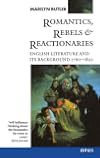
Wonderful history of the English romantics: Blake, Wordsworth, Coleridge, Austen, Scott, Byron, Shelley and Keats.
Romanticism has often been tagged revolutionary: its adherents boldly rejecting literary rules.
Butler argues that the real revolutionaries were the neo-classicists or primitivists of the preceding period: 1760-1790, when belief in freedom, progress and reform was widespread. The neo-classical style, championing noble simplicity, was identified (or at least associated) with show more political enlightenment.
According to Butler, Blake and Wordsworth (the Lyrical Ballads Wordsworth) were not romantic innovators. They were firmly attached to the tradition (alas, a recently new tradition) of neo-classicism and noble simplicity. What was so special about them wasn’t their content or their style, but the fact that they still employed it in the late 1790s. That is: after the big, fat counterrevolution that started in late 1792.
This is Butler’s second important point: neo-classicism and the revolutionary spirit where almost eliminated in the 1790s. After the fall of the bastille, the assassination of Louis 16 and the start of the english-french war, the english no longer favoured ideas of freedom and progress. In fact, the very idea of ‘ideas’ became suspicious, associated with radicals, anarchy, atheism.
Coleridge is a key example of this new zeitgeist: apolitical, anti-intellectual, very religious, attached to ‘old english’ values, retreated into a private world of melancholic personal feelings. Austen also belongs here: her books are a defense of ‘good old-fashioned’ gentry values. Scott is more bi-partisan, but still opposed to political reform (on the other hand he resembles the juste milieu-type exemplified by restoration-france politician Guizot).
Later on, in the 1810s, a new generation of literary radicals takes the stage: Shelley, Byron, Keats. Again, they link classicism’s clarity with the revolutionary cause. But they’re not so optimistic anymore. Ok, a better society may be eventually, but surely not in their lifetime. However their melancholy is not like Coleridge’s. Their private pessimism is concealed by a public embrace of comical satire, an ironic and detached commentary on society (Byron’s Beppo and Don Juan for instance). To them Coleridge seems a shady weakling, wallowing in german mysticism, an egoistic hermit.
I really love how Butler weaves together the literary, the personal and the political (and one hundred other factors). Her style is great: smooth, clear, fresh, to the point and sometimes a bit poetic. She’s a cool and razor-sharp observator of literary careers, but between the lines you feel her compassion with these small men caught up in history. show less
Romanticism has often been tagged revolutionary: its adherents boldly rejecting literary rules.
Butler argues that the real revolutionaries were the neo-classicists or primitivists of the preceding period: 1760-1790, when belief in freedom, progress and reform was widespread. The neo-classical style, championing noble simplicity, was identified (or at least associated) with show more political enlightenment.
According to Butler, Blake and Wordsworth (the Lyrical Ballads Wordsworth) were not romantic innovators. They were firmly attached to the tradition (alas, a recently new tradition) of neo-classicism and noble simplicity. What was so special about them wasn’t their content or their style, but the fact that they still employed it in the late 1790s. That is: after the big, fat counterrevolution that started in late 1792.
This is Butler’s second important point: neo-classicism and the revolutionary spirit where almost eliminated in the 1790s. After the fall of the bastille, the assassination of Louis 16 and the start of the english-french war, the english no longer favoured ideas of freedom and progress. In fact, the very idea of ‘ideas’ became suspicious, associated with radicals, anarchy, atheism.
Coleridge is a key example of this new zeitgeist: apolitical, anti-intellectual, very religious, attached to ‘old english’ values, retreated into a private world of melancholic personal feelings. Austen also belongs here: her books are a defense of ‘good old-fashioned’ gentry values. Scott is more bi-partisan, but still opposed to political reform (on the other hand he resembles the juste milieu-type exemplified by restoration-france politician Guizot).
Later on, in the 1810s, a new generation of literary radicals takes the stage: Shelley, Byron, Keats. Again, they link classicism’s clarity with the revolutionary cause. But they’re not so optimistic anymore. Ok, a better society may be eventually, but surely not in their lifetime. However their melancholy is not like Coleridge’s. Their private pessimism is concealed by a public embrace of comical satire, an ironic and detached commentary on society (Byron’s Beppo and Don Juan for instance). To them Coleridge seems a shady weakling, wallowing in german mysticism, an egoistic hermit.
I really love how Butler weaves together the literary, the personal and the political (and one hundred other factors). Her style is great: smooth, clear, fresh, to the point and sometimes a bit poetic. She’s a cool and razor-sharp observator of literary careers, but between the lines you feel her compassion with these small men caught up in history. show less
Romantics, Rebels and Reactionaries: English Literature and Its Background, 1760-1830 (Opus Books) by Marilyn Butler
Very illuminating on the political background to romanticism. You'll never look at Jane Austen the same way again!
Lists
Awards

You May Also Like


Associated Authors
Statistics
- Works
- 11
- Also by
- 12
- Members
- 334
- Popularity
- #71,210
- Rating
- 3.9
- Reviews
- 3
- ISBNs
- 22