
Patricio Pron
Author of My Fathers' Ghost Is Climbing in the Rain
About the Author
Works by Patricio Pron
El libro tachado : prácticas de la negación y del silencio en la crisis de la literatura (2014) 9 copies
No, no pienses en un conejo blanco: Literatura, dinero, tiempo, influencia, falsificación, crítica, futuro (2022) 2 copies
Caminando bajo el mar, colgando del amplio cielo (Las Tres Edades nº 277) (Spanish Edition) 2 copies
Associated Works
Granta 113: The Best of Young Spanish Language Novelists (2011) — Contributor — 165 copies, 3 reviews
Tagged
Common Knowledge
Members
Reviews
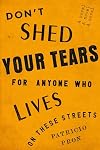
I found Don't Shed Your Tears for Anyone Who Lives on These Streets to be a frustrating read. The premise is interesting—a look back at a murder that occurred at a Fascist writers' conference in WWII Italy. This set-up raises lots of interesting possibilities about the relationship between politics and art, the ways people can delude themselves for a time about the ethics of a stance they're embracing. Unfortunately, the writing style was so Baroque and jumpy that I was never able to show more really engage with the story. There were moments when I'd think "OK, now I see how this is playing out," but those leads always seemed to turn out to be diversions or blind alleys. If you enjoy prose-heavy, stylized Latin American fiction, you may well find this book more interesting than I did. It made a splash when it was originally released in Argentina. If you're looking for a real that is more character- and narrative-driven, this title is likely to disappoint.
I received a free electronic review copy of this title from the publisher via EdelweissPlus. The opinions are my own. show less
I received a free electronic review copy of this title from the publisher via EdelweissPlus. The opinions are my own. show less
"The memories I'd decided to recover, for me and for them and for those who would follow,", 27 December 2015
This review is from: My Fathers' Ghost is Climbing in the Rain (Kindle Edition)
In a seemingly largely autobiographical work, the author describes his return to Argentina after years in Europe, living in a drug-fuelled state of forgetfulness. Just beneath the surface lurk hazy memories of life under the 1970s terror.
But as he visits his seriously ill father in hospital and trawls show more through his papers, he starts to unravel mysteries of their shared past.
As he observes: "Children are detectives of their parents, who cast them out into the world so that one day the children will return and tell them their story so that they themselves can understand it... they can try to impose some order on their story... then they can protect that story and perpetuate it in their memory."
The author does a convincing job of conveying the uncertain recollections, whether it's having missing chapter numbers or in quoting from a text where numerous words are illegible. The whole feeling of life during those years, and its legacy both on the adults and those who were just children, is dramatically captured. show less
This review is from: My Fathers' Ghost is Climbing in the Rain (Kindle Edition)
In a seemingly largely autobiographical work, the author describes his return to Argentina after years in Europe, living in a drug-fuelled state of forgetfulness. Just beneath the surface lurk hazy memories of life under the 1970s terror.
But as he visits his seriously ill father in hospital and trawls show more through his papers, he starts to unravel mysteries of their shared past.
As he observes: "Children are detectives of their parents, who cast them out into the world so that one day the children will return and tell them their story so that they themselves can understand it... they can try to impose some order on their story... then they can protect that story and perpetuate it in their memory."
The author does a convincing job of conveying the uncertain recollections, whether it's having missing chapter numbers or in quoting from a text where numerous words are illegible. The whole feeling of life during those years, and its legacy both on the adults and those who were just children, is dramatically captured. show less
No derrames tus lagrimas por nadie que viva en estas calles / Don?t Spill Your Tears for Anyone Who Lives on These Streets (Spanish Edition) by Patricio Pron

I struggled with this, I'm afraid. Very heavy-going, relating to a period I was a bit sketchy about in the first place and which needed a lot of trying to work who/what/why. Page after page of block text, with no paragraph breaks and long convoluted sentences. I skipped whole pages, just skimming to see if I could get any sense of what was going on.
Intellectual, Probably very worthy. But not what I need to read at this time!
Intellectual, Probably very worthy. But not what I need to read at this time!
This is not a story. It's a author being highbrow and feeding his publisher and the readers a bunch of bullshit. As the author in one of the chapters himself explains
"I understood for the first time that all the children of young Argentines in the 1970s were going to have to solve our parents’ pasts, like detectives, and what we would find out was going to seem like a mystery novel we wished we’d never bought. But I also realized that there was no way of telling my father’s story as a show more mystery or, more precisely, that telling it in such a way would betray his intentions and his struggles, since telling his story as a detective tale would merely confirm the existence of a genre, which is to say, a convention, and all of his efforts were meant to call into question those very social conventions and their pale reflection in literature."
“Besides, I’d seen enough mystery novels already and would see many more in the future. Telling this story from the perspective of genre would be illegitimate. To begin with, the individual crime was less important than the social crime, but social crime couldn’t be told through the artifice of a detective novel; it needed a narrative in the shape of an enormous frieze or with the appearance of an intimate personal story that held something back, a piece of an unfinished puzzle that would force the reader to look for adjacent pieces and then keep looking until the image became clear. Furthermore, the resolution of most detective stories is condescending, no matter how ruthless the plotting, so that the reader, once the loose ends are tied up and the guilty finally punished, can return to the real world with the conviction that crimes get solved and remain locked between the covers of a book, that the world outside the book is guided by the same principles of justice as the tale told inside and should not be questioned.”
Still he writes the story and not a good one at that. If there was any star rating less than 1 I'll give that to this book. show less
"I understood for the first time that all the children of young Argentines in the 1970s were going to have to solve our parents’ pasts, like detectives, and what we would find out was going to seem like a mystery novel we wished we’d never bought. But I also realized that there was no way of telling my father’s story as a show more mystery or, more precisely, that telling it in such a way would betray his intentions and his struggles, since telling his story as a detective tale would merely confirm the existence of a genre, which is to say, a convention, and all of his efforts were meant to call into question those very social conventions and their pale reflection in literature."
“Besides, I’d seen enough mystery novels already and would see many more in the future. Telling this story from the perspective of genre would be illegitimate. To begin with, the individual crime was less important than the social crime, but social crime couldn’t be told through the artifice of a detective novel; it needed a narrative in the shape of an enormous frieze or with the appearance of an intimate personal story that held something back, a piece of an unfinished puzzle that would force the reader to look for adjacent pieces and then keep looking until the image became clear. Furthermore, the resolution of most detective stories is condescending, no matter how ruthless the plotting, so that the reader, once the loose ends are tied up and the guilty finally punished, can return to the real world with the conviction that crimes get solved and remain locked between the covers of a book, that the world outside the book is guided by the same principles of justice as the tale told inside and should not be questioned.”
Still he writes the story and not a good one at that. If there was any star rating less than 1 I'll give that to this book. show less
Awards


You May Also Like


Associated Authors
Statistics
- Works
- 20
- Also by
- 2
- Members
- 336
- Popularity
- #70,810
- Rating
- 3.6
- Reviews
- 15
- ISBNs
- 75
- Languages
- 6