
Marc Fitten
Author of Valeria's Last Stand
About the Author
Image credit: Unattributed photo at publisher's author page
Works by Marc Fitten
Associated Works
We Wear the Mask: 15 True Stories of Passing in America (2017) — Contributor — 93 copies, 23 reviews
Tagged
Common Knowledge
Members
Reviews
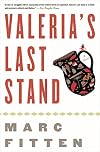
A baudy, funny, and charming first novel about life in small-town Hungary after the downfall of communism, the book reminded me of Chocolat crossed with Gogol's fantasic realism. In a village where everyone knows everything about their neighbors, sixty-eight year old Valerie's sudden infatuation with the local widowed potter is the talk of the town. Especially since the potter has been seeing the proprietess of the local tavern. It's spring, change is in the air, and scandals rock the small show more town of Zivatar ("thunderstorm"). The mayor, an itinerant chimney sweep, and the apprentice potter all figure into this unlikely love triangle.
I found the first half of the book to be especially funny and touching. Everything seems to be changing in Zivatar: the beginnings of capitalism, Valerie's sexual awakening, and the potter's transformation from craftsman to artist. This latter process is described in part by the following passage:
"The potter recognized that there was nothing better for a man to do--to reflect his godlike image--than create something lasting. Chastity is not God. Benevolence is not God. Honesty is not God. What is God, what is the crux and apex of man's existence, is when he reaches deeply into himself, uses his hands, his mind, his blood, his imagination, and his semen, points to a formless void, the emptiness of his surroundings, and utters the same phrase that began the entire universe: Let there be light!...The potter pointed hopefully at a bag of clay. 'Let there be turnip!'"
The juxtaposition of a familiar analogy with such a humorous ending is one of the stylistic tricks of the author.
The main character, Valerie, is an endearing grouch who is transformed by love. Known as the village hag, one with the cleanest pigs in town and a talent for judging vegetables and fruit, she is also intelligent and surprising self-aware. For her, love is a matter of faith, one that she knowingly acknowledges and decides to embrace.
"Valerie sighed. She understood that she should have had more faith. 'But how does one ever know until they know?' she said to herself...She smiled. 'He can make me new ones (pots),' she said, 'and I'll have faith that everything can work.' She was unsure for a momet about whether she believed that or not, but she decided that she would believe it, and in the decision to do so, she found the strength to finish dressing and wait for the potter to return."
Although I found the second half of the book less enjoyable, in part due to the unlikeable character of the chimney sweep, I looked forward to seeing how it all worked out. I enjoyed this light read and would recommend it particularly to those with an interest in literature set in Eastern Europe. show less
I found the first half of the book to be especially funny and touching. Everything seems to be changing in Zivatar: the beginnings of capitalism, Valerie's sexual awakening, and the potter's transformation from craftsman to artist. This latter process is described in part by the following passage:
"The potter recognized that there was nothing better for a man to do--to reflect his godlike image--than create something lasting. Chastity is not God. Benevolence is not God. Honesty is not God. What is God, what is the crux and apex of man's existence, is when he reaches deeply into himself, uses his hands, his mind, his blood, his imagination, and his semen, points to a formless void, the emptiness of his surroundings, and utters the same phrase that began the entire universe: Let there be light!...The potter pointed hopefully at a bag of clay. 'Let there be turnip!'"
The juxtaposition of a familiar analogy with such a humorous ending is one of the stylistic tricks of the author.
The main character, Valerie, is an endearing grouch who is transformed by love. Known as the village hag, one with the cleanest pigs in town and a talent for judging vegetables and fruit, she is also intelligent and surprising self-aware. For her, love is a matter of faith, one that she knowingly acknowledges and decides to embrace.
"Valerie sighed. She understood that she should have had more faith. 'But how does one ever know until they know?' she said to herself...She smiled. 'He can make me new ones (pots),' she said, 'and I'll have faith that everything can work.' She was unsure for a momet about whether she believed that or not, but she decided that she would believe it, and in the decision to do so, she found the strength to finish dressing and wait for the potter to return."
Although I found the second half of the book less enjoyable, in part due to the unlikeable character of the chimney sweep, I looked forward to seeing how it all worked out. I enjoyed this light read and would recommend it particularly to those with an interest in literature set in Eastern Europe. show less
 This review was written for LibraryThing Early Reviewers.
Set in a small Hungarian village, one so lacking in value that tanks rumbled on by with nary a look-in, Fitten's comic/romantic/fabulous (in the literal sense) novel examines the effect of post-Soviet economics and culture on those whose lives were shaped under the hammer-and-sickle.
Valeria is a grumpy old woman. She disapproves. Of people, of vegetables, of the world around her. Until one day, as she is turning up her nose at the market offerings, she sees the village potter, as though for show more the first time. And something moves in her. And in the potter. It's difficult. They don't quite know how to behave with each other. Not to mention that he has been keeping company with the woman who runs the local bar. When a chimney sweep with an eye for the main chance arrives in the town, and casts that eye on Valeria, the consequences are startling.
The story has the feel of a folk tale, and, indeed, many of the characters are nameless, described simply as "the potter", "the apprentice", "the mayor". Yet Fitten has created very human characters. None of them are perfect, but none are completely bad, either. Just when you decide you know what's ticking, there's a turn and you're surprised by the change in your viewpoint. It's wonderful, too, that his sensuous, sexy, hard-working, heroine, over whom the potter and sweep come literally to blows, is a woman of sixty-eight.
This is Fitten's first novel. According to an interview in the back of the book, it is the first of "A Paprika Trilogy". I look forward to the rest. show less
Valeria is a grumpy old woman. She disapproves. Of people, of vegetables, of the world around her. Until one day, as she is turning up her nose at the market offerings, she sees the village potter, as though for show more the first time. And something moves in her. And in the potter. It's difficult. They don't quite know how to behave with each other. Not to mention that he has been keeping company with the woman who runs the local bar. When a chimney sweep with an eye for the main chance arrives in the town, and casts that eye on Valeria, the consequences are startling.
The story has the feel of a folk tale, and, indeed, many of the characters are nameless, described simply as "the potter", "the apprentice", "the mayor". Yet Fitten has created very human characters. None of them are perfect, but none are completely bad, either. Just when you decide you know what's ticking, there's a turn and you're surprised by the change in your viewpoint. It's wonderful, too, that his sensuous, sexy, hard-working, heroine, over whom the potter and sweep come literally to blows, is a woman of sixty-eight.
This is Fitten's first novel. According to an interview in the back of the book, it is the first of "A Paprika Trilogy". I look forward to the rest. show less
Some people don't like change. Some are so averse to it that it infects their characters, making them crochety, bitter, and unpleasant. We use the names of these sorts of people as insults: troglodytes, Luddites, and more. But even when we are resistant to change, it comes into all of our lives whether we invite it in and embrace it or not. In Marc Fitten's novel Valeria's Last Stand, there is an entire Hungarian village being modernized at seemingly warp speed but there's also a grumpy, show more grouchy older woman, the eponymous Valeria, who, because life has not gone the way she wanted, refuses to concede anything to progress until she finds herself falling in love late in life and having to bend and adapt if she wants to have a chance of finally living the life she has long desired.
Set in a small town in Hungary post-Communism, this novel captures provincial life and the assorted characters who populate this place forgotten by progress and innovation. Now that the people and the town have access to modern conveniences, the mayor is determined haul their little corner of the world into the twenty-first century. No one is a bigger symbol of the insularity and aversion to change than curmudgeonly Valeria who has been taking her own bad mood out on the other villagers for 40 years. She is a thoroughly grumpy woman, contemptuous of everyone around her. But when she spies the village potter making a purchase at the market, she falls for him and has to revamp herself as appealing and desirable, especially since the potter is already involved with the rather buxom, Ibolya, the local bar keep. The love triangle is comical, and made even more so by the arrival of the itinerant chimney sweep to make it a love square. But there are very serious issues in play in the novel as well: progress simply for progress' sake, xenophobia, insularity, love, change and adaptation. It's a unique and unusual comedy of manners really, although threaded with some appalling violence and mob mentality.
The novel is well written and deadpan. The characters are not entirely likable but they are all the more human for their faults and weaknesses. Positing a dumpy, cranky sexagenarian as a love-struck muse for the potter is pure genius and the convoluted relationships between the main characters are reminiscent of the theater. This could definitely be successfully staged. Valeria as a symbol of the closed and resistant village is well conceived and executed and her slow growth and change, a willingness to open herself up and expose herself to both the positive and the negative, renders this a readable and delightful allegory. show less
Set in a small town in Hungary post-Communism, this novel captures provincial life and the assorted characters who populate this place forgotten by progress and innovation. Now that the people and the town have access to modern conveniences, the mayor is determined haul their little corner of the world into the twenty-first century. No one is a bigger symbol of the insularity and aversion to change than curmudgeonly Valeria who has been taking her own bad mood out on the other villagers for 40 years. She is a thoroughly grumpy woman, contemptuous of everyone around her. But when she spies the village potter making a purchase at the market, she falls for him and has to revamp herself as appealing and desirable, especially since the potter is already involved with the rather buxom, Ibolya, the local bar keep. The love triangle is comical, and made even more so by the arrival of the itinerant chimney sweep to make it a love square. But there are very serious issues in play in the novel as well: progress simply for progress' sake, xenophobia, insularity, love, change and adaptation. It's a unique and unusual comedy of manners really, although threaded with some appalling violence and mob mentality.
The novel is well written and deadpan. The characters are not entirely likable but they are all the more human for their faults and weaknesses. Positing a dumpy, cranky sexagenarian as a love-struck muse for the potter is pure genius and the convoluted relationships between the main characters are reminiscent of the theater. This could definitely be successfully staged. Valeria as a symbol of the closed and resistant village is well conceived and executed and her slow growth and change, a willingness to open herself up and expose herself to both the positive and the negative, renders this a readable and delightful allegory. show less
This review was written for LibraryThing Early Reviewers.
Elza’s Kitchen is a fairly short book, but don’t misjudge it for its size. It packs a powerful punch in terms of life lessons all wrapped in a simple and delightful story. Even if you don’t like to cook or find food boring, you’ll enjoy this book.
Elza is the owner of a small restaurant in Delibab, Hungary. It would be fair to say that her life has fallen into a rut of late. She sees the same customers in her restaurant. Her relationship with the Sous Chef is dull. Her menu is show more unchanging. So Elza decides to change things, by asking The Critic of a famed food journal to visit her restaurant and rate it. As she prepares for his visit, everything seems to go awry. Her relationship dissolves, her workers turn against her and the customers stay away. Elza needs to look at what she has and how to change it.
How Elza goes about changing her bad fortune into good (or at least tolerable) is admirable. Fitten doesn’t use any magical plot devices here – all of what Elza achieves could be done by any one of us and I think that’s where the magic in this book lies. Forget your self-help books; Elza is a role model for making great lemonade from life’s lemons. Likewise, Elza’s mishaps – a true accident, failing relationships and work issues are something that every one of us faces. Elza’s also not perfect herself – she comes across as rather naïve and gullible at times which makes her a much more believable character.
Fitten has also intrigued me by not giving all of his characters Christian names. For example, The Sous Chef is not referred to by name, despite being Elza’s partner (life and business) for years! Yet his new girlfriend is referred to as Nora, rather than ‘The Pastry Chef’. Likewise, The Critic is not referred to by name but the young boys who hang around Elza’s restaurant are. It’s interesting to try and work out why – many of these people play a pivotal role in Elza’s life, so why don’t they deserve a name? Is The Sous Chef so criminal in his betrayal of Elza? Or is he just a passing fad, not worthy of naming?
I came away with a smile on my face after reading this delightful book and a yearning for some home cooked food.
http://samstillreading.wordpress.com show less
Elza is the owner of a small restaurant in Delibab, Hungary. It would be fair to say that her life has fallen into a rut of late. She sees the same customers in her restaurant. Her relationship with the Sous Chef is dull. Her menu is show more unchanging. So Elza decides to change things, by asking The Critic of a famed food journal to visit her restaurant and rate it. As she prepares for his visit, everything seems to go awry. Her relationship dissolves, her workers turn against her and the customers stay away. Elza needs to look at what she has and how to change it.
How Elza goes about changing her bad fortune into good (or at least tolerable) is admirable. Fitten doesn’t use any magical plot devices here – all of what Elza achieves could be done by any one of us and I think that’s where the magic in this book lies. Forget your self-help books; Elza is a role model for making great lemonade from life’s lemons. Likewise, Elza’s mishaps – a true accident, failing relationships and work issues are something that every one of us faces. Elza’s also not perfect herself – she comes across as rather naïve and gullible at times which makes her a much more believable character.
Fitten has also intrigued me by not giving all of his characters Christian names. For example, The Sous Chef is not referred to by name, despite being Elza’s partner (life and business) for years! Yet his new girlfriend is referred to as Nora, rather than ‘The Pastry Chef’. Likewise, The Critic is not referred to by name but the young boys who hang around Elza’s restaurant are. It’s interesting to try and work out why – many of these people play a pivotal role in Elza’s life, so why don’t they deserve a name? Is The Sous Chef so criminal in his betrayal of Elza? Or is he just a passing fad, not worthy of naming?
I came away with a smile on my face after reading this delightful book and a yearning for some home cooked food.
http://samstillreading.wordpress.com show less
Awards

You May Also Like


Associated Authors
Statistics
- Works
- 6
- Also by
- 1
- Members
- 271
- Popularity
- #85,375
- Rating
- 3.4
- Reviews
- 45
- ISBNs
- 22
- Languages
- 3
