
Noam Chomsky
Author of Manufacturing Consent: The Political Economy of the Mass Media
About the Author
Noam Chomsky was born in Philadelphia, Pennsylvania on December 7, 1928. Son of a Russian emigrant who was a Hebrew scholar, Chomsky was exposed at a young age to the study of language and principles of grammar. During the 1940s, he began developing socialist political leanings through his show more encounters with the New York Jewish intellectual community. Chomsky received his Ph.D. from the University of Pennsylvania, where he studied linguistics, mathematics, and philosophy. He conducted much of his research at Harvard University. In 1955, he began teaching at MIT, eventually holding the Ferrari P. Ward Chair of Modern Language and Linguistics. Today Chomsky is highly regarded as both one of America's most prominent linguists and most notorious social critics and political activists. His academic reputation began with the publication of Syntactic Structures in 1957. Within a decade, he became known as an outspoken intellectual opponent of the Vietnam War. Chomsky has written many books on the links between language, human creativity, and intelligence, including Language and Mind (1967) and Knowledge of Language: Its Nature, Origin, and Use (1985). He also has written dozens of political analyses, including Manufacturing Consent: The Political Economy of the Mass Media (1988), Chronicles of Dissent (1992), and The Prosperous Few and the Restless Many (1993). (Bowker Author Biography) show less
Series
Works by Noam Chomsky
On Language: Chomsky's Classic Works Language and Responsibility and Reflections on Language in One Volume (1998) 659 copies, 2 reviews
Pirates and Emperors, Old and New: International Terrorism in the Real World (1987) 355 copies, 4 reviews
Requiem for the American Dream: The 10 Principles of Concentration of Wealth and Power (2017) 348 copies, 17 reviews
Power Systems: Conversations on Global Democratic Uprisings and the New Challenges to U.S. Empire (2013) 293 copies, 13 reviews
Middle East Illusions: Including Peace in the Middle East? Reflections on Justice and Nationhood (2003) 210 copies, 2 reviews
Perilous Power: The Middle East & U.S. Foreign Policy: Dialogues on Terror, Democracy, War, and Justice (2006) 185 copies, 1 review
The Umbrella of U.S. Power: the Universal Declaration of Human Rights and the Contradictions of U.S. Policy (1999) — Author — 177 copies
After the Cataclysm: Postwar Indochina and the Reconstruction of Imperial Ideology (1979) 167 copies
Climate Crisis and the Global Green New Deal: The Political Economy of Saving the Planet (2020) 160 copies, 6 reviews
The Precipice: Neoliberalism, the Pandemic and the Urgent Need for Social Change (2021) 148 copies, 6 reviews
Making the Future: Occupations, Interventions, Empire and Resistance (City Lights Open Media) (2012) 147 copies, 1 review
It is the Responsibility of Intellectuals to speak the truth and to expose lies (1998) 133 copies, 2 reviews
The Chomsky Trilogy: Secrets, Lies and Democracy/The Prosperous Few and the Restless Many/What Uncle Sam Really Wants (The Real Story) (1996) 98 copies
Chomsky on Democracy and Education (Social Theory, Education, and Cultural Change) (2002) 71 copies, 2 reviews
The Withdrawal: Iraq, Libya, Afghanistan, and the Fragility of U.S. Power (2022) 57 copies, 1 review
Requiem for the American Dream: Noam Chomsky and the Principles of Concentration of Wealth and Power {2015 film} (2016) 16 copies, 1 review
Textos selecionados [de] Ferdinand de Saussure, Romam Jakobson, Louis Trolle Hjelmslev, Noam Ch (1978) 15 copies
Kampf oder Untergang!: Warum wir gegen die Herren der Menschheit aufstehen müssen (2018) 14 copies, 1 review
An American Addiction: Drugs, Guerillas, and Counterinsurgency in US Intervention in Colombia (2001) 11 copies
Counter-revolutionary violence: Bloodbaths in fact and propaganda (A Warner Modular publication ; module 57) (1973) 9 copies, 1 review
Het einde van de Amerikaanse droom de tien principes voor de concentratie van rijkdom en macht (2017) 8 copies
Chomsky o Skinner?: La genesis del lenguaje (Breviarios de Conducta humana ; no. 4) (Spanish Edition) (1977) 7 copies
The Essential Chomsky 6 copies
Sobre política y lingüística 5 copies
The Generative Enterprise Revisited: Discussions with Riny Huybregts, Henk van Riemsdijk, Naoki Fukui and Mihoko Zushi (2004) 4 copies
Palestina: El Control Del Pensamiento En Ee Uu: Simbolos, Claves Y Desafios: Caso De Oriente Medio (1997) 4 copies, 1 review
Noam Chomsky - Media Control.htm 3 copies
Chomsky esencial 3 copies
Chomsky reader, The 3 copies
Zuversicht in Zeiten des Zerfalls: Warum wir trotz Terror, Trump und Turbokapitalismus optimistisch bleiben sollten (German Edition) (2018) 3 copies
Cinque anni di galera 3 copies
The Mafia Principle of Global Hegemony: The Middle East, Empire, & Activism (PM Audio) (2011) 3 copies
عن الطبيعة الإنسانية 2 copies
Théories du langage, Théories de l'apprentissage - Le débat entre Jean Piaget et Noam Chomsky (2018) 2 copies
Peering into the Abyss of the Future 2 copies
Philosophers and Public Philosophy 2 copies
You Begin With Language 2 copies
Cambiar o morir: Capitalismo, crisis climática y el Green New Deal (Spanish Edition) (2020) 2 copies
On War in Afghanistan 2 copies
The Noam Chomsky Lectures 2 copies
El programa minimalista / The Minimalist Program (El Libro Universitario. Ensayo) (Spanish Edition) (1999) 2 copies
Who are the Global Terrorists? 2 copies
Le conseguenze del capitalismo: disuguaglianze, guerre, disastri ecologici: resistere e reagire (2022) 2 copies
As consequências do capitalismo 2 copies
War Crimes & Imperial Fantasies 2 copies
La lutte ou la chute ! : Pourquoi il faut se révolter contre les maîtres de l'espèce humaine (2020) 2 copies
Líbano, desde dentro: Crónica de un viaje deshecho (Cambio social y democracia) (Spanish Edition) (2008) 2 copies
Il Vietnam in America 2 copies
Linguística cartesiana: Um capítulo na história do pensamento racionalista (Portuguese Edition) (2025) 1 copy
MÄNNISKAN OCH SPRÅKET 1 copy
A Liveable Future is Possible: Inspiring insights into the most pressing issues of our time (2025) 1 copy
The Propoganda System 1 copy
Menafsirkan Dunia 1 copy
Liveable future is possible 1 copy
Sopravvivere al XXI secolo 1 copy
Four Horsemen 1 copy
Preventive War 1 copy
I padroni dell'umanità 1 copy
Chomsky on anarchism 1 copy
Arbeit - Sprache - Freiheit. Essay und Interviews zur libertären Transformation der Gesellschaft (1988) 1 copy
Manufacturing Consent: Noam Chomsky and the Media - A Primer in Intellectual Self-Defense [DVD] 1 copy
Lingua 1 copy
Syntactic structures 1 copy
¿Qué se creen los gringos? 1 copy
Tisklai ir vizijos 1 copy
Noam Chomsky Satta Ke Samne 1 copy
os caminhos do poder 1 copy
SWtate eșuate 1 copy
Intervenții 1 copy
Presidente Bush 1 copy
2 minuti all'apocalisse 1 copy
KUSH E SUNDON BOTËN 1 copy
SIntaksičke strukture 1 copy
O pogrešnom obrazovanju 1 copy
Demokrasi: gerçek ve hayal 1 copy
Chomsky 1 copy
Essential Chomsky, The 1 copy
On Osama Bin Laden 1 copy
Anarchism and Marxism 1 copy
Revolution en linguistique (Bibliotheque Laffont des grands themes ; 81) (French Edition) (1975) 1 copy
A grief observed 1 copy
Mit amerykańskiego idealizmu : jak polityka zagraniczna Stanów Zjednoczonych zagraża światu? (2025) 1 copy
Chomsky Reader 1 copy
Radical America 1 copy
촘스키, 세ìƒ?ì?˜ 물ì?Œì—? 답하다 2 1 copy
Terörizm Efsanesi — Contributor — 1 copy
On the Bombings 1 copy
Réquiem por el sueño americano los diez principios de la concentración de la riqueza y el poder 1 copy, 1 review
21世紀の言語学—言語研究の新たな飛躍へ 1 copy
The Debate on Anarchism 1 copy
Plan Colombia 1 copy
L'educació 1 copy
De la propagande 1 copy
Guerra e propaganda. La verità della guerra e la verità dei grandi media. Interviste (2007) 1 copy, 1 review
Zysk ponad ludzi 1 copy
Interwencja 1 copy
Chomsky Ideas and Ideals 1 copy
Politika bez moći 1 copy
Gramatika i um 1 copy
Izbrani spisi 1 copy
E Depois do Laos? 1 copy
A lingüística hoje 1 copy
Bare phrase structure 1 copy
Cuba e la ragione cinica 1 copy
Sarkash riastain 1 copy
EE.UU. 1 copy
America, Moral Degenerate 1 copy
Impressions of Gaza 1 copy
Lo libertario está vivo 1 copy
L'america di Trump 1 copy
The New Left and the Jews 1 copy
Guerre en Asie 1 copy
Indignados 1 copy
Logical syntax and semantics,: Their linguistic relevance (Bobbs-Merrill reprint series in language and linguistics) (1966) 1 copy
What the Linguist Is Talking About {The Journal of Philosophy, Vol. 71, No. 12, June 27, 1974, pp. 347-367} (1974) 1 copy
Conoscenza e liberta 1 copy
A LUTA DE CLASSES (P7L95) 1 copy
State eșuate 1 copy
دربارۀ طبیعت و زبان 1 copy
The New War Against Terror 1 copy
El nuevo humanismo militar: Las lecciones de Kosovo (Sociología y política) (Spanish Edition) (2002) 1 copy
Terror and Just Response 1 copy
العقل ضد السلطة 1 copy
May Day 1 copy
زبان و اندیشه 1 copy
Four Horsemen [DVD] [2012] 1 copy
Sprache und Politik 1 copy
Raison et liberté: Sur la nature humaine, l’éducation et le rôle des intellectuels (Banc D'Essais) (French Edition) (2010) 1 copy
Amerikan müdahaleciliği 1 copy
Associated Works
You Are Being Lied To: The Disinformation Guide to Media Distortion, Historical Whitewashes, and Cultural Myths (2001) — Contributor, some editions — 739 copies, 4 reviews
A World of Ideas : Conversations With Thoughtful Men and Women About American Life Today and the Ideas Shaping Our Future (1989) — Interviewee — 602 copies, 1 review
Blaming the Victims: Spurious Scholarship and the Palestinian Question (1988) — Contributor — 238 copies, 2 reviews
Ya Basta! Ten Years of the Zapatista Uprising (2004) — Foreword, some editions — 117 copies, 1 review
Our Media, Not Theirs: The Democratic Struggle Against Corporate Media (2002) — Foreword — 97 copies
The Structure of Language: Readings in the Philosophy of Language (1964) — Contributor — 79 copies, 1 review
Conversations on the Edge of the Apocalypse: Contemplating the Future with Noam Chomsky, George Carlin, Deepak Chopra, Rupert Sheldrake, and Others (2005) — Contributor — 75 copies
Capital and Its Discontents: Conversations with Radical Thinkers in a Time of Tumult (Spectre) (2011) — Contributor — 70 copies, 1 review
Taking the Risk Out of Democracy: Corporate Propaganda versus Freedom and Liberty (History of Communication) (1995) — Foreword, some editions — 62 copies
Before and After: US Foreign Policy and the September 11th Crisis (2002) — Foreword, some editions — 49 copies
People-First Economics: Making a Clean Start for Jobs, Justice, and Climate (2010) — Contributor — 47 copies
The World According to Tomdispatch: America In The New Age of Empire (2008) — Contributor — 30 copies
Two, three ... many Vietnams;: A radical reader on the wars in Southeast Asia and the conflicts at home (1971) — Contributor — 16 copies
Democracy in Print: The best of the Progressive Magazine, 1909-2009 (2009) — Contributor — 14 copies
Reading Philosophy of Language: Selected Texts with Interactive Commentary (2005) — Contributor — 12 copies
Thirty years of linguistic evolution studies in honour of René Dirven on the occasion of his sixtieth birthday (1992) — Contributor — 6 copies
Z Media Institute Reader — Contributor — 1 copy
Our Generation Vol. 18 no. 2 — Contributor — 1 copy
Our Generation Vol. 17 no. 1 — Contributor — 1 copy
Tagged
Common Knowledge
- Canonical name
- Chomsky, Noam
- Legal name
- Chomsky, Avram Noam
- Other names
- CHOMSKY, Avram Noam
CHOMSKY, Noam - Birthdate
- 1928-12-07
- Gender
- male
- Education
- University of Pennsylvania (BA ∙ MA ∙ 1951 ∙ Ph.D ∙ 1955 ∙ Linguistics)
- Occupations
- professor (linguistics)
linguist
public intellectual
historian
philosopher
media critic - Organizations
- American Academy of Arts and Sciences
National Academy of Sciences
American Philosophical Society (2004)
Serbian Academy of Sciences and Arts
American Association for the Advancement of Science
Democratic Socialists of America (show all 11)
Industrial Workers of the World
Institute for Advanced Study
Institute for Policy Studies
Massachusetts Institute of Technology (Professor of Modern Languages and Linguistics)
British Academy (Corresponding Fellow ∙ 1974) - Awards and honors
- Guggenheim Fellowship (1971)
Orwell Award (1987|On Power and Ideology: The Managua Lectures)
Kyoto Prize (Cognitive Science ∙ 1988)
Orwell Award (1989|Manufacturing Consent: The Political Economy of the Mass Media)
Lannan Literary Award (Nonfiction ∙ 1992)
Global Intellectuals Poll by the Prospect (2005) - Relationships
- Chomsky, William (father)
Chomsky, Aviva (daughter) - Nationality
- USA
- Birthplace
- Philadelphia, Pennsylvania, USA
- Places of residence
- Lexington, Massachusetts, USA
- Associated Place (for map)
- USA
Members
Discussions
Noam Chomsky? in Other People's Libraries (May 2017)
Noam Chomsky: Mr. Conservative? in Pro and Con (August 2010)
chomsky in Philosophy and Theory (January 2008)
Chomsky and Zinn -- a survey in Pro and Con (November 2007)
Reviews
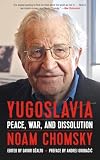
Reading Noam Chomsky's analyses of political power is always recommendable. Regardless of what one may think of him, his oft-piercing words penetrate the cobwebs that demagogues and kleptocracies throw out in order to maintain their own status quo.
When I was in high school, the war in Yugoslavia broke out. My dad's from Yugoslavia and our family sported a Yugoslavian surname, which lead to a bunch of kids coming up to me, asking which part of Yugoslavia I came from. Who do you side with? show more Even though I knew very little of the past conflicts that had affected Yugoslavia not only recently at the time, but since the start of the 20th century, it was clear to me that this was a war that was reported in disingenous ways via mainstream media. I read some things, and then heard from my cousins via ICQ and the likes; while the media gaslighted people into thinking that Serbs were basically atrocious murderers, my cousin told me of NATO missiles that precision-bombed apartments belonging to resistance leaders.
I wish I'd had this book as the war went on.
This is not a hagiography, or any kind of finger-pointer, but rather a two-pronged book:
The first part is not written by Chomsky, but mainly by Davor Džalto (Editor) and Andrej Grubacic (Preface), who have constructed a clear-cut view of Yugoslavia from before, during, and after World War II; it helps a lot to understand the complex dealings within Yugoslavia, not to mention how they differed from their (at-times) allieds, e.g. the Soviet Union.
The second part consists of a few articles written by and interviews with Noam Chomsky, most of which have appeard in the illustrious Z Magazine. Chomsky lays into NATO as he should, and he basically uses NATO statements to show how they went against the UN in every way, went against NATO member states (e.g. Greece and Italy) in attacking parts of Yugoslavia, and also what most probably lays behind the decisions of NATO; Chomsky radiates at his very best when he investigates the moral claims by the likes of Bill Clinton and NATO commanders, where they used "we couldn't very well just have stood by and watched this happen" to explain something as horrific as their 78-day-long bombing of Yugoslavia, while doing nothing in countries where NATO could have stopped sheer atrocities.
It would be hard to criticise the makers of this book for anything, really; I found this book both enlightening and uplifting, as one has to understand our history in order to do better. Still, this will probably have no impact whatsoever on US foreign policy which has only escalated and progressed since.
To those who have followed mainstream media for news on the war in Yugoslavia this book will most likely be eye-opening; to me it was, especially where finding out how both the American and British government escalated the killings and why, and also of how mainstream media chose to not be more than stenographers to government.
Examples from the book:
All in all, a very needed book. show less
When I was in high school, the war in Yugoslavia broke out. My dad's from Yugoslavia and our family sported a Yugoslavian surname, which lead to a bunch of kids coming up to me, asking which part of Yugoslavia I came from. Who do you side with? show more Even though I knew very little of the past conflicts that had affected Yugoslavia not only recently at the time, but since the start of the 20th century, it was clear to me that this was a war that was reported in disingenous ways via mainstream media. I read some things, and then heard from my cousins via ICQ and the likes; while the media gaslighted people into thinking that Serbs were basically atrocious murderers, my cousin told me of NATO missiles that precision-bombed apartments belonging to resistance leaders.
I wish I'd had this book as the war went on.
This is not a hagiography, or any kind of finger-pointer, but rather a two-pronged book:
The first part is not written by Chomsky, but mainly by Davor Džalto (Editor) and Andrej Grubacic (Preface), who have constructed a clear-cut view of Yugoslavia from before, during, and after World War II; it helps a lot to understand the complex dealings within Yugoslavia, not to mention how they differed from their (at-times) allieds, e.g. the Soviet Union.
The second part consists of a few articles written by and interviews with Noam Chomsky, most of which have appeard in the illustrious Z Magazine. Chomsky lays into NATO as he should, and he basically uses NATO statements to show how they went against the UN in every way, went against NATO member states (e.g. Greece and Italy) in attacking parts of Yugoslavia, and also what most probably lays behind the decisions of NATO; Chomsky radiates at his very best when he investigates the moral claims by the likes of Bill Clinton and NATO commanders, where they used "we couldn't very well just have stood by and watched this happen" to explain something as horrific as their 78-day-long bombing of Yugoslavia, while doing nothing in countries where NATO could have stopped sheer atrocities.
It would be hard to criticise the makers of this book for anything, really; I found this book both enlightening and uplifting, as one has to understand our history in order to do better. Still, this will probably have no impact whatsoever on US foreign policy which has only escalated and progressed since.
To those who have followed mainstream media for news on the war in Yugoslavia this book will most likely be eye-opening; to me it was, especially where finding out how both the American and British government escalated the killings and why, and also of how mainstream media chose to not be more than stenographers to government.
Examples from the book:
This is by no means the only impressive feat of doctrinal management. Another is the debate over NATO’s alleged “double standards,” revealed by its “looking away” from other humanitarian crises, or “doing too little” to prevent them. Participants in the debate must agree that NATO was guided by humanitarian principles in Kosovo—precisely the question at issue. That aside, the Clinton administration did not “look away” or “do too little” in the face of atrocities in East Timor, or Colombia, or many other places. Rather, along with its allies, it chose to escalate the atrocities, often vigorously and decisively. Perhaps the case of Turkey—within NATO and under European jurisdiction—is the most relevant in the present connection. Its ethnic cleansing operations and other crimes, enormous in scale, were carried out with a huge flow of military aid from the Clinton administration, increasing as atrocities mounted. They have also virtually disappeared from history. There was no mention of them at the fiftieth anniversary meeting of NATO in April 1999, held under the shadow of ethnic cleansing—a crime that cannot be tolerated near the borders of NATO, participants and commentators declaimed; only within its borders, where the crimes are to be expedited. With rare exceptions, the press has kept to occasional apologetics, though the participation of Turkish forces in the Kosovo campaign was highly praised. More recent debate over the problems of “humanitarian intervention” evades the crucial U.S. role in the Turkish atrocities or ignores the topic altogether.
NATO chose to reject diplomatic options that were not exhausted and to launch a military campaign that had terrible consequences for Kosovar Albanians, as anticipated. Other consequences are of little concern in the West, including the devastation of the civilian economy of Serbia by military operations that severely violate the laws of war. Though the matter was brought to the War Crimes Tribunal long ago, it is hard to imagine that it will be seriously addressed. For similar reasons, there is little likelihood that the Tribunal will pay attention to its 150-page “Indictment Operation Storm: A Prima Facie Case,” reviewing the war crimes committed by Croatian forces that drove some two hundred thousand Serbs from Krajina in August 1995, with crucial U.S. involvement that elicited “almost total lack of interest in the US press and in the US Congress,” New York Times Balkans correspondent David Binder observes.
The suffering of Kosovars did not end with the arrival of the NATO (KFOR) occupying army and the UN mission. Though billions of dollars were readily available for bombing, as of October the U.S. “has yet to pay any of the $37.9 million assessed for the start-up costs of the United Nations civilian operation in Kosovo.” By November, “the US Office of Foreign Disaster Assistance has yet to distribute any heavy-duty kits and is only now bringing lumber” for the winter shelter program in Kosovo; the UNHCR and EU humanitarian agency ECHO have also “been dogged with criticism for delays and lack of foresight.” The current shortfall for the UN mission is “the price of half a day’s bombing,” an embittered senior UN official said, and without it “this place will fail,” to the great pleasure of Milošević. A November donors’ conference of Western governments pledged only $88 million to cover the budget of the UN mission in Kosovo but pledged $1 billion in aid for reconstruction for the next year—public funds that will be transferred to the pockets of private contractors, if there is some resolution of the controversies within NATO about how the contracts are to be distributed. In mid-December the UN mission again pleaded for funds for teachers, police officers, and other civil servants, to little effect.
KFOR officers report that their orders are to disregard crimes: “Of course it’s mad,” a French commander said, “but those are the orders, from NATO, from above.” NATO forces also “seem completely indifferent” to attacks by “armed ethnic Albanian raiders” across the Serb-Kosovo border “to terrorize border settlements, steal wood or livestock, and, in some cases, to kill,” leaving towns abandoned. Current indications are that Kosovo under NATO occupation has reverted to what was developing in the early 1980s, after the death of Tito, when nationalist forces undertook to create an “ethnically clean Albanian republic,” taking over Serb lands, attacking churches, and engaging in “protracted violence” to attain the goal of an “ethnically pure” Albanian region, with “almost weekly incidents of rape, arson, pillage and industrial sabotage, most seemingly designed to drive Kosovo’s remaining indigenous Slavs … out of the province.” This “seemingly intractable” problem, another phase in an ugly history of intercommunal violence, led to Milošević’s characteristically brutal response, withdrawing Kosovo’s autonomy and the heavy federal subsidies on which it depended and imposing an “Apartheid” regime. Kosovo may also come to resemble Bosnia, “a den of thieves and tax cheats” with no functioning economy, dominated by “a wealthy criminal class that wields enormous political influence and annually diverts hundreds of millions of dollars in potential tax revenue to itself.” Much worse may be in store as independence for Kosovo becomes entangled in pressures for a “greater Albania,” with dim portents.
There are other winners. At the war’s end, the business press described “the real winners” as Western military industry, meaning high-tech industry generally. Moscow is looking forward to a “banner year for Russian weapons exports” as “the world is rearming apprehensively largely thanks to NATO’s Balkans adventure,” seeking a deterrent, as widely predicted during the war. More important, the U.S. was able to enforce its domination over the strategic Balkans region, displacing EU initiatives at least temporarily, a primary reason for the insistence that the operation be in the hands of NATO, a U.S. subsidiary. A destitute Serbia remains the last holdout, probably not for long.
Something else interesting happened after that. Yugoslavia brought the case to the World Court. The court accepted it and deliberated for a couple of years, but what is interesting is that the U.S. excused itself from the case, and the court accepted the excuse. Why? Because Yugoslavia had mentioned the Genocide Convention, and the U.S. did sign the Genocide Convention (after forty years). It ratified it, but with a reservation, saying it was “inapplicable to the United States.” In other words, the U.S. is entitled to commit genocide. That was the case that the U.S. Justice Department of President Clinton brought to the World Court, and the court had to agree. If a country does not accept World Court jurisdiction, it has to be excluded, so the U.S. was excluded from the trial on the grounds that it grants itself the right to commit genocide. Do you think this was reported here? Does any of this get reported?
All in all, a very needed book. show less

I started reading this book expecting something different from what it turned out to be, but it was informative regardless. I expected it to be more descriptive of anarchism and more contextual regarding the matters it discussed, but it was easy to fill those blanks for most part with Noam Chomsky's style of narration.
In this book, Chomsky argues the case for the anarchist ideology by firstly dismissing the notion that just because it hasn't been fully implemented doesn't mean it isn't show more practicable, and later by giving historical examples, mostly from the industrial and agricultural collectives established in Catalonia during the Spanish Civil War. He consolidates his case by presenting various citations for each claim and debunking various unfounded claims against those anarchist societies, especially those made by author Gabriel Jackson in his award-winning work The Spanish Republic and the Civil War 1931–39.
Everytime I listen to Noam Chomsky, it is easy to notice how calm and collected his demeanor is, and one can almost sense that calmness even in his written works. Every argument he makes in negation of Gabriel Jackson's work is undoubtedly well constructed, but what makes it commendable is that one can sense absolutely no hatred in Chomsky's arguments. For someone as clearheaded and radicalized as him, he has the ability to radicalize his readers without losing his cool which makes this, and all of his other works a uniquely positive experience despite the generally negative scope of his research.
This book urged me to find out more about the Spanish Civil War from the anarchist perspective, and based on this read, I can safely say that Noam Chomsky is perhaps the only scholar whose book I would blindly pick to read despite having zero context about it. show less
In this book, Chomsky argues the case for the anarchist ideology by firstly dismissing the notion that just because it hasn't been fully implemented doesn't mean it isn't show more practicable, and later by giving historical examples, mostly from the industrial and agricultural collectives established in Catalonia during the Spanish Civil War. He consolidates his case by presenting various citations for each claim and debunking various unfounded claims against those anarchist societies, especially those made by author Gabriel Jackson in his award-winning work The Spanish Republic and the Civil War 1931–39.
Everytime I listen to Noam Chomsky, it is easy to notice how calm and collected his demeanor is, and one can almost sense that calmness even in his written works. Every argument he makes in negation of Gabriel Jackson's work is undoubtedly well constructed, but what makes it commendable is that one can sense absolutely no hatred in Chomsky's arguments. For someone as clearheaded and radicalized as him, he has the ability to radicalize his readers without losing his cool which makes this, and all of his other works a uniquely positive experience despite the generally negative scope of his research.
This book urged me to find out more about the Spanish Civil War from the anarchist perspective, and based on this read, I can safely say that Noam Chomsky is perhaps the only scholar whose book I would blindly pick to read despite having zero context about it. show less
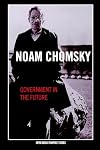
In 1970, Chomsky gave a lecture in New York that summarised his basic political philosophy, This pamphlet is that lecture and it stands as a basic manifesto for libertarian socialism (or anarcho-socialism if you prefer the term).
His analysis of imperial capitalism not only stands the test of time but applies as much to the current bout of destructive mania (the ridiculous economic war on Russia) as it does to the high point of American capitalism during the First Cold War. We are now well show more into the Second Cold War.
It could be said, stealing Marx's clothes, that the First Cold War was tragedy while the Second Cold War looks set to be farce as the West starts cutting its own throat by triggering an inflationary spiral and possible stagnation just to hold on to a distant province ... but there we have it.
However, while persuasive as an analysis of a broken system that persists even as its behaviours predict its own eventual collapse (Chomsky is equally critical of Sovietism and would be of its bastard post-Soviet Russian nationalist offspring), his solution does not convince.
Authoritarian and managerial late liberal capitalism and its own bastard offspring - stakeholder capitalism - may be morally, culturally and increasingly administratively and organisationally bankrupt but libertarian socialism is a moral ideal and not a course of action.
It is not inconsistent to accept the analysis without accepting the solution. Perhaps there is no solution. We have to face the fact that this is what we are as a species - individual aspirations locked up in processes and a system that none of us can control, not even the beneficiaries.
One ends up with a pessimistically conservative assessment of our species, a cold and reasoned observation that it is incapable of re-organising itself without creating more problems than it solves. The human world is far too complex even for very intelligent thinkers to manage.
It was not an accident that the Soviet Revolution found itself having to resort to terror and bureaucracy to survive and then build an economic base at the expense of a generation. It had enemies but it also attracted sociopaths, time-servers and the naive like moths to a flame.
The essence of our condition is that we are not and can never be in control of our condition because we are the perpetual struggle of millions, billions on a global scale, of mutually unknowable minds acting and then reacting to the actions of others. There will always be disruption.
This gives us systems that move as uncontrollable processes within pre-set structures that judder into collapse and chaos or into tyranny, brutality and sclerosis while most of us duck and dive with no more ambition than to survive. The winners are few, the losers many, most are survivors.
Strategically, if you are serious about creating something Left in the world, Lenin probably got it about as right as anyone will ever get it and we know how that turned out. Today, what we get instead is a sort of pseudo-Leftism, largely rhetorical, which changes little except 'culture'.
Probably the only way forward is to recognise that structures of order cannot suddenly be transformed into anything new very quickly because they are there for a reason and that there is probably no alternative but the slow business of persuasion to allow Leftists to control the State.
But which Leftists? I don't mind Chomsky having a go - he is a good sort - but I look at the naive idealists, urban intellectuals and excitable activists who pass for the Left and I would be reluctant to have them in charge of anything more complex than latrine duties.
The real problems lie elsewhere - not in the people who are justifiably nervous of intellectuals and idealists but in the anti-democratic structures of the vehicles necessary to control the state (political parties) and in the lack of any genuinely libertarian socialist political parties.
Beyond that, we have the inability of intellectuals and activists to abandon their narcissistic attempts to manipulate populations into right thought, right speech and right behaviour and understand the real desires and needs of the voters (the gap which populists are now filling).
My own pessimism is not driven by some arrogant and negative view of the 'masses' (quite the contrary, they are the lodestone of action) or belief in the power of the system (after all our leaders are provenly consistently inept) but in the utter stupidity of contemporary Leftists.
Anyway, be all that as it may, the pamphlet is worth reading. It comes from a highly intelligent and decent human being who sees the world as it really is even if he struggles to come up with a solution that could get even half way towards changing it. show less
His analysis of imperial capitalism not only stands the test of time but applies as much to the current bout of destructive mania (the ridiculous economic war on Russia) as it does to the high point of American capitalism during the First Cold War. We are now well show more into the Second Cold War.
It could be said, stealing Marx's clothes, that the First Cold War was tragedy while the Second Cold War looks set to be farce as the West starts cutting its own throat by triggering an inflationary spiral and possible stagnation just to hold on to a distant province ... but there we have it.
However, while persuasive as an analysis of a broken system that persists even as its behaviours predict its own eventual collapse (Chomsky is equally critical of Sovietism and would be of its bastard post-Soviet Russian nationalist offspring), his solution does not convince.
Authoritarian and managerial late liberal capitalism and its own bastard offspring - stakeholder capitalism - may be morally, culturally and increasingly administratively and organisationally bankrupt but libertarian socialism is a moral ideal and not a course of action.
It is not inconsistent to accept the analysis without accepting the solution. Perhaps there is no solution. We have to face the fact that this is what we are as a species - individual aspirations locked up in processes and a system that none of us can control, not even the beneficiaries.
One ends up with a pessimistically conservative assessment of our species, a cold and reasoned observation that it is incapable of re-organising itself without creating more problems than it solves. The human world is far too complex even for very intelligent thinkers to manage.
It was not an accident that the Soviet Revolution found itself having to resort to terror and bureaucracy to survive and then build an economic base at the expense of a generation. It had enemies but it also attracted sociopaths, time-servers and the naive like moths to a flame.
The essence of our condition is that we are not and can never be in control of our condition because we are the perpetual struggle of millions, billions on a global scale, of mutually unknowable minds acting and then reacting to the actions of others. There will always be disruption.
This gives us systems that move as uncontrollable processes within pre-set structures that judder into collapse and chaos or into tyranny, brutality and sclerosis while most of us duck and dive with no more ambition than to survive. The winners are few, the losers many, most are survivors.
Strategically, if you are serious about creating something Left in the world, Lenin probably got it about as right as anyone will ever get it and we know how that turned out. Today, what we get instead is a sort of pseudo-Leftism, largely rhetorical, which changes little except 'culture'.
Probably the only way forward is to recognise that structures of order cannot suddenly be transformed into anything new very quickly because they are there for a reason and that there is probably no alternative but the slow business of persuasion to allow Leftists to control the State.
But which Leftists? I don't mind Chomsky having a go - he is a good sort - but I look at the naive idealists, urban intellectuals and excitable activists who pass for the Left and I would be reluctant to have them in charge of anything more complex than latrine duties.
The real problems lie elsewhere - not in the people who are justifiably nervous of intellectuals and idealists but in the anti-democratic structures of the vehicles necessary to control the state (political parties) and in the lack of any genuinely libertarian socialist political parties.
Beyond that, we have the inability of intellectuals and activists to abandon their narcissistic attempts to manipulate populations into right thought, right speech and right behaviour and understand the real desires and needs of the voters (the gap which populists are now filling).
My own pessimism is not driven by some arrogant and negative view of the 'masses' (quite the contrary, they are the lodestone of action) or belief in the power of the system (after all our leaders are provenly consistently inept) but in the utter stupidity of contemporary Leftists.
Anyway, be all that as it may, the pamphlet is worth reading. It comes from a highly intelligent and decent human being who sees the world as it really is even if he struggles to come up with a solution that could get even half way towards changing it. show less
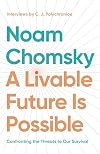
Noam Chomsky has always been more than generous with his time. He has been constantly giving interviews, seemingly to all comers (including me), from academics, to writers, to researchers, to a graphic novelist and several filmmakers. He has had a lot to say, and all of it has always been eye-opening and mind expanding.
This latest effort seems more compact, more straightforward, more direct, and much more damning. On climate change, he begins one answer with: “An independent observer show more looking at the world today might well conclude that it is being run by the fossil fuel and military industries, or by lunatics. Or both.” That directness, that clarity, that perspective is what has been missing from the conversation.
The book’s rather Pollyanna-title is A Livable Future Is Possible, when it really is all about how a livable future is all but impossible. There is just too much standing directly in the way. And it’s not moving.
It is written interviews, in which CJ Polychroniou once again provides the provocative questions, and Chomsky provides detailed, written answers. It reads much more easily and faster than transcripts do, and allows the participants to refer back to things that they’ve already said, or which are relevant, by simply saying “as mentioned above.” The conversations are from 2022 and 2023. Things are not better in 2024. And Noam Chomsky is 95 and bedridden.
The two elephants in this particular room are nuclear war and climate change. Both have the ability to terminate civilization as we know it, and both are on the verge of taking place. As Chomsky points out several times, everything else pales beside them. Nothing else matters. At several points, Robert Pollin, who studies and works in climate change remediation and management, adds needed expertise, depth and direct experience on the climate miasma.
On the positive side, Chomsky admits that humans have overpopulated the planet – but for once there is an easy solution. It’s called education, particularly of women. Given the knowledge and the choice, women would regulate the size and timing of their families. That remains a possibility for a brighter future, but for the countervailing efforts all over the world, including in the USA. I did not perceive even a hint of optimism that it was well on its way. Because if anything, we are backsliding.
On the much-criticized IPCC Reports, Chomsky points out they are consensus reports among the world’s top scientists. This, he says, means they tend of necessity to err on the side of understatement, as we are discovering much to our horror. The rains are heavier, the fires fiercer, the temperatures hotter and the damage to crops far worse than predicted for this early stage of the decline.
And nothing at the political level is even remotely capable of changing it. The “landmark” IRA law of Joe Biden has done nothing to decrease the flow of carbon into the atmosphere. It continues to increase, making a(n expected) joke of the stated goals for 2030 and 2050. There is a solution. It requires just 2.5% of GDP globally to build out alternative systems and enforce conversion to them. This however, is an unacceptable burden for the rich, who could easily finance it all if taxed to do so. But politicians would much rather kick the can down the road and let future lawmakers deal with multiple times that cost in what will by then be a irreversibly losing effort. A very long period where funding will of necessity be for damage control instead of the then insanely unaffordable corrective systems.
For Chomsky of course, this is all class warfare as usual. The obnoxiously rich are forever beating up on the poor and the emerging middle class. He cites Adam Smith repeatedly: “All for us and none for anyone else.” It’s nothing new: still as short-sighted and self-defeating as ever.
Probably the biggest attack in the book is reserved for Senator Joe Manchin of West Virginia, famous for coal mining (making Manchin’s fortune). There are only about 40,000 in the state employed in fossil fuels or ancillary industries. What with job switching, retirement and so on, only about 1400 (0.2%) of the labor force need aid in an energy transition each year. Meanwhile, the alternative energy sector is already hiring 25,000 a year in West Virginia. Similarly in other states, it will cost about 0.02% of the state GDP to make the transition to alternative energy, if it is done now. People like Manchin, representing the multibillionaires of fossil fuels, will do anything to prevent that, sacrificing the entire planet if necessary. He stops any legislation from passing the senate. The result is stagnancy in lawmaking. And imminent danger for all.
Meanwhile, Pollin checks in on technological solutions: there is only one that works at scale – planting trees. But of course, we are going the opposite way, turning the Amazon rainforest from a carbon sink to a carbon producer (as of summer, 2024). Pollin, just as anyone who surveys the situation, knows that none of the technologies scales to levels needed to reverse the overload of carbon. Most don’t even work at all. All are way too costly, and none of them can lay claim to being the silver bullet. There are no new technologies that work at the rates needed. The best new carbon removal technology can remove in one year what we produce every 15 minutes. Trees are the only viable answer.
On fighting in Ukraine while the world is self-destructing with climate change, Chomsky says: “Escalating the war in Ukraine in the face of such realities reaches levels of imbecility that are hard to capture in words.”
This a good transition to issue number two – a (supposedly) local nuclear war. The farther we get from the first atomic blasts in Japan in WWII, the less we fear a return engagement. It is now a common expectation that nuclear war will occur, and soon. Too many players have the necessary weapons, too many wild people hold the levers of power, and we have forgotten the horrors and pledges to never let it happen again. Because that was 80 years ago – ancient history. The infamous Doomsday Clock sits at a minute and half from midnight. As long as it occurs on the other side of the world, we’re good with it. Tick away.
So Putin feels free to threaten Ukraine with it unless he is allowed to win the war. Israel of course, is just itching for the right provocation, or what have they been building and stocking for? India and Pakistan seem to be just frustrated waiting to do it, and North Korea is ready to take on the entire rest of the world. Who goes first is a coin toss.
And then there’s insanity. Chomsky sees neoliberalism as the breeding ground for the collapse of society: “…the collapse of the social order, yielding a breeding ground of extremism, violence, hatred, search for scapegoats – and fertile territory for authoritarian figures who can posture as the savior. And we’re on the road to a form of neofascism.” Which is the last thing we need facing these two giant existential threats. But to be even more piercing: “In this and many other respects, the US remains in many ways a pre-modern society, easily attracted to well-crafted ‘culture wars.’” He calls the current US Supreme Court’s decisions “medieval proclivities”, compelling adherence to religious doctrine while undermining what little progress was specified in the constitution. And this is what is leading the world.
While climate change and nuclear war are being triggered, the US is instead focusing on surrounding Russia and China with hostile neighbors. It is actively trying to expand NATO (a clear breach of its direct promise to Gorbachev when he agreed to let the USSR unwind) and a new Asian edition starring Japan.
It’s so crazy that official documents, such as a 1995 Stratcomm document, calls on the USA to project a national persona of “irrationality and vindictiveness” with some elements “out of control.” This, in all seriousness, is referred to as the “madman doctrine” and the USA has been using it to juggle alliances, isolate perceived enemies and spread its own hypocrisy all over the world. No one else can break the rules the US makes, while the US continuously ignores them.
It was in 1962 that comedian Mort Sahl said that “Anyone who holds a consistent foreign policy position in this country must eventually be tried for treason.” I wonder if Chomsky knows that one. But I digress.
Back at insanity, the USA has been all about limiting democracy and silencing the citizenry, as history has shown repeatedly. “In short, the population … are ‘spectators’ not ‘participants’ in accord with liberal democratic theory.” Ordinary protestors are considered to be “special interests” (though most people would consider business lobbyists as the real special interests. Not government, though): “They are to be ‘put in their place’ so that ample room is left for the national interest that is upheld by the ‘masters of mankind’“ ie. the business class.
And finally, his 2022 view on Trump is that he greatly enhances the two main threats of climate change and nuclear war. On his running again in 2024: “The idea that the future of the world might soon again be in such hands almost surpasses belief.”
Meanwhile, neither of these two crucial issues factor in the 2024 election. Of the 28 top issues, climate change ranks 29th. Nuclear war is simply not discussed at all. America is far too busy with book banning, gun carrying, the price of gasoline and a plan to gut America of all government.
The book has two additional takeaways for me. First and foremost: this might be the last new publication of Chomsky’s thoughts. He has had a crippling stroke and is bedridden in Sao Paulo, Brazil. He seems to have the ability to move his left arm, but that’s about it. Incredibly, at least to an American, the president of Brazil came to visit him there. Lula gushed that he owed his whole life to Chomsky, whom he read as a teenager. It transformed him, his outlook, his approach and his determination. It is not feasible to imagine a Trump or a Biden paying a visit to the bedside of this globally respected public intellectual at all, ever, under any circumstances. That, as much as anything, sums up what is wrong with the world.
The second takeaway is the desperation in the title. The entire book is about how we’ve come to this point, with the crime, greed and dishonesty that is the human world. There is a livable future possible, but to get there, we have to walk a tightrope between the Twin Towers, ten minutes before the first airliner hits the first tower. Want to put money on that?
David Wineberg show less
This latest effort seems more compact, more straightforward, more direct, and much more damning. On climate change, he begins one answer with: “An independent observer show more looking at the world today might well conclude that it is being run by the fossil fuel and military industries, or by lunatics. Or both.” That directness, that clarity, that perspective is what has been missing from the conversation.
The book’s rather Pollyanna-title is A Livable Future Is Possible, when it really is all about how a livable future is all but impossible. There is just too much standing directly in the way. And it’s not moving.
It is written interviews, in which CJ Polychroniou once again provides the provocative questions, and Chomsky provides detailed, written answers. It reads much more easily and faster than transcripts do, and allows the participants to refer back to things that they’ve already said, or which are relevant, by simply saying “as mentioned above.” The conversations are from 2022 and 2023. Things are not better in 2024. And Noam Chomsky is 95 and bedridden.
The two elephants in this particular room are nuclear war and climate change. Both have the ability to terminate civilization as we know it, and both are on the verge of taking place. As Chomsky points out several times, everything else pales beside them. Nothing else matters. At several points, Robert Pollin, who studies and works in climate change remediation and management, adds needed expertise, depth and direct experience on the climate miasma.
On the positive side, Chomsky admits that humans have overpopulated the planet – but for once there is an easy solution. It’s called education, particularly of women. Given the knowledge and the choice, women would regulate the size and timing of their families. That remains a possibility for a brighter future, but for the countervailing efforts all over the world, including in the USA. I did not perceive even a hint of optimism that it was well on its way. Because if anything, we are backsliding.
On the much-criticized IPCC Reports, Chomsky points out they are consensus reports among the world’s top scientists. This, he says, means they tend of necessity to err on the side of understatement, as we are discovering much to our horror. The rains are heavier, the fires fiercer, the temperatures hotter and the damage to crops far worse than predicted for this early stage of the decline.
And nothing at the political level is even remotely capable of changing it. The “landmark” IRA law of Joe Biden has done nothing to decrease the flow of carbon into the atmosphere. It continues to increase, making a(n expected) joke of the stated goals for 2030 and 2050. There is a solution. It requires just 2.5% of GDP globally to build out alternative systems and enforce conversion to them. This however, is an unacceptable burden for the rich, who could easily finance it all if taxed to do so. But politicians would much rather kick the can down the road and let future lawmakers deal with multiple times that cost in what will by then be a irreversibly losing effort. A very long period where funding will of necessity be for damage control instead of the then insanely unaffordable corrective systems.
For Chomsky of course, this is all class warfare as usual. The obnoxiously rich are forever beating up on the poor and the emerging middle class. He cites Adam Smith repeatedly: “All for us and none for anyone else.” It’s nothing new: still as short-sighted and self-defeating as ever.
Probably the biggest attack in the book is reserved for Senator Joe Manchin of West Virginia, famous for coal mining (making Manchin’s fortune). There are only about 40,000 in the state employed in fossil fuels or ancillary industries. What with job switching, retirement and so on, only about 1400 (0.2%) of the labor force need aid in an energy transition each year. Meanwhile, the alternative energy sector is already hiring 25,000 a year in West Virginia. Similarly in other states, it will cost about 0.02% of the state GDP to make the transition to alternative energy, if it is done now. People like Manchin, representing the multibillionaires of fossil fuels, will do anything to prevent that, sacrificing the entire planet if necessary. He stops any legislation from passing the senate. The result is stagnancy in lawmaking. And imminent danger for all.
Meanwhile, Pollin checks in on technological solutions: there is only one that works at scale – planting trees. But of course, we are going the opposite way, turning the Amazon rainforest from a carbon sink to a carbon producer (as of summer, 2024). Pollin, just as anyone who surveys the situation, knows that none of the technologies scales to levels needed to reverse the overload of carbon. Most don’t even work at all. All are way too costly, and none of them can lay claim to being the silver bullet. There are no new technologies that work at the rates needed. The best new carbon removal technology can remove in one year what we produce every 15 minutes. Trees are the only viable answer.
On fighting in Ukraine while the world is self-destructing with climate change, Chomsky says: “Escalating the war in Ukraine in the face of such realities reaches levels of imbecility that are hard to capture in words.”
This a good transition to issue number two – a (supposedly) local nuclear war. The farther we get from the first atomic blasts in Japan in WWII, the less we fear a return engagement. It is now a common expectation that nuclear war will occur, and soon. Too many players have the necessary weapons, too many wild people hold the levers of power, and we have forgotten the horrors and pledges to never let it happen again. Because that was 80 years ago – ancient history. The infamous Doomsday Clock sits at a minute and half from midnight. As long as it occurs on the other side of the world, we’re good with it. Tick away.
So Putin feels free to threaten Ukraine with it unless he is allowed to win the war. Israel of course, is just itching for the right provocation, or what have they been building and stocking for? India and Pakistan seem to be just frustrated waiting to do it, and North Korea is ready to take on the entire rest of the world. Who goes first is a coin toss.
And then there’s insanity. Chomsky sees neoliberalism as the breeding ground for the collapse of society: “…the collapse of the social order, yielding a breeding ground of extremism, violence, hatred, search for scapegoats – and fertile territory for authoritarian figures who can posture as the savior. And we’re on the road to a form of neofascism.” Which is the last thing we need facing these two giant existential threats. But to be even more piercing: “In this and many other respects, the US remains in many ways a pre-modern society, easily attracted to well-crafted ‘culture wars.’” He calls the current US Supreme Court’s decisions “medieval proclivities”, compelling adherence to religious doctrine while undermining what little progress was specified in the constitution. And this is what is leading the world.
While climate change and nuclear war are being triggered, the US is instead focusing on surrounding Russia and China with hostile neighbors. It is actively trying to expand NATO (a clear breach of its direct promise to Gorbachev when he agreed to let the USSR unwind) and a new Asian edition starring Japan.
It’s so crazy that official documents, such as a 1995 Stratcomm document, calls on the USA to project a national persona of “irrationality and vindictiveness” with some elements “out of control.” This, in all seriousness, is referred to as the “madman doctrine” and the USA has been using it to juggle alliances, isolate perceived enemies and spread its own hypocrisy all over the world. No one else can break the rules the US makes, while the US continuously ignores them.
It was in 1962 that comedian Mort Sahl said that “Anyone who holds a consistent foreign policy position in this country must eventually be tried for treason.” I wonder if Chomsky knows that one. But I digress.
Back at insanity, the USA has been all about limiting democracy and silencing the citizenry, as history has shown repeatedly. “In short, the population … are ‘spectators’ not ‘participants’ in accord with liberal democratic theory.” Ordinary protestors are considered to be “special interests” (though most people would consider business lobbyists as the real special interests. Not government, though): “They are to be ‘put in their place’ so that ample room is left for the national interest that is upheld by the ‘masters of mankind’“ ie. the business class.
And finally, his 2022 view on Trump is that he greatly enhances the two main threats of climate change and nuclear war. On his running again in 2024: “The idea that the future of the world might soon again be in such hands almost surpasses belief.”
Meanwhile, neither of these two crucial issues factor in the 2024 election. Of the 28 top issues, climate change ranks 29th. Nuclear war is simply not discussed at all. America is far too busy with book banning, gun carrying, the price of gasoline and a plan to gut America of all government.
The book has two additional takeaways for me. First and foremost: this might be the last new publication of Chomsky’s thoughts. He has had a crippling stroke and is bedridden in Sao Paulo, Brazil. He seems to have the ability to move his left arm, but that’s about it. Incredibly, at least to an American, the president of Brazil came to visit him there. Lula gushed that he owed his whole life to Chomsky, whom he read as a teenager. It transformed him, his outlook, his approach and his determination. It is not feasible to imagine a Trump or a Biden paying a visit to the bedside of this globally respected public intellectual at all, ever, under any circumstances. That, as much as anything, sums up what is wrong with the world.
The second takeaway is the desperation in the title. The entire book is about how we’ve come to this point, with the crime, greed and dishonesty that is the human world. There is a livable future possible, but to get there, we have to walk a tightrope between the Twin Towers, ten minutes before the first airliner hits the first tower. Want to put money on that?
David Wineberg show less
Lists
Five star books (1)
Read These Too (1)
1960s (1)
Climate Change (1)
Political Theory (1)
Blindpill (1)
South End Press (1)
Awards


You May Also Like


Associated Authors
Statistics
- Works
- 592
- Also by
- 64
- Members
- 47,381
- Popularity
- #336
- Rating
- 3.8
- Reviews
- 430
- ISBNs
- 1,830
- Languages
- 34
- Favorited
- 158


