
David Pears (1921–2009)
Author of Wittgenstein
About the Author
Series
Works by David Pears
The False Prison: A Study of the Development of Wittgenstein's Philosophy (Volume 1) (1987) 72 copies
The False Prison: A Study of the Development of Wittgenstein's Philosophy (Volume 2) (1988) 54 copies, 1 review
Associated Works
Tagged
Common Knowledge
- Canonical name
- Pears, David
- Legal name
- Pears, David Francis
- Birthdate
- 1921-08-08
- Date of death
- 2009-07-01
- Gender
- male
- Education
- University of Oxford (Balliol College)
- Occupations
- philosopher
professor - Organizations
- University of Oxford (Christ Church)
Royal Artillery (WWII) - Nationality
- England
UK - Birthplace
- London, England, UK
- Place of death
- Oxford, Oxfordshire, England, UK
- Associated Place (for map)
- England, UK
Members
Reviews
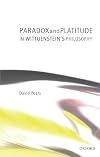
I've tried to read the Tractatus before, and couldn't find much in it that wasn't either a proposition of common sense, or else completely impenetrable. I didn't read the whole thing, as I couldn't bear to, and haven't got round to reading any of his other books.
This book has helped me understand some of the interesting ideas of Wittgenstein, and it seems that much of his work after the Tractatus was more coherent. The chapter on logical necessity was useful, and was a relief in that it show more discussed something other than mere language. It is important to be able to distinguish between necessary truths and contingent truths if we are avoid the misuse of logic.
I perhaps have overlooked something very important, but I still can't quite understand how philosophy of language, as Wittgenstein sometimes dealt with it, adds much to philosophy as a whole. Perhaps this is unfair, as he does address some questions well, with the private language argument, and his dealing with solipsism, but they are not questions that I would lose sleep over if they went unanswered. Language is a means to an end, we use it to represent thoughts, ideas, and objects, to communicate with other people, so I would take a more pragmatic approach to language than Wittgenstein. Language as it is usually works for most things that we want to discuss, and when it fails there are other tools to that can be implemented. His claim that “I” refers to nothing seems to be provocative to the point of absurdity, and it is this sort of thing that the paradox refers to in the title. It seems to me a waste of breath to discuss this sort of thing, whether or not “I” refers to anything or not, it will not in any practical circumstance lead to confusion in the answering of serious philosophical questions. Wittgenstein had a sound understanding of logic, and knew the value of the tautology, but as Goedel showed, formal logic in some circumstances will not yield an answer. Language isn't something that needs to be logical down to the finest detail, and if we are to avoid talking in fruitless tautologies and paradoxes, we have to limit our use of logic to when it is actually needed. Some people view the world in a specialised way, and reading their books can help people who are less focused understand complicated issues more clearly, but we must realise that they have a limited point of view. Wittgenstein interpreted the world with a focus on language, and I think he misses out at least as much of importance as what he reveals.
Pears makes Wittgenstein a lot clearer than Wittgenstein would be on his own. It has encouraged me to read the Philosophical Investigations at some point, but I don't think I will attempt the Tractatus again in the near future. Perhaps Wittgenstein's paradoxes are important, but I can't help thinking that they just arise from him taking language too seriously. show less
This book has helped me understand some of the interesting ideas of Wittgenstein, and it seems that much of his work after the Tractatus was more coherent. The chapter on logical necessity was useful, and was a relief in that it show more discussed something other than mere language. It is important to be able to distinguish between necessary truths and contingent truths if we are avoid the misuse of logic.
I perhaps have overlooked something very important, but I still can't quite understand how philosophy of language, as Wittgenstein sometimes dealt with it, adds much to philosophy as a whole. Perhaps this is unfair, as he does address some questions well, with the private language argument, and his dealing with solipsism, but they are not questions that I would lose sleep over if they went unanswered. Language is a means to an end, we use it to represent thoughts, ideas, and objects, to communicate with other people, so I would take a more pragmatic approach to language than Wittgenstein. Language as it is usually works for most things that we want to discuss, and when it fails there are other tools to that can be implemented. His claim that “I” refers to nothing seems to be provocative to the point of absurdity, and it is this sort of thing that the paradox refers to in the title. It seems to me a waste of breath to discuss this sort of thing, whether or not “I” refers to anything or not, it will not in any practical circumstance lead to confusion in the answering of serious philosophical questions. Wittgenstein had a sound understanding of logic, and knew the value of the tautology, but as Goedel showed, formal logic in some circumstances will not yield an answer. Language isn't something that needs to be logical down to the finest detail, and if we are to avoid talking in fruitless tautologies and paradoxes, we have to limit our use of logic to when it is actually needed. Some people view the world in a specialised way, and reading their books can help people who are less focused understand complicated issues more clearly, but we must realise that they have a limited point of view. Wittgenstein interpreted the world with a focus on language, and I think he misses out at least as much of importance as what he reveals.
Pears makes Wittgenstein a lot clearer than Wittgenstein would be on his own. It has encouraged me to read the Philosophical Investigations at some point, but I don't think I will attempt the Tractatus again in the near future. Perhaps Wittgenstein's paradoxes are important, but I can't help thinking that they just arise from him taking language too seriously. show less


This book has TWO (2) juicy volumes, the gripping story of how Wittgenstein appeared to change his mind. Compare this with the work of William Warren Bartley, III, who wrote re: Wittgenstein and his issues

You May Also Like


Associated Authors
Statistics
- Works
- 23
- Also by
- 5
- Members
- 936
- Popularity
- #27,446
- Rating
- 4.0
- Reviews
- 4
- ISBNs
- 55
- Languages
- 8