
Lee Cole
Author of Groundskeeping
Works by Lee Cole
Kentucky 2 copies
Tagged
Common Knowledge
- Gender
- male
- Birthplace
- Kentucky, USA
- Associated Place (for map)
- Kentucky, USA
Members
Reviews
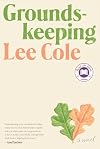
A beautifully written and very modern love story (which is not to say a romance) between two people who identify themselves by their craft, writing. Alma identifies that way because academic accomplishment is the pathway to love in her progressive upper middle-class Serbian immigrant family. She writes therefore she is. Owen identifies as a writer because otherwise despite his degree he is a groundskeeper, a minimum wage job, less economically successful than his fundamentalist, uneducated show more redneck family members whom he wishes to be superior to (for good reason.) Owen has aspirations and talent but no ability to rub elbows with the "right" people. Alma, Princeton educated, published (short stories) and recipient of residencies and fellowships knows how to interact with the "East Coast elites" (that phrase is used in the book to express the fear of Owen's parents that he will wander off into the heathen intelligentsia) but is kind of stuck in finishing her novel and in figuring out how to find a stable life as a literary darling whose only skill is teaching when the US no longer values higher education in the liberal arts. The central relationship also bows under the weight of the roadblocks to love that come in the form of dueling professional ambitions and from the art and craft of writing itself (is everything that happens in a relationship fair fodder for literary treatment?)
This is also a love (or really a love/hate) story between a man and his home state of Kentucky. That part of the story provides a framework to look at different kinds of Americans. Alma's DC suburb dwelling family prizes knowledge and intelligence, sometimes at the cost of offering unconditional love. Owen's deeply rural family thrives on willful ignorance, sort of hating the fact that Owen thinks about things rather than just forming opinions or simply doing. They don't understand his objection to a life of going to church and watching old movies. They think they are nice. They choose not to see that their blindered world view and support of a loathsome administration that grinds groups (Black people, immigrants, etc.) under their bootheels to appease the other ignorant people who are not nice but who vote is destroying everything good.
I enjoyed this quiet, smart, beautifully crafted novel. I found myself savoring the language, rereading passages that seemed to break more than a few rules in a way I imagine is uncomfortable for an Iowa Writers' Program guy. show less
This is also a love (or really a love/hate) story between a man and his home state of Kentucky. That part of the story provides a framework to look at different kinds of Americans. Alma's DC suburb dwelling family prizes knowledge and intelligence, sometimes at the cost of offering unconditional love. Owen's deeply rural family thrives on willful ignorance, sort of hating the fact that Owen thinks about things rather than just forming opinions or simply doing. They don't understand his objection to a life of going to church and watching old movies. They think they are nice. They choose not to see that their blindered world view and support of a loathsome administration that grinds groups (Black people, immigrants, etc.) under their bootheels to appease the other ignorant people who are not nice but who vote is destroying everything good.
I enjoyed this quiet, smart, beautifully crafted novel. I found myself savoring the language, rereading passages that seemed to break more than a few rules in a way I imagine is uncomfortable for an Iowa Writers' Program guy. show less
I am a child of the suburbs. My husband’s career took us into the inner city and middling-sized towns and small towns and resort towns. Once, I told a teenager at a resort town that it was a beautiful place to grow up. He scowled. I discovered his graduating class was 23 students. Ouch. Another small town had an annual ‘pumpkin roll;’ the road on the hill into downtown was lined with bales of hay, and people rolled their pumpkins down the hill.
So, when the main character in show more Groundskeeping told about the annual Halloween event of soaking a bale of hay in kerosene, lighting it on fire, and rolling it down the hill into downtown, I perfectly understood his hometown.
“I’ve always had the same predicament. When I’m home, in Kentucky, all I want is to leave. When I’m away, I’m homesick for a place that never was.” These were Owen’s first words to Alma when they met at a party. She tells him she is from “a country that no longer exists,” her Muslin family refugees from Bosnia.
Alma is a visiting writer on fellowship at Ashby College. She went to an ivy league school. Her family is well off. After college, Own had faltered, became addicted to opioids, and recovered, and now is working at the college so he could take one free writing class a semester. Owen is a groundskeeper living with his elderly grandfather, who watches John Wayne movies, and his disabled, disgruntled, Trumpite uncle. His parents are divorced, his mother a evangelical Christian married to a Trump voter and his father caring for a wife dying of cancer. Owen longs to escapee the Bible Belt and everything it stands for.
They could not be more different. They become lovers. But life is not a novel or a movie. Sometimes there is no happily ever after. Not when it’s a choice between love and career.
I wasn’t sure how I would respond to a novel about young people finding themselves. I am over forty years beyond that age. But the fine writing and characterization was captivating, the sense of place and time is vivid. Owen’s story is about turning out different from your family, escaping the fate of your peers. Alma’s family history is filled with horror and tragedy, and finding the American Dream.
Author Lee Cole captures America in the age of Trump, opioid addiction, and anti-immigrant sentiment.
The morning after the election that brought Trump into office, Rodin’s The Thinker was found spray painted with swastikas. Owen thinks, “from here on out. We would be crass and ugly, and nothing would be hidden.” His coworker Rando announces that he has “always voted for the anti-establishment candidate…Anybody who’s gonna shake the system up.” He believes that the votes aren’t even counted, that “its all decided behind closed doors by the big banks and the one-percenters.”
Owen’s hometown peers have crashed and burned into addiction, jail, and early death. He takes Alma to Cracker Barrel, explaining its country food and farm decor’s familiarity to working class people, noting that the waitress “had the look of someone on the precipice of ruin.” Visiting Owen’s mom, Alma must contend with the penchant for pork, the separate bedrooms for her and Owen, his mom’s preference for his last girlfriend who she is still in contact with, and her rejection of evolution. Later, Alma muses,” why would an intelligent designer make a universe that resulted in all this? In genocide and capitalism and Taco Bell?”
The question is if their love affair can span their differences, and if their careers are more important. Cole makes us care about these characters.
I received a free egalley from the publisher through NetGalley. My review is fair and unbiased. show less
So, when the main character in show more Groundskeeping told about the annual Halloween event of soaking a bale of hay in kerosene, lighting it on fire, and rolling it down the hill into downtown, I perfectly understood his hometown.
“I’ve always had the same predicament. When I’m home, in Kentucky, all I want is to leave. When I’m away, I’m homesick for a place that never was.” These were Owen’s first words to Alma when they met at a party. She tells him she is from “a country that no longer exists,” her Muslin family refugees from Bosnia.
Alma is a visiting writer on fellowship at Ashby College. She went to an ivy league school. Her family is well off. After college, Own had faltered, became addicted to opioids, and recovered, and now is working at the college so he could take one free writing class a semester. Owen is a groundskeeper living with his elderly grandfather, who watches John Wayne movies, and his disabled, disgruntled, Trumpite uncle. His parents are divorced, his mother a evangelical Christian married to a Trump voter and his father caring for a wife dying of cancer. Owen longs to escapee the Bible Belt and everything it stands for.
They could not be more different. They become lovers. But life is not a novel or a movie. Sometimes there is no happily ever after. Not when it’s a choice between love and career.
I wasn’t sure how I would respond to a novel about young people finding themselves. I am over forty years beyond that age. But the fine writing and characterization was captivating, the sense of place and time is vivid. Owen’s story is about turning out different from your family, escaping the fate of your peers. Alma’s family history is filled with horror and tragedy, and finding the American Dream.
Author Lee Cole captures America in the age of Trump, opioid addiction, and anti-immigrant sentiment.
The morning after the election that brought Trump into office, Rodin’s The Thinker was found spray painted with swastikas. Owen thinks, “from here on out. We would be crass and ugly, and nothing would be hidden.” His coworker Rando announces that he has “always voted for the anti-establishment candidate…Anybody who’s gonna shake the system up.” He believes that the votes aren’t even counted, that “its all decided behind closed doors by the big banks and the one-percenters.”
Owen’s hometown peers have crashed and burned into addiction, jail, and early death. He takes Alma to Cracker Barrel, explaining its country food and farm decor’s familiarity to working class people, noting that the waitress “had the look of someone on the precipice of ruin.” Visiting Owen’s mom, Alma must contend with the penchant for pork, the separate bedrooms for her and Owen, his mom’s preference for his last girlfriend who she is still in contact with, and her rejection of evolution. Later, Alma muses,” why would an intelligent designer make a universe that resulted in all this? In genocide and capitalism and Taco Bell?”
The question is if their love affair can span their differences, and if their careers are more important. Cole makes us care about these characters.
I received a free egalley from the publisher through NetGalley. My review is fair and unbiased. show less
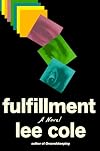
College professor Joel, who has written an academically successful book, is married to Alice, a woman tiring of domestic life and longing for something else. When he returns to his hometown in Kentucky for a visiting teaching job, he is reunited with his family including half brother, Emmett. Emmett has never quite gotten it together. A college dropout who aspires to being a screen writer, his present job, in a long list of them, is at an online store fulfillment center. As a relationship show more develops between Alice and Emmett, lives spiral out of control.
How do we find fulfillment in our lives? As each of the main characters in this well written, complex novel strives to find it, Cole paints a realistic picture of present day American rural south and our contemporary political culture. Family, guilt, class, longing, resentment, yearning….it is all here, along with insight into the different Americas that have been ripped apart by the politics of our times. As with his first novel, Groundskeeping, which I loved, dialog is written sans quotation marks.
Thanks to #NetGalley and @aaknopf for the DRC. show less
How do we find fulfillment in our lives? As each of the main characters in this well written, complex novel strives to find it, Cole paints a realistic picture of present day American rural south and our contemporary political culture. Family, guilt, class, longing, resentment, yearning….it is all here, along with insight into the different Americas that have been ripped apart by the politics of our times. As with his first novel, Groundskeeping, which I loved, dialog is written sans quotation marks.
Thanks to #NetGalley and @aaknopf for the DRC. show less
Was I rooting for any of the characters? No. Maybe, Joel. Were the emotions and situations realistic? Yes. Was the writing good? Yes. The setting and plight of making ends meet, or at least trying, in rural America richly described? Yes. Cole has empathy for these characters and how they move through this point in time. Stories such as these are hard to find without the addition of drug addiction of some form of emotional or physical abuse. Mother and grandmother, Kathy and Ruth, were a show more great addition as was Dale the hot tub salesman. show less
Lists
Awards


You May Also Like


Associated Authors
Statistics
- Works
- 5
- Members
- 304
- Popularity
- #77,405
- Rating
- 3.7
- Reviews
- 18
- ISBNs
- 24
- Languages
- 2
- Favorited
- 1

