
John Schofield (1)
Author of The Rise & Fall of Thomas Cromwell: Henry VIII's Most Faithful Servant
For other authors named John Schofield, see the disambiguation page.
Works by John Schofield
Tagged
Common Knowledge
- Gender
- male
- Occupations
- historian
academic - Organizations
- Newcastle upon Tyne University (School of Historical Studies|visiting scholar)
- Short biography
- "John Schofield is a Visiting Scholar is the School of Historical Studies at the University of Newcastle upon Tyne. He holds a PhD in Reformation History, and is the author of Philip Melanchthon and the English Reformation, The Rise and Fall of Thomas Cromwell and Martin Luther : a Concise History of his Life Works. He lives in North Shields." (biography from Cromwell to Cromwell : Reformation to Civil War).
Members
Reviews
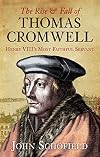
The Rise and Fall of Thomas Cromwell– John Schofield 4*
This is a much better book than Robert Hutchinson’s book on the same subject. Schofield actually seems to have done his research and not just rehashed the same old material which portrays Cromwell as a tyrant, bully etc.
Most of the things that Cromwell gets the blame for either started before he entered the King’s service or before he was high enough up the food chain to influence them, most of the evidence against Cromwell comes show more from the Spanish Chronicle which should be discounted as it has some very important details wrong e.g. it has Cromwell investigating the accusations of adultery against Catherine Howard which would be fine if he hadn’t been executed the year before.
Schofield does a very good job of presenting Cromwell as a human being, warts and all. This is a very good read for anybody interested in Cromwell’s life, it is a real page turner. I couldn’t put it down. show less
This is a much better book than Robert Hutchinson’s book on the same subject. Schofield actually seems to have done his research and not just rehashed the same old material which portrays Cromwell as a tyrant, bully etc.
Most of the things that Cromwell gets the blame for either started before he entered the King’s service or before he was high enough up the food chain to influence them, most of the evidence against Cromwell comes show more from the Spanish Chronicle which should be discounted as it has some very important details wrong e.g. it has Cromwell investigating the accusations of adultery against Catherine Howard which would be fine if he hadn’t been executed the year before.
Schofield does a very good job of presenting Cromwell as a human being, warts and all. This is a very good read for anybody interested in Cromwell’s life, it is a real page turner. I couldn’t put it down. show less
I've seen many people mentioning that this book was dry and I can't agree. It might be the fact that I am used to reading historical theory books or that my definition of dry is closer to Suimption's, exquisitely detailed and masterfully researched, Hundred Years War series, but I found this book lively and easy to read.
It is true that Schofield reaches some hagiographic moments in his defence of Cromwell, but I think that is to be expected when writing about a man so often slandered with show more such little reason. Like others, I've came to this books after reading Wolf Hall and Bring Up the Bodies and I have always liked Thomas Cromwell, so I am of course biased. But we all are, in the end, and I think Schofield's description of CRomwell's last months show that he was, indeed, capable of doing morally reprehensible things.
Two things I loved about this books. The first was the clear explanation on Lutheran theology which, being raised in a Catholic family and a Catholic country and having attended a Catholic university was never too clear for me. The second is the abundance of sources and reference works. Too often one finds history books and biographies that make statements without citing their sources, which is frustrating at best and bad research at worst. But Schofield's book has a great bibliography section and his statements are backed up by evidence; a gift for those of us who want to keep reading on the subject.
An interesting exercise was going back to Wolf Hall and Bring Up The Bodies to compare and contrast how Schofield and Mantel tell the same events and Schofield's influence is pretty clear, something I really enjoyed and allowed me to understand some parts of the novels better.
All in all, I loved the book and I'll be re-reading it often. show less
It is true that Schofield reaches some hagiographic moments in his defence of Cromwell, but I think that is to be expected when writing about a man so often slandered with show more such little reason. Like others, I've came to this books after reading Wolf Hall and Bring Up the Bodies and I have always liked Thomas Cromwell, so I am of course biased. But we all are, in the end, and I think Schofield's description of CRomwell's last months show that he was, indeed, capable of doing morally reprehensible things.
Two things I loved about this books. The first was the clear explanation on Lutheran theology which, being raised in a Catholic family and a Catholic country and having attended a Catholic university was never too clear for me. The second is the abundance of sources and reference works. Too often one finds history books and biographies that make statements without citing their sources, which is frustrating at best and bad research at worst. But Schofield's book has a great bibliography section and his statements are backed up by evidence; a gift for those of us who want to keep reading on the subject.
An interesting exercise was going back to Wolf Hall and Bring Up The Bodies to compare and contrast how Schofield and Mantel tell the same events and Schofield's influence is pretty clear, something I really enjoyed and allowed me to understand some parts of the novels better.
All in all, I loved the book and I'll be re-reading it often. show less
The ‘Rise and Fall of Thomas Cromwell’, by John Schofield, was a very enjoyable biography of Henry V’s right hand man. It’s interesting how few people have heard of Cromwell — when I’ve mentioned the subject it has generally been assumed that this book refers to Oliver Cromwell.
The book seems to be very well researched but the copious cross references don’t get in the way of the narrative for a casual reader. I do harbour a suspicion that Schofield got too close to his show more subject and was drawn to him. He sometimes appears too eager to dismiss the possibility that Cromwell influenced Henry over matters such as the fall of Ann Boleyn and the Cleves marriage. He acknowledges Cromwell’s subtle influence over Lutheran reforms but dismisses that he could influence the King in these other ‘Great Matters’ where he is often cited as the Machiavellian prime mover.
This minor quibble aside, I found this book fascinating without being over-academic. I certainly learned a great deal about Tudor England as a result of reading it. show less
The book seems to be very well researched but the copious cross references don’t get in the way of the narrative for a casual reader. I do harbour a suspicion that Schofield got too close to his show more subject and was drawn to him. He sometimes appears too eager to dismiss the possibility that Cromwell influenced Henry over matters such as the fall of Ann Boleyn and the Cleves marriage. He acknowledges Cromwell’s subtle influence over Lutheran reforms but dismisses that he could influence the King in these other ‘Great Matters’ where he is often cited as the Machiavellian prime mover.
This minor quibble aside, I found this book fascinating without being over-academic. I certainly learned a great deal about Tudor England as a result of reading it. show less
Very well researched but oh heavy going.
Statistics
- Works
- 4
- Members
- 119
- Popularity
- #166,387
- Rating
- 3.8
- Reviews
- 5
- ISBNs
- 81