
Jacquelyn Cook
Author of The River Between
About the Author
Series
Works by Jacquelyn Cook
River Between, The 1 copy
Tagged
Common Knowledge
Members
Reviews
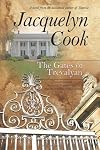
Wow! was I pleasantly surprised by reading this book. I expected a romantic dime novel but I got a well focused scope on the lives of real and nearly-real people in middle 19th century Georgia. It was a time of honor vs. greed. It reminded me very much of today.
Ms. Cook animates her characters with a rare authenticity I have seldom read regarding the inhabitants of the south during the war between the states. Usually, authors seem afraid to stray from the approved stereotypes. We like to show more think the times were very different but what her character "lil Alex" observed after the war near the end of the book rings with haunting familiarity, "Honor was forgotten in the pursuit of great wealth. Politicians were bought and sold."
The first thing, however, that caught my eye was her unapologetic use of exact if expansive vocabulary that had me reaching for my dictionary to be sure I had the right meaning. This may be a burdensome chore for some but I thoroughly enjoyed the novelty.
Be warned. If you only abide stereotypical history and skip words seldom read, this book isn't for you. On the other hand if you enjoy authenticity and precision with some emotion thrown in for seasoning this is a book well cooked! show less
Ms. Cook animates her characters with a rare authenticity I have seldom read regarding the inhabitants of the south during the war between the states. Usually, authors seem afraid to stray from the approved stereotypes. We like to show more think the times were very different but what her character "lil Alex" observed after the war near the end of the book rings with haunting familiarity, "Honor was forgotten in the pursuit of great wealth. Politicians were bought and sold."
The first thing, however, that caught my eye was her unapologetic use of exact if expansive vocabulary that had me reaching for my dictionary to be sure I had the right meaning. This may be a burdensome chore for some but I thoroughly enjoyed the novelty.
Be warned. If you only abide stereotypical history and skip words seldom read, this book isn't for you. On the other hand if you enjoy authenticity and precision with some emotion thrown in for seasoning this is a book well cooked! show less
 This review was written for LibraryThing Early Reviewers.
Southern belle Lily Edwards is torn between her family's plans for her life and her love for a dashing steamboat captain. This fairly predictable plot would be fine for a romance novel if the writing and characterization were strong. Unfortunately, in this case, they are not. The author is overfond of adjectives and purple prose -- stripped down, this would have made a 50-page novella. The author has obviously done her homework researching the setting, but her skill at inserting those bits show more of trivia she has unearthed is lacking, and the trivia draws attention to itself and away from the story. The characterization is inconsistent, and readers are told, not shown, what the characters are thinking and feeling. The result is overblown reactions, with the female lead either laughing or weeping every few minutes (sometimes both within the space of a few sentences). Readers who do not care for inspirational romance will also be put off by the preachy tone of several sections of the book, especially when a sentiment embraced by the main character feels inconsistent with the period and setting of the novel. On the other hand, readers of inspirational romance who know their Bible stories may find themselves questioning some of the creative interpretations that the main character takes with her scriptures. All of these factors combined make me hesitant to recommend this book, even to hardcore fans of the genre. show less
This review was written for LibraryThing Early Reviewers.Spanning a period of 22 years; years leading up to and through the American civil war; The Gates of Trevalyan follows two primary characters of the American south as they navigate life during this difficult time in history. There are also numerous secondary, related characters that we follow; some real historical figures, some not.
We meet the first main character, Jenny, when she is a teenager and looking for true love. We watch her grow from a self-conscious young girl who fears she show more isn’t good enough, into a strong woman who, though still humble, tackles her war-torn world from her home, Trevalyan, with grace and efficiency.
Our second main character is historical figure Alexander Stephens, a friend and acquaintance of Jenny, whose political career we follow clear up to the Vice Presidency of the Confederacy. He is a sad character, very sickly, who just keeps on rallying one more time, and one more time, and on and on.
Jenny and Alexander have separate, yet related stories, as The South was a small world, and everyone in southern ‘society’ seemed to know each other. Their paths did cross occasionally, and they thought fondly of each other throughout the novel. I liked watching Jenny grow. She held to her faith. It was refreshing to see this as an important part of the story. More than anything, this is a coming of age story in a very difficult and a very significant time in history.
This is a romance, in a secondary sense, but mostly, I saw this as an historical fiction novel as told through the eyes of the southerner. The writing engaged the reader, and was obviously biased in favor of southern thought. This is not a criticism, just an observation, as fiction is allowed to be biased any way the author chooses. Personally, I didn’t care for the portrayal of southern slave owners being so benevolent and self-righteous, nor did I care for the negative light in which President Lincoln was portrayed, but again, this is fiction as told from a southern point of view.
The story was beautifully told, in that the words painted for the reader a sense of ‘being there’ that is necessary in good writing. It was also an intriguing history lesson, if you put the writer’s bias aside, as dates were given, and each significant event leading up to the outbreak of war was given detail. It appears that Jacquelyn Cook conducted quite a bit of research, and that is highly admirable, adding to the validity of the storyline.
Overall, this was an enjoyable read that kept me awake until the wee hours as I neared the end, as I couldn’t wait to find out where our characters ended up. As far as the number of characters to follow, there were quite a few, and I found myself having to look back to find out who was married to whom. Again, this is a minor issue, as the story was good enough that I didn’t mind. show less
We meet the first main character, Jenny, when she is a teenager and looking for true love. We watch her grow from a self-conscious young girl who fears she show more isn’t good enough, into a strong woman who, though still humble, tackles her war-torn world from her home, Trevalyan, with grace and efficiency.
Our second main character is historical figure Alexander Stephens, a friend and acquaintance of Jenny, whose political career we follow clear up to the Vice Presidency of the Confederacy. He is a sad character, very sickly, who just keeps on rallying one more time, and one more time, and on and on.
Jenny and Alexander have separate, yet related stories, as The South was a small world, and everyone in southern ‘society’ seemed to know each other. Their paths did cross occasionally, and they thought fondly of each other throughout the novel. I liked watching Jenny grow. She held to her faith. It was refreshing to see this as an important part of the story. More than anything, this is a coming of age story in a very difficult and a very significant time in history.
This is a romance, in a secondary sense, but mostly, I saw this as an historical fiction novel as told through the eyes of the southerner. The writing engaged the reader, and was obviously biased in favor of southern thought. This is not a criticism, just an observation, as fiction is allowed to be biased any way the author chooses. Personally, I didn’t care for the portrayal of southern slave owners being so benevolent and self-righteous, nor did I care for the negative light in which President Lincoln was portrayed, but again, this is fiction as told from a southern point of view.
The story was beautifully told, in that the words painted for the reader a sense of ‘being there’ that is necessary in good writing. It was also an intriguing history lesson, if you put the writer’s bias aside, as dates were given, and each significant event leading up to the outbreak of war was given detail. It appears that Jacquelyn Cook conducted quite a bit of research, and that is highly admirable, adding to the validity of the storyline.
Overall, this was an enjoyable read that kept me awake until the wee hours as I neared the end, as I couldn’t wait to find out where our characters ended up. As far as the number of characters to follow, there were quite a few, and I found myself having to look back to find out who was married to whom. Again, this is a minor issue, as the story was good enough that I didn’t mind. show less
This review was written for LibraryThing Early Reviewers.Although The Gates of Trevalyan is described as the second in a series, the reader can read it alone. In fact, I would recommend it; in my opinion it is superior to the first in the series (Sunshine) and has little in common with it aside from a shared setting. Gates follows Jenny Mobley, a poor Southern woman whose marriage into Georgia's high society exposes her to figures who play an important role in seccession of the Southern states and the Confederate government. Jenny, a staunch show more advocate of Southern secession, offers an interesting view on the events surrounding her. I particularly enjoyed the portion of the book devoted to the pre-Civil-War expansion and the political wrangling over slavery in the new territories. I had not read anything about that period of history since high school, and the book offered an entertaining refresher.
Although I enjoyed the book for the most part, I did feel that the style, in particular the dialogue, could have been improved. At times I felt like I was dodging anvils, to be frank ( e.g., "Now, Jenny, you know we're nothing but women. We can't do anything. We depend on our menfolks for or fate. Be thankful for a father who'll provide a husband to care for you like a lady!" (22) ). I also wished that the 'historical' and 'fiction' aspects could have been more deftly integrated. Especially towards the beginning I felt that history book type facts were injected into the dialogue to the point of distraction. At one point a pair of characters switched from grieving the death of a loved one to an analysis of the President's cabinet so quickly is almost made me laugh.
I feel like the elephant in the room with any antebellum South or Civil War fiction is the portrayal of slavery. In this book, the protagonists are white, upper class (or newly upper class by marriage) people, who hold views towards slavery and slaves that are, for the most part, typically paternalistic (oddly enough, Trevalyan seems to be the unusual cotton plantation that can make do with three or four slaves who are treated like family). The slaves are portrayed as completely satisfied with their lot, showing devotion and affection for their 'masters'; no one is ever beaten or mistreated. I imagine a more typical depiction of plantation life might have undermined the heroism of the protagonists, so her choice makes sense on that level. Since the book concentrates on a specific segment of society, it might also make a certain amount of sense not to delve into the unpleasant and indeed horrific aspects of slavery. However, I include this paragraph in my review because I know there are people who would be put off by the book's portrayal of the institution.
While the book could be frustrating for readers due to its glossing over of the nastier aspects of Southern life, and the dialogue could use some work, The Gates of Trevalyan is an interesting history of the time for those in search of a story about the Southern aristocracy at the dawn and during the Civil War, replete with characters who typify the romanticized Southern character. show less
Although I enjoyed the book for the most part, I did feel that the style, in particular the dialogue, could have been improved. At times I felt like I was dodging anvils, to be frank ( e.g., "Now, Jenny, you know we're nothing but women. We can't do anything. We depend on our menfolks for or fate. Be thankful for a father who'll provide a husband to care for you like a lady!" (22) ). I also wished that the 'historical' and 'fiction' aspects could have been more deftly integrated. Especially towards the beginning I felt that history book type facts were injected into the dialogue to the point of distraction. At one point a pair of characters switched from grieving the death of a loved one to an analysis of the President's cabinet so quickly is almost made me laugh.
I feel like the elephant in the room with any antebellum South or Civil War fiction is the portrayal of slavery. In this book, the protagonists are white, upper class (or newly upper class by marriage) people, who hold views towards slavery and slaves that are, for the most part, typically paternalistic (oddly enough, Trevalyan seems to be the unusual cotton plantation that can make do with three or four slaves who are treated like family). The slaves are portrayed as completely satisfied with their lot, showing devotion and affection for their 'masters'; no one is ever beaten or mistreated. I imagine a more typical depiction of plantation life might have undermined the heroism of the protagonists, so her choice makes sense on that level. Since the book concentrates on a specific segment of society, it might also make a certain amount of sense not to delve into the unpleasant and indeed horrific aspects of slavery. However, I include this paragraph in my review because I know there are people who would be put off by the book's portrayal of the institution.
While the book could be frustrating for readers due to its glossing over of the nastier aspects of Southern life, and the dialogue could use some work, The Gates of Trevalyan is an interesting history of the time for those in search of a story about the Southern aristocracy at the dawn and during the Civil War, replete with characters who typify the romanticized Southern character. show less
This review was written for LibraryThing Early Reviewers.You May Also Like


Statistics
- Works
- 13
- Members
- 437
- Popularity
- #55,994
- Rating
- 2.8
- Reviews
- 99
- ISBNs
- 34
