
Moray Dalton (1881–1963)
Author of The Night Of Fear
About the Author
Disambiguation Notice:
Pseudonym of Katherine M. Renoir.
Series
Works by Moray Dalton
Associated Works
Tagged
Common Knowledge
- Legal name
- Renoir, Katherine Mary Deville Dalton
- Birthdate
- 1881-05-06
- Date of death
- 1963-02-22
- Gender
- female
- Occupations
- novelist
short story writer - Nationality
- UK
- Birthplace
- London, England, UK
- Place of death
- Worthing, Sussex, England, UK
- Disambiguation notice
- Pseudonym of Katherine M. Renoir.
- Associated Place (for map)
- England, UK
Members
Reviews
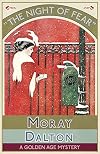
How do young lovers snatch time together in the 1930s?
They play hide and seek, of course. But as a Christmas gathering in a great country house reaches its peak, one such game will result in murder, the unravelling of long hidden secrets and, potentially, a grave miscarriage of justice.
-- What's it about? --
When the lights are turned off at Laverne Peveril, most of the players anticipate a delightful few minutes fumbling in the dark, but when a player shouts for "Lights!" a murder is show more revealed. Covered in the dead man's blood, ex-soldier Hugh Darrow seems the most likely culprit, despite having been blind since the war.
A local policeman investigates, but is soon hospitalised, close to death. What, exactly, did he uncover at Laverne Peveril? His friend, Scotland Yard inspector Hugh Collier, briefly takes over the investigation but is soon deposed by a fellow Yard man who is determined to make the simplest explanation the correct one - but is it?
-- What's it like? --
Initially awkward, quickly intriguing and ultimately compelling, 'The Night of Fear' has a superb ending involving a murder trial, some serious secrets and a final, perfectly logical re-evaluation of events.
The opening lines seemed unpromising - there's a startlingly swift leap from the scene of the crime to the home of an unimaginative local plod entertaining his much smarter friend, but after the initial awkwardness, Dalton's story quickly racks up the queries we need answered. Why does Ruth lose faith in Darrow? Did the chauffeur really stay in his room all night? And what had DS Lane discovered that meant he had to be silenced?
Characterisation is a strength of Dalton's and though there are numerous characters involved in the narrative, they all have distinctive voices. I loved the blustering blindness of Sir Eustace ("A most unpleasant affair. I hope for everybody's sake that it can be hushed up. I suppose there's no doubt the wretched man committed suicide?"), the horrible bluntness of Mrs Storey ("You're a fool, my dear, but lots of men prefer that.") and the resolute application of PI Hermann Glide ("This is a rescue party. There'll be plenty of time to talk later.")
-- Final thoughts --
Moray Dalton's 'The Night of Fear' is another Dean Street Press resurrection from the golden age of crime fiction - and it's another worthy addition to any mystery lover's shelves. Expect to uncover multiple secrets, feel intrigued by Stallard's hidden knowledge and be completely beguiled by the court case which hangs upon as yet undiscovered witnesses...
Unusually for detective fiction, Dalton splits her investigation between the hapless DS Lane, thoughtful Inspector Collier, brusque Inspector Purley and, finally, the indefatigable Hermann Glide. While there is a rationale behind this, initially I felt as unsettled as the suspects themselves, one of whom complains that, "I can't understand all this chopping and changing." Ultimately, it works, though it does lend a slightly disjointed air to the first part of the story.
'The Night of Fear' is a classic murder mystery which deserves to be better known. I look forward to reading the other Moray Dalton titles republished recently: 'One by One They Disappeared', 'The Body in the Road', 'Death in the Cup' and 'The Strange Case of Harriet Hall'.
Many thanks to the publishers for providing me with a copy of this book for my enjoyment. show less
They play hide and seek, of course. But as a Christmas gathering in a great country house reaches its peak, one such game will result in murder, the unravelling of long hidden secrets and, potentially, a grave miscarriage of justice.
-- What's it about? --
When the lights are turned off at Laverne Peveril, most of the players anticipate a delightful few minutes fumbling in the dark, but when a player shouts for "Lights!" a murder is show more revealed. Covered in the dead man's blood, ex-soldier Hugh Darrow seems the most likely culprit, despite having been blind since the war.
A local policeman investigates, but is soon hospitalised, close to death. What, exactly, did he uncover at Laverne Peveril? His friend, Scotland Yard inspector Hugh Collier, briefly takes over the investigation but is soon deposed by a fellow Yard man who is determined to make the simplest explanation the correct one - but is it?
-- What's it like? --
Initially awkward, quickly intriguing and ultimately compelling, 'The Night of Fear' has a superb ending involving a murder trial, some serious secrets and a final, perfectly logical re-evaluation of events.
The opening lines seemed unpromising - there's a startlingly swift leap from the scene of the crime to the home of an unimaginative local plod entertaining his much smarter friend, but after the initial awkwardness, Dalton's story quickly racks up the queries we need answered. Why does Ruth lose faith in Darrow? Did the chauffeur really stay in his room all night? And what had DS Lane discovered that meant he had to be silenced?
Characterisation is a strength of Dalton's and though there are numerous characters involved in the narrative, they all have distinctive voices. I loved the blustering blindness of Sir Eustace ("A most unpleasant affair. I hope for everybody's sake that it can be hushed up. I suppose there's no doubt the wretched man committed suicide?"), the horrible bluntness of Mrs Storey ("You're a fool, my dear, but lots of men prefer that.") and the resolute application of PI Hermann Glide ("This is a rescue party. There'll be plenty of time to talk later.")
-- Final thoughts --
Moray Dalton's 'The Night of Fear' is another Dean Street Press resurrection from the golden age of crime fiction - and it's another worthy addition to any mystery lover's shelves. Expect to uncover multiple secrets, feel intrigued by Stallard's hidden knowledge and be completely beguiled by the court case which hangs upon as yet undiscovered witnesses...
Unusually for detective fiction, Dalton splits her investigation between the hapless DS Lane, thoughtful Inspector Collier, brusque Inspector Purley and, finally, the indefatigable Hermann Glide. While there is a rationale behind this, initially I felt as unsettled as the suspects themselves, one of whom complains that, "I can't understand all this chopping and changing." Ultimately, it works, though it does lend a slightly disjointed air to the first part of the story.
'The Night of Fear' is a classic murder mystery which deserves to be better known. I look forward to reading the other Moray Dalton titles republished recently: 'One by One They Disappeared', 'The Body in the Road', 'Death in the Cup' and 'The Strange Case of Harriet Hall'.
Many thanks to the publishers for providing me with a copy of this book for my enjoyment. show less

This is a mystery of the Golden age, but it is certainly not sedate. It starts with a famous jewel of the Russian court and a rumour of its existence being passed on to two different parties. The rest of the book then chases around after one of these gangs that has it's heart set on the jewel and really doesn't care what it does to achieve it. There is an interesting cast of characters, including an array of possible villains and a cross section of class, ranging from the Lord and his show more children, his secretary and his antiques dealer father, an invalided army officer and his younger brother. The Army officer and the CID man were in the war together, which is how he gets involved. It all gets a little confused and very frenetic towards the end. It's unusual in that there are multiple crimes, some of which are not solved at all, while others have an identified guilty party. I will feel smug that I had one of the villains down as a wrong 'un from the start, but I entirely missed some of the others! There is also, in the midst of all the chasing about, a small romance that ought to be given the chance to bloom - only on that topic the ending remains silent., Well we can always imagine a happier ending.
This was recommended to me as the title contains "Belfry" and I'm a bellringer who spends far too much time in belfries. The belfry's role is limited to the site of a grisly discovery after the bell tolled once, in suitably spooky and suspicious way... show less
This was recommended to me as the title contains "Belfry" and I'm a bellringer who spends far too much time in belfries. The belfry's role is limited to the site of a grisly discovery after the bell tolled once, in suitably spooky and suspicious way... show less
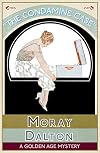
Country people are very good at keeping out of any sort of mess. They mind their own business and don’t interfere. That’s why such unspeakable things go on sometimes in villages for a long time before the police hear about it.
Oh, what joy The Condamine Case was to read. I loved the characters, the interactions, the mystery, the setting, the potential for supernatural elements, and the fact that I was able to follow the clues and identify the solution ahead of the book but not so early as show more to find it obvious.
This was a great example of Dalton's writing, and an easy one to recommend to anyone who would like to try her books but isn't sure. show less
Oh, what joy The Condamine Case was to read. I loved the characters, the interactions, the mystery, the setting, the potential for supernatural elements, and the fact that I was able to follow the clues and identify the solution ahead of the book but not so early as show more to find it obvious.
This was a great example of Dalton's writing, and an easy one to recommend to anyone who would like to try her books but isn't sure. show less
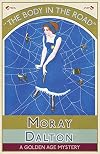
It’s really too bad that mine is the first review of The Body in the Road. It is possibly the worst mystery I’ve ever read.
Note: In the interests of fairness, I want to say that the first book I read by Dalton wasn’t too bad. Not a huge winner, but not bad.
WARNING: review is full of spoilers
The reader knows from the second page who the murderer is. And I don’t mean that author Dalton has created an inverted mystery. Not at all. It’s simply perfectly obvious who has done the show more killing, and why. Naturally this detracts from any possible suspense, or even interest in the story.
But I’ve read other mysteries where I knew whodunnit fairly quickly. I even reread certain mysteries to savor the atmosphere and the author’s twists and turns. I’ll never read this one again, and wish I hadn’t read it this time.
There’s a romance of sorts which isn’t too sickly sweet, and it’s the best part of the book. Since I normally dislike a romance interfering with figuring out the puzzle, this book goes even lower on my list.
The writing is almost impossibly clunky and awkward. I know it’s from 1930, but I read plenty of books, whether mysteries or not, written from 1800 onward. This is just dreadful.
The detective doesn’t come on board until late in the story. He’s an interesting character: not your usual run of private investigator at all. He redeems the book somewhat, but his actions are finally so over the top as to be incredible. Too bad; he’s got potential.
I’ll try one more by Dalton, just to see. I recommend avoiding this one, though. show less
Note: In the interests of fairness, I want to say that the first book I read by Dalton wasn’t too bad. Not a huge winner, but not bad.
WARNING: review is full of spoilers
The reader knows from the second page who the murderer is. And I don’t mean that author Dalton has created an inverted mystery. Not at all. It’s simply perfectly obvious who has done the show more killing, and why. Naturally this detracts from any possible suspense, or even interest in the story.
But I’ve read other mysteries where I knew whodunnit fairly quickly. I even reread certain mysteries to savor the atmosphere and the author’s twists and turns. I’ll never read this one again, and wish I hadn’t read it this time.
There’s a romance of sorts which isn’t too sickly sweet, and it’s the best part of the book. Since I normally dislike a romance interfering with figuring out the puzzle, this book goes even lower on my list.
The writing is almost impossibly clunky and awkward. I know it’s from 1930, but I read plenty of books, whether mysteries or not, written from 1800 onward. This is just dreadful.
The detective doesn’t come on board until late in the story. He’s an interesting character: not your usual run of private investigator at all. He redeems the book somewhat, but his actions are finally so over the top as to be incredible. Too bad; he’s got potential.
I’ll try one more by Dalton, just to see. I recommend avoiding this one, though. show less
Lists
You May Also Like


Associated Authors
Statistics
- Works
- 31
- Also by
- 1
- Members
- 351
- Popularity
- #68,158
- Rating
- 3.4
- Reviews
- 7
- ISBNs
- 31
- Languages
- 2