
Alan Gold (1) (1945–2024)
Author of The Pirate Queen: The Story of Grace O'Malley, Irish Pirate
For other authors named Alan Gold, see the disambiguation page.
Works by Alan Gold
Tagged
Common Knowledge
- Birthdate
- 1945-08-13
- Date of death
- 2024-06-18
- Gender
- male
- Occupations
- marketing consultant
journalist
critic
writer - Nationality
- UK
- Birthplace
- Leicester, Leicestershire, England, UK
- Place of death
- Katoomba, New South Wales, Australia
- Burial location
- Rookwood Cemetery, Sydney, Australia
- Map Location
- Australia
Members
Reviews
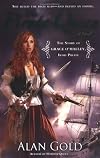
Oh dear. No, really...I mean it. Have you ever run across a novel where you genuinely wondered how it made it to the printing press? Was the editor on vacation that week? Did the publisher call in sick that day? More important, was the author actually paid money for this? How, how, how did this happen?
Last Friday was International Talk Like a Pirate Day (we Americans are so cute this way) and in honor of that, I decided to pull out the novel The Pirate Queen: A Novel, by Alan Gold from the show more Leaning-Tower-of-Pisa that is my reading pile (no matter that it was at the bottom of the stack and the resultant crash of books could be heard a block away). Never being one to let horrid cover design stop me from reading, I had picked up the book a few weeks ago on a recommendation from the Amazon Historical Fiction Forum....I'll deal with that person later.
The Pirate Queen is ostensibly a novel about Grace O'Malley, an Irish pirate who bedeviled Queen Elizabeth I during her day. The story follows Grace from her childhood on the coast of Ireland, where she was raised sailing upon her father's ships, through adulthood when she became one of the more successful pirates - she commanded a large fleet of ships - of her time. She led fighting men on both land and sea, married twice, and harassed the English merchant trade to the immense chagrin of Queen Elizabeth. Ultimately, Grace ended up meeting with Elizabeth in person and the two strong women reached their own understanding. Truly, her life is a veritable treasure trove for the historical fiction writer. Unfortunately, it did not come together well in this novel.
Character development in the novel is non-existent. For example, Grace's first husband, Donal O'Flaherty, is so one-dimensional it's slightly comical. After an entire year of beating and raping Grace at will, he suddenly becomes loving and docile in the span of two short pages and for no apparent reason. Twenty pages later, however, Donal abruptly appears again and the character has reverted to his evil self again, as if the author forgot his earlier passage.
The reader is offered either simplistic motivations or none at all for Grace's intimate relationships aside from her desire for sex. Her daughter, Margaret, one of the three children history tells us she produced with her first husband Donal, is portrayed as the result of Grace's rather explicit liaison with a Turkish sea captain she captured and held as a "sex-slave" of sorts. The novel describes Grace giving birth to Margaret at sea, while according to legend, it was her son Theobald, a product of Grace's second marriage, who was born at sea. Historical inconsistencies with no author explanation abound throughout the book and listing them all here might take days. Literally.
The dialogue throughout the story is stilted, almost juvenile in manner. All the female characters, including Queen Elizabeth, are crude and crass to the point of embarrassment.
For some unknown reason, characters seem to verbalize everything by screaming and hardly a page goes by without some character emoting their dialogue in this manner. Rarely do they "shout," "cry out," "rage," "yell," or even "fume." Instead, we read passages such as
"'WHAT!' she screamed." Followed two sentences later by "'The f****** Mac Mahons dare to visit my lands!' she screamed at him." No character seems to have escaped from the screaming thing and I feel quite deaf from reading it all.
But perhaps what I found most unforgivable was what I'll call historical plagiarism: attributing the recorded and known words of one personage in history to another.
"Yes, I may only have the body of a weak and feeble woman, but I have the heart and mind of a sea captain..."
Grace O'Malley addressing her crew
The Pirate Queen
Those of you who are familiar with Tudor history will immediately recognize this quote as Elizabeth I's Tilbury speech, when she is recorded as saying
"I know I have the body of a weak and feeble woman, but I have the heart and stomach of a king, and a king of England, too."
Elizabeth I, Tilbury, 1588
Evidently, the author couldn't come up with any original words to give his poor heroine and it is at this point that the novel loses all integrity.
Reading historical fiction is always a bit tricky. The liberties an author takes (after all, it is fiction) may, with exceptional writing, be forgiven. In the case of The Pirate Queen, however, the reader is assaulted with both poor writing and grave historical inaccuracies. I could not in good conscious recommend this book to anyone whose friendship I value.
For those interested in Grace's fantastical life, I would steer them towards either the definitive non-fiction biography, Granuaile, Ireland's Pirate Queen by Anne Chambers or the superior work of Pirate Queen, by Morgan Llywelyn.
By the way, look for a feature film about Grace to appear in 2009...I expect we'll be hearing a lot more about this forgotten Irish pirate in the near future.
Title: The Pirate Queen
Author: Alan Gold
358 pages
ISBN: 0-451-21744-6 (trade pbk.)
Publisher: Penguin Group
Date: 2006 show less
Last Friday was International Talk Like a Pirate Day (we Americans are so cute this way) and in honor of that, I decided to pull out the novel The Pirate Queen: A Novel, by Alan Gold from the show more Leaning-Tower-of-Pisa that is my reading pile (no matter that it was at the bottom of the stack and the resultant crash of books could be heard a block away). Never being one to let horrid cover design stop me from reading, I had picked up the book a few weeks ago on a recommendation from the Amazon Historical Fiction Forum....I'll deal with that person later.
The Pirate Queen is ostensibly a novel about Grace O'Malley, an Irish pirate who bedeviled Queen Elizabeth I during her day. The story follows Grace from her childhood on the coast of Ireland, where she was raised sailing upon her father's ships, through adulthood when she became one of the more successful pirates - she commanded a large fleet of ships - of her time. She led fighting men on both land and sea, married twice, and harassed the English merchant trade to the immense chagrin of Queen Elizabeth. Ultimately, Grace ended up meeting with Elizabeth in person and the two strong women reached their own understanding. Truly, her life is a veritable treasure trove for the historical fiction writer. Unfortunately, it did not come together well in this novel.
Character development in the novel is non-existent. For example, Grace's first husband, Donal O'Flaherty, is so one-dimensional it's slightly comical. After an entire year of beating and raping Grace at will, he suddenly becomes loving and docile in the span of two short pages and for no apparent reason. Twenty pages later, however, Donal abruptly appears again and the character has reverted to his evil self again, as if the author forgot his earlier passage.
The reader is offered either simplistic motivations or none at all for Grace's intimate relationships aside from her desire for sex. Her daughter, Margaret, one of the three children history tells us she produced with her first husband Donal, is portrayed as the result of Grace's rather explicit liaison with a Turkish sea captain she captured and held as a "sex-slave" of sorts. The novel describes Grace giving birth to Margaret at sea, while according to legend, it was her son Theobald, a product of Grace's second marriage, who was born at sea. Historical inconsistencies with no author explanation abound throughout the book and listing them all here might take days. Literally.
The dialogue throughout the story is stilted, almost juvenile in manner. All the female characters, including Queen Elizabeth, are crude and crass to the point of embarrassment.
For some unknown reason, characters seem to verbalize everything by screaming and hardly a page goes by without some character emoting their dialogue in this manner. Rarely do they "shout," "cry out," "rage," "yell," or even "fume." Instead, we read passages such as
"'WHAT!' she screamed." Followed two sentences later by "'The f****** Mac Mahons dare to visit my lands!' she screamed at him." No character seems to have escaped from the screaming thing and I feel quite deaf from reading it all.
But perhaps what I found most unforgivable was what I'll call historical plagiarism: attributing the recorded and known words of one personage in history to another.
"Yes, I may only have the body of a weak and feeble woman, but I have the heart and mind of a sea captain..."
Grace O'Malley addressing her crew
The Pirate Queen
Those of you who are familiar with Tudor history will immediately recognize this quote as Elizabeth I's Tilbury speech, when she is recorded as saying
"I know I have the body of a weak and feeble woman, but I have the heart and stomach of a king, and a king of England, too."
Elizabeth I, Tilbury, 1588
Evidently, the author couldn't come up with any original words to give his poor heroine and it is at this point that the novel loses all integrity.
Reading historical fiction is always a bit tricky. The liberties an author takes (after all, it is fiction) may, with exceptional writing, be forgiven. In the case of The Pirate Queen, however, the reader is assaulted with both poor writing and grave historical inaccuracies. I could not in good conscious recommend this book to anyone whose friendship I value.
For those interested in Grace's fantastical life, I would steer them towards either the definitive non-fiction biography, Granuaile, Ireland's Pirate Queen by Anne Chambers or the superior work of Pirate Queen, by Morgan Llywelyn.
By the way, look for a feature film about Grace to appear in 2009...I expect we'll be hearing a lot more about this forgotten Irish pirate in the near future.
Title: The Pirate Queen
Author: Alan Gold
358 pages
ISBN: 0-451-21744-6 (trade pbk.)
Publisher: Penguin Group
Date: 2006 show less
4.5 stars rounded up.
The Pirate Queen: The story of Grace O'Malley, Irish pirate by Alan Gold is a supremely fascinating book. I picked it up after hearing the name, Grace O'Malley, on an episode of NCIS.
I'm not generally a pirate fan, but I thought that perhaps with a female pirate, it would provide the strong female characters that I prefer. The book was extremely interesting and I was riveted to it from the day I picked it up. I happened to be in school at that point, and it was a good show more thing it was after the semester had ended, because I couldn't hardly put it down.
This book actually goes back and forth between Grace O'Malley and Queen Elizabeth I. It's a fictional tale but based on real life events that caused these two powerful females' paths to cross and intertwine. It's fascinating to read these ladies' stories. If you at all like pirates or 16th century British history, take a look at this one! show less
The Pirate Queen: The story of Grace O'Malley, Irish pirate by Alan Gold is a supremely fascinating book. I picked it up after hearing the name, Grace O'Malley, on an episode of NCIS.
I'm not generally a pirate fan, but I thought that perhaps with a female pirate, it would provide the strong female characters that I prefer. The book was extremely interesting and I was riveted to it from the day I picked it up. I happened to be in school at that point, and it was a good show more thing it was after the semester had ended, because I couldn't hardly put it down.
This book actually goes back and forth between Grace O'Malley and Queen Elizabeth I. It's a fictional tale but based on real life events that caused these two powerful females' paths to cross and intertwine. It's fascinating to read these ladies' stories. If you at all like pirates or 16th century British history, take a look at this one! show less
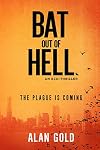
Bat out of Hell was pretty scary, though not in the way I expected. Going in, I don’t know what exactly I was hoping for. An apocalyptic-type thriller novel, perhaps? Or a science fiction with a horror spin?
The story ended up being neither of those. I attribute my first impressions to the somewhat misleading book description, which I think overplays the urgency of the premise. I expected a nightmare scenario in which humanity was dying by the millions to a new Black Death. In truth, the show more book isn’t so much about the plague than the social and political games that surround it. It’s also not really a sci-fi or techno-thriller in the vein of Michael Crichton or Douglas Preston. Even though the tagline says “Eco-Thriller”, I wouldn’t say suspense and excitement are the book’s main elements.
Oh but there are plenty of cool things about it, all right. Like I said, the premise is pretty frightening. All around the world, outbreaks of infectious diseases are happening all at once, and not just in third world countries or rural areas either. London gets hit. Then a built up neighborhood in New Jersey. The UN quickly puts together a first-response team and dispatches them all around the world to find out what’s going on. The diseases have to be spreading through a vector, and scientists narrow it down to bats. (Or birds. A stunning amount of time is actually spent by characters in the book hotly debating whether or not it’s one or the other.) The point is though, infectious diseases are scary as hell, and they make great topics for Horror/Thriller novels. That’s the reason I was originally drawn to Bat Out of Hell and why I wanted to read it.
Of course, there were also parts of the story that just didn’t work for me. But that doesn’t mean they won’t work for you. Truth be told, I find books like this very hard to review, because its style and structure (and genre, arguably) don’t mesh too well with my own reading preferences. That’s not the book’s fault, obviously. For this reason, I’m going to leave my rating off for the blog.
Essentially, I enjoyed the overall premise of the story. It’s smart, it’s entertaining, and the subject matter is fascinating. However, there are several things I felt could have been changed in order to make it a better and more exciting read. First of all, I wish there had been a lot more focus on the diseases themselves. The story didn’t cover too many outbreaks to begin with, and every time we saw one, only a few pages were devoted to the entire cycle of infection, immediate deaths (inevitably the scenarios all involved children), and eventual fallout. And then without skipping a beat, we are right back to the politicians and the special interest groups shamelessly spinning the situation.
Hence, my second observation: from politicians to leading scientists, animal rights activists to celebrities – everyone seems to get their chance to weigh in on the worldwide health crisis. Everyone except the ones who are the most affected. Where are the victims’ voices? The family and friends of the dead? Seems like a gross oversight to exclude their perspectives and influence on the global discourse.
Thirdly, I thought the narrative greatly oversimplified certain elements of the story. For example, birds are lovely and cute. So the idea of killing them en masse to prevent them from transmitting deadly diseases to humans would be met with outrage and resistance, to the joyful glee of the activists behind Citizens for Humane Animal Treatment. Bats, on the other hand, are icky. So if it turns out they’re the culprits, no one cares. There’s also the disturbing implication that most people will blindly follow the random claims of pop stars and Hollywood actors over the word of scientific experts who actually know what they’re talking about. Maybe a some people, but I think most folks tend to trust the epidemiologist with the PHD over some aging metalhead, no matter how famous they are — especially when it comes to matters of health. Speaking of which, where’s the internet and social media? Something like this should have had millions talking about it, but once again we’re only getting the perspectives of the elite, the world leaders and the CEOs and the celebrities who treat the population like lemmings — point in the direction you want them to go and they will follow – but reality just isn’t like that.
In the end, I think what I wanted was a more intense and more personal story. Still, I thought the book was interesting and devoured it quickly because I really wanted to find out what happens. Something tells me Bat Out of Hell might be somewhat of an esoteric novel, and certainly if you have an interest in stories about outbreaks and infectious diseases, it’d definitley be worth giving this book a shot. show less
The story ended up being neither of those. I attribute my first impressions to the somewhat misleading book description, which I think overplays the urgency of the premise. I expected a nightmare scenario in which humanity was dying by the millions to a new Black Death. In truth, the show more book isn’t so much about the plague than the social and political games that surround it. It’s also not really a sci-fi or techno-thriller in the vein of Michael Crichton or Douglas Preston. Even though the tagline says “Eco-Thriller”, I wouldn’t say suspense and excitement are the book’s main elements.
Oh but there are plenty of cool things about it, all right. Like I said, the premise is pretty frightening. All around the world, outbreaks of infectious diseases are happening all at once, and not just in third world countries or rural areas either. London gets hit. Then a built up neighborhood in New Jersey. The UN quickly puts together a first-response team and dispatches them all around the world to find out what’s going on. The diseases have to be spreading through a vector, and scientists narrow it down to bats. (Or birds. A stunning amount of time is actually spent by characters in the book hotly debating whether or not it’s one or the other.) The point is though, infectious diseases are scary as hell, and they make great topics for Horror/Thriller novels. That’s the reason I was originally drawn to Bat Out of Hell and why I wanted to read it.
Of course, there were also parts of the story that just didn’t work for me. But that doesn’t mean they won’t work for you. Truth be told, I find books like this very hard to review, because its style and structure (and genre, arguably) don’t mesh too well with my own reading preferences. That’s not the book’s fault, obviously. For this reason, I’m going to leave my rating off for the blog.
Essentially, I enjoyed the overall premise of the story. It’s smart, it’s entertaining, and the subject matter is fascinating. However, there are several things I felt could have been changed in order to make it a better and more exciting read. First of all, I wish there had been a lot more focus on the diseases themselves. The story didn’t cover too many outbreaks to begin with, and every time we saw one, only a few pages were devoted to the entire cycle of infection, immediate deaths (inevitably the scenarios all involved children), and eventual fallout. And then without skipping a beat, we are right back to the politicians and the special interest groups shamelessly spinning the situation.
Hence, my second observation: from politicians to leading scientists, animal rights activists to celebrities – everyone seems to get their chance to weigh in on the worldwide health crisis. Everyone except the ones who are the most affected. Where are the victims’ voices? The family and friends of the dead? Seems like a gross oversight to exclude their perspectives and influence on the global discourse.
Thirdly, I thought the narrative greatly oversimplified certain elements of the story. For example, birds are lovely and cute. So the idea of killing them en masse to prevent them from transmitting deadly diseases to humans would be met with outrage and resistance, to the joyful glee of the activists behind Citizens for Humane Animal Treatment. Bats, on the other hand, are icky. So if it turns out they’re the culprits, no one cares. There’s also the disturbing implication that most people will blindly follow the random claims of pop stars and Hollywood actors over the word of scientific experts who actually know what they’re talking about. Maybe a some people, but I think most folks tend to trust the epidemiologist with the PHD over some aging metalhead, no matter how famous they are — especially when it comes to matters of health. Speaking of which, where’s the internet and social media? Something like this should have had millions talking about it, but once again we’re only getting the perspectives of the elite, the world leaders and the CEOs and the celebrities who treat the population like lemmings — point in the direction you want them to go and they will follow – but reality just isn’t like that.
In the end, I think what I wanted was a more intense and more personal story. Still, I thought the book was interesting and devoured it quickly because I really wanted to find out what happens. Something tells me Bat Out of Hell might be somewhat of an esoteric novel, and certainly if you have an interest in stories about outbreaks and infectious diseases, it’d definitley be worth giving this book a shot. show less

This had such potential to be exciting. The Celtic tribes uniting to fight off the repressive Roman regime. One woman with a vendetta and a grasp of Roman tactics leads a massive army against a seasoned Roman general. This is the stuff of high drama, or at least a stirring tragic story. And this really did try. But it failed.
First off the book takes over 250 pages to even get to the incident that transforms Romanized Boudica into the vengeance-driven queen known as Britannia. 250 pages of show more practically nothing happening. Except for plenty of sex - which is not only plentiful, but unnecessary to the focus of the story. In the first few scenes, for example, Boudica encounters a boy with whom she has a ridiculously stilted conversation about how often she has been 'entered' and he never shows up again.
That's not the only way the story wanders. The story runs through more than its fair share of Roman emperors as well, which certainly adds to the sordid sexual encounters. There seems to be little to no point to these except possibly as comparisons between the scheming Roman women and the more overt strength of Boudica. If that's the case, though, it certainly fails as well.
The good points of this book mostly involved the fight scenes. These were interesting and clever - I enjoyed seeing Boudica portrayed as smart, observant and competent but defeated by the lack of discipline amongst her men. Unfortunately even this is undermined by the 'inspirational speaker' style orations Boudica uses to unite the Celts after years of living fat on the Romans patronage and ignoring the sufferings of other tribes. It just comes off as stilted and cheesy. I certainly wouldn't have followed her into battle.
Bottom line: The idea and the history is fascinating, and there is certainly room for literary license considering how little is known about Boudica. But find a different book about it. And please let me know if it was any good.
Also posted at my blog. show less
First off the book takes over 250 pages to even get to the incident that transforms Romanized Boudica into the vengeance-driven queen known as Britannia. 250 pages of show more practically nothing happening. Except for plenty of sex - which is not only plentiful, but unnecessary to the focus of the story. In the first few scenes, for example, Boudica encounters a boy with whom she has a ridiculously stilted conversation about how often she has been 'entered' and he never shows up again.
That's not the only way the story wanders. The story runs through more than its fair share of Roman emperors as well, which certainly adds to the sordid sexual encounters. There seems to be little to no point to these except possibly as comparisons between the scheming Roman women and the more overt strength of Boudica. If that's the case, though, it certainly fails as well.
The good points of this book mostly involved the fight scenes. These were interesting and clever - I enjoyed seeing Boudica portrayed as smart, observant and competent but defeated by the lack of discipline amongst her men. Unfortunately even this is undermined by the 'inspirational speaker' style orations Boudica uses to unite the Celts after years of living fat on the Romans patronage and ignoring the sufferings of other tribes. It just comes off as stilted and cheesy. I certainly wouldn't have followed her into battle.
Bottom line: The idea and the history is fascinating, and there is certainly room for literary license considering how little is known about Boudica. But find a different book about it. And please let me know if it was any good.
Also posted at my blog. show less
Lists
Awards

You May Also Like
Associated Authors
Statistics
- Works
- 21
- Members
- 531
- Popularity
- #46,873
- Rating
- 3.4
- Reviews
- 18
- ISBNs
- 79
- Languages
- 1