
Ellis Avery (1972–2019)
Author of The Teahouse Fire
About the Author
Ellis Avery was born on October 25, 1972. She received a bachelor's degree in performance studies from Bryn Mawr College and an MFA in writing from Goddard College. Before moving to New York City, she spent several years in San Francisco working for queer youth organizations. Her first book, The show more Smoke Week, was her personal account of the 9/11 attacks and their aftermath. Her novels included The Last Nude and The Teahouse Fire. Her other works included a memoir entitled The Family Tooth and a collection of poetry entitled Broken Rooms. She received several awards including the American Library Association Stonewall Award for Fiction, the Golden Crown Literary Society, and the Lambda Literary Award for Lesbian Fiction. She taught fiction writing at Columbia University and the University of California, Berkeley. She died on February 15, 2019 at the age of 46. (Bowker Author Biography) show less
Image credit: Matthew David Powell. www.powellsmithny.com
Series
Works by Ellis Avery
Tagged
Common Knowledge
- Canonical name
- Avery, Ellis
- Other names
- Atwood, Elisabeth (birth name)
- Birthdate
- 1972-10-25
- Date of death
- 2019-02-15
- Gender
- female
- Education
- Bryn Mawr College (1993)
- Awards and honors
- American Library Association 2008 Stonewall Fiction Award
- Relationships
- Marcus, Sharon (spouse)
- Nationality
- USA
- Birthplace
- Newark, New Jersey, USA
- Places of residence
- New York, New York, USA
Kyoto, Japan - Map Location
- USA
Members
Reviews
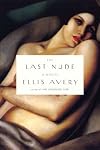
This novel had me hooked and reading at a fast pace. It tells the story of Rafaela Fano, a not quite eighteen year old girl living in Paris in the 1920's after having escaped from a trip to Italy and an arranged marriage. Rafaela supports herself through a couple of rich boyfriends and prostitution. She then meets the artist Tamara de Lempicka, who wants Rafaela to model for her. They then begin an affair, which for Rafaela is the first time she has slept with a woman but also the first time show more she has slept with anyone just because she wanted to. Tamara introduces Rafaela into her artistic circle of friends and the nudes she has painted of Rafaela get her into The Salon and get her a patron.
Rafaela is alternately torn between jealousy of Tamara's past and the possibility of a future with her and creating her own career.
But does Tamara want what Rafaela wants?
I loved this book, based on real-life events of Tamara de Lempicka but I do not know how accurate it is. The writing was amazing and the setting fantastic. What can be better than Paris in the '20's and references and appearances by others from that period.
I only gave the book 3 stars however. I took away one star because I am bothered by the fact that there is a character, Anson, who has life stories taken straight from Hemingway's own life (one part was how Hemingway's wife lost all of his work on a train) and from one of his characters. I thought maybe there would be some explanation later from Anson, that he made this stuff up. But there wasn't. Then I read an interview by the author where she states she wanted to create a character that would show what Hemingway might have become had he no longer been able to write after that train incident. That didn't sit with me. Anson was a smaller character that we never fully got to know, it didn't make sense to steal from Hemingway for that. It seems like plagiarism to me.
The second star i took away was because of the ending. The last section fast forwards some 50 years later and is told from Tamara's point of view. It was long and rambling and did not at all fit with the rest of the book. It could have been cut out. Instead it ended a great novel with a bad taste in my mouth. That was worse than the Hemingway stuff.
The author has potential but those 2 points were unacceptable to me. show less
Rafaela is alternately torn between jealousy of Tamara's past and the possibility of a future with her and creating her own career.
But does Tamara want what Rafaela wants?
I loved this book, based on real-life events of Tamara de Lempicka but I do not know how accurate it is. The writing was amazing and the setting fantastic. What can be better than Paris in the '20's and references and appearances by others from that period.
I only gave the book 3 stars however. I took away one star because I am bothered by the fact that there is a character, Anson, who has life stories taken straight from Hemingway's own life (one part was how Hemingway's wife lost all of his work on a train) and from one of his characters. I thought maybe there would be some explanation later from Anson, that he made this stuff up. But there wasn't. Then I read an interview by the author where she states she wanted to create a character that would show what Hemingway might have become had he no longer been able to write after that train incident. That didn't sit with me. Anson was a smaller character that we never fully got to know, it didn't make sense to steal from Hemingway for that. It seems like plagiarism to me.
The second star i took away was because of the ending. The last section fast forwards some 50 years later and is told from Tamara's point of view. It was long and rambling and did not at all fit with the rest of the book. It could have been cut out. Instead it ended a great novel with a bad taste in my mouth. That was worse than the Hemingway stuff.
The author has potential but those 2 points were unacceptable to me. show less
 This review was written for LibraryThing Early Reviewers.
This lovely piece of historical fiction- fictionalized biography?- is based on the artist Tamara de Lempicka and one of her models, Rafaela Fano. Lempicka is considered an Art Deco painter, strongly influenced by Cubism but with her own unique take on it, creating vivid canvases that seemed to have life of their own. Fano posed for some of her most famous works.
The first part of the book, in 1927, is told from Fano’s point of view; only in her mid-teens when she arrives in Paris, having show more escaped a plan to marry her off to a cousin who is a stranger to her, she is dirt poor, eking out a living by turning tricks. When Lempicka sees her in a park, she convinces her to go with her and pose nude. This begins an affair that surprises Fano; she’s never had sex with someone that she wanted to have sex with before, never done it for anything other than gain. Filled with actual desire for a person, Fano sees new possibilities in her life; having a steady paycheck for the first time, she also sees possibilities for a professional life as a couturier. She discovers she has options. But not only does she discover love for the first time, she also discovers heartbreak. Lempicki is beautiful, talented and brilliant, but she is a poor excuse for a human being.
The second part, told from Lempicki’s point of view, leaps years ahead to her old age and her explanation of why she was such a grasping schemer. It attempts to redeem the image that both history and the novel have produced. It also gives a compact overview of how history has treated her work.
The writing is compelling and I was drawn right in. Avery evokes the Jazz Age with deft strokes, making it appear before our eyes without going into long descriptive passages. It’s a lush, beautiful novel, filled with fashion, art, sex, and Paris in the Jazz Age. show less
The first part of the book, in 1927, is told from Fano’s point of view; only in her mid-teens when she arrives in Paris, having show more escaped a plan to marry her off to a cousin who is a stranger to her, she is dirt poor, eking out a living by turning tricks. When Lempicka sees her in a park, she convinces her to go with her and pose nude. This begins an affair that surprises Fano; she’s never had sex with someone that she wanted to have sex with before, never done it for anything other than gain. Filled with actual desire for a person, Fano sees new possibilities in her life; having a steady paycheck for the first time, she also sees possibilities for a professional life as a couturier. She discovers she has options. But not only does she discover love for the first time, she also discovers heartbreak. Lempicki is beautiful, talented and brilliant, but she is a poor excuse for a human being.
The second part, told from Lempicki’s point of view, leaps years ahead to her old age and her explanation of why she was such a grasping schemer. It attempts to redeem the image that both history and the novel have produced. It also gives a compact overview of how history has treated her work.
The writing is compelling and I was drawn right in. Avery evokes the Jazz Age with deft strokes, making it appear before our eyes without going into long descriptive passages. It’s a lush, beautiful novel, filled with fashion, art, sex, and Paris in the Jazz Age. show less
This review was written for LibraryThing Early Reviewers.
For something that affects 50% of the population 25% of the time, people certainly get funny talking about periods. When Ellis Avery is diagnosed with uterine cancer, she’s told that her only option is a hysterectomy. This short but poignant little essay follows her struggle to accept this – not so much for the loss of her uterus, since she has decided she is happy without children – but for the loss of her ovaries, which leave her at much greater risk of osteoporosis, heart disease, show more Parkinson’s and dementia. She’s staggered by how matter-of-fact her surgeons seem to be, and how difficult it is to explain her position to her beloved partner Sharon. The doctors don’t seem to understand why a woman in her position would hesitate. Frustrated by the double standards that the world applies, Avery explains: ‘“They all want to cut off my balls”, my angry brain fizzed, “and nobody cares.” Had I been a man, losing a reproductive organ would have been The Most Tragic Thing Ever, regardless of whether I wanted children. But I was a woman who did not want children, so it wasn’t supposed to matter.‘ But it does, of course. Deeply. Avery writes with gratitude of the example of Hilary Mantel, a shining beacon who underwent a hysterectomy at a young age and has remained vibrant, brilliant, celebrated. A heartfelt paean to the importance of ovaries, and menstruation, in shaping a woman’s life and giving her a sense of identity – and the cataclysmic sense of loss when such things are abruptly snatched away..
For a post on The Family Tooth, please see my blog:
https://theidlewoman.net/2020/02/24/the-family-tooth-ellis-avery/ show less
For a post on The Family Tooth, please see my blog:
https://theidlewoman.net/2020/02/24/the-family-tooth-ellis-avery/ show less
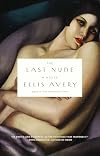
I picked up Ellis Avery’s latest novel The Last Nude after reading Danika’s glowing review of it on the lesbrary earlier this year. It’s not every author who can claim your lifelong allegiance after you’ve read only one of her works, but I agree with Danika that Avery is one of these writers and that reading The Last Nude is enough to convince you. This historical novel, set in Paris in the decadent 1920s period between the two world wars, is an easy book to love and sink into. From show more the first unassuming sentence (“I only met Tamara de Lempicka because I needed a hundred francs”), The Last Nude is captivating and delightful. The writing is exquisite; the characterization rich; and the setting wonderfully and lovingly rendered in superb detail.
Just because the novel is beautiful, though, doesn’t mean it isn’t also without its delicious complexities. We are introduced to the whirlwind environment of 20s Paris, in all its queer, smoky glory through the eyes of Rafaela Fano, an Italian-American Jew who is also experiencing it for the first time. Rafaela (her actual last name isn’t known) is a real historical person about whom we don’t know much except she was Art Deco painter Tamara de Lempicka’s model and inspiration for some of her most arresting works, including La Belle Rafaela, which graces the cover of the novel. Rafaela is both sweetly naïve and street-wise, having survived her family’s attempt to arrange her marriage at age sixteen by trading sex for passage to Paris. She’s survived in the city thus far by doing sex work, sometimes in more explicit scenarios than others; Rafaela is on the brink of a so-called respectable job at a department store when Tamara, seduced by her beauty on the street, recruits the young woman to model for her.
Tamara, as you might have guessed, is unbelievably sexy and glamorous; of course, she’s also a supremely talented artist with an insatiable appetite for art, wealth, and power. Rafaela falls for Tamara, hard. You know from early on, despite the fact that the story is related to us through Rafaela’s perspective, that Tamara’s motives are more complicated and less wholesome than Rafaela’s young, innocent heart wants to believe. In fact, it’s not just Tamara, it’s the whole circle Rafaela is introduced to: we enter the exotic world of the queer, artsy, bohemian population and are by turns charmed and appalled by them just as Rafaela is. Like us 21st century readers, Rafaela is a stranger to this world, its hopeful possibilities, and its hidden sinister underbelly.
Despite the sense of apprehension you feel knowing that Tamara and Rafaela’s love affair is doomed, Tamara offers something to Rafaela that is priceless: she gives Rafaela her own body back and opens up her sexuality. After the first time they make love, Rafaela recalls:
“And suddenly I remembered a day when I was very small, before my brothers came along. When my mother went out for groceries, I slopped … oil on the banister and slid down. I climbed those stairs again and again, to get that feeling: how slick my knickers got, how distinctly I could feel the spreading wings of my little figa, how the shock of bliss pleated through me like lightning. I had forgotten this kind of eagerness until now, as my body sobbed into Tamara’s hand. Again, again! I wanted to crow. I was a giddy witch on a broomstick. I was a leaping dog. I was liquor; I was laughter; I was a sliding girl on a shining rail: something I’d forgotten how to be.”
Later on, Rafaela tells us how she has learned to love and revel in her body:
“Ever since my sixteenth birthday, my body had felt like a coin in an unfamiliar currency: small, shiny, and heavy, obviously of value to somebody, but not to me… My body felt coincidental to me—I could just as easily be a tree, a stone, a gust of wind. For so long, I still felt like the ten-year-old me, skinny as a last wafer of soap, needling through Washington Square on her way to Baxter Street. But my months with Tamara had worn away the lonely old questions and replaced them with a greed of my own: my body was just a fact, this night, a kind of euphoria. I coincided with it, and with the dancing crowd. Throbbing with the horns and drums, we formed a waterfall passing over a light, each of us a drop, a spark, bright, gone. The music danced us, and I knew it wouldn’t last, this body I’d learnt to love.”
If you’re at all familiar with famous lesbian/queer/bi expatriate women from this period, you’ll be delighted to see the literary couple Sylvia Beach and Adrienne Monnier, who ran successful bookstores and first published James Joyce’s Ulysses, function as Rafaela’s queer elders. Gertrude Stein and her partner Alice B. Toklas make appearances too, as well as Romaine Brooks, Natalie Barney, and Violette Morris. If you don’t know who any of these women are, I suggest looking them up asap. Ah, if only I could time travel back to one of their parties and chat with them, wearing smoky black eye shadow and red lipstick, and smoking cigarettes out of a long classy holder without knowing the consequences.
The consequences of the way Tamara treats Rafaela don’t fully emerge until the second part of the book, much smaller than the first, and from the perspective of Tamara as an old woman. On the one hand, I felt robbed of the chance to see in her own words how Rafaela pulls herself up after Tamara’s betrayal and ‘follows her dreams.’ On the other, Avery had to do something to humanize Tamara for us, if only to complicate the view of her as a ruthless egotistical villain. Although I can’t say I was completely satisfied with Tamara’s atonement, I was glad in the end to know that Tamara did care for Rafaela, amidst her self-delusions and guilt. In a way, these revelations made the love story all the more tragic; they also made the novel even more complex, powerful, and poignant than it already was. This, considering The Last Nude is (lesbian) historical fiction at its finest, is quite an achievement. show less
Just because the novel is beautiful, though, doesn’t mean it isn’t also without its delicious complexities. We are introduced to the whirlwind environment of 20s Paris, in all its queer, smoky glory through the eyes of Rafaela Fano, an Italian-American Jew who is also experiencing it for the first time. Rafaela (her actual last name isn’t known) is a real historical person about whom we don’t know much except she was Art Deco painter Tamara de Lempicka’s model and inspiration for some of her most arresting works, including La Belle Rafaela, which graces the cover of the novel. Rafaela is both sweetly naïve and street-wise, having survived her family’s attempt to arrange her marriage at age sixteen by trading sex for passage to Paris. She’s survived in the city thus far by doing sex work, sometimes in more explicit scenarios than others; Rafaela is on the brink of a so-called respectable job at a department store when Tamara, seduced by her beauty on the street, recruits the young woman to model for her.
Tamara, as you might have guessed, is unbelievably sexy and glamorous; of course, she’s also a supremely talented artist with an insatiable appetite for art, wealth, and power. Rafaela falls for Tamara, hard. You know from early on, despite the fact that the story is related to us through Rafaela’s perspective, that Tamara’s motives are more complicated and less wholesome than Rafaela’s young, innocent heart wants to believe. In fact, it’s not just Tamara, it’s the whole circle Rafaela is introduced to: we enter the exotic world of the queer, artsy, bohemian population and are by turns charmed and appalled by them just as Rafaela is. Like us 21st century readers, Rafaela is a stranger to this world, its hopeful possibilities, and its hidden sinister underbelly.
Despite the sense of apprehension you feel knowing that Tamara and Rafaela’s love affair is doomed, Tamara offers something to Rafaela that is priceless: she gives Rafaela her own body back and opens up her sexuality. After the first time they make love, Rafaela recalls:
“And suddenly I remembered a day when I was very small, before my brothers came along. When my mother went out for groceries, I slopped … oil on the banister and slid down. I climbed those stairs again and again, to get that feeling: how slick my knickers got, how distinctly I could feel the spreading wings of my little figa, how the shock of bliss pleated through me like lightning. I had forgotten this kind of eagerness until now, as my body sobbed into Tamara’s hand. Again, again! I wanted to crow. I was a giddy witch on a broomstick. I was a leaping dog. I was liquor; I was laughter; I was a sliding girl on a shining rail: something I’d forgotten how to be.”
Later on, Rafaela tells us how she has learned to love and revel in her body:
“Ever since my sixteenth birthday, my body had felt like a coin in an unfamiliar currency: small, shiny, and heavy, obviously of value to somebody, but not to me… My body felt coincidental to me—I could just as easily be a tree, a stone, a gust of wind. For so long, I still felt like the ten-year-old me, skinny as a last wafer of soap, needling through Washington Square on her way to Baxter Street. But my months with Tamara had worn away the lonely old questions and replaced them with a greed of my own: my body was just a fact, this night, a kind of euphoria. I coincided with it, and with the dancing crowd. Throbbing with the horns and drums, we formed a waterfall passing over a light, each of us a drop, a spark, bright, gone. The music danced us, and I knew it wouldn’t last, this body I’d learnt to love.”
If you’re at all familiar with famous lesbian/queer/bi expatriate women from this period, you’ll be delighted to see the literary couple Sylvia Beach and Adrienne Monnier, who ran successful bookstores and first published James Joyce’s Ulysses, function as Rafaela’s queer elders. Gertrude Stein and her partner Alice B. Toklas make appearances too, as well as Romaine Brooks, Natalie Barney, and Violette Morris. If you don’t know who any of these women are, I suggest looking them up asap. Ah, if only I could time travel back to one of their parties and chat with them, wearing smoky black eye shadow and red lipstick, and smoking cigarettes out of a long classy holder without knowing the consequences.
The consequences of the way Tamara treats Rafaela don’t fully emerge until the second part of the book, much smaller than the first, and from the perspective of Tamara as an old woman. On the one hand, I felt robbed of the chance to see in her own words how Rafaela pulls herself up after Tamara’s betrayal and ‘follows her dreams.’ On the other, Avery had to do something to humanize Tamara for us, if only to complicate the view of her as a ruthless egotistical villain. Although I can’t say I was completely satisfied with Tamara’s atonement, I was glad in the end to know that Tamara did care for Rafaela, amidst her self-delusions and guilt. In a way, these revelations made the love story all the more tragic; they also made the novel even more complex, powerful, and poignant than it already was. This, considering The Last Nude is (lesbian) historical fiction at its finest, is quite an achievement. show less
Lists
Awards


You May Also Like


Associated Authors
Statistics
- Works
- 9
- Members
- 1,202
- Popularity
- #21,357
- Rating
- 3.5
- Reviews
- 60
- ISBNs
- 27
- Languages
- 6
- Favorited
- 1
