
Tanner Colby
Author of The Chris Farley Show
Works by Tanner Colby
Some of My Best Friends Are Black: The Strange Story of Integration in America (2012) 155 copies, 6 reviews
Tagged
Common Knowledge
Members
Reviews
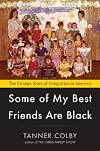
In browsing other Goodreads reviews for this book, I’m surprised to see this pattern: “I really wanted to like this book, but…”
Some folks wanted it to be more research-y and informative. Others found it boring for what they felt was a dearth of personal interviews and narrative. Colby was criticized for saying only what black people already know and for saying only what white people want to hear. One reviewer took issue with the “dull facts and figures regarding...church-going show more (Catholic church-going, at that)”.
The nerve of this man, to bore us not only with information about church, but information about CATHOLIC church. What is this, Rome?
Not in the least. This book explores the uniquely American fits and starts that have characterized the process of attempting to integrate black people and white people in neighborhoods, schools, churches, and business (specifically the advertising business). Colby describes the clashing efforts of people whose motives and actions fall all along the spectrum: noble, practical, reluctant, resistant, and (of course) racist. He talks about why government-mandated desegregation could have been the solution that most undermined voluntary integration.
What Colby does so earnestly and to such compelling effect is ignore the minefield of political correctness. It’s true, as another reviewer points out: his cavalier approach to our convoluted language boundaries results in such collegiate-feeling insensitivity as, for example, calling a group of old white men “whiteytown.” But it also allows the author to speak candidly and honestly -- and tres amusingly -- about why integration is so damn difficult. Colby’s self-deprecating (and white-deprecating) humility also moderates the squirm-factor of his unceremonious delivery.
And although the facts of his accounts are depressing because of what they describe about human motives and behavior, Colby communicates his conviction that integration is not a lost cause and his hope that we Americans of both (or all) races will commit to the long-term hard work required to realize Martin Luther King, Jr.’s dream. show less
Some folks wanted it to be more research-y and informative. Others found it boring for what they felt was a dearth of personal interviews and narrative. Colby was criticized for saying only what black people already know and for saying only what white people want to hear. One reviewer took issue with the “dull facts and figures regarding...church-going show more (Catholic church-going, at that)”.
The nerve of this man, to bore us not only with information about church, but information about CATHOLIC church. What is this, Rome?
Not in the least. This book explores the uniquely American fits and starts that have characterized the process of attempting to integrate black people and white people in neighborhoods, schools, churches, and business (specifically the advertising business). Colby describes the clashing efforts of people whose motives and actions fall all along the spectrum: noble, practical, reluctant, resistant, and (of course) racist. He talks about why government-mandated desegregation could have been the solution that most undermined voluntary integration.
What Colby does so earnestly and to such compelling effect is ignore the minefield of political correctness. It’s true, as another reviewer points out: his cavalier approach to our convoluted language boundaries results in such collegiate-feeling insensitivity as, for example, calling a group of old white men “whiteytown.” But it also allows the author to speak candidly and honestly -- and tres amusingly -- about why integration is so damn difficult. Colby’s self-deprecating (and white-deprecating) humility also moderates the squirm-factor of his unceremonious delivery.
And although the facts of his accounts are depressing because of what they describe about human motives and behavior, Colby communicates his conviction that integration is not a lost cause and his hope that we Americans of both (or all) races will commit to the long-term hard work required to realize Martin Luther King, Jr.’s dream. show less
I found Some of My Best Friends Are Black by accident at our town library. The book flap summary seemed interesting, so I picked it up. It turned out to complement Michelle Alexander's The New Jim Crow quite well, offering a very personal look at the ongoing effects of racial segregation in our churches, neighborhoods, schools, and workplaces.
The two sections I found most interesting were the one about real estate and the one about re-integrating Catholic churches in southern Louisiana. In show more the real estate section, I was particularly struck by Colby's description of racially restrictive covenants in real estate. Turns out the modern suburb developed largely as a result of one developer's desire to make money off of white people's fears of living near black people. I knew I didn't like suburbs (particularly housing developments with draconian homeowners' associations), but now I have another concrete reason to dislike them. In most locations, these racist covenants are still part of the agreements of the housing developments, even though they're no longer enforceable by law.
In the section about churches, I found the entire history of segregation within both Catholic and Protestant churches very interesting, but I especially appreciated how Colby demonstrated just how difficult it is to get back to more integrated places of worship once these communities have been separated. This is a major issue for many churches in the United States; I know it's a major concern for my denomination wherever we've lived. Colby shows that there is hope, but that integrating our churches requires sacrifice and trust on the part of everyone involved, and of course, trust isn't something that's been in great supply between black and white communities in the United States in the last couple of hundred years.
More than four decades after Jim Crow laws in the South were overturned, the United States is still struggling to become racially integrated. The segregation is no longer mandated by law, but the generations of separation have had ripple effects that have proven very difficult to change. Colby's stories show these difficulties in detail, but he also offers hope that, with a lot of time and effort, we will eventually heal this rift and become a fully integrated culture. show less
The two sections I found most interesting were the one about real estate and the one about re-integrating Catholic churches in southern Louisiana. In show more the real estate section, I was particularly struck by Colby's description of racially restrictive covenants in real estate. Turns out the modern suburb developed largely as a result of one developer's desire to make money off of white people's fears of living near black people. I knew I didn't like suburbs (particularly housing developments with draconian homeowners' associations), but now I have another concrete reason to dislike them. In most locations, these racist covenants are still part of the agreements of the housing developments, even though they're no longer enforceable by law.
In the section about churches, I found the entire history of segregation within both Catholic and Protestant churches very interesting, but I especially appreciated how Colby demonstrated just how difficult it is to get back to more integrated places of worship once these communities have been separated. This is a major issue for many churches in the United States; I know it's a major concern for my denomination wherever we've lived. Colby shows that there is hope, but that integrating our churches requires sacrifice and trust on the part of everyone involved, and of course, trust isn't something that's been in great supply between black and white communities in the United States in the last couple of hundred years.
More than four decades after Jim Crow laws in the South were overturned, the United States is still struggling to become racially integrated. The segregation is no longer mandated by law, but the generations of separation have had ripple effects that have proven very difficult to change. Colby's stories show these difficulties in detail, but he also offers hope that, with a lot of time and effort, we will eventually heal this rift and become a fully integrated culture. show less
I will admit to approaching this book with some trepidation. After picking it up and glancing at it in the bookstore, I was worried it would be another “Live From New York.”
For those of you who don’t keep up on the “Saturday Night Live” books, “Live From New York” was basically a 656-page set of interviews with the cast and crew. While informative, it didn’t contain much of a narrative and frankly was a slog to work through.
Luckily, my fears were unfounded. “The Chris show more Farley Show: A Biography in Three Acts” is an absolute must-have for any Farley fan. Released in May in paperback, it’s absolutely worth the price of admission.
For those of who grew up sharing Matt Foley’s fate of living in a van down by the river, the book is an eye-opener. Not only do we hear from the man the character was based on, Matt Foley, on Farley’s life, but we’re entreated to what amounts to a backstage pass into the life of our own comedian struck down too early by addiction.
Farley’s past is well-documented, from his time as a class clown through making his break onto “SNL.” It’s not difficult to see how Farley became the lovable oaf we all knew. His attitude in school is described as someone who will do anything to make sure people laugh – from grade school right on through Marquette University.
His acting chops and talent are revealed far more than they ever were on-screen. A truly genuine man, Farley is described as having the ability to act “honestly” – he didn’t need to rely on pratfalls and fat jokes, he was merely playing the part given to him.
The book is primarily constructed of interviews, and the insights revealed by David Spade, Alex Baldwin and his brothers are invaluable to understanding who he was and what he did. The book obviously cannot provide a complete picture of Farley, but it at least allows to place him in context.
Farley is a far more intricate and complicated man than most of us probably give him credit for. Even some of his best friends didn’t know how much humanitarian work he was involved in, though it was usually done one-on-one rather than just handing out money to random charities.
Fans probably remember the “Chris Farley Show” sketches, where Farley would pretend to be interviewing celebrities such as Jeff Daniels and Paul McCartney. The gag was that Farley would frequently become overcome with excitement and ask these celebrities to remember famous moments from their careers, following up with a question along the lines of “wasn’t that awesome?” Several “SNL” cast members said the Chris Farley depicted in those sketches was the most accurate Farley ever presented, on the small screen or in the movies: Innocent, eager and always trying to please.
It’s well known that Farley battled addiction most of his life, but what’s not as well known is how he dealt with it. For periods at a time he was completely sober, living clean and doing well. Then he would crash, and the cycle would start again. Toward the end of his life, he faked sobriety a number of times, but seemed to give up.
Books and stories are always supposed to end with a moral, something the reader can take away to apply in their everyday lives. While there are any number of life lessons and warnings one can glean from this book, there’s really only one you should pay attention to. In everything that he did, nearly every day of his life, Chris Farley always tried his best to make others laugh and brighten their day. And really, what more could you ask? show less
For those of you who don’t keep up on the “Saturday Night Live” books, “Live From New York” was basically a 656-page set of interviews with the cast and crew. While informative, it didn’t contain much of a narrative and frankly was a slog to work through.
Luckily, my fears were unfounded. “The Chris show more Farley Show: A Biography in Three Acts” is an absolute must-have for any Farley fan. Released in May in paperback, it’s absolutely worth the price of admission.
For those of who grew up sharing Matt Foley’s fate of living in a van down by the river, the book is an eye-opener. Not only do we hear from the man the character was based on, Matt Foley, on Farley’s life, but we’re entreated to what amounts to a backstage pass into the life of our own comedian struck down too early by addiction.
Farley’s past is well-documented, from his time as a class clown through making his break onto “SNL.” It’s not difficult to see how Farley became the lovable oaf we all knew. His attitude in school is described as someone who will do anything to make sure people laugh – from grade school right on through Marquette University.
His acting chops and talent are revealed far more than they ever were on-screen. A truly genuine man, Farley is described as having the ability to act “honestly” – he didn’t need to rely on pratfalls and fat jokes, he was merely playing the part given to him.
The book is primarily constructed of interviews, and the insights revealed by David Spade, Alex Baldwin and his brothers are invaluable to understanding who he was and what he did. The book obviously cannot provide a complete picture of Farley, but it at least allows to place him in context.
Farley is a far more intricate and complicated man than most of us probably give him credit for. Even some of his best friends didn’t know how much humanitarian work he was involved in, though it was usually done one-on-one rather than just handing out money to random charities.
Fans probably remember the “Chris Farley Show” sketches, where Farley would pretend to be interviewing celebrities such as Jeff Daniels and Paul McCartney. The gag was that Farley would frequently become overcome with excitement and ask these celebrities to remember famous moments from their careers, following up with a question along the lines of “wasn’t that awesome?” Several “SNL” cast members said the Chris Farley depicted in those sketches was the most accurate Farley ever presented, on the small screen or in the movies: Innocent, eager and always trying to please.
It’s well known that Farley battled addiction most of his life, but what’s not as well known is how he dealt with it. For periods at a time he was completely sober, living clean and doing well. Then he would crash, and the cycle would start again. Toward the end of his life, he faked sobriety a number of times, but seemed to give up.
Books and stories are always supposed to end with a moral, something the reader can take away to apply in their everyday lives. While there are any number of life lessons and warnings one can glean from this book, there’s really only one you should pay attention to. In everything that he did, nearly every day of his life, Chris Farley always tried his best to make others laugh and brighten their day. And really, what more could you ask? show less
Chris Farley's career emerged and ended during my childhood, so I was never aware of his struggles. He was well loved and well paid, and neither aspect was enough to conquer his addictions. I do wish 'oral history' books like this would acknowledge the voices that are missing - I know not everyone will want to participate, but sometimes an unacknowledged absence can make you wonder (his mom and sister were missing, despite all the brothers participating). It highlighted the dominance of male show more voices in this book. show less
Lists
Awards


You May Also Like


Associated Authors
Statistics
- Works
- 2
- Members
- 508
- Popularity
- #48,805
- Rating
- 3.8
- Reviews
- 28
- ISBNs
- 11
- Languages
- 1