
Greg Dawson
Author of Alias Anna: A True Story of Outwitting the Nazis
Works by Greg Dawson
Judgment Before Nuremberg: The Holocaust in the Ukraine and the First Nazi War Crimes Trial (2012) 62 copies, 1 review
The butt boy 1 copy
Associated Works
Tagged
Common Knowledge
- Birthdate
- 1950
- Gender
- male
- Occupations
- journalist
author - Relationships
- Dawson, Candy (spouse)
- Nationality
- USA
- Birthplace
- Indiana, USA
- Associated Place (for map)
- Indiana, USA
Members
Reviews
Judgment Before Nuremberg: The Holocaust in the Ukraine and the First Nazi War Crimes Trial by Greg Dawson
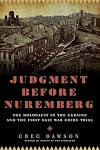
Even though I think that Dawson is doing a historically good deed in writing about a largely ignored area of history and Holocaust studies, I question that he is the right candidate to write about it. His motivation is in the right place (his mother and aunt are the only known survivors of the Drobitsky Yar massacre) and he has the writing skills needed to engage an audience, but the fact that it took him two thirds of the book to actually get to the trial in question because he was so busy show more writing about the back story too much is inexcusable. Sure, many of his readers will need a primer on the Holoaust in the Ukraine, but he basically rewrote the whole story rather than having a succinct introduction or referring them to general sources. I also feel like he could have beefed up the discussion of the trial, and done so easily by including interviews and eyewitness accounts (he pawns this off because he figures that it's too raw a wound and people woulndn't be willing to talk...). This is why historians, not journalists, need to take the lead in exposing stories like this! show less
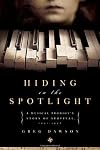
Hiding in the Spotlight tells the true story of two young Jewish sisters from the Ukraine. When their family is removed from its home and sent on a Nazi death march in the winter of 1941, piano prodigies Zhanna and Frina Arshankaya are spared through an exchange brokered by their father and a Ukrainian guard: the two girls are allowed to escape for their father's pocket watch. Left without family, Zhanna and Frina reinvented themselves as orphans of a Red Army soldier and joined a troupe of show more entertainers. The sisters survived the war by performing for German soldiers and officers and living in constant fear of discovery of their Jewish ancestry.
After the war, Zhanna and Frina were liberated but homeless. They were sent to a displaced persons camp near Munich where they avoided boredom by staging shows on a "bare stage" and a "creaky piano." The camp's American director, recognizing the sister's prodigious musical talent, committed to adopt the sisters. He sent them to safety in America, where Zhanna and Frina struggled to adapt to a new language, culture, and family on a farm in Virginia.
Perhaps due to his forty years as a journalist, Dawson writes this story with a keen eye for historical accuracy and describes the horrors inflicted by the Nazis in vivid detail. But the narrative is not without a personal connection. Dawson is Zhanna's son, and this link gives him great access to the emotional side of the story. My only wish is that Dawson had continued the story beyond 1946 to cover the sisters' new life in America. I may be a bit biased, however, because the camp director who adopted the sisters, Larry Dawson, was my grandfather. And the grand piano I learned to play during summers spent with my grandmother on her farm in Virginia is the same piano that greeted Zhanna and Frina on their first night in America. show less
After the war, Zhanna and Frina were liberated but homeless. They were sent to a displaced persons camp near Munich where they avoided boredom by staging shows on a "bare stage" and a "creaky piano." The camp's American director, recognizing the sister's prodigious musical talent, committed to adopt the sisters. He sent them to safety in America, where Zhanna and Frina struggled to adapt to a new language, culture, and family on a farm in Virginia.
Perhaps due to his forty years as a journalist, Dawson writes this story with a keen eye for historical accuracy and describes the horrors inflicted by the Nazis in vivid detail. But the narrative is not without a personal connection. Dawson is Zhanna's son, and this link gives him great access to the emotional side of the story. My only wish is that Dawson had continued the story beyond 1946 to cover the sisters' new life in America. I may be a bit biased, however, because the camp director who adopted the sisters, Larry Dawson, was my grandfather. And the grand piano I learned to play during summers spent with my grandmother on her farm in Virginia is the same piano that greeted Zhanna and Frina on their first night in America. show less
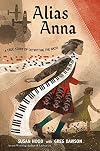
Anna and her sister adopted new names as they tried to hide in plain sight to survive the Holocaust. Ukrainian Jews, their family was rounded up when the Nazi's invaded Russia. The girls were able to escape a march to the woods that led to the murder of their parents. Piano prodigies, they spent much of the war playing music for the Nazis.
Written in verse, the story starts in response to a letter to Anna (Zannah) from her granddaughter who asks about life at her age.
Written in verse, the story starts in response to a letter to Anna (Zannah) from her granddaughter who asks about life at her age.
I knew I couldn’t get through Spring Break without reading at least one Holocaust book. I had five selected. This is the one I got to. We learn that this book came about when Zhanna’s granddaughter had to write about her grandparent’s history and any major thing that had happened in their life. The story is co-written by her son Greg Dawson, whose daughter sent the letter.
Zhanna Arshanskaya was a child when she, her sister, mother and father and grandparents were sent on a death march. show more Her father was a candymaker and played violin. He helped his daughters Zhanna and Frina develop a love of music, playing the family’s piano. They were sent to a music conservatory until Jews were no longer welcome. Their father offers a bribe to one of the guards while on the march to look away so his daughter Zhanna can step out of the line. A while later she was joined by her sister. They changed their names to better blend in. Zhanna became Anna and Frina became Marina. The help from a Christian family, an orphanage and believe it or not the Nazis themselves helped them to survive. This is a story that must be read and recommended to students everywhere. I strongly recommend it.
Make sure you check out all of the resources at the end of the story. There are websites, books, etc to help you learn more. show less
Zhanna Arshanskaya was a child when she, her sister, mother and father and grandparents were sent on a death march. show more Her father was a candymaker and played violin. He helped his daughters Zhanna and Frina develop a love of music, playing the family’s piano. They were sent to a music conservatory until Jews were no longer welcome. Their father offers a bribe to one of the guards while on the march to look away so his daughter Zhanna can step out of the line. A while later she was joined by her sister. They changed their names to better blend in. Zhanna became Anna and Frina became Marina. The help from a Christian family, an orphanage and believe it or not the Nazis themselves helped them to survive. This is a story that must be read and recommended to students everywhere. I strongly recommend it.
Make sure you check out all of the resources at the end of the story. There are websites, books, etc to help you learn more. show less
Awards


You May Also Like


Associated Authors
Statistics
- Works
- 10
- Also by
- 2
- Members
- 356
- Popularity
- #67,309
- Rating
- 4.0
- Reviews
- 18
- ISBNs
- 22
- Languages
- 2