
Artemis Cooper
Author of Paris After the Liberation: 1944-1949
About the Author
Image credit: Artemis Cooper , at the Sunday Times Oxford Literary Festival in Christ Church on March 22, 2013 in Oxford, England
Works by Artemis Cooper
Writing at the Kitchen Table: The Authorized Biography of Elizabeth David (1999) 197 copies, 4 reviews
Associated Works
The Broken Road: From the Iron Gates to Mount Athos (2013) — Editor & Introduction, some editions — 790 copies, 19 reviews
A Durable Fire: The Letters of Duff and Diana Cooper, 1913-1950 (1983) — Editor — 40 copies, 1 review
Livros Condensados: Veterinário de Província | A Queda Fulminante | Nella, a Sobrevivente | A Linha Vermelha (1993) — Author — 6 copies
Reader's Digest Condensed Books: Driving Force • The Island Harp • Stephanie • Watching in the Dark • The White Puma (1993) — Author — 5 copies
Kirjavaliot: Pelikaanimuistio, Onnen sirpaleet, Paluu, Kuin kulkisi pimeässä (1994) — Author — 3 copies
Tagged
Common Knowledge
- Legal name
- Beevor, Hon. Alice Clare Antonia Opportune Cooper
- Other names
- Beevor, Honorable Alice Clare Antonia Opportune Cooper
- Birthdate
- 1953-04-22
- Gender
- female
- Education
- French Lycée, London
Camden School for Girls
University of Oxford (St Hugh's College)
Convent of the Sacred Heart, Woldingham, England, UK - Occupations
- editor
biographer
memoirist
historian - Organizations
- Université d'Alexandrie (Enseignante, Anglais, 19 75 - 19 76)
Royal Society of Literature (Membre, 2017) - Awards and honors
- Université de York (Doctorat honoris causa, 2015)
- Relationships
- Norwich, John Julius (father)
Cooper, Duff (grandfather)
Cooper, Lady Diana (grandmother)
Beevor, Antony (husband)
Huston, Allegra (half-sister) - Short biography
- The Hon. Alice Clare Antonia Opportune Cooper, known as Artemis Cooper, is the daughter of John Julius Cooper, 2nd Viscount Norwich, the historian, and his first wife, Anne Clifford. She is a granddaughter of the famous society figure Lady Diana Cooper and her husband Alfred Duff Cooper, the politician and diplomat In 1986, Artemis Cooper married fellow writer and historian Antony Beevor, with whom she has two children. Her books include The Authorized Biography of Elizabeth David; Paris After the Liberation, 1944-1949 (written with Antony Beevor); Watching in the Dark: A Child's Fight for Life; and Cairo in the War, 1939-1945. She also edited The Letters of Evelyn Waugh and Diana Cooper and The Letters of Duff and Diana Cooper, 1913-1950. In 2012, she published the biography of Sir Patrick Leigh Fermor, whom she knew from childhood.
- Nationality
- UK
- Places of residence
- England, UK
New Mexico, USA
Alexandria, Egypt - Map Location
- UK
Members
Reviews
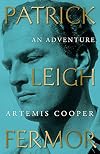
I first encountered Patrick Leigh Fermor when I read his account of his walk across pre-war Europe, recorded in A Time of Gifts, Between the Woods and the Water and the posthumous conclusion, The Broken Road. Now I have read Artemis Cooper's biography of PLF, and I am as enamoured of the man as I was on reading those works.
Although PLF was born into the upper middle class (father in the Indian Civil Service, mother heiress to a minor industrialist with pretentions to the stage), I was show more surprised to find that he had a fairly ordinary upbringing for his first four years in the Northamptonshire village of Weedon, where he was farmed out to the sister of friend of his mother while she alternated between London and India with his older sister. Indeed, I now know that I have passed the fairly ordinary house where PLF was brought up on a number of occasions.
But when he was returned to his mother's care at the age of four, he passed into a different set of surroundings, socialite London in the 1920s. His schooldays were spectacular only for his lack of achievement, but he developed for himself a love of literature, language, art and history. He conceived the idea to walk across Europe to Constantinople, a sort of itinerant scholar, foraging and fending for himself, sleeping in barns and treetops. But whilst he did a certain amount of this, he also had the benefit of letters of introduction to a few key individuals along his route, who in turn passed him on to their friends and acquaintances. In this way, he made his way through a Europe that in a few short years was to vanish.
At the outbreak of war, PLF gave up his life as the lover of a Romanian countess to return to Britain and enlist. Through a set of remarkable circumstances - well, remarkable to mere mortals such as you or I, but apparently increasingly "normal" for PLF - he ended up as an SOE operative in Crete, where he lived for four years amongst the Cretans, participating in guerrilla warfare against the occupying Germans, and ultimately achieving fame by kidnapping a German general and spiriting him away to Cairo.
After the war, PLF travelled widely, writing a number of books on Greece, a country he loved, but also other travel books and magazine articles. He continued to mix in the literary circles of Britain and Europe, and had lasting friendships with many notable writers, artists and thinkers. He died in 2011 at the age of 97.
This book is written by Artemis Cooper, grand-daughter of Duff Cooper (one of PLF's extended circle of friends) and so someone who has some direct personal knowledge of the man. At the same time, this is no hagiography: Artemis Cooper details PLF's problems with authority, his issues with applying himself to work, and the fleeting nature of many of his personal relationships. It seems that PLF was a person that you either took to immediately or thought to be way too self-centred for his own good; Cooper outlines some instances where PLF committed gaffes which estranged him from some quite influential people. At the same time, the level of personal detail Cooper puts in this book accurately reflects the man's gregariousness; if, at the beginning of A Time of Gifts, the reader is tempted to think of the 18-year old PLF boarding the ferry to the Hook of Holland to begin his walk as an innocent abroad, then the early chapters of this book will disavow you of that illusion.
The walk acts as a good framing device, as it was PLF's first major achievement, but he didn't complete his full account of the walk in his lifetime. A Time of Gifts was assembled from diaries, letters and notebooks and was published in 1977, taking him from London to Esztergom, on the Czech/Hungarian border; the second book, Between the Woods and the Water, taking him through Hungary and parts of Romania to the Iron Gates gorge on the Danube and the border with Bulgaria, did not appear until 1986. The final volume, The Broken Road, was still in progress when PLF died. It actually does not cover his arrival into Constantinople (as PLF always referred to Istanbul), and picks up some weeks later, recounting his trip to Mount Athos in Greece, a peninsula known for its remarkable isolated monasteries. It had not appeared in 2012 when this book was published; Cooper and Colin Thubron finally got the book into shape and published it in 2014.
This biography fills in many of the missing parts of PLF's story started in his account of his "Great Trudge" across Europe. Cooper hinted at some of this in the footnotes to The Broken Road, but here we see as detailed an account of PLF's life, loves and travels as one could ask for. I recommend it. show less
Although PLF was born into the upper middle class (father in the Indian Civil Service, mother heiress to a minor industrialist with pretentions to the stage), I was show more surprised to find that he had a fairly ordinary upbringing for his first four years in the Northamptonshire village of Weedon, where he was farmed out to the sister of friend of his mother while she alternated between London and India with his older sister. Indeed, I now know that I have passed the fairly ordinary house where PLF was brought up on a number of occasions.
But when he was returned to his mother's care at the age of four, he passed into a different set of surroundings, socialite London in the 1920s. His schooldays were spectacular only for his lack of achievement, but he developed for himself a love of literature, language, art and history. He conceived the idea to walk across Europe to Constantinople, a sort of itinerant scholar, foraging and fending for himself, sleeping in barns and treetops. But whilst he did a certain amount of this, he also had the benefit of letters of introduction to a few key individuals along his route, who in turn passed him on to their friends and acquaintances. In this way, he made his way through a Europe that in a few short years was to vanish.
At the outbreak of war, PLF gave up his life as the lover of a Romanian countess to return to Britain and enlist. Through a set of remarkable circumstances - well, remarkable to mere mortals such as you or I, but apparently increasingly "normal" for PLF - he ended up as an SOE operative in Crete, where he lived for four years amongst the Cretans, participating in guerrilla warfare against the occupying Germans, and ultimately achieving fame by kidnapping a German general and spiriting him away to Cairo.
After the war, PLF travelled widely, writing a number of books on Greece, a country he loved, but also other travel books and magazine articles. He continued to mix in the literary circles of Britain and Europe, and had lasting friendships with many notable writers, artists and thinkers. He died in 2011 at the age of 97.
This book is written by Artemis Cooper, grand-daughter of Duff Cooper (one of PLF's extended circle of friends) and so someone who has some direct personal knowledge of the man. At the same time, this is no hagiography: Artemis Cooper details PLF's problems with authority, his issues with applying himself to work, and the fleeting nature of many of his personal relationships. It seems that PLF was a person that you either took to immediately or thought to be way too self-centred for his own good; Cooper outlines some instances where PLF committed gaffes which estranged him from some quite influential people. At the same time, the level of personal detail Cooper puts in this book accurately reflects the man's gregariousness; if, at the beginning of A Time of Gifts, the reader is tempted to think of the 18-year old PLF boarding the ferry to the Hook of Holland to begin his walk as an innocent abroad, then the early chapters of this book will disavow you of that illusion.
The walk acts as a good framing device, as it was PLF's first major achievement, but he didn't complete his full account of the walk in his lifetime. A Time of Gifts was assembled from diaries, letters and notebooks and was published in 1977, taking him from London to Esztergom, on the Czech/Hungarian border; the second book, Between the Woods and the Water, taking him through Hungary and parts of Romania to the Iron Gates gorge on the Danube and the border with Bulgaria, did not appear until 1986. The final volume, The Broken Road, was still in progress when PLF died. It actually does not cover his arrival into Constantinople (as PLF always referred to Istanbul), and picks up some weeks later, recounting his trip to Mount Athos in Greece, a peninsula known for its remarkable isolated monasteries. It had not appeared in 2012 when this book was published; Cooper and Colin Thubron finally got the book into shape and published it in 2014.
This biography fills in many of the missing parts of PLF's story started in his account of his "Great Trudge" across Europe. Cooper hinted at some of this in the footnotes to The Broken Road, but here we see as detailed an account of PLF's life, loves and travels as one could ask for. I recommend it. show less
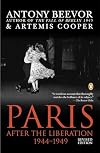
The book in itself is absolutely enthralling. I’ve been a fan of Beevor’s nonfiction prose since I came across a paperback copy of his Berlin – a signed copy, no less! (Sadly a bit worn) – at my now-defunct Dutch auction haunt some years ago. So this one has been on my internal “must-read”-list for quite some time now.
Add to this the contributions of his wife, the always entertaining Artemis Cooper, and you have a very solid constellation.
Now, I’ve never fancied myself an show more expert on post-war France – not by any stretch – but I was somewhat aware that the years of the Cold War was also quite confusing and convoluted in many ways. This book proves that I wasn’t completely off. You are taken on an exhaustive – but not exhausting – tour of the frankly Byzantine chain of events, starting with a meeting between Marshal Petain, De Gaulle, and the rest of the French top brass in 1940.
It’s all there. All the stuff you might associate with France after the war. The intellectuals, the counterculture, the Communists. And yet, it never gets boring. Although I did find myself needing to look up certain names and events from time to time.
A central narrative role – for quite valid reasons – is performed by the power-couple Duff and Diana Cooper, later the 1st Viscount Norwich and Lady Diana Cooper, respectively (Lady Diana refused to be adressed as “Viscountess Norwich”, as she thought it sounded too much like “porridge”). Cooper was the UK ambassador to France from 1944-48 – and the paternal grandfather of Artemis Cooper.
In closing – as I don’t want to spoil too much of this great book – I flat-out loved it. No two ways about it. If you like 20th-Century history – and Beevor’s work in general – you’ll love this one.
5/5 show less
Add to this the contributions of his wife, the always entertaining Artemis Cooper, and you have a very solid constellation.
Now, I’ve never fancied myself an show more expert on post-war France – not by any stretch – but I was somewhat aware that the years of the Cold War was also quite confusing and convoluted in many ways. This book proves that I wasn’t completely off. You are taken on an exhaustive – but not exhausting – tour of the frankly Byzantine chain of events, starting with a meeting between Marshal Petain, De Gaulle, and the rest of the French top brass in 1940.
It’s all there. All the stuff you might associate with France after the war. The intellectuals, the counterculture, the Communists. And yet, it never gets boring. Although I did find myself needing to look up certain names and events from time to time.
A central narrative role – for quite valid reasons – is performed by the power-couple Duff and Diana Cooper, later the 1st Viscount Norwich and Lady Diana Cooper, respectively (Lady Diana refused to be adressed as “Viscountess Norwich”, as she thought it sounded too much like “porridge”). Cooper was the UK ambassador to France from 1944-48 – and the paternal grandfather of Artemis Cooper.
In closing – as I don’t want to spoil too much of this great book – I flat-out loved it. No two ways about it. If you like 20th-Century history – and Beevor’s work in general – you’ll love this one.
5/5 show less
Patrick Leigh Fermor seems to have led a charmed life. He died in 2011 at the age of 96, after living an unorthodox life on his own terms. Leigh Fermor was a war hero, serving as an intelligence officer on Crete and operating throughout Greece during World War II. He now is best known as a travel writer -- indeed, his [b:A Time of Gifts|253984|A Time of Gifts|Patrick Leigh Fermor|http://d202m5krfqbpi5.cloudfront.net/books/1321602492s/253984.jpg|2636997] is one of my favorite books of all show more time. In this affectionate biography, Artemis Cooper uses letters and interviews, publications and journal entries, to describe Leigh Fermor's life in all its complexity, conflict, and joy. This biography is likely to be of interest to readers who already love Leigh Fermor's writing, but it may also bring new readers to his work.
Leigh Fermor was born in 1915 in London to Lewis Leigh Fermor, a respected geologist working for the English Civil Service and stationed in India, and Æileen, a free spirit who loved theatre and socializing, but who chafed against staid expectations for behavior. Paddy-Mike lived the first years of his life separated from his parents and older sister, Vanessa as we has brought up by the Martin family in Northamptonshire, to protect him from possible attack by the Germans. By all accounts, this was an idyllic period in Leigh Fermor's life, but it ended when his mother brought him to live with her in London. He was not yet five.
Leigh Fermor's parents were profoundly incompatible, so they separated and later divorced. Leigh Fermor's youth saw him veering between two extremes: a bright boy with an impressive memory and a talent for languages and history, who was also undisciplined and unwilling (and perhaps unable) to abide by rules. He loved socializing, acted without thinking of consequences, and generally let his high spirits move him to act. As a result, he had difficulty remaining in any one school for longer than a few terms. By the time Leigh Fermor turned 18, his future was in doubt. He was in debt from living a wild social life, he had no degree and no prospects for an academic or a professional future, and his lack of discipline made a tenure in the army questionable at best. Cooper traces these aspects of Leigh Fermor's personailty not only in his youth, but throughout his life. The contrast between his meditative, scholarly inclinations and his adventuresome, exuberant spirit remained a constant.
Photo by Joan Leigh Fermor
At this point, Leigh Fermor developed his plan to walk across Europe, from Holland to Constantinople. The prospect excited him -- the chance of adventure, the promise of meeting new people, the opportunity to see places he had read about in history texts and works of literature, and the ability to make his own decisions about where to go and what to do. He got some funding to help him outfit himself for life as a wanderer, made arrangements to receive his allowance in intervals on the road, and set off on December 8, 1933. The first stage of this journey later was retold by Leigh Fermor in [b:A Time of Gifts|253984|A Time of Gifts|Patrick Leigh Fermor|http://d202m5krfqbpi5.cloudfront.net/books/1321602492s/253984.jpg|2636997], while stage two is related in [b:Between the Woods and the Water|293207|Between the Woods and the Water|Patrick Leigh Fermor|http://d202m5krfqbpi5.cloudfront.net/books/1320564549s/293207.jpg|807394]. (A posthumous volume collecting Leigh Fermor's writings about the final stage of the journey is set to be published in Spring 2014.)
Cooper draws heavily on Leigh Fermor's writings to tell of his travels during this period, but she also provides some additional perspective. She cites on interviews with Leigh Fermor to indicate places where he fictionalized some events. She explores the gaps between 18-year-old Leigh-Fermor's rudimentary understanding of politics and his later recognition that these political blinders made him miss many crucial details relating to the rise of Nazism in Central Europe. She later traces the difficult publication history of these volumes, as for anything that Leigh Fermor wrote. Paddy was often plagued by writer's block, He wrote very slowly, and often was distracted when he was writing. Decades after his walk through Europe, he was overwhelmed by the success of [b:A Time of Gifts|253984|A Time of Gifts|Patrick Leigh Fermor|http://d202m5krfqbpi5.cloudfront.net/books/1321602492s/253984.jpg|2636997] and [b:Between the Woods and the Water|293207|Between the Woods and the Water|Patrick Leigh Fermor|http://d202m5krfqbpi5.cloudfront.net/books/1320564549s/293207.jpg|807394]. Cooper's biography provides insight into this aspect of Leigh Fermor's life, particularly as she quotes from correspondence between Paddy and his publisher.
Princess Balasha Cantacuzène
Cooper also provides insight in Leigh Fermor's life after the walk. She details his relationship with Princess Balasha Cantacuzène, a Romanian painter whom he met in Athens, and with whom he lived for years until the onset of Wrold War II. She describes his work in World War II, when he worked as a British Intelligence Officer, focusing especially on work with the Cretan Resistance Movement. His journeys through Greece and his language skills made him a valuable officer, as did his ability to forge strong relationships with people from different cultures. Leigh Fermor achieved fame for leading a successful operation to kidnap a German general on Crete. Cooper describes not only this action, but also its afterlife, including some controversy over different versions of events, and what happened when Hollywood took interest. Greece remained an important part of Leigh Fermor's life until his death. He visited often, wrote two well-received travel books ([b:Mani: Travels in the Southern Peloponnese|766421|Mani Travels in the Southern Peloponnese|Patrick Leigh Fermor|http://d202m5krfqbpi5.cloudfront.net/books/1343686627s/766421.jpg|780647] and [b:Roumeli: Travels in Northern Greece|766415|Roumeli Travels in Northern Greece|Patrick Leigh Fermor|http://d202m5krfqbpi5.cloudfront.net/books/1343686844s/766415.jpg|752486]), and later designed and built a house there.
Moss, General Kreipe, and Leigh Fermor on Crete
For a long period of time after WWII, Leigh Fermor lived a hand-to-mouth existence. A constant in his life was Joan Rayner, whom he met just after World War II, and who was his longtime partner, and later his wife. In Cooper's portrait, Rayner emerges as a fascinating figure: calm, quiet, practical, intelligent, beloved by her close friends, and, according to Cooper, happy for Leigh Fermor to engage in affairs and spend considerable time away from her. As depicted by Cooper, theirs was not a conventional relationship. Using personal correspondence and interviews with friends. Cooper shows the depth of their mutual love and respect for each other. I would have liked more focus on Joan throughout the biography -- or, perhaps, for someone to write a biography of her. She appears as a self-contained person, someone who valued a spiritual, emotional and intellectual connection with Leigh Fermor far more than any physical relationship. She also was widely-traveled, a skilled photographer, an intelligent person with many gifts and a quiet confidence in herself.
Joan Leigh Fermor
In the end, Cooper presents Patrick Leigh Fermor as a three-dimensional figure, a man whose gifts and flaws shaped his life. He veered between depression and exhilaration throughout his life, but consistently viewed himself as profoundly fortunate. He lived outside of convention, on his own terms. Cooper does not gloss over his flaws, but explores them with sensitivity and balance. I emerged with a better understanding of his life, and a new foundation from which to approach his writings which I have not yet read. show less
Leigh Fermor was born in 1915 in London to Lewis Leigh Fermor, a respected geologist working for the English Civil Service and stationed in India, and Æileen, a free spirit who loved theatre and socializing, but who chafed against staid expectations for behavior. Paddy-Mike lived the first years of his life separated from his parents and older sister, Vanessa as we has brought up by the Martin family in Northamptonshire, to protect him from possible attack by the Germans. By all accounts, this was an idyllic period in Leigh Fermor's life, but it ended when his mother brought him to live with her in London. He was not yet five.
Leigh Fermor's parents were profoundly incompatible, so they separated and later divorced. Leigh Fermor's youth saw him veering between two extremes: a bright boy with an impressive memory and a talent for languages and history, who was also undisciplined and unwilling (and perhaps unable) to abide by rules. He loved socializing, acted without thinking of consequences, and generally let his high spirits move him to act. As a result, he had difficulty remaining in any one school for longer than a few terms. By the time Leigh Fermor turned 18, his future was in doubt. He was in debt from living a wild social life, he had no degree and no prospects for an academic or a professional future, and his lack of discipline made a tenure in the army questionable at best. Cooper traces these aspects of Leigh Fermor's personailty not only in his youth, but throughout his life. The contrast between his meditative, scholarly inclinations and his adventuresome, exuberant spirit remained a constant.
Photo by Joan Leigh Fermor
At this point, Leigh Fermor developed his plan to walk across Europe, from Holland to Constantinople. The prospect excited him -- the chance of adventure, the promise of meeting new people, the opportunity to see places he had read about in history texts and works of literature, and the ability to make his own decisions about where to go and what to do. He got some funding to help him outfit himself for life as a wanderer, made arrangements to receive his allowance in intervals on the road, and set off on December 8, 1933. The first stage of this journey later was retold by Leigh Fermor in [b:A Time of Gifts|253984|A Time of Gifts|Patrick Leigh Fermor|http://d202m5krfqbpi5.cloudfront.net/books/1321602492s/253984.jpg|2636997], while stage two is related in [b:Between the Woods and the Water|293207|Between the Woods and the Water|Patrick Leigh Fermor|http://d202m5krfqbpi5.cloudfront.net/books/1320564549s/293207.jpg|807394]. (A posthumous volume collecting Leigh Fermor's writings about the final stage of the journey is set to be published in Spring 2014.)
Cooper draws heavily on Leigh Fermor's writings to tell of his travels during this period, but she also provides some additional perspective. She cites on interviews with Leigh Fermor to indicate places where he fictionalized some events. She explores the gaps between 18-year-old Leigh-Fermor's rudimentary understanding of politics and his later recognition that these political blinders made him miss many crucial details relating to the rise of Nazism in Central Europe. She later traces the difficult publication history of these volumes, as for anything that Leigh Fermor wrote. Paddy was often plagued by writer's block, He wrote very slowly, and often was distracted when he was writing. Decades after his walk through Europe, he was overwhelmed by the success of [b:A Time of Gifts|253984|A Time of Gifts|Patrick Leigh Fermor|http://d202m5krfqbpi5.cloudfront.net/books/1321602492s/253984.jpg|2636997] and [b:Between the Woods and the Water|293207|Between the Woods and the Water|Patrick Leigh Fermor|http://d202m5krfqbpi5.cloudfront.net/books/1320564549s/293207.jpg|807394]. Cooper's biography provides insight into this aspect of Leigh Fermor's life, particularly as she quotes from correspondence between Paddy and his publisher.
Princess Balasha Cantacuzène
Cooper also provides insight in Leigh Fermor's life after the walk. She details his relationship with Princess Balasha Cantacuzène, a Romanian painter whom he met in Athens, and with whom he lived for years until the onset of Wrold War II. She describes his work in World War II, when he worked as a British Intelligence Officer, focusing especially on work with the Cretan Resistance Movement. His journeys through Greece and his language skills made him a valuable officer, as did his ability to forge strong relationships with people from different cultures. Leigh Fermor achieved fame for leading a successful operation to kidnap a German general on Crete. Cooper describes not only this action, but also its afterlife, including some controversy over different versions of events, and what happened when Hollywood took interest. Greece remained an important part of Leigh Fermor's life until his death. He visited often, wrote two well-received travel books ([b:Mani: Travels in the Southern Peloponnese|766421|Mani Travels in the Southern Peloponnese|Patrick Leigh Fermor|http://d202m5krfqbpi5.cloudfront.net/books/1343686627s/766421.jpg|780647] and [b:Roumeli: Travels in Northern Greece|766415|Roumeli Travels in Northern Greece|Patrick Leigh Fermor|http://d202m5krfqbpi5.cloudfront.net/books/1343686844s/766415.jpg|752486]), and later designed and built a house there.
Moss, General Kreipe, and Leigh Fermor on Crete
For a long period of time after WWII, Leigh Fermor lived a hand-to-mouth existence. A constant in his life was Joan Rayner, whom he met just after World War II, and who was his longtime partner, and later his wife. In Cooper's portrait, Rayner emerges as a fascinating figure: calm, quiet, practical, intelligent, beloved by her close friends, and, according to Cooper, happy for Leigh Fermor to engage in affairs and spend considerable time away from her. As depicted by Cooper, theirs was not a conventional relationship. Using personal correspondence and interviews with friends. Cooper shows the depth of their mutual love and respect for each other. I would have liked more focus on Joan throughout the biography -- or, perhaps, for someone to write a biography of her. She appears as a self-contained person, someone who valued a spiritual, emotional and intellectual connection with Leigh Fermor far more than any physical relationship. She also was widely-traveled, a skilled photographer, an intelligent person with many gifts and a quiet confidence in herself.
Joan Leigh Fermor
In the end, Cooper presents Patrick Leigh Fermor as a three-dimensional figure, a man whose gifts and flaws shaped his life. He veered between depression and exhilaration throughout his life, but consistently viewed himself as profoundly fortunate. He lived outside of convention, on his own terms. Cooper does not gloss over his flaws, but explores them with sensitivity and balance. I emerged with a better understanding of his life, and a new foundation from which to approach his writings which I have not yet read. show less
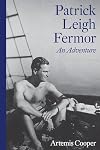
Perhaps I didn't pick up this biography at the right time--although when else? as I had just finished reading the 2nd and 3rd books of Fermor's youthful travels. This is a painstakingly researched and painfully thorough catalog of Fermor's deeds and occasional misdeeds (more like errors of omission or the results of his forgetfulness) and the person that emerges never quite came to life for me -- not in the way he brings himself to life in his own books. Paddy never pretended to be anything show more he wasn't, he had a zest for life beyond the ordinary, restless in body and receptive and curious in mind--in some ways he was drawn to what he wasn't--one of the most constant obsessions was of the monastic life--his irrepressible sociability made it impossible for him to also give himself the silence and solitude he needed to give time and space to the other part of him, deeply thoughtful and eager to "connect the dots" of the almost bewildering amount of information he was constantly taking in. What I found lacking in this biography, were any moments on Cooper's part where she might have stopped to ponder the complexities of Paddy Fermor's personality -- the need for company and solitude in equal measure, the need for a steady relationship with a woman as well as for sexual adventure, the enjoyment of the benefits to being gentry and well-regarded intellectually with his love of hanging about with "the lads" in whatever country he found himself. For me there was just too much of where, who, when and not enough why--so the biography has a kind of uniform blandness of tone which struck me as sad given the ebullience and intransigence of the subject! What is interesting about Paddy Fermor are these contradictions and the truly magical writing that he somehow managed to squeeze out of his inner chaos and Cooper won't go near it, for inexplicable reasons, in my view, no children or family to offend etcetera. I'm sorry to be harsh, if you want to know the facts of Fermor's life, you will not be disappointed, anything more, you will have to work it out for yourself from the information Cooper places before you. ***1/2 show less
Lists
Awards


You May Also Like


Associated Authors
Statistics
- Works
- 9
- Also by
- 8
- Members
- 1,517
- Popularity
- #16,955
- Rating
- 3.9
- Reviews
- 35
- ISBNs
- 72
- Languages
- 13
- Favorited
- 1

