
Keith Devlin
Author of The Millennium Problems: The Seven Greatest Unsolved Mathematical Puzzles of Our Time
About the Author
Born in England in 1947 and living in America since 1987, Keith Devlin has written more than 20 books and numerous research articles on various elements of mathematics. From 1983 to 1989, he wrote a column on for the Manchester (England) Guardian. The collected columns are published in All the Math show more That's Fit to Print (1994) and cover a wide range of topics from calculating travel expenses to calculating pi. His book Logic and Information (1991) is an introduction to situation theory and situation semantics for mathematicians. Co-author of the PBS Nova episode "A Mathematical Mystery Tour," he is also the author of Devlin's Angle, a column on the Mathematical Association of America's electronic journal. Devlin lives in California, where he is dean of the school of science at Saint Mary's College in Morgana. He is currently studying the use of mathematics to analyze communication and information flow in the workplace. (Bowker Author Biography) show less
Works by Keith Devlin
The Millennium Problems: The Seven Greatest Unsolved Mathematical Puzzles of Our Time (2002) 521 copies, 6 reviews
The Math Gene: How Mathematical Thinking Evolved And Why Numbers Are Like Gossip (2000) 417 copies, 5 reviews
The Unfinished Game: Pascal, Fermat, and the Seventeenth-Century Letter that Made the World Modern (2008) 244 copies, 5 reviews
Mathematics: The Science of Patterns : The Search for Order in Life, Mind, and the Universe (Scientific American Library) (1994) 228 copies, 1 review
The Math Instinct: Why You're a Mathematical Genius (Along with Lobsters, Birds, Cats, and Dogs) (2005) 203 copies, 4 reviews
Goodbye, Descartes: The End of Logic and the Search for a New Cosmology of the Mind (1997) 144 copies, 2 reviews
Associated Works
What Is Your Dangerous Idea? Today's Leading Thinkers on the Unthinkable (2007) — Contributor — 668 copies, 8 reviews
Tagged
Common Knowledge
- Other names
- "The Math Guy"
- Birthdate
- 1947-03-16
- Gender
- male
- Education
- King's College London (BSc - Mathematics Hons, 1968)
University of Bristol (PhD - Mathematics, 1972) - Occupations
- mathematician
professor
journalist - Organizations
- Stanford University
St. Mary's College of California
Colby College
University of Lancaster
University of Toronto
University of Heidelberg (show all 8)
University of Oslo
BrainQuake - Awards and honors
- American Association for the Advancement of Science (Fellow, 1999)
Forum Fellow, World Economic Forum
Carl Sagan Prize for Science Popularization (2007)
American Mathematical Society (Fellow, 2012)
Peano Prize (2003)
Pythagoras Prize (2005) - Short biography
- Dr. Keith Devlin is executive director of Stanford University's Center for the Study of Language and Information and a consulting professor of mathematics at Stanford. Devlin has a B.Sc. degree in Mathematics from King's College London (1968) and a Ph.D. in Mathematics from the University of Bristol (1971). He is a fellow of the American Association for the Advancement of Science, a World Economic Forum fellow, and a former member of the Mathematical Sciences Education Board of the U.S. National Academy of Sciences. Devlin has been a regular contributor to National Public Radio's popular Weekend Edition, where he is known as "the Math Guy" in his on-air conversations with host Scott Simon. His monthly column, "Devlin's Angle," appears on Mathematical Association of America's web journal MAA Online. [from The Numbers Behind Numb3ers (2007)]
- Nationality
- UK (birth)
USA - Birthplace
- Hull, Yorkshire, England, UK
- Places of residence
- Palo Alto, California, USA
England, UK - Associated Place (for map)
- England, UK
Members
Reviews
The Millennium Problems: The seven greatest unsolved mathematical puzzles of our time by Keith J. Devlin

Keith Devlin takes on a daunting task in The Millennium Problems: explain the problems that the Clay Mathematical Institute in 2000 labeled the seven most important unsolved problems in modern mathematics to an audience of non-mathematicians. Given the difficulty of this problem, Devlin succeeds as well as could reasonably be expected.
Devlin organizes the book from most comprehensible to least, beginning with the relatively straightforward Riemann Hypothesis dealing with the distribution of show more prime numbers (though ease in understanding is not ease in solving; this is the longest-standing of the Problems, first proposed in 1859.) He works his way through the classic algorithmic question of P vs NP and the Poincaré Conjecture (proved in 2006, after the publication of this book) to the utterly opaque Hodge conjecture, where he effectively throws up his hands in despair at even attempting to explain the problem.
The book assumes an interest in math (why else would anyone read it, after all?), but not much knowledge of the field. This was actually rather baffling; Devlin has no qualms about introducing the fundamentals of complex analysis or group theory, but doesn't assume the reader knows or remembers differential calculus. I thus found myself skimming impatiently at some points while being baffled at others. It's probably safe to assume that people who didn't take any math at all in college wouldn't touch this book, so why the coyness about high school calculus?
As a physicist and astronomer by training, it was difficult for me to understand why some of these problems matter. P vs NP is obviously tremendously important to modern computing, and the Navier-Stokes equations of fluid mechanics have clear real-world applications (and their inclusion in the list of problems validated my longstanding opinion that quantum mechanics and general relativity are childs' play compared to the terrors of fluid dynamics), but what will it actually mean, even to mathematicians, whether the Hodge conjecture is true?
This review may seem fairly critical, but overall The Millennium Problems is a very interesting read; the task it tackles may just be nearly as difficult as some of the problems it describes. show less
Devlin organizes the book from most comprehensible to least, beginning with the relatively straightforward Riemann Hypothesis dealing with the distribution of show more prime numbers (though ease in understanding is not ease in solving; this is the longest-standing of the Problems, first proposed in 1859.) He works his way through the classic algorithmic question of P vs NP and the Poincaré Conjecture (proved in 2006, after the publication of this book) to the utterly opaque Hodge conjecture, where he effectively throws up his hands in despair at even attempting to explain the problem.
The book assumes an interest in math (why else would anyone read it, after all?), but not much knowledge of the field. This was actually rather baffling; Devlin has no qualms about introducing the fundamentals of complex analysis or group theory, but doesn't assume the reader knows or remembers differential calculus. I thus found myself skimming impatiently at some points while being baffled at others. It's probably safe to assume that people who didn't take any math at all in college wouldn't touch this book, so why the coyness about high school calculus?
As a physicist and astronomer by training, it was difficult for me to understand why some of these problems matter. P vs NP is obviously tremendously important to modern computing, and the Navier-Stokes equations of fluid mechanics have clear real-world applications (and their inclusion in the list of problems validated my longstanding opinion that quantum mechanics and general relativity are childs' play compared to the terrors of fluid dynamics), but what will it actually mean, even to mathematicians, whether the Hodge conjecture is true?
This review may seem fairly critical, but overall The Millennium Problems is a very interesting read; the task it tackles may just be nearly as difficult as some of the problems it describes. show less
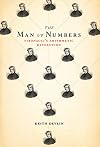
I clearly remember puzzling out the relationship between the numbers in the Fibonacci sequence back in grade school, so I was vaguely expecting a bunch of interesting number puzzles from this book. Instead, what I got was a fantastic historical and mathematical tour of Italy in and around the 13th century, and an appreciation for the revolution caused by the introduction of the numerals 0-9 and the new way of doing arithmetic.
While I had a vague idea that doing arithmetic with roman numerals show more was annoying, I hadn't really thought about how much easier it is to use 0-9. The introduction of the new math was totally revolutionary, affecting the complexity of trade in the newly emerging banking, and insurance industries. Like most brilliant new ideas, it was resisted (in some cases legislated against), and then eventually simply replaced the previous system to the degree that we don't even think about it anymore. Fibonacci is famous for publishing the first practical guides to using the new mathematical tools, and appears to be the direct ancestor of day's math textbooks. Devlin puts some translations of Fibonacci's solutions to example problems alongside the solutions that people today would be familiar with from a high-school math class, and it is shocking to see just how far we have come. If you're someone who doesn't like looking at equations, these are easy to skip past as they're simply for illustration...and I suspect that Fibonacci's approach to arithmetic might give you a whole new appreciation for them!
This was a great book. Nice and short. Devlin's style is easy to read and entertaining, and I learned a lot. I'm definitely planning to investigate some of his other books. show less
While I had a vague idea that doing arithmetic with roman numerals show more was annoying, I hadn't really thought about how much easier it is to use 0-9. The introduction of the new math was totally revolutionary, affecting the complexity of trade in the newly emerging banking, and insurance industries. Like most brilliant new ideas, it was resisted (in some cases legislated against), and then eventually simply replaced the previous system to the degree that we don't even think about it anymore. Fibonacci is famous for publishing the first practical guides to using the new mathematical tools, and appears to be the direct ancestor of day's math textbooks. Devlin puts some translations of Fibonacci's solutions to example problems alongside the solutions that people today would be familiar with from a high-school math class, and it is shocking to see just how far we have come. If you're someone who doesn't like looking at equations, these are easy to skip past as they're simply for illustration...and I suspect that Fibonacci's approach to arithmetic might give you a whole new appreciation for them!
This was a great book. Nice and short. Devlin's style is easy to read and entertaining, and I learned a lot. I'm definitely planning to investigate some of his other books. show less
 This review was written for LibraryThing Early Reviewers.
I read books on the history of math because I am interested in how people think, not specially in math. This is a very touching book on how arithmetic was introduced to Europe in 1202 by Fibonacci, an Italian we know almost nothing about. At the eve of what was to become "global trade", arithmetic came just on time. What made it possible was the introduction of the numerals 0 to 9 and place value. This, Fibonacci inherited from India via the Arab world: he made popular what we now consider show more basic knowledge all over the world. It could be a dry book, it is not: under the bright, intelligent, incisive style of Keith Devlin, there is a lot of love and emotion, the ambition to correct a wrongdoing of history: if you know Fibonacci's name, it is probably for the wrong reason. The book tells you a lot on how people thought: how do you solve problems when you do not have mathematical symbols? Devlin guides us through some problem solving examples from the Fibonacci's book of calculation, I found this entertaining. I live in Savannah GA where no kid knows how to divide by ten, because teachers have forgotten the importance of place value: this is the kind of book that would remind them what arithmetic is about: it is the first step to democracy. show less
This review was written for LibraryThing Early Reviewers.
How do you write a book on a man about whom almost nothing is known? Leonardo Pisano (Fibonacci) is such a man. Keith Devlin's answer is to write about the effect that this man's masterpiece Liber Abaci had on the history of Europe. Unable to see the man directly, we can gain some notion of his importance by the way that his work changed Italy, Europe and the world.
An Italian mathematician of the late 12th and early 13th centuries, Leonardo of Pisa (hence Pisano) was an early pioneer in the show more education of Europeans in the Hindu-Arabic number system and its uses in arithmetic and algebraic calculations. Leonardo did not bring our modern number system to Europe. It was already known. He does not appear to have added appreciably to the body of knowledge concerning mathematics. Most of the techniques and problems illustrated in his works were due to earlier Arabic scholars. What makes Leonardo an important man is his practical educational work among the merchants of Italy. He trained a generation (or more) of Italian business men and educators , writing books which served to spread efficient computation beyond the borders of Italy and into northern Europe.
'The Man of Numbers' outlines the transformation of Italian business due to Fibonacci's efforts. He illustrates the practical importance of the work with examples of problems and their solutions from Liber Abaci, an effort which will make you thankful for the centuries of pedagogical progress made since Leonardo's time. Unfortunately, I felt that the book left me with more questions than answers. Devlin's book is not meant to be a history of commerce and the influences of mathematics on business, but one is left with the feeling that this is where the real story lies. Having been shown a glimpse of this history, I found myself wanting more.
Throughout the book, I kept remembering the old James Burke documentary series, Connections. I kept wanting Devlin to make that connection on to something beyond his limited subject. I can't really fault him for this, as that was not his goal. However, I think that this could be a great starting point for someone more ambitious. Someone who would take us from the earliest records of counting and business record keeping of, let's say, the Egyptians or Sumerians up to the stock market collapse of 2008. show less
An Italian mathematician of the late 12th and early 13th centuries, Leonardo of Pisa (hence Pisano) was an early pioneer in the show more education of Europeans in the Hindu-Arabic number system and its uses in arithmetic and algebraic calculations. Leonardo did not bring our modern number system to Europe. It was already known. He does not appear to have added appreciably to the body of knowledge concerning mathematics. Most of the techniques and problems illustrated in his works were due to earlier Arabic scholars. What makes Leonardo an important man is his practical educational work among the merchants of Italy. He trained a generation (or more) of Italian business men and educators , writing books which served to spread efficient computation beyond the borders of Italy and into northern Europe.
'The Man of Numbers' outlines the transformation of Italian business due to Fibonacci's efforts. He illustrates the practical importance of the work with examples of problems and their solutions from Liber Abaci, an effort which will make you thankful for the centuries of pedagogical progress made since Leonardo's time. Unfortunately, I felt that the book left me with more questions than answers. Devlin's book is not meant to be a history of commerce and the influences of mathematics on business, but one is left with the feeling that this is where the real story lies. Having been shown a glimpse of this history, I found myself wanting more.
Throughout the book, I kept remembering the old James Burke documentary series, Connections. I kept wanting Devlin to make that connection on to something beyond his limited subject. I can't really fault him for this, as that was not his goal. However, I think that this could be a great starting point for someone more ambitious. Someone who would take us from the earliest records of counting and business record keeping of, let's say, the Egyptians or Sumerians up to the stock market collapse of 2008. show less
This review was written for LibraryThing Early Reviewers.Lists
Awards


You May Also Like


Associated Authors
Statistics
- Works
- 33
- Also by
- 2
- Members
- 3,794
- Popularity
- #6,677
- Rating
- 3.6
- Reviews
- 57
- ISBNs
- 153
- Languages
- 13
- Favorited
- 1
