
Jamie Russell
Author of Book of the Dead: The Complete History of Zombie Cinema
Works by Jamie Russell
Tagged
Common Knowledge
- Birthdate
- 1974
- Gender
- male
- Occupations
- freelance writer
- Places of residence
- Shropshire, England, UK
- Associated Place (for map)
- England, UK
Members
Reviews
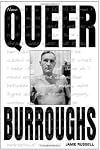
I picked this up on a whim probably because my partner is so immersed in queer and gender theory as of late, and Burroughs on my mind being the relatively recent 50th anniversary of Naked Lunch and the release of the William S. Burroughs: A Man Within film. And I couldn’t put it down. Usually I find critical analysis of Burroughs’ work blah. Russell’s book fills a lacuna that definitely need filled considering Burrough’s, as Russell calls it, problematic relationship with gay show more culture. Never one accept any standard narrative, including the gay community’s, Burroughs’ hawkishness and political incorrectness alienates him from most politcal or aesthetic blocs. Hombre insivible indeed. Russell though clearly demonstrates the dialog between gay culture and Burroughs oevre. As gay culture changed so did Burroughs work with the most striking shift being before and after Stonewall and the subsequent sea change in gay consciousness. The book also works as a de facto primer on gay history in America as Russell mirrors Burroughs’ work against it.Outside the issues of gay identity central to the book, Russell has some other great insights to Burroughs’ work. First, Burroughs' large debt to Scientology. If this surprises you, read Queer Burroughs. Second, Russell’s acknowledgement that Cronenberg’s adaption / bio-pic hybrid of Naked Lunch is a failure precisely because of Cronenberg’s disinterest/misunderstanding/ignorance of gay issues in Burroughs’ work. A recent double feature screening of A Man Within and Naked Lunch made me realize the same thing shortly before reading Russell. This is a splinter that pains any viewing Cronenberg’s film for me. And apparently for Russell too as he goes of out his way to shoehorn this point into the text early on though really any mention of Cronenberg’s film is unnecessary for his program. Let’s just take some pop shots while we have the floor? Okay – I will! Errr, I mean I did!This book was great but I'm giving it four stars instead of five because of Russell's willful exclusion of the herion issue. For all of the analysis of Burroughs' obsession with bodily possession from without, with loss of bodily control, Burroughs' history of herion addiction (and the nature thereof) deserved a larger nod [pun?] than it got. I understand why Russell left it out but maybe it should have been addressed early to get it out of the way. Maybe it is even more important than a knock on David Cronenberg.I should read the Wild Boys tetralogy again. "His essentialist assumptions over issues of gender place him at odds with the prevalent trend of queer, gender, and postmodern theory. While this does not justify Burroughs'exclusion from the queer canon, it does indicate the extend to which his inclusion would be politically problematic and could only ever be regarded as a historical recuperation of a novelist whose work expresses desires that the contemporary gay movement has long since sought to distance itself from... Perhaps it is too much to expect of an author whose career as a gay novelist spans McCarthy, the Mattachine Society, Stonewall, the Gay Liberation Front, the clone scene, AIDS, and the emergence of the discourses of postmodernity."I couldn't have said it better myself. I can't someone out there stop me from using the world "de facto" in review? show less
Last year I requested that my local library buy a few books on zombie cinema. Pretend We're Dead: Capitalist Monsters in American Pop Culture was okay - it read a bit too much like a dissertation (which it was). Very "cultural studies" - I had a hard time discerning the chicken or the egg - did the filmakers intentionally make horror films that critiqued capitalism or do we read them that way because we want to critique capitalism?
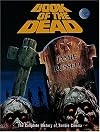
Anyway, next up was Book of the Dead: The Complete History of show more Zombie Cinema. I made it my bedtime reading (yes, I am so much of a zombie cinema fan this did not give me nightmares - in fact, dreams I have with zombies in them tend not to be nightmares) and savored every word. From the looks of it, Book of the Dead is a reference book with lots of color pictures. In fact, the first half of the book is chronological and insightful criticism, while the second half is a movie-by-movie reference guide to every zombie film.
Russell doesn't paint zombie films with a broad stroke - rather, he starts with the White Zombie (1932), explaining the origins of zombie cinema in the American occupation of Haiti and covers every decades, every nation, and every variation up until the present (he ends with Romero's Land of the Dead). Throughout the book zombie cinema is contextualized; you cannot understand Spanish zombie cinema without taking Franco into account and you can't understand Japanese zombie cinema without taking the Resident Evil video game into consideration.
Russell is just as willing to discuss terrible zombie movies as the excellent ones, from homemade fan films to Romero's classics. He covers the established interpretations and challenges them (are all Italian zombie films really about Catholicism? Probably not). Sometimes he can't help himself and cracks jokes or expresses shock. He includes fun details (I didn't know Simon Pegg had a cameo in Land of the Dead or that Tom Savini was also the special effects artist in Dawn of the Dead) and gave me a long list of films to see. show less
Anyway, next up was Book of the Dead: The Complete History of show more Zombie Cinema. I made it my bedtime reading (yes, I am so much of a zombie cinema fan this did not give me nightmares - in fact, dreams I have with zombies in them tend not to be nightmares) and savored every word. From the looks of it, Book of the Dead is a reference book with lots of color pictures. In fact, the first half of the book is chronological and insightful criticism, while the second half is a movie-by-movie reference guide to every zombie film.
Russell doesn't paint zombie films with a broad stroke - rather, he starts with the White Zombie (1932), explaining the origins of zombie cinema in the American occupation of Haiti and covers every decades, every nation, and every variation up until the present (he ends with Romero's Land of the Dead). Throughout the book zombie cinema is contextualized; you cannot understand Spanish zombie cinema without taking Franco into account and you can't understand Japanese zombie cinema without taking the Resident Evil video game into consideration.
Russell is just as willing to discuss terrible zombie movies as the excellent ones, from homemade fan films to Romero's classics. He covers the established interpretations and challenges them (are all Italian zombie films really about Catholicism? Probably not). Sometimes he can't help himself and cracks jokes or expresses shock. He includes fun details (I didn't know Simon Pegg had a cameo in Land of the Dead or that Tom Savini was also the special effects artist in Dawn of the Dead) and gave me a long list of films to see. show less
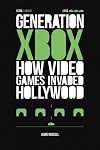
Took me only three days before finishing this book because it is really entertaining and does a very good job explaining the game developers / publishers relationships and Hollywood with great insights and facts i never heard before - like the development of the NEMO console!
If you are in the games industry - read this book!
If you are in the games industry - read this book!
From within the Game Bundle, this happens to be my least favorite book. Not because it didn't have enough data, quite on the contrary. You can see that there was a lot of research in this book (although it could use another review). The problem is that Generation Xbox is such a dense, factual, tedious, not-fun-to-read book that could be summed-up into "games-based movies are not successful because people who make the movies never actually played the goddamned game", which is mentioned by a show more Gabe Newell quote near the end of the book. The book does mention how the video games affected a couple of technologies used by the movie, but it still gave out the idea that it was about why movies based on video game stories did not succeed. show less
Awards


You May Also Like


Associated Authors
Statistics
- Works
- 10
- Members
- 312
- Popularity
- #75,594
- Rating
- 4.0
- Reviews
- 6
- ISBNs
- 25
- Languages
- 2