
Kelly Hale
Author of Doctor Who: Grimm Reality
Works by Kelly Hale
Blood Pith Crux 1 copy
Associated Works
Whedonistas!: A Celebration of the Worlds of Joss Whedon by the Women Who Love Them (2011) — Contributor — 115 copies, 4 reviews
Chicks Unravel Time: Women Journey Through Every Season of Doctor Who (2012) — Contributor — 103 copies, 3 reviews
Twice Upon A Time: Fairytale, Folklore, & Myth. Reimagined & Remastered. (2015) — Contributor — 11 copies, 1 review
Tagged
Common Knowledge
Members
Reviews

The Vampire Curse covers three different encounters with vampires across Bernice Summerfield's lifetime. (She also battle vampires in the New Adventures in Blood Harvest, which would go between the first and second stories in this volume.) The first, Mags Halliday's "The Badblood Diaries," is set during her postgraduate years, before she met the Doctor. She goes on an archaeological expedition which is (of course) attacked by vampires. The whole story is told in the form of a column she's show more publishing about her adventures, which somewhat strained my credulity, as she's very open about some things I'm not entirely convinced one would reveal to a broad audience. However, Halliday is great at capturing Benny's voice; we've heard a lot of it thanks to the use of her diary throughout her history, and I could easily imagine Lisa Bowerman reading the lines. It's filled with little observations of people that sketch in character very quickly and very well, and also feel very Young Benny. The plot, on the other hand, was a bit too straightforward. I enjoyed the experience of reading it, but when it finished I was surprised that was all that had happened.
The second, "Possum Kingdom" by Kelly Hale, actually takes place during Benny's travels with the seventh Doctor, and he even puts in a brief (unnamed, of course) appearance on pp. 98-99. (I'd guess it goes somewhere between Set Piece and Original Sin.) Benny joins a group of time-traveling tourists in order to help track down an ancient, vampiric evil. I didn't entirely understand what was going on, as the story isn't told in order, but I enjoyed Hale's descriptions of Texas. The best part of the story, though, is the time tourism agency; the tour is about vampires, and so there are lots of good jokes about this, like the guy they meet outside Dracula's castle who matter-of-factly claims his uncle came back as a vampire to help with the kids, and the visit to the Edward and Bella Reenactment Society in Forks, Washington. I think it's the most complicated story in the volume, but also the shortest.
The last story, Philip Purser-Hallard's "Predating the Predators," is the best one. Set during series 9 of the audio dramas (probably between The Adventure of the Diogenes Damsel and The Diet of Worms), the story is about an academic conference on vampires where the keynote speaker is a vampire. It's told as a collection of documents (shades of Dracula, there), mostly excerpts from the diary of a Jesuit priest and letters from a physics graduate student to his sister. It's funny and clever, as Purser-Hallard explores the sfnal implications of vampires on other planets to good effect. Benny's role isn't terribly huge, but it is significant, and also clever and funny. I really enjoyed reading it.
The whole collection is worth reading even if it is a little uneven. This doesn't reach the heights of some previous Bernice Summerfield three-in-one books like Nobody's Children or Old Friends, but it still shows off the strengths of the format. It's a shame that this would be its last use; from here on out, all the Benny books will be short-story anthologies or novels, nothing in between. show less
The second, "Possum Kingdom" by Kelly Hale, actually takes place during Benny's travels with the seventh Doctor, and he even puts in a brief (unnamed, of course) appearance on pp. 98-99. (I'd guess it goes somewhere between Set Piece and Original Sin.) Benny joins a group of time-traveling tourists in order to help track down an ancient, vampiric evil. I didn't entirely understand what was going on, as the story isn't told in order, but I enjoyed Hale's descriptions of Texas. The best part of the story, though, is the time tourism agency; the tour is about vampires, and so there are lots of good jokes about this, like the guy they meet outside Dracula's castle who matter-of-factly claims his uncle came back as a vampire to help with the kids, and the visit to the Edward and Bella Reenactment Society in Forks, Washington. I think it's the most complicated story in the volume, but also the shortest.
The last story, Philip Purser-Hallard's "Predating the Predators," is the best one. Set during series 9 of the audio dramas (probably between The Adventure of the Diogenes Damsel and The Diet of Worms), the story is about an academic conference on vampires where the keynote speaker is a vampire. It's told as a collection of documents (shades of Dracula, there), mostly excerpts from the diary of a Jesuit priest and letters from a physics graduate student to his sister. It's funny and clever, as Purser-Hallard explores the sfnal implications of vampires on other planets to good effect. Benny's role isn't terribly huge, but it is significant, and also clever and funny. I really enjoyed reading it.
The whole collection is worth reading even if it is a little uneven. This doesn't reach the heights of some previous Bernice Summerfield three-in-one books like Nobody's Children or Old Friends, but it still shows off the strengths of the format. It's a shame that this would be its last use; from here on out, all the Benny books will be short-story anthologies or novels, nothing in between. show less
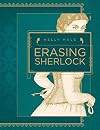
https://fromtheheartofeurope.eu/erasing-sherlock-by-kelly-hale/
Last of the books I bought when I was thinking of giving the Faction Paradox sequence a try, and I must say the most enjoyable of those that I have read, perhaps because it is barely connected to the incomprehensible main story-line. Our protagonist is a far-future researcher who installs herself as a maid at 221b Baker Street in order to observe the young Sherlock Holmes at work. Romance, sex and criminal violence ensue. I show more really liked it. Hale’s Sherlock Holmes is not the somewhat austere figure of Doyle (and indeed most theatrical presentations); he’s a young man starting to establish himself, often short of money, emotionally vulnerable, and a lot more convincing as a human being. Good stuff. show less
Last of the books I bought when I was thinking of giving the Faction Paradox sequence a try, and I must say the most enjoyable of those that I have read, perhaps because it is barely connected to the incomprehensible main story-line. Our protagonist is a far-future researcher who installs herself as a maid at 221b Baker Street in order to observe the young Sherlock Holmes at work. Romance, sex and criminal violence ensue. I show more really liked it. Hale’s Sherlock Holmes is not the somewhat austere figure of Doyle (and indeed most theatrical presentations); he’s a young man starting to establish himself, often short of money, emotionally vulnerable, and a lot more convincing as a human being. Good stuff. show less
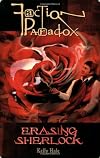
An excellent young Sherlock Holmes, by an author with a strong and evocative prose style. I loved it.
wanted to write a lengthy review/commentary of Erasing Sherlock, which I've just finished, but come to the conclusion that saying less, now, is better than writing the ideal perfect review a year from now.
I really enjoyed this book, for two reasons: Sherlock Holmes, and Gillian ("Rose") Petra, the protagonists. I thought Hale nailed the late-twenties genius-and-boy-doesn't-he-know-it show more Sherlock, with attitude, complexes, mood swings, massive jerk attacks, Daddy issues, talent coming out his ears, and when it comes right down to it, an unflinching and sterling moral core.
And Gillian Petra, the time-travelling female narrator from somewhere approaching our own time (a little later) was almost too close to the bone for me. Painful to read sometimes. She's a grad student, going to write her thesis on something Sherlock-based, she's got the training, the knowledge, the foreknowledge, ha, the Victorian-England-data-implants (or something like that), and she's plenty bright. But she is not as bright as she thinks she is, and frankly she is hopelessly outclassed by our hero. She knows it, too. Their love affair insofar as you can call it that is coloured by her painful knowledge - and Sherlock's self-knowledge - that his interest in her will last only as along as she continues to be a mystery to him. Once he's solved it, he won't want her. Or so they both believe.
Now by that time, as it turns out, he has developed a great deal of affection for her that is not based on her mysterious past/present/future. But the fact remains that they are not equals. They present as equals because Sherlock is really smart, and Gillian is unusual (in Victorian England) and has a lot of knowledge he doesn't have. But his superiority is one of essence, and hers merely of position, which she can lose. So in the end it's not a lifelong partnership, but an affair, and Gillian gets out just in time, before he would have tired of her. She's, ultimately, not bright enough for him; not his natural equal.
And I find that acutely painful, because thanks to Hale's writing I've fallen hopelessly in love with Sherlock myself, and recognize myself, also painfully, in Gillian. Sherlock would ultimately lose interest in me too. AUGH.
If one compares these to the Mary Russell/Sherlock Holmes books by Laurie R. King, Gillian is no Mary Russell, in that Mary Russell is a transparent Mary Sue (name a perfection she doesn't have) - so is Sherlock, mind you, in Conan Doyle - where Gillian makes dumb mistakes all over the place, just the mistakes a normal human would make, over and over. She resents the amount of work she has to do (she's disguised as Mrs. Hudson's housemaid, and works 16 hours a day). She drinks too much, m ore than once, with disastrous results. She is moved by petty vanity to do silly things. She thinks she knows more than she does. She is being manipulated and is not aware of it. She is altogether human, where Mary Russell, frankly, is not.
Hale's Sherlock is likewise much more human than either Doyle's or King's. He is in his twenties and is just learning how to be Holmes, for one thing. But he is, in addition to being proud, arrogant, moody, and frequently a complete bastard, enormously bound by the conventions of his class (which is upper, though he has no money). He may be a keen observer of the foibles and vagaries of other classes - lower classes, female classes, whatever - and be accurately able to reproduce or describe them; but he is unthinkingly certain that he personally and by class is better than those lower class sorts, also those female sorts. He may be able to tell you how women really behave, but that does not at all mean that he doesn't have very Victorian assumptions about how they SHOULD behave.
He has improved a lot by the end of the novel, mind you. He learns quite a lot from Gillian.
Other notes: it's enormously well-written. Vivid, evocative, colourful and unusual descriptions that bring people, places, emotions to life, in just a few words. also, very erotic (without being very graphic) sex scenes.
Only caveat: I wanted it to go on longer. though I can see why it didn't, but I would have liked more before the end. show less
wanted to write a lengthy review/commentary of Erasing Sherlock, which I've just finished, but come to the conclusion that saying less, now, is better than writing the ideal perfect review a year from now.
I really enjoyed this book, for two reasons: Sherlock Holmes, and Gillian ("Rose") Petra, the protagonists. I thought Hale nailed the late-twenties genius-and-boy-doesn't-he-know-it show more Sherlock, with attitude, complexes, mood swings, massive jerk attacks, Daddy issues, talent coming out his ears, and when it comes right down to it, an unflinching and sterling moral core.
And Gillian Petra, the time-travelling female narrator from somewhere approaching our own time (a little later) was almost too close to the bone for me. Painful to read sometimes. She's a grad student, going to write her thesis on something Sherlock-based, she's got the training, the knowledge, the foreknowledge, ha, the Victorian-England-data-implants (or something like that), and she's plenty bright. But she is not as bright as she thinks she is, and frankly she is hopelessly outclassed by our hero. She knows it, too. Their love affair insofar as you can call it that is coloured by her painful knowledge - and Sherlock's self-knowledge - that his interest in her will last only as along as she continues to be a mystery to him. Once he's solved it, he won't want her. Or so they both believe.
Now by that time, as it turns out, he has developed a great deal of affection for her that is not based on her mysterious past/present/future. But the fact remains that they are not equals. They present as equals because Sherlock is really smart, and Gillian is unusual (in Victorian England) and has a lot of knowledge he doesn't have. But his superiority is one of essence, and hers merely of position, which she can lose. So in the end it's not a lifelong partnership, but an affair, and Gillian gets out just in time, before he would have tired of her. She's, ultimately, not bright enough for him; not his natural equal.
And I find that acutely painful, because thanks to Hale's writing I've fallen hopelessly in love with Sherlock myself, and recognize myself, also painfully, in Gillian. Sherlock would ultimately lose interest in me too. AUGH.
If one compares these to the Mary Russell/Sherlock Holmes books by Laurie R. King, Gillian is no Mary Russell, in that Mary Russell is a transparent Mary Sue (name a perfection she doesn't have) - so is Sherlock, mind you, in Conan Doyle - where Gillian makes dumb mistakes all over the place, just the mistakes a normal human would make, over and over. She resents the amount of work she has to do (she's disguised as Mrs. Hudson's housemaid, and works 16 hours a day). She drinks too much, m ore than once, with disastrous results. She is moved by petty vanity to do silly things. She thinks she knows more than she does. She is being manipulated and is not aware of it. She is altogether human, where Mary Russell, frankly, is not.
Hale's Sherlock is likewise much more human than either Doyle's or King's. He is in his twenties and is just learning how to be Holmes, for one thing. But he is, in addition to being proud, arrogant, moody, and frequently a complete bastard, enormously bound by the conventions of his class (which is upper, though he has no money). He may be a keen observer of the foibles and vagaries of other classes - lower classes, female classes, whatever - and be accurately able to reproduce or describe them; but he is unthinkingly certain that he personally and by class is better than those lower class sorts, also those female sorts. He may be able to tell you how women really behave, but that does not at all mean that he doesn't have very Victorian assumptions about how they SHOULD behave.
He has improved a lot by the end of the novel, mind you. He learns quite a lot from Gillian.
Other notes: it's enormously well-written. Vivid, evocative, colourful and unusual descriptions that bring people, places, emotions to life, in just a few words. also, very erotic (without being very graphic) sex scenes.
Only caveat: I wanted it to go on longer. though I can see why it didn't, but I would have liked more before the end. show less
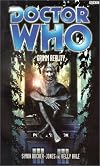
Grimm Reality is an Eighth Doctor Adventure, with companions Anji and Fitz. Anji and Fitz are probably one of my favorite TARDIS teams. While I did think the book was a little muddled at times, it was pretty enjoyable. The TARDIS lands on a world of fairy tales. There are wishing boxes and witches and giants and sleeping princesses in castles and other fairy tale things. But it's mostly the real kind of fairy tale, where people get eaten by wolves and the kindly woodcutter never comes along, show more because children need to know about the horrors of the world.
About as soon as the crew exits the TARDIS, the whole thing is swallowed by a bunch of trees. So right off the TARDIS is rendered unavailable, and then by about thirty pages later the Doctor, Anji, and Fitz are all split up. A traditional Doctor Who plot! Anji is even kidnapped! And then the aliens come in. Not that the planet isn't alien, but a bunch of space explorers show up, on a ship crewed by three different races. Human, insectoid, and something looking like pink hippos. They think the planet has something they want, so various members of the crew are sent down to get it. The "magical" aspects of the planet collide with technology, and the whole thing turns into a mess.
Can the Doctor save the day while being chased by giants? Can Fitz find the Doctor and Anji and figure out what's going on with the wolf pelt he's wearing? Can Anji get out of servitude to a household of mean sisters and maybe win a beauty competition? Did that one guy really turn into a fox? Will the princess ever wake? All good questions! All answered in the book! show less
About as soon as the crew exits the TARDIS, the whole thing is swallowed by a bunch of trees. So right off the TARDIS is rendered unavailable, and then by about thirty pages later the Doctor, Anji, and Fitz are all split up. A traditional Doctor Who plot! Anji is even kidnapped! And then the aliens come in. Not that the planet isn't alien, but a bunch of space explorers show up, on a ship crewed by three different races. Human, insectoid, and something looking like pink hippos. They think the planet has something they want, so various members of the crew are sent down to get it. The "magical" aspects of the planet collide with technology, and the whole thing turns into a mess.
Can the Doctor save the day while being chased by giants? Can Fitz find the Doctor and Anji and figure out what's going on with the wolf pelt he's wearing? Can Anji get out of servitude to a household of mean sisters and maybe win a beauty competition? Did that one guy really turn into a fox? Will the princess ever wake? All good questions! All answered in the book! show less
Awards
You May Also Like


Associated Authors
Statistics
- Works
- 4
- Also by
- 8
- Members
- 244
- Popularity
- #93,238
- Rating
- 3.8
- Reviews
- 7
- ISBNs
- 3